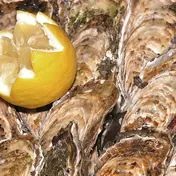
The Bouzigues oyster is grown on ropes hung from wooden tables in the Étang de Thau, a tideless lagoon half an hour west of the city. Permanent immersion makes the shell thin and the meat unusually fleshy.
Oyster culture on the Thau lagoon is barely more than a century old, but it now turns out around 12,000 tonnes a year from some 600 conchylicole holdings between Bouzigues, Mèze and Marseillan. Because the lagoon has no tide, the oysters hang permanently underwater rather than being alternately covered and exposed, which is why they grow fast and fill their shells. Some producers exondate their oysters, lifting them clear of the water on a cycle to harden the shell and firm the flesh. Montpellier eats them without any of the ritual of an Atlantic oyster bar: a dozen on ice at a market counter, a glass of Picpoul, bread and butter, standing up.
Thau mussels tipped into a wide flat pan over burning vine cuttings, opened in their own liquor and finished with garlic, parsley and olive oil. Outdoor cooking, eaten straight from a paper tray.
The brasucade takes its name from the occitan brasa, embers, and belongs to the same open-fire tradition as the Camargue grillade. Vine prunings burn hot and fast and give the shellfish a resinous edge that a gas ring cannot. Mussels from the Thau lagoon are the standard, cooked by the kilo in a pan a metre across, shaken rather than stirred, and served the moment the shells open. In Montpellier the dish belongs to the Estivales on the Esplanade and to the food-truck yard at the Marché du Lez rather than to any restaurant menu.
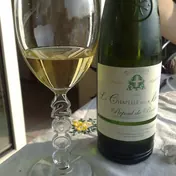
The white wine of the Thau lagoon shore, made from picpoul blanc on six communes behind Pinet. Lean, high in acid and faintly saline, it is treated locally as the automatic partner to a plate of oysters.
Picpoul, literally lip-stinger, has grown on the coastal plain since long before the appellation existed, surviving the phylloxera replanting because it suited the sandy soils close to the lagoon. It won its own AOC in 2013, carved out of the wider Coteaux du Languedoc. The vineyards sit within sight of the oyster tables, which is the whole point: the wine is bottled at low alcohol with sharp acidity precisely because that is what the local shellfish demands. Every Montpellier wine bar keeps one open, and every oyster counter in the city pours it by the glass.
Drive through the Mediterranean countryside, passing by Pic Saint-Loup and visit 2 vineyards. Learn about the art of making wine and take a short wine tasting.
With this half day wine tour discover the picturesque and geologically surprising landscape of the Pic Saint-Loup, one of the most interesting wine areas of Languedoc....
A wine tour to Pic Saint Loup......scenic route, small group and with a local guide......
Enjoy and explore the Montpellier countryside.
Off the beaten track !!!!
i w...
The red of the garrigue slopes north of Montpellier, syrah-led with grenache and mourvèdre, grown under the limestone tooth of the Pic. Cold nights keep the acidity up and the pepper sharp.
The hills between Saint-Mathieu-de-Tréviers and Valflaunès were planted to vines long before quality was the point, and for a century they shipped bulk red north with everything else. The turn came in the 1980s and 1990s when growers pulled out high-yield varieties for syrah and mourvèdre and started bottling under their own names. Pic Saint-Loup won its own appellation in 2017. The altitude and the diurnal swing give the wines their signature: garrigue herbs, black pepper, and a freshness that Languedoc reds are not supposed to have. It is the bottle Montpellier reaches for when a visitor asks what the region tastes like.
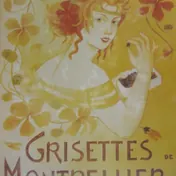
A small grey-brown sweet the size of a peppercorn, made from honey and liquorice and rolled until the surface goes matt. It tastes of dark honey first, then of liquorice root, and it is the city's own.
The grisette belongs to the same medieval world as the Montpellier medical faculty, founded in 1220 and still the oldest working school of its kind. Apothecaries in the Ecusson traded in spices, honey and liquorice as pharmacy rather than confectionery, and prescriptions for coughs and sore throats were dispensed as sweets. The name is usually traced to the grey working dress of the women who sold them. What survives is a honey and liquorice ball with none of the fruit or nut of later French confectionery, an unfashionable flavour that has kept the sweet a local rather than a national item.
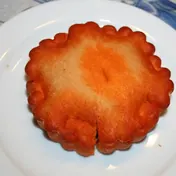
A wafer-thin waffle cooked flat in cast-iron moulds over a flame, so light it shatters at the edges. The name comes from the occitan escaleta, and the biscuit is sold in stacks in flavours from orange-flower to anise.
The escalette is documented as a Languedoc recipe going back more than seven centuries, made at home over an open fire in hinged iron moulds of the kind that also produced communion wafers. It disappeared commercially and was revived relatively recently by producers working the same flat cast-iron format rather than the deep Belgian pattern. The result is closer to a brandy snap than to a modern waffle: almost no crumb, a caramelised surface, and a snap that goes soft within a day. It is a market and gift-shop item rather than a bakery one, and it travels badly, which is part of why it stayed local.
A small flat disc of raw goat cheese from the Cévennes foothills, AOP since 2000. Young it is chalky and lactic; dried it goes hard and intensely goaty, and Montpellier kitchens grill it on toast over salad.
Goats have been kept on the schist and limestone slopes of the Cévennes for as long as the region has been farmed, because the terrain suits nothing larger. The pélardon is made from raw whole milk in discs of about sixty grams, salted and left to ripen for a minimum of eleven days. Kids are born in late winter, so the first cheeses of the year appear in spring and the flavour tracks the season: mild and milky in April, sharp and dry by autumn. The AOP granted in 2000 fixed the area and the method, and every covered market in Montpellier now carries at least one producer selling it at several stages of drying.
A green olive shaped like a crescent moon, pointed at one end, with firm buttery flesh and almost no bitterness. It is picked young, cured in brine and eaten as an aperitif rather than pressed for oil.
The Lucques is grown almost entirely in the Hérault and the Aude and takes its name, most sources agree, from the Italian city of Lucca. It has AOP status as Lucques du Languedoc. The curve is natural rather than a processing artefact, and the stone lifts cleanly out, which is why it is the olive of choice for a table bowl. Picking happens in September and October and the fruit is cured quickly in weak brine so the flesh stays pale green and the flavour stays sweet. In Montpellier it turns up automatically with a glass of Picpoul, salted almonds alongside, before anyone has ordered anything.
A small domed tourte filled with octopus in a tomato sauce sharpened with chilli and white wine, sealed under a crimped lid of slightly brioched pastry. A Sète dish, eaten cold or barely warm.
The tielle came to Sète with fishermen from Gaeta, north of Naples, who settled the port from the 1880s onwards. The Italian original is a covered pie; the Sète version fixed on octopus because that is what the boats brought in, and on the distinctive crimped seal around the rim. It was a household recipe sold from doorsteps until the 1930s, when Adrienne Virduci began producing it commercially and the tielle became the town's emblem. Montpellier does not claim the dish, and no serious local cook pretends otherwise, but the traiteur counters in the covered halls carry it year-round.
A spool-shaped pastry the size of a cork, filled with minced lamb, lemon zest, suet and brown sugar. The sweet and savoury combination startles on first bite, and it is served warm as a starter.
The recipe is credited to the Indian cook travelling with Lord Clive, the Governor of Bengal, who wintered at the Château de Larzac near Pézenas in 1766. Whatever the truth of that story, the pastry sits somewhere between a keema filling and a British mince pie, and the sweet-savoury lamb has no parallel anywhere else in French charcuterie. Pézenas now produces around 250,000 of them a year and the exact proportions remain a closely held trade secret among the town's makers. Montpellier stocks them at market charcutiers and delicatessens, but the town forty minutes west is where they are made.
Paper-thin strips of dough scented with orange-flower water or anise, fried until they blister and dusted heavily with icing sugar. Carnival food across the Languedoc, eaten within hours of frying.
The oreillette belongs to the family of pre-Lent fritters found right across southern Europe, from Italian chiacchiere to Spanish orejas, and the name simply means little ear. The Languedoc version is rolled thinner than most, sometimes to the point of translucency, and flavoured with orange-flower water rather than lemon. Traditionally they were made at home in the days before Ash Wednesday to use up eggs and fat, and a household would turn out enough for the whole street. Montpellier bakeries put them out through January and February, and they are gone from the counters by the time Easter arrives.
Watch out for: Gluten, Eggs, Dairy
Signature Dishes in Montpellier, FAQ
What food is Montpellier known for?
Montpellier's signature dishes include Huîtres de Bouzigues, Brasucade de moules, Picpoul de Pinet, Pic Saint-Loup, Grisette de Montpellier. See our signature dishes chapter for where to eat each.