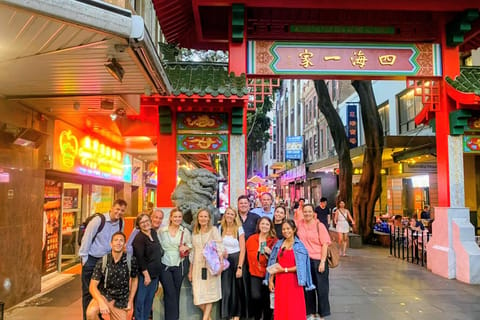

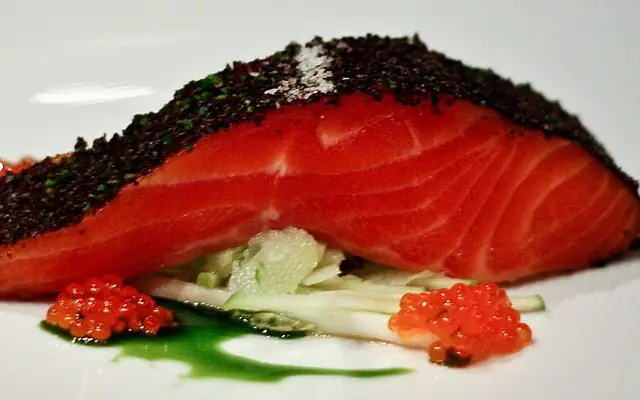
Modern Australian is the contemporary national cuisine of Australia, built from the 1980s onward by chefs who fused the European traditions of Australia's earlier waves of immigration (British, Italian, Greek, Maltese, Lebanese) with the East Asian and Southeast Asian techniques that arrived through later migrations (Chinese, Vietnamese, Thai, Indonesian, Japanese, Korean). The cooking is ingredient-led, increasingly Indigenous-informed (with native ingredients like finger lime, lemon myrtle, saltbush, warrigal greens, wattleseed, and Davidson plum entering mainstream menus through chefs like Jock Zonfrillo at the late Orana and Mark Olive), and explicitly multicultural in a way no single European national cuisine is.
The defining lineage runs through a handful of chefs. Tetsuya Wakuda at Tetsuya's in Sydney made the Japanese-French-Australian fusion respectable in the 1990s. Bill Granger at Bills built the cafe-brunch format that exported globally. Neil Perry at Rockpool defined the contemporary Sydney fine-dining room. Andrew McConnell, Ben Shewry at Attica (Melbourne), Dan Hong, Kylie Kwong, and the contemporary Sydney harbor cohort (Quay, Bennelong, Saint Peter under Josh Niland's whole-fish project) round out the canon. Melbourne's tasting-menu scene (Attica, Vue de Monde, Brae outside the city) leans more closely toward New Nordic in spirit.
The cafe-and-brunch wing of Modern Australian is its biggest cultural export. The Sydney and Melbourne cafe model (serious espresso, sourdough toast, smashed avocado, ricotta hotcakes, an egg-led menu, brunch service that runs late) was exported to London, New York, Tokyo, Seoul, and onward via the Australian cafe diaspora. Today, when a London or New York cafe calls itself 'Australian-style,' it almost always means this format. The cuisine's other defining feature is its ingredient-source seriousness: Australia's small-scale fish, lamb, beef, and produce sourcing supports a fine-dining scene that punches far above the country's population.
Book a food experience
Tours, tastings and classes that match this page, bookable on GetYourGuide.
Top picks
The best-scored modern Australian place in each of 11 cities.
Amaru ★ 4.9
Amaru holds three Good Food Guide hats, Melbourne's highest. Clinton McIver's 34-seat Armadale room runs a single tasting menu built on Australian produce.
Book4 to 6 weeks ahead
Solander Dining and Bar ★ 4.8
Solander Dining & Bar, at 65 Sussex Street, is a modern Australian all-day restaurant and bar with botanical-inspired cocktails and Will & Co coffee.
TipBreakfast runs 6:30am to 10:30am Monday to Friday and dinner at the bar from 5pm Monday to Saturday; the restaurant is closed on Sunday.
e'cco bistro ★ 4.7
e'cco bistro opened in 1995 and now sits at Haven in Newstead, cooking premium Australian seafood and seasonal produce with wood-fired technique.
+61 ★ 4.6
Cassandra Karinsky and Sebastian de Gzell's +61 in Marrakech's Gueliz blends Sydney technique with Moroccan and Mediterranean produce under chef Andrew Cibej.
SignatureHouse-made pasta, Wood-fire grilled fish, Modern Australian-Moroccan plates
TipMENA's 50 Best 2026 No. 31. Book a week ahead; the wine list is one of the city's deepest.
The Collins Quarter ★ 4.5
The Collins Quarter serves Aussie-inspired brunch and dinner at 151 Bull St in Savannah.
Banksia Bakehouse ★ 4.5
Banksia Bakehouse in Kansas City: modern australian room. Kansas City's only Australian-style bakehouse, tucked into a downtown Main Street storefront..
Why locals goKansas City's only Australian-style bakehouse, tucked into a downtown Main Street storefront.
TipOrder the pork and fennel sausage roll plus a Lamington. Wed to Sat the kitchen runs to 21:00, longer than most KC bakeries.
Federal Cafe ★ 4.5
Manchester's Nicholas Croft Australian-style brunch room. Banana bread with ricotta, eggs benedict, Turkish eggs; most plates between ten and fourteen pounds.
TryBanana bread brunch
Peninsula House ★ 4.4
Peninsula House serves modern Australian sharing plates upstairs in 1937's India House, the handsomest dinner room on Penang's old Beach Street.
SignatureWood-grilled sharing plates, Sourdough with cultured butter
TipThe stairway entrance is easy to miss beside the old bank facades; look for the India House lettering and head up.
Waltzing Kangaroo ★ 4.3
Waltzing Kangaroo bakes Australian meat pies in Campus West, from steak and gravy to a Guinness steak and mushroom, all in five-inch handmade pastry shells.
OrderLamb and rosemary pie with a sausage roll on the side
TipEvery pie is also sold frozen to take home; the lamb and rosemary is the sleeper order.
Council Oak Steaks and Seafood ★ 4.3
Council Oak at Seminole Hard Rock Tampa runs a high-end chophouse with Australian wagyu, dry-aged Black Angus and a tableside martini service.
Book1 week ahead
Symmetry ★ 4.1
An all-day dining room and bar on the fringe of Kampong Glam with the relaxed sensibility of an Australian cafe. Serving from 9am through to late, Symmetry covers breakfast bowls, smashed avocado, grain salads, pasta and cocktails under an open-air terrace. One of the city's most reliably pleasant mid-week lunches.
OrderTruffle eggs, Grain bowl, Mushroom toast
TipDog-friendly terrace makes this a favourite for expat brunches on weekday mornings when it is quieter than weekends.
Find a place
Amaru ★ 4.9
Amaru holds three Good Food Guide hats, Melbourne's highest. Clinton McIver's 34-seat Armadale room runs a single tasting menu built on Australian produce.
Book4 to 6 weeks ahead
Brae ★ 4.9
Brae in Birregurra holds three Good Food Guide hats and features in the World's 50 Best list. Dan Hunter grows most of what the kitchen cooks on the farm.
Book6 to 8 weeks ahead
TipBrae is 90 minutes from Melbourne in the Otway hinterland. An overnight stay in the on-site cottages makes the trip logical.
Vue de Monde ★ 4.8
Vue de Monde holds three Good Food Guide hats 55 floors above Collins Street. Hugh Allen's tasting menu takes Victorian produce with the utmost seriousness.
Book2 to 4 weeks ahead
Solander Dining and Bar ★ 4.8
Solander Dining & Bar, at 65 Sussex Street, is a modern Australian all-day restaurant and bar with botanical-inspired cocktails and Will & Co coffee.
TipBreakfast runs 6:30am to 10:30am Monday to Friday and dinner at the bar from 5pm Monday to Saturday; the restaurant is closed on Sunday.
Bennelong ★ 4.7
Bennelong, in the Sydney Opera House, has a three-course menu in the Restaurant, a la carte at The Counter and Two Hats in the Good Food Guide 2026.
Firedoor ★ 4.7
Firedoor is Lennox Hastie's Surry Hills restaurant, with no gas or electricity: two wood-fired ovens, three grills and a wood burning hearth.
BookReservations are available up to six months in advance ahead
e'cco bistro ★ 4.7
e'cco bistro opened in 1995 and now sits at Haven in Newstead, cooking premium Australian seafood and seasonal produce with wood-fired technique.
+61 ★ 4.6
Cassandra Karinsky and Sebastian de Gzell's +61 in Marrakech's Gueliz blends Sydney technique with Moroccan and Mediterranean produce under chef Andrew Cibej.
SignatureHouse-made pasta, Wood-fire grilled fish, Modern Australian-Moroccan plates
TipMENA's 50 Best 2026 No. 31. Book a week ahead; the wine list is one of the city's deepest.
Albion Hotel ★ 4.5
The Albion Hotel at 300 Sandgate Road is the original local, with cold beer, big screens and a buzzing garden, and a Lounge Bar with 21 taps and three TVs.
TipThe Lounge Bar suits pre-dinner cocktails, and you can dine inside or alfresco, or in private dining in The Wine Room.
The Collins Quarter ★ 4.5
The Collins Quarter serves Aussie-inspired brunch and dinner at 151 Bull St in Savannah.
Banksia Bakehouse ★ 4.5
Banksia Bakehouse in Kansas City: modern australian room. Kansas City's only Australian-style bakehouse, tucked into a downtown Main Street storefront..
Why locals goKansas City's only Australian-style bakehouse, tucked into a downtown Main Street storefront.
TipOrder the pork and fennel sausage roll plus a Lamington. Wed to Sat the kitchen runs to 21:00, longer than most KC bakeries.
Federal Cafe ★ 4.5
Manchester's Nicholas Croft Australian-style brunch room. Banana bread with ricotta, eggs benedict, Turkish eggs; most plates between ten and fourteen pounds.
TryBanana bread brunch
Blackbird Bar & Grill ★ 4.4
Blackbird is a riverfront restaurant and bar in the Riverside Centre on Eagle Street, serving modern Australian cuisine with a focus on steaks and seafood.
SignaturePremium steaks, Fresh seafood
Peninsula House ★ 4.4
Peninsula House serves modern Australian sharing plates upstairs in 1937's India House, the handsomest dinner room on Penang's old Beach Street.
SignatureWood-grilled sharing plates, Sourdough with cultured butter
TipThe stairway entrance is easy to miss beside the old bank facades; look for the India House lettering and head up.
Waltzing Kangaroo ★ 4.3
Waltzing Kangaroo bakes Australian meat pies in Campus West, from steak and gravy to a Guinness steak and mushroom, all in five-inch handmade pastry shells.
OrderLamb and rosemary pie with a sausage roll on the side
TipEvery pie is also sold frozen to take home; the lamb and rosemary is the sleeper order.
Council Oak Steaks and Seafood ★ 4.3
Council Oak at Seminole Hard Rock Tampa runs a high-end chophouse with Australian wagyu, dry-aged Black Angus and a tableside martini service.
Book1 week ahead
Symmetry ★ 4.1
An all-day dining room and bar on the fringe of Kampong Glam with the relaxed sensibility of an Australian cafe. Serving from 9am through to late, Symmetry covers breakfast bowls, smashed avocado, grain salads, pasta and cocktails under an open-air terrace. One of the city's most reliably pleasant mid-week lunches.
OrderTruffle eggs, Grain bowl, Mushroom toast
TipDog-friendly terrace makes this a favourite for expat brunches on weekday mornings when it is quieter than weekends.
Modern Australian by city
 Melbourne15 places
Amaru, Brae
Melbourne15 places
Amaru, Brae
 Sydney11 places
Solander Dining and Bar, Bennelong
Sydney11 places
Solander Dining and Bar, Bennelong
 Brisbane5 places
e'cco bistro, Albion Hotel
Brisbane5 places
e'cco bistro, Albion Hotel
 Fort Collins3 places
Waltzing Kangaroo
Fort Collins3 places
Waltzing Kangaroo
 Savannah3 places
The Collins Quarter
Savannah3 places
The Collins Quarter
 Kansas City1 place
Banksia Bakehouse
Kansas City1 place
Banksia Bakehouse
 Manchester1 place
Federal Cafe
Manchester1 place
Federal Cafe
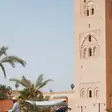 Marrakech1 place
+61
Marrakech1 place
+61
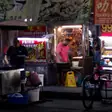 Penang1 place
Peninsula House
Penang1 place
Peninsula House
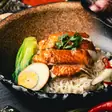 Singapore1 place
Symmetry
Singapore1 place
Symmetry
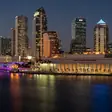 Tampa1 place
Council Oak Steaks and Seafood
Tampa1 place
Council Oak Steaks and Seafood
Defining modern Australian dishes
- Smashed avocado on sourdough
- The Bills (Sydney, 1993) invention that became the global brunch standard. Sourdough toast, smashed avocado, feta or labneh, chile flakes, lemon, often a poached egg.
- Ricotta hotcakes
- Bills's other 1993 invention: fluffy ricotta pancakes with banana and honeycomb butter. Defining Aussie dish.
- Flat white
- Australian-Kiwi espresso drink: double shot with microfoam steamed milk, served in a 5-6 oz cup. The global third-wave coffee export.
- Lamington
- Sponge cake cut into cubes, dipped in chocolate, rolled in desiccated coconut. The defining Australian baked sweet, often filled with jam or cream.
- Tim Tam
- Chocolate sandwich cookie with cream filling, fully chocolate-coated. The defining Australian biscuit; the 'Tim Tam Slam' (using one as a straw to drink hot coffee) is an Australian cultural rite.
- Whole grilled fish (Australian rock lobster, snapper, barramundi)
- Sydney and Brisbane seafood, often Indigenous-sourced. Saint Peter (Josh Niland) made whole-fish butchery and dry-aged fish a global movement.
- Wagyu and grass-fed beef
- Australian wagyu (David Blackmore's farm and others) is now globally competitive with Japanese. Grass-fed Angus from Victoria, Tasmania, and New South Wales for the steakhouse trade.
- Native-ingredient course (modern fine dining)
- Finger lime, lemon myrtle, saltbush, warrigal greens, wattleseed, Davidson plum, kakadu plum, bunya nut. Used at Attica, the late Orana, Brae, and increasingly mainstream menus.
- Vietnamese banh mi, pho, and bun cha (Vietnamese-Australian)
- Australia's largest non-European immigrant community is Vietnamese, and Sydney's Cabramatta and Melbourne's Richmond are major Vietnamese restaurant districts. Banh mi and pho are essentially Australian everyday food.
- Chiko roll
- The Australian deep-fried savory pastry, beef and vegetable filling in a thick wrapper. The roadhouse and footy-stadium classic; an underdog of Australian food culture.
How to order
At a Sydney or Melbourne cafe, the brunch menu is the canonical order: a flat white plus one savory plate (smashed avo, mushroom toast, breakfast bowl, eggs benedict) plus a sweet (ricotta hotcakes, banana bread) to share. At a Modern Australian fine-dining room (Attica, Quay, Bennelong, Saint Peter), the tasting menu is usually the way; expect 8 to 14 courses with strong Asian-influence accents and native ingredients. At Vietnamese-Australian rooms in Sydney's Cabramatta or Melbourne's Richmond, the order is pho, banh mi, bun cha, com tam (broken rice with grilled pork), bun bo Hue.
Reservations at Attica (Melbourne) and Quay (Sydney) open 30 to 90 days ahead. Brae (rural Victoria) is a destination room requiring an overnight stay. Saint Peter's whole-fish menu changes by what came in that morning. The mistake is expecting Australian food to mean British-Australian roast meat and meat pies; that's the older Australian food culture, mostly displaced by the post-1980 multicultural Modern Australian tradition.
What to drink with it
Australian wine is one of the country's great strengths. Shiraz from the Barossa Valley (Penfolds Grange, Henschke Hill of Grace) and McLaren Vale, riesling from the Eden Valley and Clare Valley, chardonnay from Margaret River, pinot noir from the Yarra Valley and Tasmania, semillon from the Hunter Valley. Australian craft beer (Stone & Wood, Mountain Goat, Young Henrys) is excellent. Coffee is the third-wave global standard. Wine pairings at top tasting rooms (Attica, Quay) often surprise with Australian regional bottles paired against international classics. Native ingredients in cocktails (finger lime, lemon myrtle, wattleseed) are increasingly common at serious bars.
Where to eat it
Sydney is the harbor-city flagship: Quay (Peter Gilmore), Bennelong, Saint Peter (Josh Niland's whole-fish project), Sixpenny, Ester, Cumulus Inc, Continental Deli, LP's Quality Meats, Sean's. Melbourne: Attica (Ben Shewry), Vue de Monde, Cumulus Inc, Marion, Bar Lourinha, Cutler and Co, Anchovy, Lune Croissanterie. Brisbane: Agnes (chargrilled fine dining), e'cco, Detour. Adelaide: Fugazzi, the Magill Estate Restaurant. Tasmania: Templo (Hobart), the late Franklin. Margaret River and Tasmania for wine-country dining. Outside Australia, the cafe diaspora exported the format to London (Granger and Co, Caravan, Lantana, Bourke Street Bakery), New York (Two Hands, Ruby's, Bluestone Lane), Tokyo (Bills Tokyo), Seoul, and Hong Kong.
A short history
Modern Australian as a self-conscious cuisine emerged in the 1980s. The Sydney Olympics (2000) accelerated its global visibility. Tetsuya Wakuda opened Tetsuya's in 1989; Bill Granger opened Bills in 1993. The Sydney Morning Herald food critic Terry Durack and Cherry Ripe began naming the style 'Modern Australian' in the early 1990s. The Migration Act amendments of the 1970s onward, opening Australia to non-European immigration, are the underlying demographic reason the cuisine is Asian-influenced rather than purely British-derived. The 2010s saw the rise of native-ingredient cooking through Jock Zonfrillo's Orana (Adelaide), Ben Shewry's Attica, and Mark Olive's broader Indigenous-food advocacy.
More cities are in research. Want modern Australian covered somewhere specific? Tell us where you want to eat.