


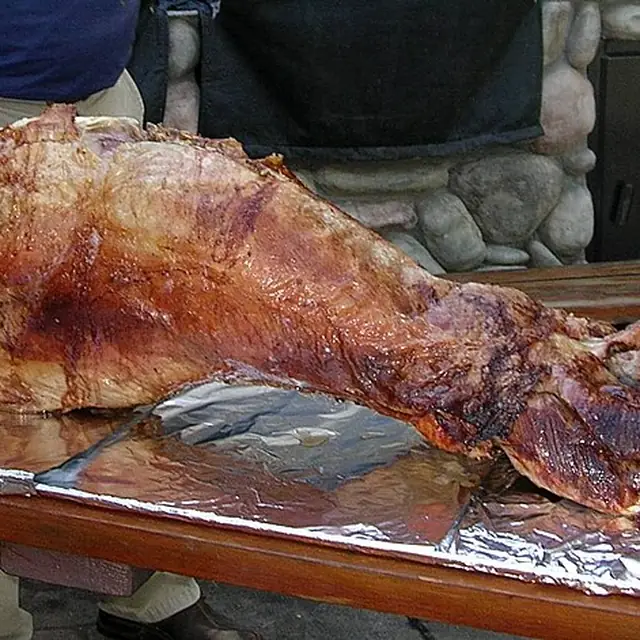
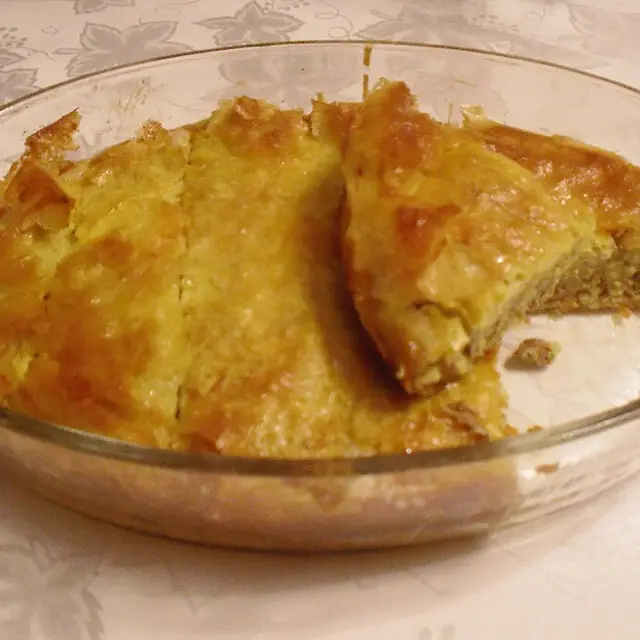
Marrakech eats in three layers stacked on top of each other. At Jemaa el-Fna, the great square empties of snake charmers each evening and refills with food stalls: tangia (lamb cooked in a clay urn at the hammam's wood fires), pit-roasted mechoui at the alley off Sidi Bouchakour, harira broken with a date for 10 dirham. Inside the medina, restored riads like Le Tobsil, Dar Yacout and Le Foundouk serve 11-course Fassi tasting menus with pigeon pastilla, lamb-prune-almond tagine, and live Gnaoua or Arabo-Andalusian music depending on the house. In Gueliz, the French colonial new city, Cassandra Karinsky and Andrew Cibej run +61 (MENA's 50 Best No. 31 in 2026), Saida Chab cooks at the women-run Al Fassia, and Lebanese-Moroccan plates surface at Naranj and Azar. Mint tea binds it all, poured ceremonially from height.
Where to eat in Marrakech
All 16 restaurants-
Nomad
- ★ 4.6
- $$$
- Medina
Order Order the calamari salad with green chermoula and the slow lamb shoulder.
-
Le Foundouk
- ★ 4.4
- $$$
- Medina
Order Pigeon pastilla, then the lamb-prune tagine; book the rooftop in clear weather.
-
Al Fassia Gueliz
- ★ 4.7
- $$$
- Gueliz
Order The slow-cooked lamb tagine with caramelised quince, served with khobz bread.
-
Naranj
Order Build a meal from the mezze, then the chargrilled lamb shawarma plate.
-
L'Mida
- ★ 4.4
- $$
- Medina
Order The Berber gnocchi (Italian technique with Moroccan spice), then lamb chops on the rooftop.
-
Le Jardin
- ★ 4.3
- $$
- Medina
Order Tanjia, the clay-urn lamb served straight from the amphora, with khobz bread.
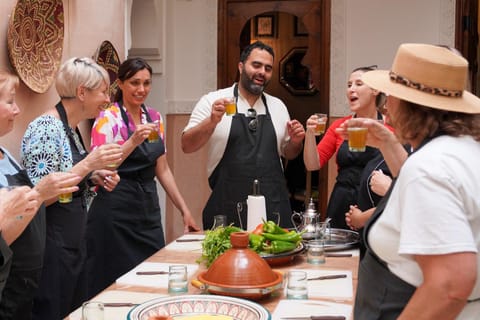
Book food experiences in Marrakech

Food festivals coming up in Marrakech
All Marrakech food festivalsGoing to Ramadan Iftar? Hotels for 8 Feb to 9 Mar 2027.
Hotels for these datesWhere to stay in Marrakech
All Marrakech hotels-
 Dar Ikalimo Marrakech
Check prices
Dar Ikalimo Marrakech
Check prices
-
 For You Hostel Marrakech - Adults Only
Check prices
For You Hostel Marrakech - Adults Only
Check prices
-
 Hostel Riad Marrakech Rouge
Check prices
Hostel Riad Marrakech Rouge
Check prices
-
 Moroccan House Hotel Marrakech
Check prices
Moroccan House Hotel Marrakech
Check prices
-
 Click Riad Marrakech
Check prices
Click Riad Marrakech
Check prices
-
 Hotel Marrakech le Tichka
Check prices
Hotel Marrakech le Tichka
Check prices
-
 Résidence Tichka Marrakech
Check prices
Résidence Tichka Marrakech
Check prices
-
 Riad Azra Marrakech
Check prices
Riad Azra Marrakech
Check prices
-
 Tempoo Hotel Marrakech
Check prices
Tempoo Hotel Marrakech
Check prices
-
 Hotel Les Trois Palmiers Marrakech
Check prices
Hotel Les Trois Palmiers Marrakech
Check prices
-
 Riad Marrakech House
Check prices
Riad Marrakech House
Check prices
-
 Rodamon Riad Marrakech
Check prices
Rodamon Riad Marrakech
Check prices
Also compare
Hotels are listed by our booking partners, not picked by our editors. We earn a commission if you book, at no cost to you.
Getting there and around Marrakech



Sold by our booking partners. We earn a commission if you book, at no cost to you.
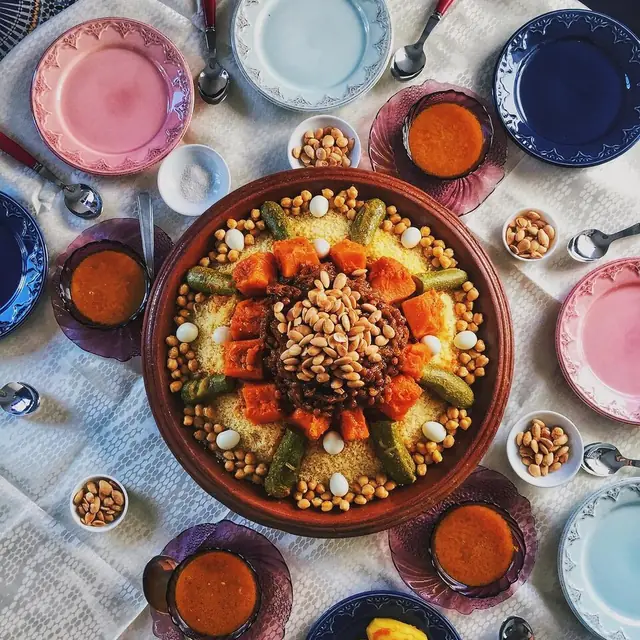
Signature dishes in Marrakech
All 12 dishes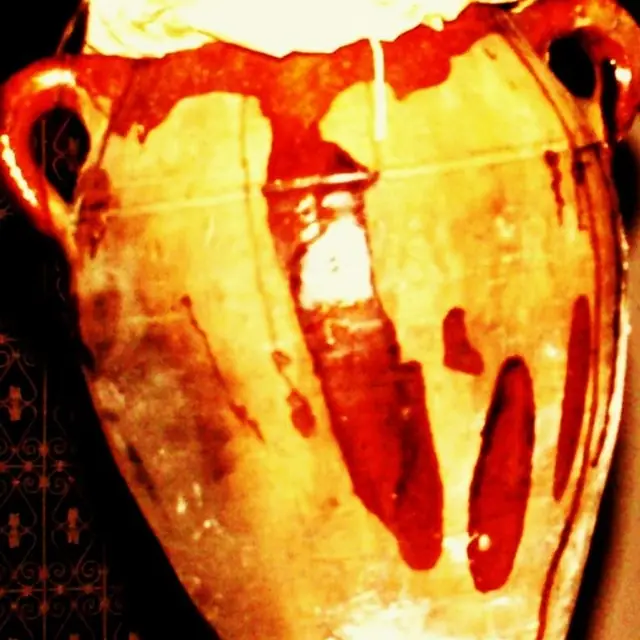
Where to eat by neighborhood
All neighbourhoods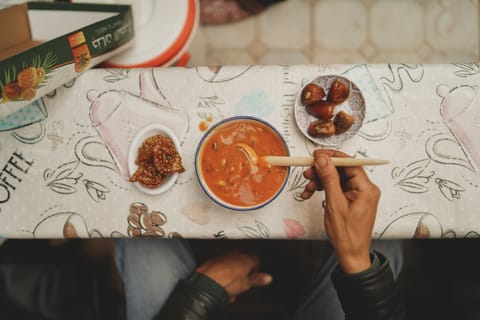
Also in Marrakech: tickets for the sights


Tickets are sold by our booking partners. We earn a commission if you book, at no cost to you.
Map of Marrakech
Every restaurant, cafe, market and bar we cover in Marrakech, pinned. Click a pin for the page.
Everything in Marrakech
When to come hungry in Marrakech
- Peak food season
- October to April. Summer is brutally hot (40+C) and many medina riad-restaurants close lunch service. Ramadan (Feb 17 to March 19 in 2026) flips the schedule: most medina venues open only after sundown for iftar, then run till the suhoor pre-dawn meal.
- Local dining hours
- Lunch 12:30 to 15:00, dinner 19:30 to 22:30. Jemaa el-Fna stalls 18:00 to midnight. Hotel bars in Hivernage run later. During Ramadan the city eats at sundown (around 19:00 in March), with a second meal before sunrise.
- Tipping
- 10 percent in restaurants is generous; small change rounded up is the local norm. At Jemaa el-Fna stalls, the price is the price. Tip the dada (traditional cook) 50 to 100 DH at cooking classes. Riad staff appreciate 20 to 50 DH per service.
Marrakech food, FAQ
What food is Marrakech known for?
Marrakech's signature dishes include Tangia, Mechoui, Tagine, Couscous, Pastilla. See our signature dishes chapter for where to eat each.
What are the best food neighborhoods in Marrakech?
TableJourney editors map Marrakech by district. Medina, Jemaa el-Fna, Kasbah, Mellah are among the strongest for food, each with its own guide.
Where should I eat fine dining in Marrakech?
Editor picks in Marrakech include La Grande Table Marocaine, Le Tobsil, Dar Yacout, plus the full fine dining chapter on TableJourney.
Are there food tours in Marrakech?
TableJourney covers 3 editor-picked food tours in Marrakech, with what each shows you and how much to budget.
Does Marrakech have good vegetarian or vegan food?
TableJourney's Marrakech dietary chapter covers vegan, vegetarian, halal venues, each editor-picked with what to order and how to ask.