Signature dishes
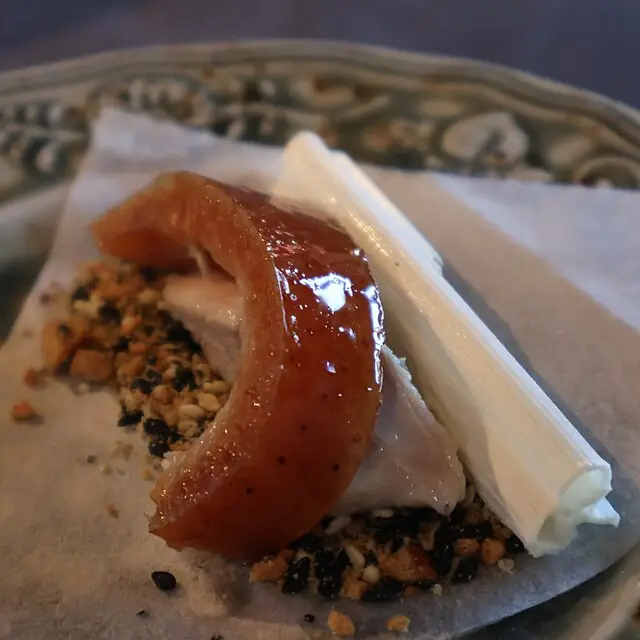
Peking duck is roast duck with thin, lacquered skin, sliced for wrapping in a soft pancake with sweet bean sauce, spring onion and cucumber, from either a hung oven or a closed oven.
Where: Quanjude (Qianmen), Bianyifang (Xianyukou), Siji Minfu (Forbidden City), Da Dong (Jinbao Place), Liqun Roast Duck
Price: about ¥165 a person
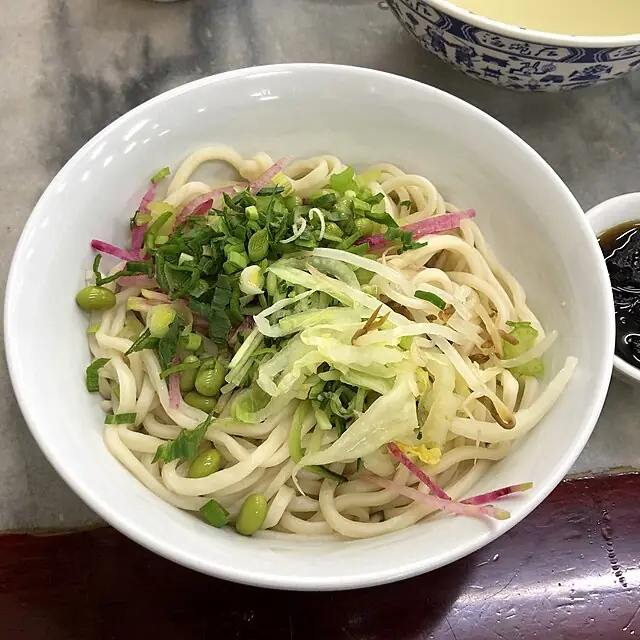
Zhajiangmian is thick wheat noodles under a dark sauce of diced pork fried in yellow soybean paste and sweet bean sauce, served with a ring of crunchy shredded vegetables to toss through.
Where: No. 69 Fangzhuanchang Zhajiangmian, Fortune Long Beijing Bean Sauce Noodles (East Xinglong Street), Mingyuan Restaurant
Price: about ¥30 to ¥50 a person
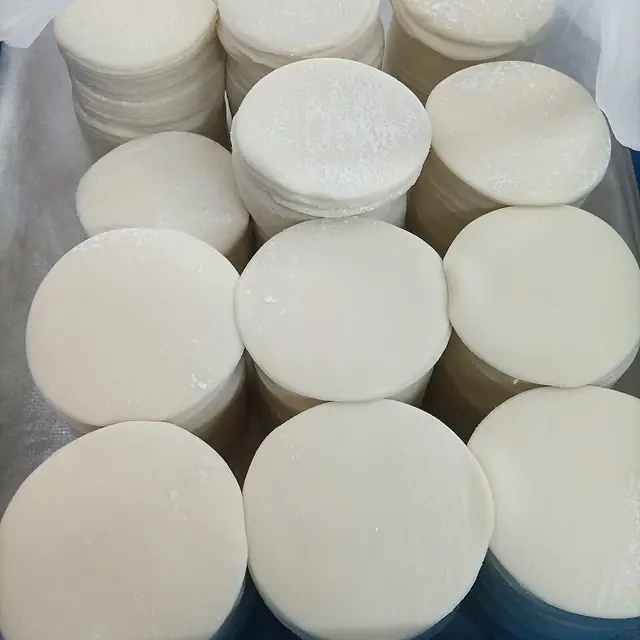
Jiaozi are crescent dumplings of pork and cabbage or chive in a thin wheat wrapper, boiled and dipped in black vinegar, and the dish families fold together at Lunar New Year.
Where: Baiweiyuan Dumpling (Tuanjiehu Road), Beef & Dumplings (Shunyuan Street), Xian Lao Man (Andingmen)
Price: about ¥40 to ¥65 a person
Shuan yangrou is paper-thin lamb swished for seconds in clear broth in a charcoal-heated copper pot, then dipped in sesame sauce and eaten with sugared garlic and sesame flatbread.
Where: Donglaishun (Beijing APM), Jubaoyuan (Niujie), Man Heng Ji, Beiping San Xiongdi Hotpot (Guijie), Ritan Shuanrou (Ritan Park)
Price: about ¥105 to ¥115 a person
Zhizi kaorou is sliced beef or lamb seared on a round griddle of iron bars with raw onion and coriander, dipped in cumin and chilli, and washed down with Beibingyang soda or erguotou.
Where: Kaorouji (Qianhai Dongyan), Liuji Zhizi Kaorou (Hufangqiao), Baqi Barbecue (Xinjiekou), Dahuaishu Grill
Price: about ¥100 to ¥110 a person
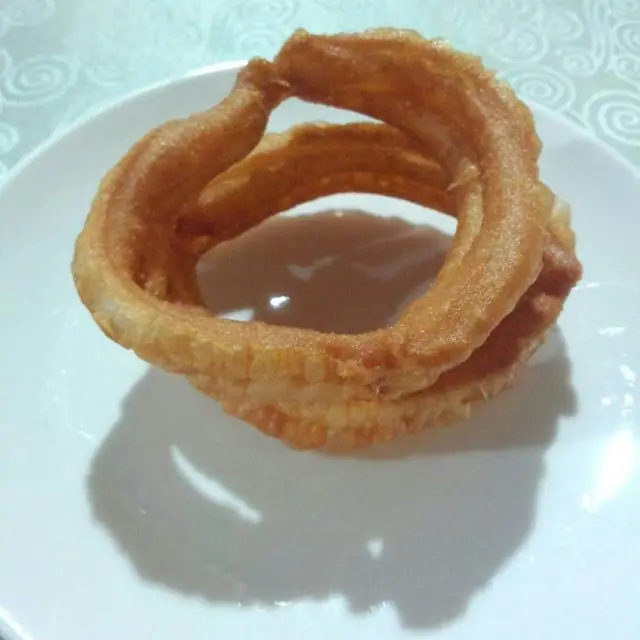
Douzhi is a grey-green, sour drink of fermented mung beans, boiled and sipped hot with crisp jiaoquan fried dough rings and shredded pickles, the standard test of a Beijing palate.
Where: Yin San Douzhi (Dongxiaoshi Street), Huguosi Snacks (Huguosi Street Flagship), Mingyuan Restaurant, Tianxingju (Xianyukou)
Price: about ¥15 a person
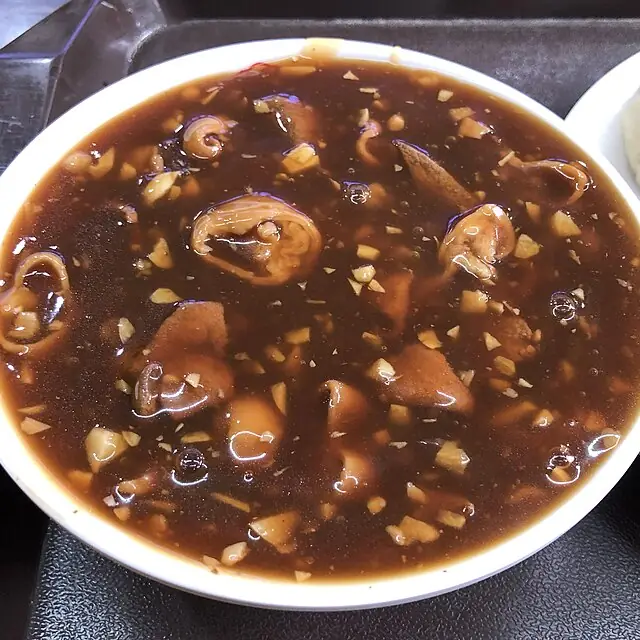
Chaogan is a thick, glossy stew of pork liver and intestine in a starch-thickened sauce, finished with garlic and vinegar and eaten with steamed pork buns for breakfast.
Where: Yaoji Chaogan (Gulou), Tianxingju (Xianyukou)
Price: about ¥30 a person
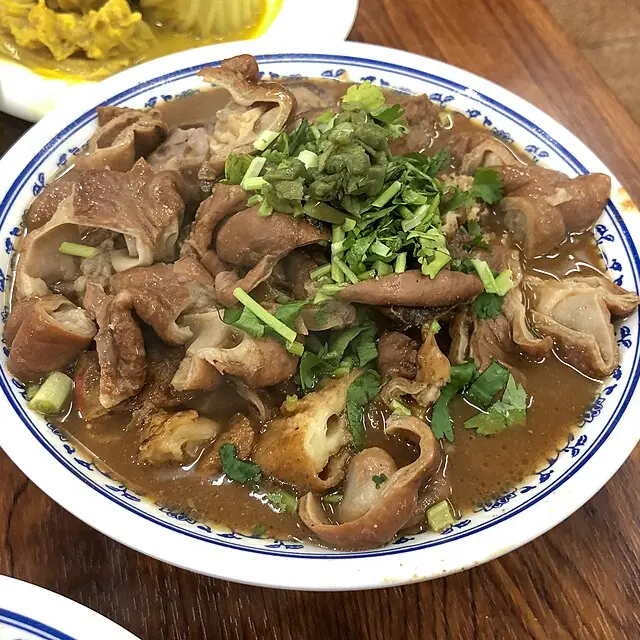
Luzhu huoshao is pork intestine, lung and tofu stewed in a spiced broth with pieces of baked flatbread that soak up the soup, eaten piping hot with garlic sauce.
Where: Chen Ji Luzhu Xiaochang (Langfang Ertiao), Tianxingju (Xianyukou), Yaoji Chaogan (Gulou)
Price: about ¥35 a person
Nailao is a chilled, custard-soft milk curd set with fermented glutinous rice wine, sweet with a faint wine aroma, once a court delicacy and now sold in small bowls from old Niujie shops.
Where: Nailao Wei (Wei's Fermented Dairy, Niujie Main Store)
Price: about ¥30 a person
Roubing are thin-skinned pan-fried pies packed with juicy beef, lamb or pork and spring onion, eaten hot with vinegar beside millet porridge or a bowl of lamb offal soup.
Where: Beijing Pie (Xila Hutong), Jingdong Chengji Roubing (Longtan)
Price: about ¥45 to ¥60 a person
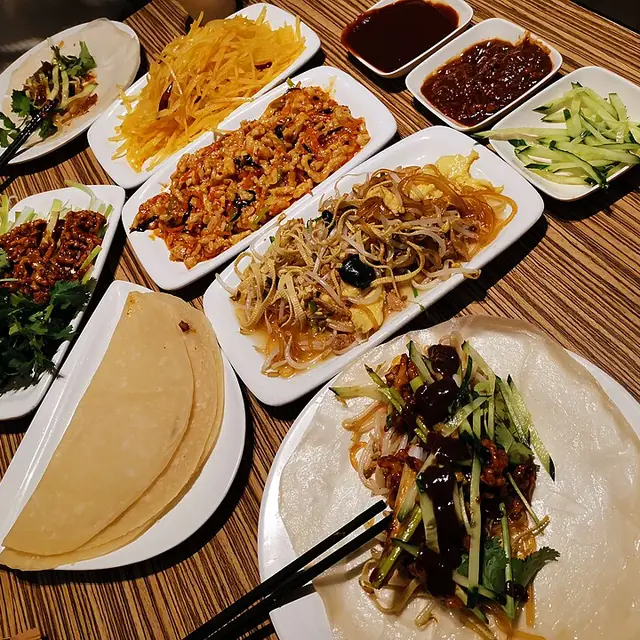
Chunbing are thin steamed wheat pancakes, peeled into two sheets and rolled around shredded pork in sweet bean sauce, eggs and stir-fried vegetables, a table dish for the start of spring.
Where: Feng Yuan Chunbing (Xingfu Lane), Lao Lao Jia Chunbing (Balizhuang)
Price: about ¥60 to ¥70 a person
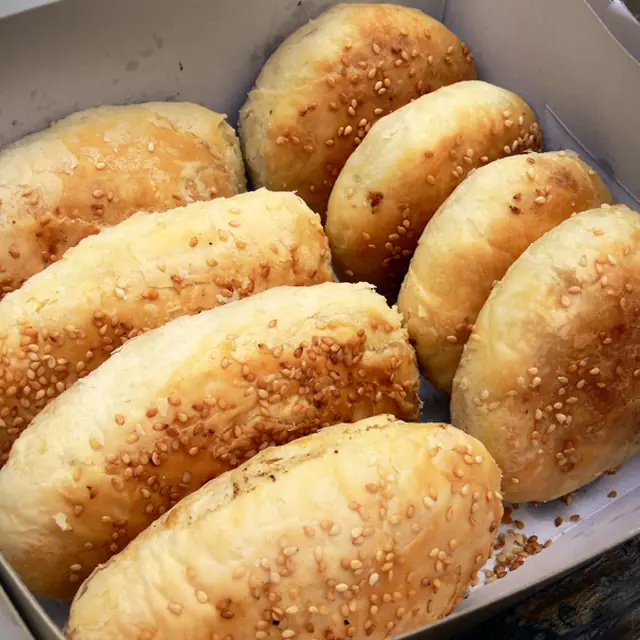
Beijing shaobing is a layered, baked wheat flatbread with sesame paste and spice rolled inside and sesame seeds on top, eaten for breakfast or beside copper-pot lamb and barbecue.
Where: Shi Cheng Ji Shaobing Shop, Man Heng Ji, Beiping San Xiongdi Hotpot (Guijie)
Price: about ¥15 a person
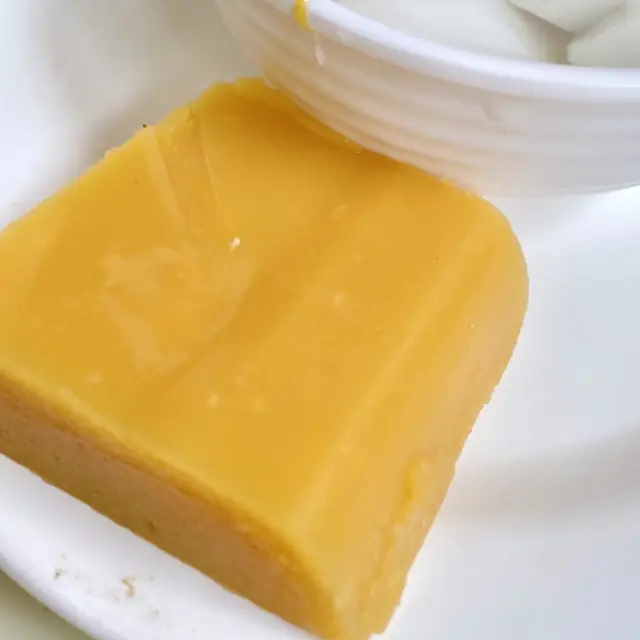
Wandouhuang is a smooth, pale yellow pea paste set into a lightly sweet, cool cake, a Beijing snack with a court version said to have won over Empress Dowager Cixi.
Where: Huguosi Snacks (Huguosi Street Flagship), Laohuihui Snack Bar (Baiwanzhuang)
Price: about ¥30 a person
Peking duck (Beijing roast duck)
Peking duck is roast duck with thin, lacquered skin, sliced for wrapping in a soft pancake with sweet bean sauce, spring onion and cucumber, from either a hung oven or a closed oven.
History: Roast duck appears in a 1330 imperial kitchen manual by Hu Sihui, and by the later Ming dynasty it was a main dish on court menus. Bianyifang, founded in 1416 near Qianmen, still roasts in a closed oven without open flame. Quanjude, founded in 1864, is known for the hung oven, an open-fire design developed in the Qing imperial kitchens. By the middle of the twentieth century the duck had become a national symbol and a fixture of state banquets.
Where to try it: Quanjude (Qianmen), Bianyifang (Xianyukou), Siji Minfu (Forbidden City), Da Dong (Jinbao Place), Liqun Roast Duck
Watch out for: Gluten, Soy, Sesame
Zhajiangmian (noodles with fried bean sauce)
Zhajiangmian is thick wheat noodles under a dark sauce of diced pork fried in yellow soybean paste and sweet bean sauce, served with a ring of crunchy shredded vegetables to toss through.
History: Beijing's version of zhajiangmian is ranked among the Ten Great Noodles of China. The sauce combines yellow soybean paste with tianmianjiang, plenty of white spring onion and diced pork, and the bowl is surrounded by cucumber, radish, bean sprouts and soybeans. Accounts of its origin differ: some point to Shandong, and one story has Empress Dowager Cixi bringing a noodle cook to the capital after the court fled to Xi'an in 1900. Fortune Long has served it since 1994.
Where to try it: No. 69 Fangzhuanchang Zhajiangmian, Fortune Long Beijing Bean Sauce Noodles (East Xinglong Street), Mingyuan Restaurant
Watch out for: Gluten, Soy
Jiaozi (boiled dumplings)
Jiaozi are crescent dumplings of pork and cabbage or chive in a thin wheat wrapper, boiled and dipped in black vinegar, and the dish families fold together at Lunar New Year.
History: Dumplings have been eaten in China for more than 1,800 years. A story attributes them to the Han-dynasty physician Zhang Zhongjing, who filled thin dough with mutton, onion and chilli to cure frostbitten ears. The crescent shape is likened to ancient ingots, so the dish stands for wealth, and families fold them together at the Lunar New Year, sometimes hiding a coin in one. In Beijing the shops are small and cook to order: Baiweiyuan fills and cooks its dumplings à la minute.
Where to try it: Baiweiyuan Dumpling (Tuanjiehu Road), Beef & Dumplings (Shunyuan Street), Xian Lao Man (Andingmen)
Watch out for: Gluten, Soy, Sesame
Shuan yangrou (instant-boiled mutton)
Shuan yangrou is paper-thin lamb swished for seconds in clear broth in a charcoal-heated copper pot, then dipped in sesame sauce and eaten with sugared garlic and sesame flatbread.
History: A popular legend ties instant-boiled mutton to Kublai Khan in the Yuan dynasty, but the story has little historical backing; written records of shuan yangrou as a Beijing dish start in the Qing. Yitiaolong dates its restaurant to 1785, and Donglaishun, founded in 1903, has its charcoal copper-pot technique on China's national intangible cultural heritage list. Jubaoyuan began in 1937 as a halal beef and mutton shop and added lamb hotpot in 2003. The city government's autumn food guide puts it first, and the hotpot season builds through winter.
Where to try it: Donglaishun (Beijing APM), Jubaoyuan (Niujie), Man Heng Ji, Beiping San Xiongdi Hotpot (Guijie), Ritan Shuanrou (Ritan Park)
Watch out for: Sesame, Soy, Gluten
Zhizi kaorou (Beijing griddle barbecue)
Zhizi kaorou is sliced beef or lamb seared on a round griddle of iron bars with raw onion and coriander, dipped in cumin and chilli, and washed down with Beibingyang soda or erguotou.
History: Kaorouwan, founded in 1686, and Kaorouji, founded in 1848, earned the pairing South Wan and North Ji, and the Beijing grill technique of both is recognised as national intangible cultural heritage. The meat is cooked on a round plate of iron strips set with small gaps, with the fire underneath. Yijucheng, founded in 1898, is described as the earliest known zhizi barbecue tavern in the Qianmen and Dashilar area. The city government's autumn food guide pairs the dish with Beibingyang soda or a shot of erguotou.
Where to try it: Kaorouji (Qianhai Dongyan), Liuji Zhizi Kaorou (Hufangqiao), Baqi Barbecue (Xinjiekou), Dahuaishu Grill
Watch out for: Gluten, Soy, Sesame
Douzhi with jiaoquan (fermented mung bean drink)
Douzhi is a grey-green, sour drink of fermented mung beans, boiled and sipped hot with crisp jiaoquan fried dough rings and shredded pickles, the standard test of a Beijing palate.
History: Douzhi has a documented history of more than 300 years and is traced to the Liao and Song dynasties. A Qianlong-era record shows an official proposing that it be inspected and served in the palace. It is made from fermented mung beans, a by-product of cellophane noodle production, and drunk hot with jiaoquan and salted vegetables. Beijing listed the custom of eating douzhi as municipal intangible cultural heritage in 2007. Yin San brews with a starter kept from the previous day and boils it in a double boiler.
Where to try it: Yin San Douzhi (Dongxiaoshi Street), Huguosi Snacks (Huguosi Street Flagship), Mingyuan Restaurant, Tianxingju (Xianyukou)
Watch out for: Legumes, Gluten
Chaogan (Beijing stewed liver)
Chaogan is a thick, glossy stew of pork liver and intestine in a starch-thickened sauce, finished with garlic and vinegar and eaten with steamed pork buns for breakfast.
History: Chaogan is believed to have been invented at the Huixianju restaurant in Qing-dynasty Beijing, and despite its name it is simmered rather than stir-fried. Huixianju opened at Xianyukou in 1862. Tianxingju opened diagonally opposite in 1933, and the two merged under joint state-private ownership in 1956; the merged shop kept the Tianxingju name and its stewed liver. Yaoji, opened in 1989 on Gulou East Street, is a newer specialist that serves it from early morning.
Where to try it: Yaoji Chaogan (Gulou), Tianxingju (Xianyukou)
Watch out for: Gluten, Soy
Luzhu huoshao (stewed offal with baked flatbread)
Luzhu huoshao is pork intestine, lung and tofu stewed in a spiced broth with pieces of baked flatbread that soak up the soup, eaten piping hot with garlic sauce.
History: A legend traces luzhu to suzao rou, a pork belly dish that the cook Zhang Dongguan made for the Qianlong Emperor. Pork belly was too dear for most people, so cooks stewed pork offal in the same broth and added baked flatbread, and luzhu huoshao became a staple of Beijing street food. Xiaochang Chen, founded in 1886, had its luzhu technique listed as Beijing municipal intangible cultural heritage in 2014, and Menkuang Hutong Luzhu, founded in 1902, serves it near Qianmen.
Where to try it: Chen Ji Luzhu Xiaochang (Langfang Ertiao), Tianxingju (Xianyukou), Yaoji Chaogan (Gulou)
Watch out for: Gluten, Soy
Nailao (Beijing milk curd)
Nailao is a chilled, custard-soft milk curd set with fermented glutinous rice wine, sweet with a faint wine aroma, once a court delicacy and now sold in small bowls from old Niujie shops.
History: In the Yuan, Ming and Qing dynasties, nailao was served only at court. The original method mixed fresh milk with fermented glutinous rice wine, baked the mixture in a wooden cask and cooled it in an ice cellar. Wei Hongchen founded the shop Lin Ji Lao Pu in 1888, and in 1988 it was renamed Nailao Wei. Its nailao is known for a tender texture, a milky fragrance and a weak note of wine. Beijing's tourism office describes it as a snack people can make at home.
Where to try it: Nailao Wei (Wei's Fermented Dairy, Niujie Main Store)
Watch out for: Milk
Roubing (Beijing meat pies)
Roubing are thin-skinned pan-fried pies packed with juicy beef, lamb or pork and spring onion, eaten hot with vinegar beside millet porridge or a bowl of lamb offal soup.
History: Beijing's best-known meat pie is the menting roubing, named for the studs on palace gates, and a story says the imperial kitchen first made it for Empress Dowager Cixi. Its traditional filling is beef and spring onion. The Eryouju shop, established by the imperial chef Chang Eryou in 1921, later became the Huatian Eryouju meat pie restaurant. Today the pies are a neighbourhood meal: Beijing Pie in Xila Hutong sells them thin-skinned and generously filled, and Jingdong Chengji sells pork, lamb and beef versions.
Where to try it: Beijing Pie (Xila Hutong), Jingdong Chengji Roubing (Longtan)
Watch out for: Gluten, Soy, Sesame
Chunbing (spring pancakes)
Chunbing are thin steamed wheat pancakes, peeled into two sheets and rolled around shredded pork in sweet bean sauce, eggs and stir-fried vegetables, a table dish for the start of spring.
History: Spring pancakes are eaten at Lichun, the start of spring in the solar calendar. The custom is called biting the spring: fresh vegetables and meat wrapped in a pancake, eaten in the hope of a good harvest. Families make a table of side dishes together, such as shredded potato, cucumber, spring onion and stir-fried vegetables. The same thin pancake is what Peking duck is wrapped in, and Beijing neighbourhood shops such as Feng Yuan, in the Xingfu Beili community near Tiantan, specialise in the full spread.
Where to try it: Feng Yuan Chunbing (Xingfu Lane), Lao Lao Jia Chunbing (Balizhuang)
Watch out for: Gluten, Egg, Soy, Sesame
Shaobing (sesame flatbread)
Beijing shaobing is a layered, baked wheat flatbread with sesame paste and spice rolled inside and sesame seeds on top, eaten for breakfast or beside copper-pot lamb and barbecue.
History: Chinese legend says the General Ban Chao of the Han dynasty brought the roasted flatbread back from the Western Regions, where it was known as hubing. Beijing sorts its flatbreads into shaobing and huoshao, with sesame-paste, horseshoe and hanging-oven kinds, and the master Feng Huaishen's old Beijing shaobing technique is on a district-level heritage list. A well-made one breaks open into 18 layers. Shaobing rarely appears at a formal meal except with barbecue and hotpot, where it is part of the usual order.
Where to try it: Shi Cheng Ji Shaobing Shop, Man Heng Ji, Beiping San Xiongdi Hotpot (Guijie)
Watch out for: Gluten, Sesame
Wandouhuang (pea cake)
Wandouhuang is a smooth, pale yellow pea paste set into a lightly sweet, cool cake, a Beijing snack with a court version said to have won over Empress Dowager Cixi.
History: Wandouhuang has been famous in Beijing since the Ming dynasty and entered the Forbidden City in the Qing. It was a classic spring product sold at temple fairs, and vendors once sold it at the Shangsi Festival. A legend says Cixi heard vendors selling it near Beihai and had them cook it in the palace, which gave rise to two versions of the recipe, one for the court and one for the street. Huguosi Snacks, formed in 1956 from famous street vendors, still sells it among its 100-odd snacks.
Where to try it: Huguosi Snacks (Huguosi Street Flagship), Laohuihui Snack Bar (Baiwanzhuang)
Watch out for: Legumes