Signature dishes
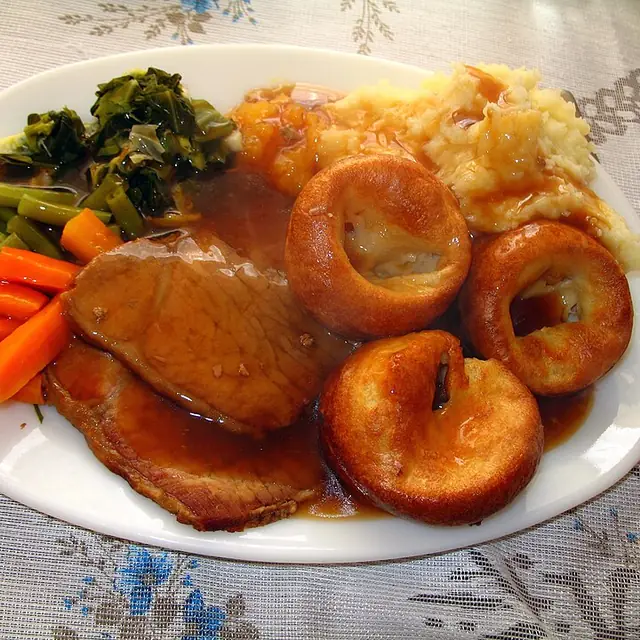
The Sunday roast is a plate of roasted joint, Yorkshire pudding, roast potatoes, seasonal greens and gravy, eaten in London pubs on Sunday lunch. The capital's defining set-piece since the nineteenth century.
Where: The Eagle, The Camberwell Arms, Quality Chop House, Blacklock Soho, The Jugged Hare
Price: £18-32
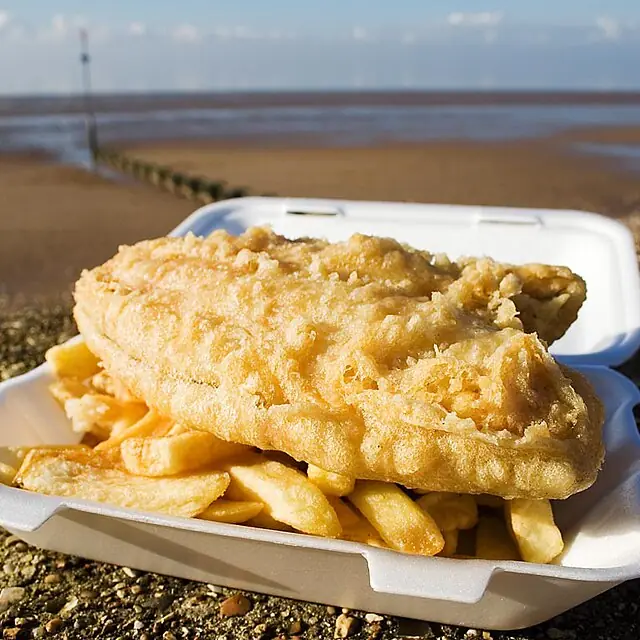
Battered white fish (cod or haddock) deep-fried with thick-cut chips, salt, malt vinegar and mushy peas. The defining British take-away dish, eaten in London since the 1860s.
Where: J Sheekey, Wright Brothers Borough
Price: £10-18
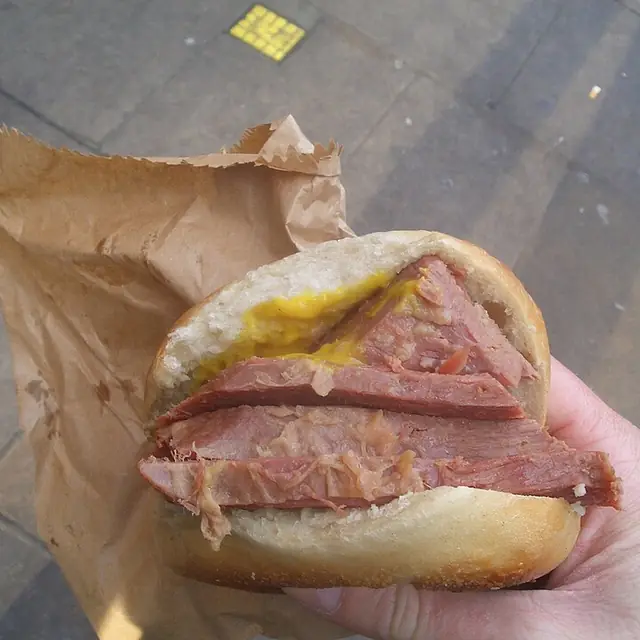
Brined and slow-cooked salt beef brisket, hand-sliced thick onto a boiled-and-baked bagel with English mustard and pickled cucumber. A Brick Lane lunch from a 24-hour counter since 1974.
Where: Beigel Bake, Reuben's, The Dusty Knuckle
Price: £6-12
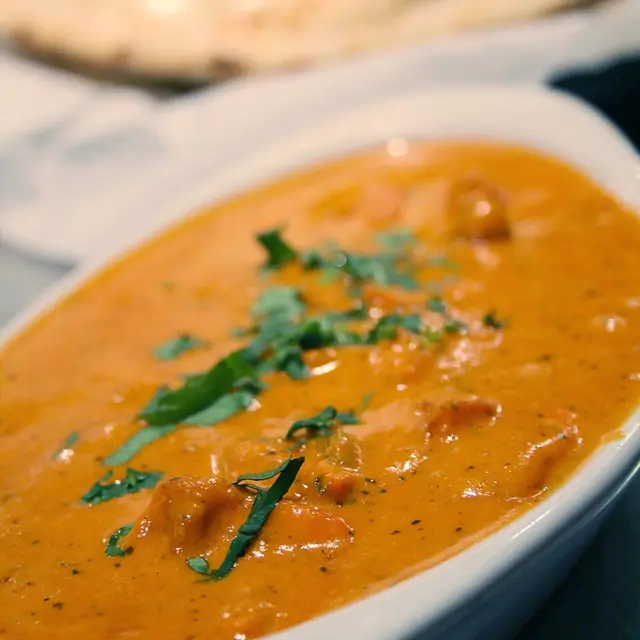
Marinated tandoor-roasted chicken in a creamy spiced tomato gravy with butter and fenugreek. Britain's most-ordered curry, claimed by London and Glasgow alike since the 1970s.
Where: Tayyabs, Dishoom Shoreditch, Gymkhana, Trishna, Gunpowder Spitalfields
Price: £12-22
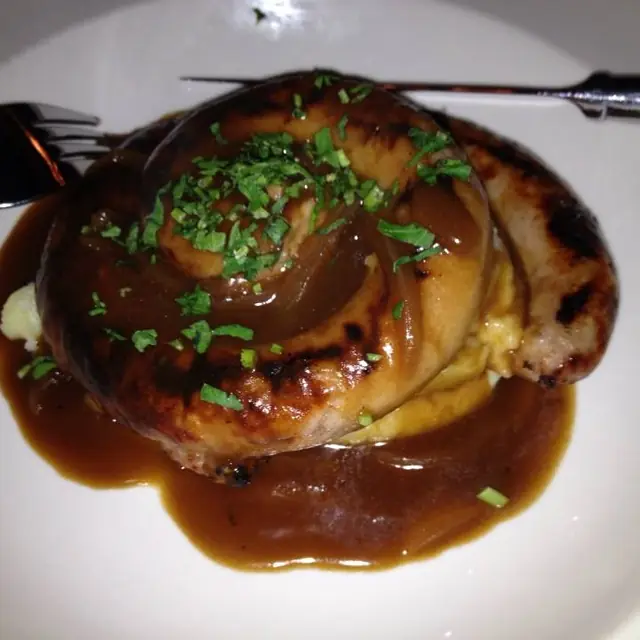
Pork sausages on buttery mashed potato with onion gravy. London's defining pub plate, eaten in gastropubs and chippies across the capital since the early twentieth century.
Where: The Eagle, Quality Chop House, The Camberwell Arms
Price: £12-18
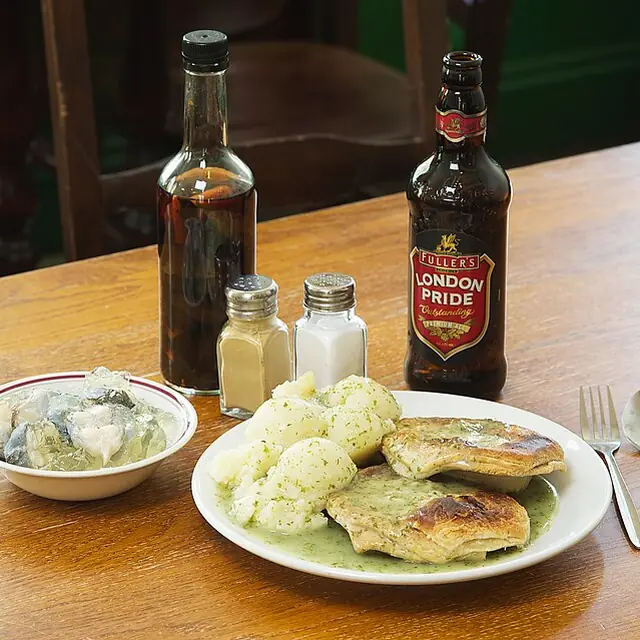
Minced beef pie with mashed potato and a green parsley liquor, the working-class East End plate served at heavy ceramic counters like Manze's on Tower Bridge Road continuously since 1902.
Where: The Eagle, Quality Chop House
Price: £5-9
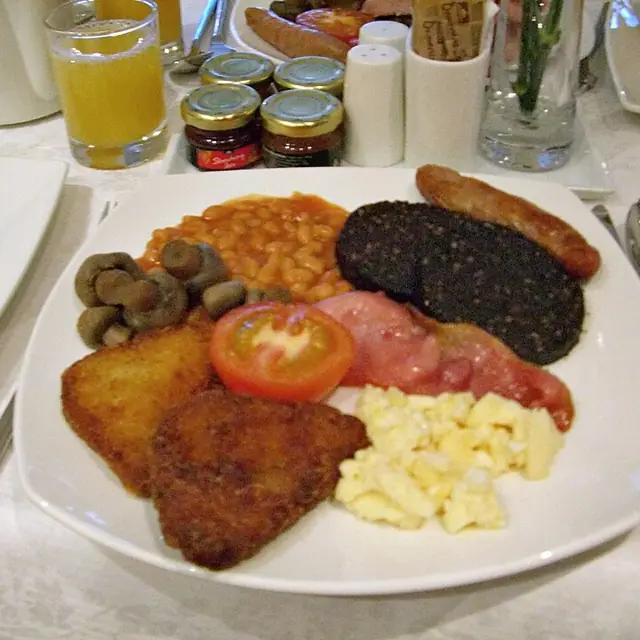
Bacon, sausage, fried egg, baked beans, grilled tomato, mushrooms, black pudding, fried bread or toast. London's defining hangover plate, served all day at greasy spoons and gastro brunch rooms since the 1800s.
Where: Regency Cafe, E Pellicci, Granger and Co Notting Hill, The Wolseley, The Breakfast Club Soho
Price: £8-22
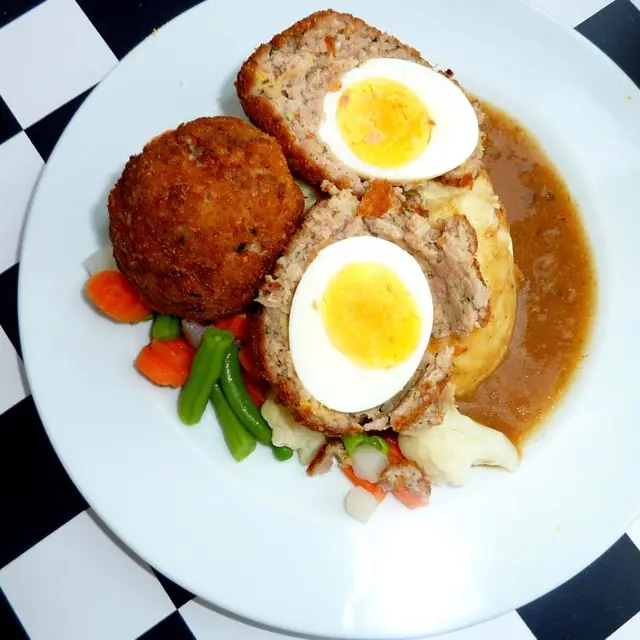
A soft-boiled egg wrapped in sausage meat, coated in breadcrumbs and deep-fried, served cold in pub windows or warm at the bar. London's defining bar snack since the 1730s.
Where: Fortnum and Mason, Quality Chop House, The Jugged Hare
Price: £4-12
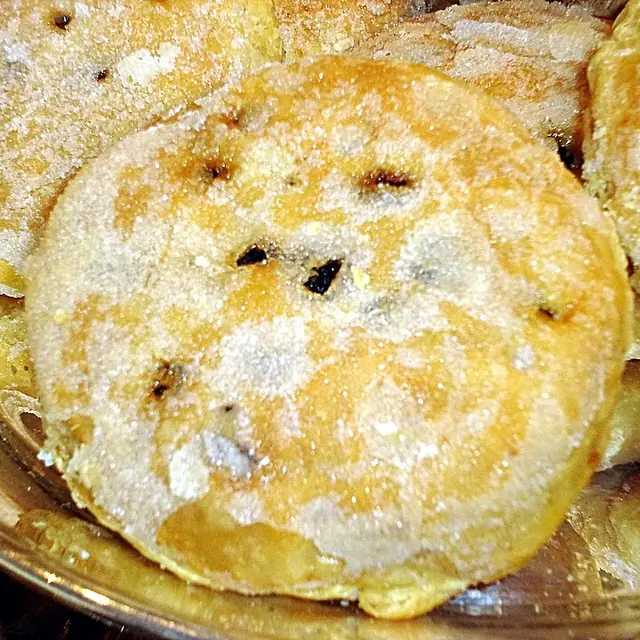
A small flaky-pastry round filled with currants, butter and brown sugar, topped with crystallised sugar. A classic British bake found at St John in Clerkenwell and bakery counters across London.
Where: St John, Quality Chop House, Toad Bakery
Price: £3-7
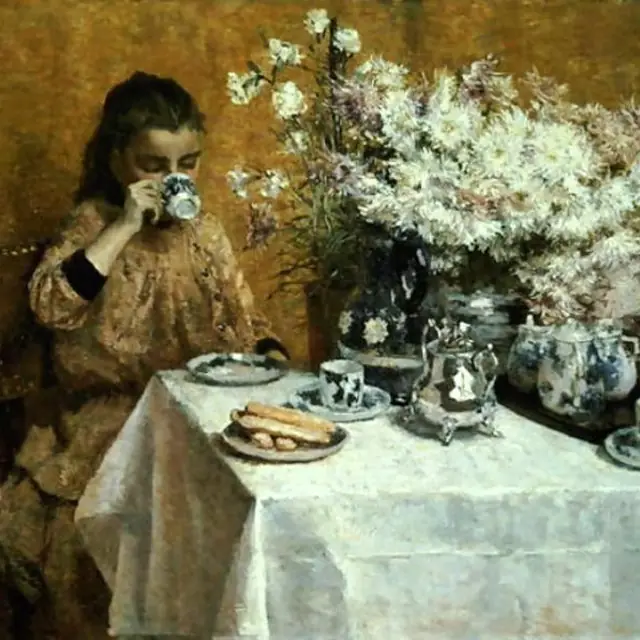
Finger sandwiches, warm scones with clotted cream and jam, and a tiered stand of cakes, with a pot of loose-leaf tea. A London hotel ritual since 1840.
Where: The Ritz, Fortnum and Mason, The Wolseley
Price: £70-120
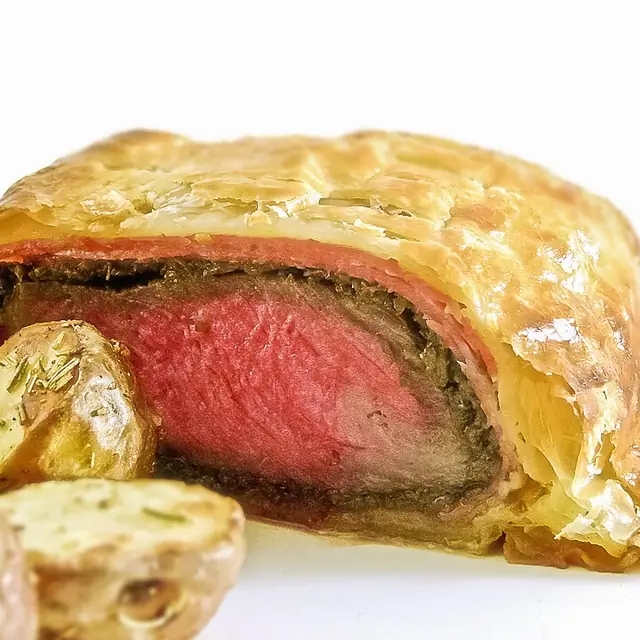
London Mayfair's special-occasion dish: a centre-cut fillet of beef seared and wrapped in mushroom duxelles and Parma ham, encased in puff pastry and baked until medium-rare with a crisp top.
Where: Restaurant Gordon Ramsay, Hide, Sketch
Price: £60-150
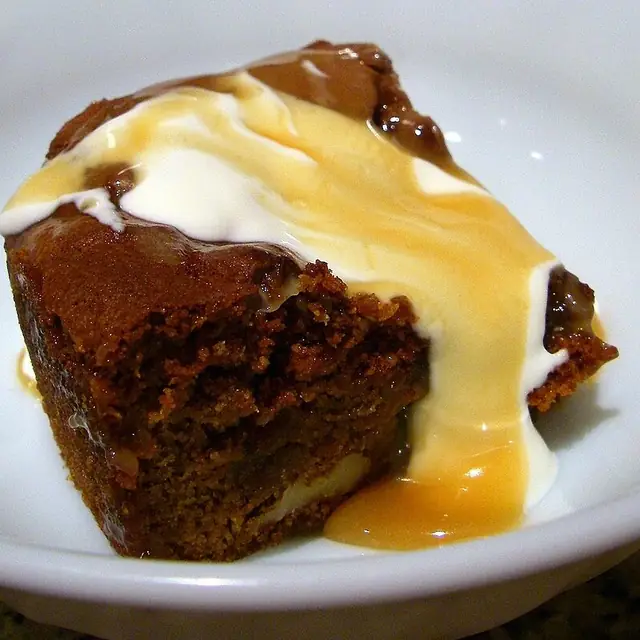
Britain's quintessential dessert: a dense date-and-treacle sponge cake, soaked in a butterscotch toffee sauce, served warm in a pool of more sauce with vanilla ice cream or a pour of double cream.
Where: The Eagle, The Camberwell Arms, Andrew Edmunds, The Ritz
Price: £8-14
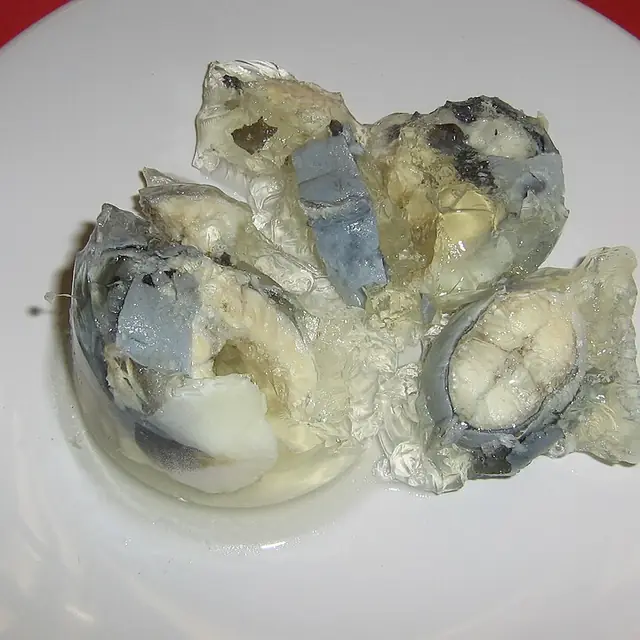
Chunks of freshwater eel boiled in spiced stock with vinegar and bay, then cooled until the bone collagen sets the broth into a wobbly savoury jelly. East End working-class classic.
Price: £4 to £8
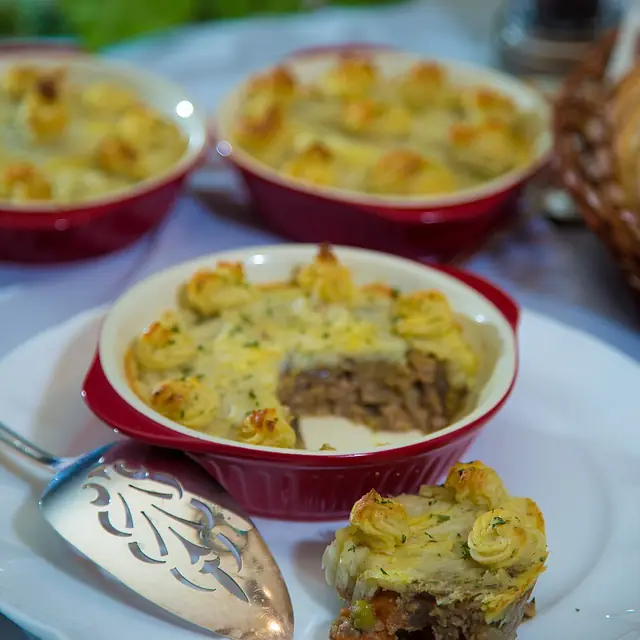
Minced lamb braised with onions, carrots and peas in rich gravy, topped with buttery mash fluffed with a fork to scorch in the oven. London pub Sunday-supper standard.
Where: Rules, The Wolseley, The French House, The Eagle, Andrew Edmunds, Quality Chop House
Price: £16 to £24
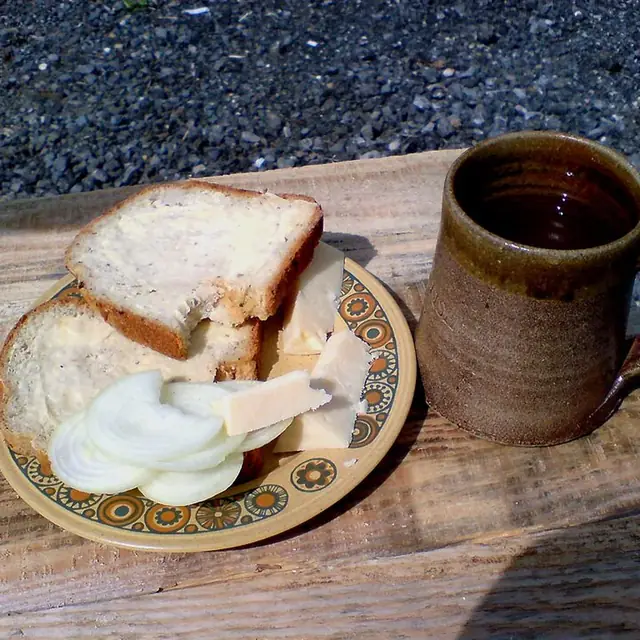
Pub plate of three cheeses (a hard, a blue, a soft), crusty bread, butter, Branston pickle, pickled onions, pork pie, an apple. Eaten cold with cask ale.
Where: The French House, Andrew Edmunds, The Eagle, The Jugged Hare, Rochelle Canteen, Quality Chop House
Price: £14 to £22
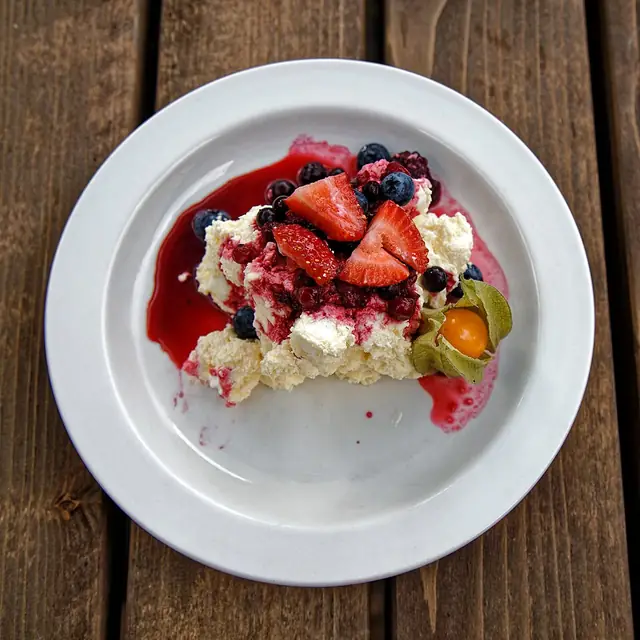
Whipped cream folded with crushed meringue and macerated strawberries until ragged. The British summer pudding: assembled in 5 minutes, eaten before the meringue softens.
Where: Rules, The Wolseley, Spring, The Ritz, Sketch, St John
Price: £8 to £14
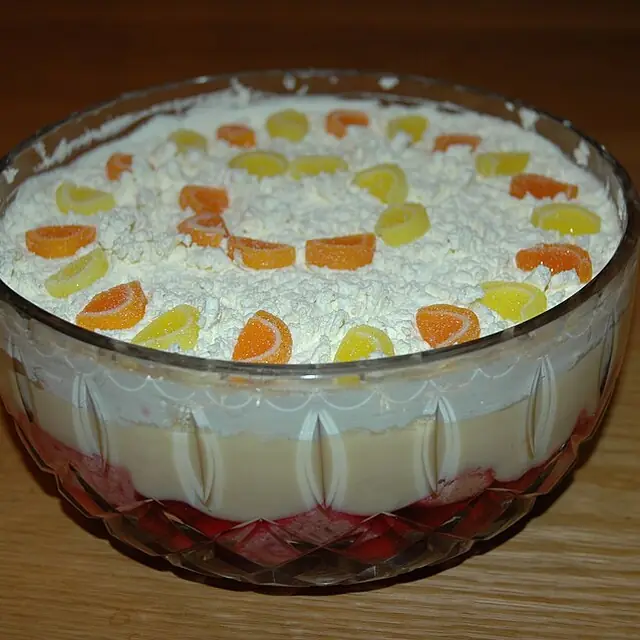
Layered glass bowl of sherry-soaked sponge, raspberry jam, vanilla custard, and whipped cream, topped with flaked almonds and glace cherries. The British Christmas-table classic.
Where: The Wolseley, Rules, St John, Quality Chop House, Quo Vadis, Sketch
Price: £8 to £14
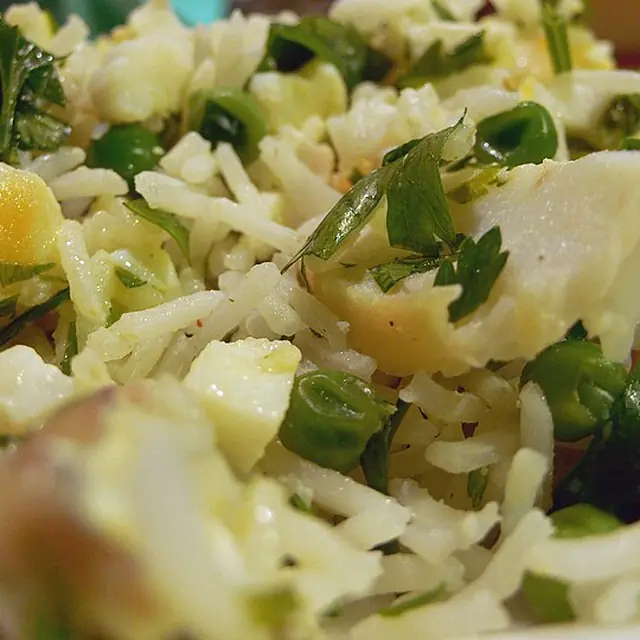
Smoked haddock flaked through curried basmati rice with hard-boiled eggs, parsley and butter. Victorian London's Anglo-Indian breakfast import: rich, mildly spiced, served at hotel breakfast buffets and weekend brunches.
Where: The Wolseley, Riding House Cafe
Price: £12 to £18
Sunday roast
The Sunday roast is a plate of roasted joint, Yorkshire pudding, roast potatoes, seasonal greens and gravy, eaten in London pubs on Sunday lunch. The capital's defining set-piece since the nineteenth century.
History: The roast joint of meat on Sunday traces to medieval landowner kitchens and church-day eating. Industrial London pubs codified the modern format in the late 1800s: a single sitting, often midday to mid-afternoon, with one carved meat, Yorkshire pudding, roast potatoes, parsnips, carrots, greens and a gravy made from the pan. The Eagle on Farringdon Road, opened in 1991, is usually credited as the first London gastropub to take the dish seriously as a kitchen-led plate rather than school-dinner fare. The form spread through Anchor and Hope, The Camberwell Arms, Quality Chop House and the modern pub crawl that defines London Sundays today.
Where to try it: The Eagle, The Camberwell Arms, Quality Chop House, Blacklock Soho, The Jugged Hare
Watch out for: Gluten, Dairy
Fish and chips
Battered white fish (cod or haddock) deep-fried with thick-cut chips, salt, malt vinegar and mushy peas. The defining British take-away dish, eaten in London since the 1860s.
History: Fried fish came to London with Sephardic Jewish settlers in the seventeenth century. Joseph Malin opened the first identifiable combined fish-and-chip shop in 1860 in Bow, east London, pairing the Jewish fried-fish tradition with the northern chipped potato. By 1910 there were 25,000 chip shops in Britain; London's surviving institutions include The Golden Hind on Marylebone Lane (1914), Poppies (Camden, Spitalfields, Soho) and the Sea Shell of Lisson Grove. The Friday-night fish-and-chips habit owes to Catholic and traditional working-class fasting customs that the chippy slotted into perfectly.
Where to try it: J Sheekey, Wright Brothers Borough
Watch out for: Gluten, Fish
Salt beef bagel
Brined and slow-cooked salt beef brisket, hand-sliced thick onto a boiled-and-baked bagel with English mustard and pickled cucumber. A Brick Lane lunch from a 24-hour counter since 1974.
History: Eastern European Jewish migrants brought the boiled-and-baked bagel and the brined-brisket tradition to Whitechapel and Spitalfields from the 1880s. The Beigel Bake on Brick Lane (1974) and the rival Beigel Shop next door (1855, the older of the two) sell the form that London adopted: dense hand-rolled bagel, hot pink salt beef sliced to order at the window, English mustard and pickled cucumber, cash and card, 24 hours. Cabbies, theatre staff and clubbers anchor the queue from midnight onwards. North London delis like Reuben's and Brass Rail in Selfridges sell the upmarket sit-down version.
Where to try it: Beigel Bake, Reuben's, The Dusty Knuckle
Watch out for: Gluten, Mustard
Chicken tikka masala
Marinated tandoor-roasted chicken in a creamy spiced tomato gravy with butter and fenugreek. Britain's most-ordered curry, claimed by London and Glasgow alike since the 1970s.
History: Chicken tikka masala is a British-Bengali invention of the late 1960s or early 1970s. Multiple Glasgow Pakistani chefs claim the dish (Ali Ahmed Aslam at Shish Mahal is most frequently named), and London's Brick Lane curry houses popularised it through the 1980s. Robin Cook, then Foreign Secretary, called it a 'true British national dish' in a 2001 speech. The dish marries north Indian tandoor cookery with a milder Anglo-Indian gravy: tomato puree, single cream, garam masala and dried fenugreek leaf. Brick Lane's Bengali-run curry houses (Aladin, Sheba) and the Tayyabs Pakistani tradition both still serve it; Dishoom and Gymkhana plate the modern restaurant versions.
Where to try it: Tayyabs, Dishoom Shoreditch, Gymkhana, Trishna, Gunpowder Spitalfields
Watch out for: Dairy
Bangers and mash
Pork sausages on buttery mashed potato with onion gravy. London's defining pub plate, eaten in gastropubs and chippies across the capital since the early twentieth century.
History: The bangers-and-mash name came from World War One British troops, when sausages with high water content tended to burst (bang) in the pan. The pairing of pork sausage and mashed potato is older, with London piesmiths and butchers selling versions on Fleet Street and Whitechapel from the 1800s. Gastropubs revived the dish from 1990 onwards: The Eagle on Farringdon Road, Mark Hix at the now-closed Le Caprice, and S&M Cafe (1992) made it a kitchen-led plate. The modern London version uses Cumberland, Toulouse or Lincolnshire pork sausages, finished with a deep onion gravy.
Where to try it: The Eagle, Quality Chop House, The Camberwell Arms
Watch out for: Gluten, Dairy
Pie and mash
Minced beef pie with mashed potato and a green parsley liquor, the working-class East End plate served at heavy ceramic counters like Manze's on Tower Bridge Road continuously since 1902.
History: Pie and mash shops opened in east and south London from the 1840s, serving cheap minced-beef pies with mash and a parsley liquor made from the cooking water of jellied eels. F. Cooke (1862), M. Manze (1902 at Tower Bridge Road) and Goddards in Greenwich kept the form unchanged through the twentieth century: heavy ceramic plates, a knife and fork, optional jellied eels on the side. The trade declined as Cockney London moved out post-war; the survivors (G. Kelly on Roman Road, F. Cooke in Hoxton, several Manze's branches) trade as heritage spots in 2026.
Where to try it: The Eagle, Quality Chop House
Watch out for: Gluten
Full English breakfast
Bacon, sausage, fried egg, baked beans, grilled tomato, mushrooms, black pudding, fried bread or toast. London's defining hangover plate, served all day at greasy spoons and gastro brunch rooms since the 1800s.
History: The full English derived from rural country-house breakfasts of the nineteenth century, codified by the Edwardian middle classes as a single plate to start the day. Mass production of bacon and sausage in the 1900s pushed it into working-class greasy spoons. The Regency Cafe (1946 on Regency Street, Westminster) and E Pellicci (1900 on Bethnal Green Road) still serve the canonical version: white plate, brown HP sauce, tea on the side. Modern London brunch rooms (Caravan, Granger and Co, Riding House) plate prettier takes; the survival of the form sits with the cafe institutions.
Where to try it: Regency Cafe, E Pellicci, Granger and Co Notting Hill, The Wolseley, The Breakfast Club Soho
Watch out for: Gluten, Egg
Scotch egg
A soft-boiled egg wrapped in sausage meat, coated in breadcrumbs and deep-fried, served cold in pub windows or warm at the bar. London's defining bar snack since the 1730s.
History: The Scotch egg is traditionally attributed to Fortnum and Mason on Piccadilly, who claim the form from around 1738 as a portable picnic snack for the wealthy. The modern London pub-snack revival started with Scott Hallsworth at The Eagle and was made canon by Tom Norrington-Davies at The Cow in Notting Hill, then perfected at The Harwood Arms in Fulham, which won a Michelin star partly on the strength of its venison Scotch egg. The orthodox London bar version has a soft-yolk egg, coarse pork sausage, panko crust, English mustard on the side.
Where to try it: Fortnum and Mason, Quality Chop House, The Jugged Hare
Watch out for: Gluten, Egg
Eccles cake
A small flaky-pastry round filled with currants, butter and brown sugar, topped with crystallised sugar. A classic British bake found at St John in Clerkenwell and bakery counters across London.
History: The Eccles cake is named for the town of Eccles in Greater Manchester, where James Birch began selling them commercially in 1793. London's enduring claim to the form comes from St John on St John Street (1994), where Fergus Henderson serves Eccles cake with Lancashire cheese as a counter-bakery and dessert plate. The St John recipe (flaky pastry, butter-soaked currants, demerara) is widely copied across modern British kitchens. Other London bakeries selling the orthodox form: Bea's of Bloomsbury, Lyle's, Toad Bakery.
Where to try it: St John, Quality Chop House, Toad Bakery
Watch out for: Gluten, Dairy
Afternoon tea
Finger sandwiches, warm scones with clotted cream and jam, and a tiered stand of cakes, with a pot of loose-leaf tea. A London hotel ritual since 1840.
History: Anna, the seventh Duchess of Bedford, is credited with inventing afternoon tea around 1840 to bridge the gap between lunch and a late dinner. The Ritz on Piccadilly began serving formal afternoon tea in 1906 in the Palm Court, and Brown's Hotel, Claridge's, The Savoy, Fortnum and Mason and The Lanesborough have served it continuously since the Edwardian era. The orthodox order: a pot of loose-leaf tea, three finger sandwiches (cucumber, smoked salmon, egg mayonnaise), warm scones with clotted cream and strawberry jam, a tiered stand of patisserie. Booking opens months ahead at the marquee rooms.
Where to try it: The Ritz, Fortnum and Mason, The Wolseley
Watch out for: Gluten, Dairy, Egg
Beef Wellington
London Mayfair's special-occasion dish: a centre-cut fillet of beef seared and wrapped in mushroom duxelles and Parma ham, encased in puff pastry and baked until medium-rare with a crisp top.
History: Beef Wellington's origin is disputed: most credibly it derives from late 19th-century French filet de boeuf en croute, anglicised in some accounts by celebrating Wellington's victory at Waterloo in 1815. The modern London Mayfair version codified through the 20th century at the Savoy and Connaught hotels, and became the defining dish of Restaurant Gordon Ramsay (3-star) on Royal Hospital Road, which he opened in 1998. The Ramsay version popularised the modern duxelles-and-Parma-ham wrap; the Hawksmoor steakhouses run a more casual version.
Where to try it: Restaurant Gordon Ramsay, Hide, Sketch
Watch out for: Gluten, Dairy, Egg
Sticky Toffee Pudding
Britain's quintessential dessert: a dense date-and-treacle sponge cake, soaked in a butterscotch toffee sauce, served warm in a pool of more sauce with vanilla ice cream or a pour of double cream.
History: Sticky toffee pudding has disputed Northern English origins, with Sharrow Bay Country House Hotel in Cumbria claiming the modern recipe (chef Francis Coulson, 1970s) and several Lake District establishments contesting. The dish became a London restaurant fixture through the 1980s and 1990s; today it appears on virtually every British gastropub menu. The defining elements are the chopped dates, the treacle or molasses for depth, the toffee sauce from butter and brown sugar, and the warm-serve-with-cream finish. The Wolseley and St. John run benchmark versions.
Where to try it: The Eagle, The Camberwell Arms, Andrew Edmunds, The Ritz
Watch out for: Gluten, Dairy, Egg
Jellied eels
Chunks of freshwater eel boiled in spiced stock with vinegar and bay, then cooled until the bone collagen sets the broth into a wobbly savoury jelly. East End working-class classic.
History: Jellied eels emerged in the 18th-century East End when the Thames teemed with eels and the city's poor needed cheap protein; nets were set as far inland as London Bridge. By the 1850s, pie-and-mash shops paired stewed eels (in liquor sauce) with jellied eels (cold, set), and the dish became inseparable from cockney identity. M. Manze on Tower Bridge Road (1902) is the oldest surviving pie-and-mash and jellied-eel shop in continuous trade. Modern Thames eels are protected; today's eels are imported from the Netherlands, but the dish itself remains a London icon.
Watch out for: Fish
Shepherd's pie
Minced lamb braised with onions, carrots and peas in rich gravy, topped with buttery mash fluffed with a fork to scorch in the oven. London pub Sunday-supper standard.
History: Shepherd's pie (lamb) and cottage pie (beef) both emerged in the late 18th century in northern Britain as a way to repackage Sunday-roast leftovers; cottage pie is the older of the two (1791 in print), shepherd's pie (1854) gained its lamb-specific name when sheep farming dominated certain regions. London adopted both as pub-grub mainstays in the Victorian era; today the lamb version is on most traditional British pub menus across the city. The crisp, fork-scored mash top is the defining textural feature; without it, it's just stew with potato on top.
Where to try it: Rules, The Wolseley, The French House, The Eagle, Andrew Edmunds, Quality Chop House
Watch out for: Gluten, Dairy
Ploughman's lunch
Pub plate of three cheeses (a hard, a blue, a soft), crusty bread, butter, Branston pickle, pickled onions, pork pie, an apple. Eaten cold with cask ale.
History: While bread-cheese-pickle lunches have been farmworker's fare for centuries, the formal ploughman's lunch as a named pub dish was a 1950s invention of the English Country Cheese Council, who promoted it to drive cheese sales after the end of WWII rationing in 1954. By the 1960s every pub in the country had it on the menu, and London's Victorian pubs adopted it as the signature cold lunch option. The modern London ploughman's leans heavily into artisan British cheeses (Stichelton, Cornish Yarg, Stilton, Westcombe Cheddar) and small-producer pickles; pubs like The French House and Andrew Edmunds keep the format alive.
Where to try it: The French House, Andrew Edmunds, The Eagle, The Jugged Hare, Rochelle Canteen, Quality Chop House
Watch out for: Gluten, Dairy, Egg
Eton mess
Whipped cream folded with crushed meringue and macerated strawberries until ragged. The British summer pudding: assembled in 5 minutes, eaten before the meringue softens.
History: Eton mess first appeared in print in 1893 as the dessert served at the annual Eton vs Harrow cricket match, then a major fixture of the London Season. The original 1930s version used strawberries or bananas with ice cream or cream; the meringue addition came later in the 1950s. London's clubs and Wimbledon kept the dish alive as a quintessential summer dessert, and modern London restaurants from Rules to Spring serve seasonal versions through June and July when British strawberries (Cambridge Favourite, Wimbledon Favourite, Hapil) are at peak.
Where to try it: Rules, The Wolseley, Spring, The Ritz, Sketch, St John
Watch out for: Dairy, Egg
Trifle
Layered glass bowl of sherry-soaked sponge, raspberry jam, vanilla custard, and whipped cream, topped with flaked almonds and glace cherries. The British Christmas-table classic.
History: Trifle dates to the 16th century in England as a simple cream-and-rosewater dessert; the layered modern form with sherry-soaked sponge and custard emerged in the 18th century in Hannah Glasse's 1747 The Art of Cookery. By Victorian London, trifle was the show-off centrepiece of any Christmas or formal dinner, served in a cut-glass footed bowl. The dish remains a Christmas Day or Boxing Day institution in British households; London restaurants from The Wolseley to Quality Chop House feature seasonal trifle (rhubarb in spring, raspberry in summer, sloe-gin and blackberry in autumn).
Where to try it: The Wolseley, Rules, St John, Quality Chop House, Quo Vadis, Sketch
Watch out for: Gluten, Egg, Dairy, Nuts
Kedgeree
Smoked haddock flaked through curried basmati rice with hard-boiled eggs, parsley and butter. Victorian London's Anglo-Indian breakfast import: rich, mildly spiced, served at hotel breakfast buffets and weekend brunches.
History: Kedgeree descends from khichdi, the South Asian one-pot rice and lentil dish, which arrived in 17th-century English households through East India Company traders. The fish addition is credited to Eliza Acton's 1845 recipe and likely emerged when Scottish smoked haddock (finnan haddie) became fashionable in southern England in the early 1800s. By the late Victorian era, kedgeree was the canonical breakfast in country-house and London hotel breakfast buffets, served alongside kippers and devilled kidneys. The Wolseley still offers it daily; St John keeps the dish in the modernist British canon. Smoked haddock is non-negotiable; the dish without it becomes plain spiced rice.
Where to try it: The Wolseley, Riding House Cafe
Watch out for: Fish, Egg, Dairy


