Signature dishes
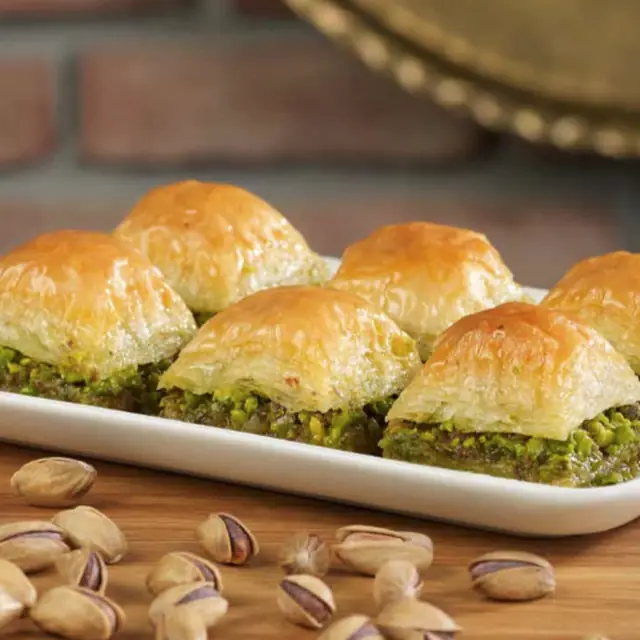
Forty or more layers of hand-rolled dough, clarified butter and crushed green Antep pistachio, baked and syruped so the top shatters and the base stays crisp rather than wet.
Where: Koçak Baklava, İmam Çağdaş, Baklavacı Zeki İnal, Çelebioğulları Baklava, Tarihi Elmacıpazarı Güllüoğlu
Price: ₺500-900 per kilo
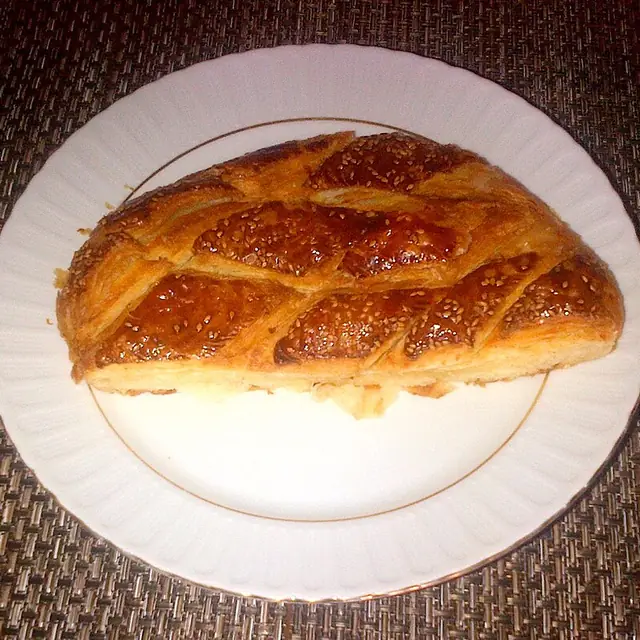
A single sheet of dough thrown until it is almost transparent, folded around clotted cream and green pistachio, then baked flat in a stone oven and cut into squares while it is still molten.
Where: Katmerci Zekeriya Usta, Metanet Katmer, Beyoğlu Katmercim, Katmerci Murat
Price: ₺180-350
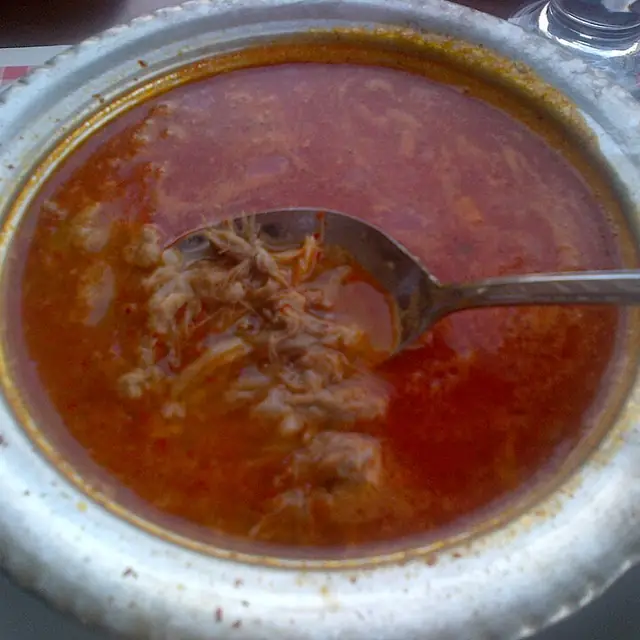
Shredded lamb neck and rice in a garlic and pepper broth built on marrow bones, ladled over the top so it is served scalding. This is the Gaziantep breakfast that starts before dawn.
Where: Metanet Lokantası, Sakıp Usta Paça Beyran Kebap, Yesemek Gaziantep Mutfağı
Price: ₺200-320
A thin flatbread topped with minced lamb, tomato, parsley and isot, fired hot and fast so the edges blister. The Antep version is thinner and spicier than the Urfa one and is eaten rolled.
Where: Üçler Kebap Lahmacun, İmam Çağdaş, Özcanlar Pide & Lahmacun Fırını
Price: ₺80-150 per piece
Aubergine charred over flame, peeled and beaten into garlic yoghurt, then topped with cubed or minced lamb cooked in butter. Smoke, sourness and fat in one plate, and Gaziantep claims it.
Where: İmam Çağdaş, Ali Usta Kebap ve Baklava, Yesemek Gaziantep Mutfağı
Price: ₺400-650
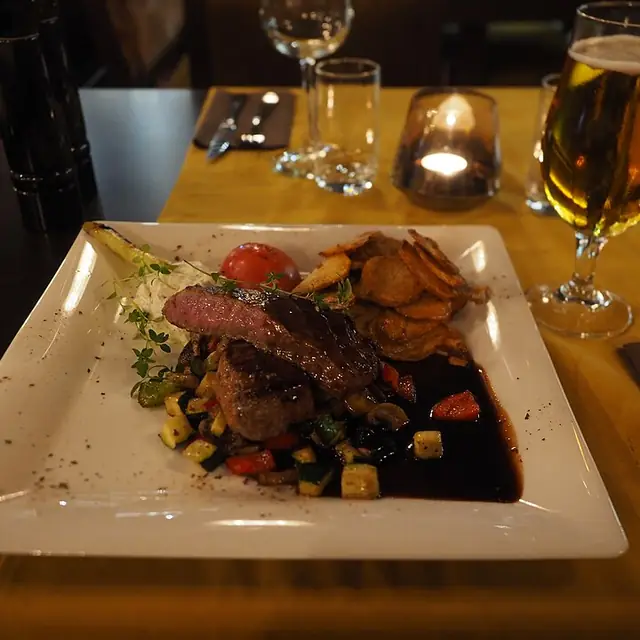
Unmarinated lamb tenderloin, cut into small cubes and grilled fast over charcoal with nothing but salt. It is the most expensive kebab in Gaziantep because there is very little of it per animal.
Where: Kebapçı Halil Usta, Küşlemeci Mehmet Usta, Bayazhan, Çulcuoğlu Et Lokantası
Price: ₺700-1200
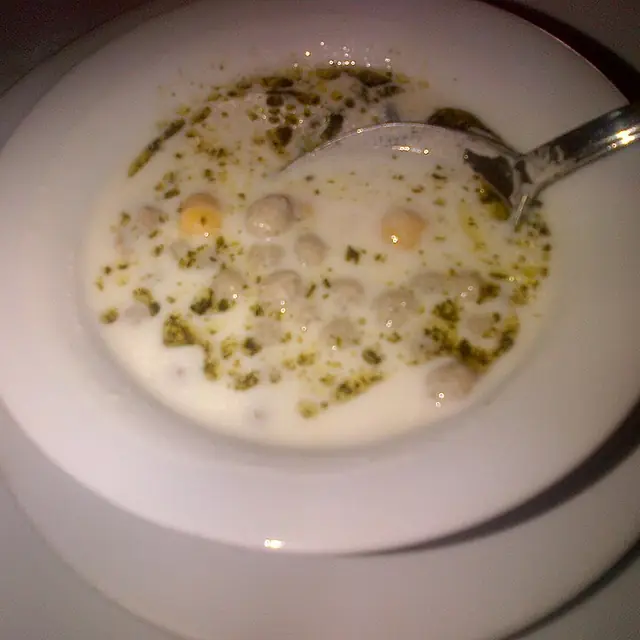
Tiny rice and meat balls the size of a fingernail, cooked with chickpeas in a warm yoghurt soup finished with dried mint butter. It is the feast dish of Gaziantep, made for Eid mornings.
Where: Yesemek Gaziantep Mutfağı, Hışvahan, Evirgeç Mantı Evi
Price: ₺250-400
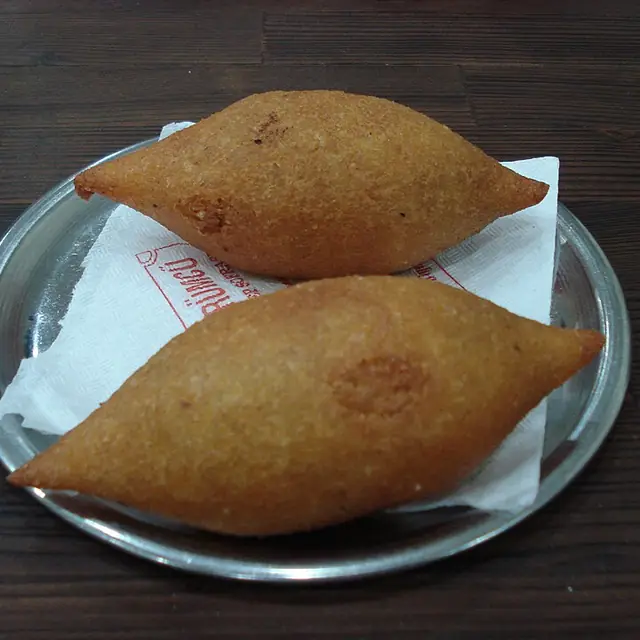
A bulgur shell moulded thin around spiced lamb and walnut, then fried or boiled. In Gaziantep the shell is worked so fine that the filling shows through when you cut it open.
Where: Çulcuoğlu Et Lokantası, Evirgeç Mantı Evi
Price: ₺250-400
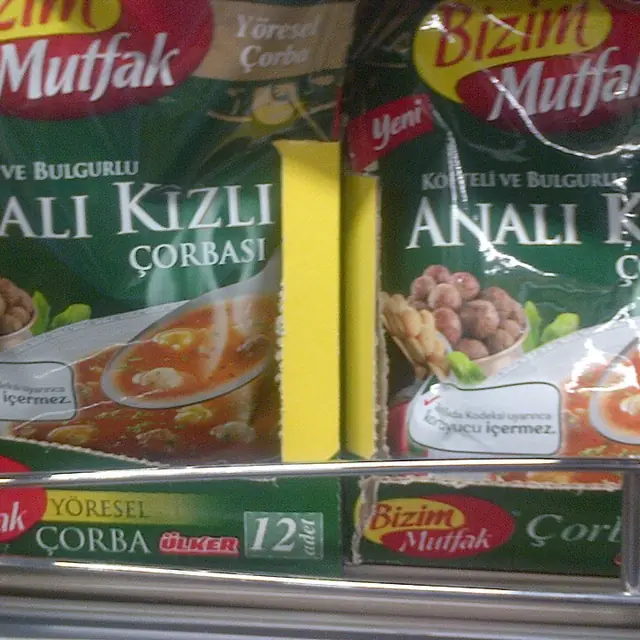
A yoghurt and chickpea soup holding two sizes of dumpling: large stuffed ones and small plain ones, the mother and the daughter that give the dish its name.
Where: Hışvahan, Yesemek Gaziantep Mutfağı
Price: ₺250-400
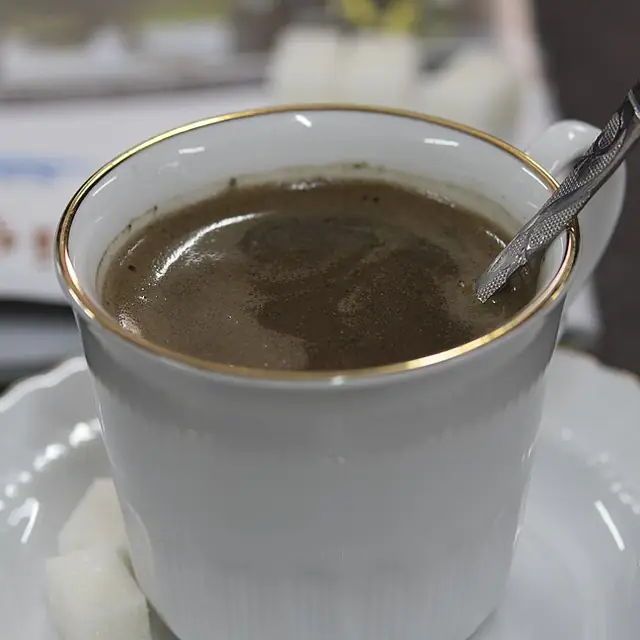
A coffee with no coffee in it: wild terebinth berries roasted and ground to a paste, then brewed with milk into something between hazelnut, chocolate and pistachio.
Where: Tarihi Tahmis Kahvesi
Price: ₺80-150
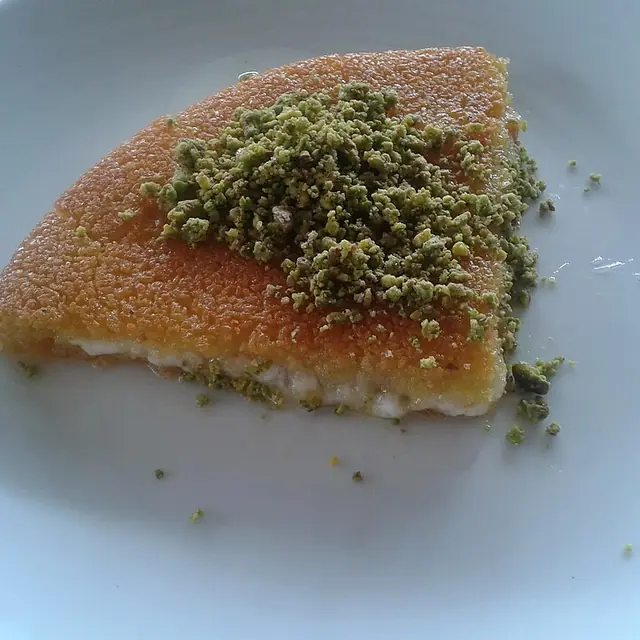
Shredded kadayıf pastry packed above and below a layer of unsalted stretching cheese, baked or fired over charcoal until the outside is bronzed, then soaked in syrup and buried in pistachio.
Where: Künefe Han, Cumba Künefe, Erçelebi Kömürde Kadayıf
Price: ₺200-350
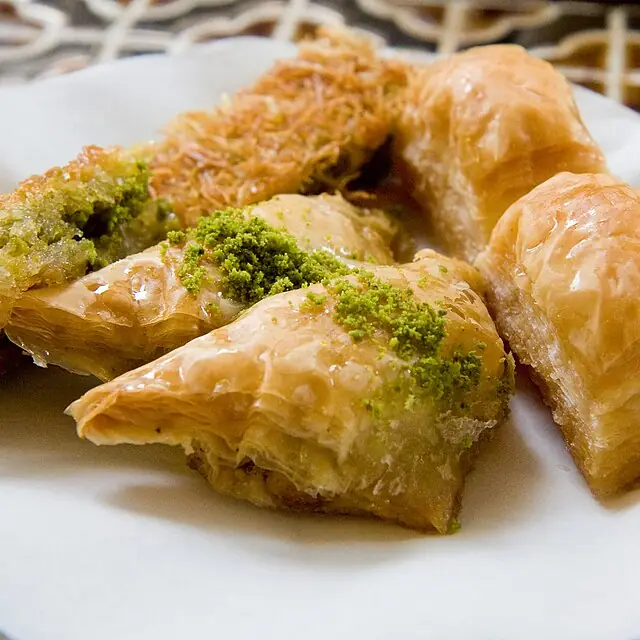
A triangle of baklava pastry with clotted cream folded in beside the pistachio, so it eats richer and softer than a standard slice and has a much shorter shelf life.
Where: Baklavacı Zeki İnal, Çelebioğulları Baklava, Koçak Baklava
Price: ₺600-1000 per kilo
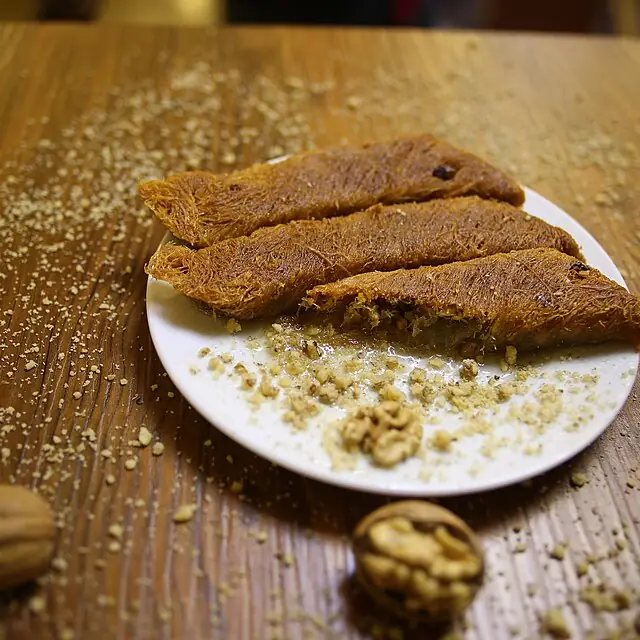
Shredded kadayıf wrapped tightly around a log of crushed pistachio, baked and then syruped, cut into short lengths that show a dense green core.
Where: Yusuf Ziya Fıstıklı Burma Kadayıfları, İmamoğlu Baklava
Price: ₺600-1000 per kilo
Small lamb dumplings served under garlic yoghurt and paprika butter. The Antep version is boiled rather than baked and comes in a lighter, wetter bowl than the Kayseri original.
Where: Evirgeç Mantı Evi, Yesemek Gaziantep Mutfağı
Price: ₺180-300
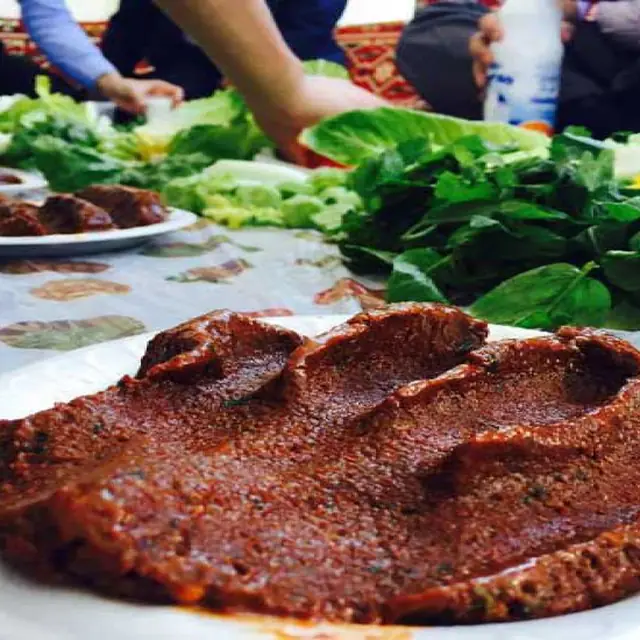
Fine bulgur kneaded for an hour with isot, pepper paste and spice until it turns dark and sticky, then served cold in lettuce or rolled into a wrap. Now made without meat by law.
Where: Çiğ Köfteci Yuşa Usta, Çulcuoğlu Et Lokantası
Price: ₺70-150
Antep fıstıklı baklava
Forty or more layers of hand-rolled dough, clarified butter and crushed green Antep pistachio, baked and syruped so the top shatters and the base stays crisp rather than wet.
History: Baklava in Gaziantep is a protected product: the European Commission registered Antep baklavası with a protected geographical indication, and the city counts roughly 180 workshops making it. The commercial line starts in 1871, when Mehmet and Güllü Çelebi came home from a journey that took them through Damascus and opened a small baklava shop on Uzun Çarşı with their son Mahmut. Kuru baklava, a drier version engineered to survive travel, is how the city's pastry later reached Istanbul and then everywhere else. The signature variants split from there: şöbiyet with clotted cream folded in, dolama rolled tight, midye shaped like a mussel, bülbül yuvası coiled into a nest.
Where to try it: Koçak Baklava, İmam Çağdaş, Baklavacı Zeki İnal, Çelebioğulları Baklava, Tarihi Elmacıpazarı Güllüoğlu
Watch out for: Gluten, Nuts, Dairy
Katmer
A single sheet of dough thrown until it is almost transparent, folded around clotted cream and green pistachio, then baked flat in a stone oven and cut into squares while it is still molten.
History: Katmer is a breakfast course in Gaziantep, not a dessert, and the counters that make it open at five or six in the morning and close before lunch. The dough is stretched by hand over a marble slab until light passes through it, which is why the shops build their windows around the counter: watching the throw is part of the sale. The filling is kaymak, the thick clotted cream of the region, and the pistachio is used raw and ground so it keeps its colour. Tradition also ties katmer to weddings, where it is served to the couple on the first morning.
Where to try it: Katmerci Zekeriya Usta, Metanet Katmer, Beyoğlu Katmercim, Katmerci Murat
Watch out for: Gluten, Nuts, Dairy
Beyran çorbası
Shredded lamb neck and rice in a garlic and pepper broth built on marrow bones, ladled over the top so it is served scalding. This is the Gaziantep breakfast that starts before dawn.
History: Beyran is the reason the bazaar counters of Gaziantep open at five in the morning. The broth takes ten to thirteen hours, meat and marrowbones simmered overnight so the lamb pulls apart, and each bowl is finished to order with rice, garlic and hot pepper paste. Metanet Lokantası, trading since 1975 and still run by Mustafa Hasırcı, is the address most closely tied to it, and the kitchen sells until the pot is empty rather than until a closing time. Locals eat it as a first meal and treat mid-morning as late. The dish has since travelled across Türkiye, but the early start has not travelled with it.
Where to try it: Metanet Lokantası, Sakıp Usta Paça Beyran Kebap, Yesemek Gaziantep Mutfağı
Antep usulü lahmacun
A thin flatbread topped with minced lamb, tomato, parsley and isot, fired hot and fast so the edges blister. The Antep version is thinner and spicier than the Urfa one and is eaten rolled.
History: Gaziantep counts around twenty kinds of lahmacun, and the local argument with Şanlıurfa is about thickness and heat. The Antep version rolls the dough thinner, uses more isot in the mince and takes less time in the oven, so it comes out crisp rather than pliable. It is street food and a starter rather than a meal: kebab houses send lahmacun out free while the grill works, and dedicated bakeries sell it by the piece to be eaten standing. The mince is traditionally hand-chopped with tail fat rather than machine-ground, which is what keeps it juicy on such a thin base.
Where to try it: Üçler Kebap Lahmacun, İmam Çağdaş, Özcanlar Pide & Lahmacun Fırını
Watch out for: Gluten
Ali Nazik kebabı
Aubergine charred over flame, peeled and beaten into garlic yoghurt, then topped with cubed or minced lamb cooked in butter. Smoke, sourness and fat in one plate, and Gaziantep claims it.
History: Ali Nazik is the dish most often used to introduce Gaziantep cooking abroad, and the city treats it as its own. The name is usually traced to an Ottoman court visit and a compliment paid to the cook, though the versions of that story do not agree on the detail. What is consistent is the method: the aubergine is burned directly on charcoal until the skin collapses, then peeled while hot and worked into thick yoghurt with raw garlic so it stays warm and loose. The lamb goes on last with butter and pepper. Every kebab house in the city serves it, and the differences are in how much garlic and how much smoke.
Where to try it: İmam Çağdaş, Ali Usta Kebap ve Baklava, Yesemek Gaziantep Mutfağı
Watch out for: Dairy
Küşleme
Unmarinated lamb tenderloin, cut into small cubes and grilled fast over charcoal with nothing but salt. It is the most expensive kebab in Gaziantep because there is very little of it per animal.
History: Küşleme is Gaziantep's status kebab. It uses only the tenderloin, so a whole lamb yields a couple of portions and the daily allocation runs out well before closing time. No marinade is used, because the point is the meat: the cubes are threaded tight, salted and grilled over hot charcoal for a few minutes only. Kebapçı Halil Usta and Küşlemeci Mehmet Usta both built single-dish businesses on it, and both shut once the day's supply is gone. It is served with grilled peppers, flatbread and yayık ayran, the churned buttermilk drink that cuts the fat.
Where to try it: Kebapçı Halil Usta, Küşlemeci Mehmet Usta, Bayazhan, Çulcuoğlu Et Lokantası
Yuvalama
Tiny rice and meat balls the size of a fingernail, cooked with chickpeas in a warm yoghurt soup finished with dried mint butter. It is the feast dish of Gaziantep, made for Eid mornings.
History: Yuvalama is a labour dish. The balls are rolled by hand from a paste of soaked rice and minced lamb, each one no bigger than a chickpea, which is why it appears at festivals and family gatherings rather than on a weekday. The base is yoghurt stabilised with egg and starch so it can be heated without splitting, and chickpeas and shredded lamb go in alongside the rolled balls. It is finished with butter and dried mint. Gaziantep families traditionally eat it on the first morning of Kurban Bayramı, and restaurants that cook it are signalling that they do regional home food, not just kebab.
Where to try it: Yesemek Gaziantep Mutfağı, Hışvahan, Evirgeç Mantı Evi
Watch out for: Dairy, Eggs
İçli köfte
A bulgur shell moulded thin around spiced lamb and walnut, then fried or boiled. In Gaziantep the shell is worked so fine that the filling shows through when you cut it open.
History: İçli köfte is made across the southeast, but Gaziantep judges it on the thinness of the shell. Fine bulgur is kneaded with semolina and water until it becomes plastic enough to shape over one finger, and the wall is worked down almost to translucency before the filling goes in. That filling is minced lamb cooked with onion, pepper paste and, in the Antep version, plenty of walnut. The shaped köfte are then deep fried until the shell blisters. Çulcuoğlu is known for a version with a crisp outside and a heavy walnut middle, and home cooks still make them in batches for freezing.
Where to try it: Çulcuoğlu Et Lokantası, Evirgeç Mantı Evi
Watch out for: Gluten, Nuts
Analı kızlı
A yoghurt and chickpea soup holding two sizes of dumpling: large stuffed ones and small plain ones, the mother and the daughter that give the dish its name.
History: Analı kızlı translates as with mother and daughter, and the name describes the bowl rather than any legend: the large stuffed bulgur dumplings are the mothers, the small unstuffed ones the daughters. It belongs to the same family of yoghurt-based Gaziantep soups as yuvalama, and it is similarly a dish of occasions rather than a weekday plate. The stuffed dumplings carry minced lamb and walnut, the small ones are plain bulgur, and both go into a broth thickened with yoghurt and chickpeas. Hışvahan is one of the restaurants that keeps it on a permanent menu rather than making it only for feasts.
Where to try it: Hışvahan, Yesemek Gaziantep Mutfağı
Watch out for: Gluten, Dairy, Nuts
Menengiç kahvesi
A coffee with no coffee in it: wild terebinth berries roasted and ground to a paste, then brewed with milk into something between hazelnut, chocolate and pistachio.
History: Menengiç is the fruit of the wild terebinth that grows across the Antep plateau, and the drink made from it predates and outlasts every coffee shortage the region has seen. The berries are roasted then ground until they release their own oil and form a paste, which is why menengiç is sold in jars rather than as a loose powder. It is brewed with milk rather than water, and it comes out thick, nutty and only faintly bitter. Tahmis Kahvesi, trading beside the grain market since 1635, is the address most associated with it, and it still sells the paste across the counter alongside dibek coffee ground by mallet.
Where to try it: Tarihi Tahmis Kahvesi
Watch out for: Nuts, Dairy
Künefe
Shredded kadayıf pastry packed above and below a layer of unsalted stretching cheese, baked or fired over charcoal until the outside is bronzed, then soaked in syrup and buried in pistachio.
History: Künefe belongs to the wider Levantine belt and Hatay claims the loudest version, but Gaziantep makes it its own with the pistachio and with the charcoal. Dessert rooms across Şehitkamil fire individual copper trays to order rather than reheating a large tray, so the cheese is still pulling when it reaches the table. It is eaten late: the künefe rooms of Pancarlı and Sarıgüllük run to one or two in the morning and treat the after-dinner crowd as their main service. Erçelebi finishes its kadayıf over coals, which gives a smokier edge than an oven ever does.
Where to try it: Künefe Han, Cumba Künefe, Erçelebi Kömürde Kadayıf
Watch out for: Gluten, Dairy, Nuts
Şöbiyet
A triangle of baklava pastry with clotted cream folded in beside the pistachio, so it eats richer and softer than a standard slice and has a much shorter shelf life.
History: Şöbiyet is the variant Gaziantep bakers use to show off, because kaymak inside a syruped pastry is unstable and has to be sold the same day. It is a twentieth-century refinement rather than an old form, and it has become the default request at every counter in the city. Baklavacı Zeki İnal, a family shop on Atatürk Bulvarı, makes it by hand in small batches and routinely sells out before midday, which is the clearest signal of how the city ranks it. Ordering a mixed tray without at least one şöbiyet is considered a beginner's mistake.
Where to try it: Baklavacı Zeki İnal, Çelebioğulları Baklava, Koçak Baklava
Watch out for: Gluten, Nuts, Dairy
Fıstıklı burma kadayıf
Shredded kadayıf wrapped tightly around a log of crushed pistachio, baked and then syruped, cut into short lengths that show a dense green core.
History: Burma means twisted, and the technique is the whole dish: the shredded pastry is wound around a rod with the pistachio inside, then compressed so the finished roll holds its shape when sliced. It is a Gaziantep speciality that the big baklava houses treat as a sideline and that a few shops treat as their entire business. Yusuf Ziya, working out of a han on Suburcu Caddesi, is the clearest example, selling little else from the window. Because the pistachio is packed rather than scattered, burma carries more nut per bite than any other pastry in the city, and it needs less syrup to work.
Where to try it: Yusuf Ziya Fıstıklı Burma Kadayıfları, İmamoğlu Baklava
Watch out for: Gluten, Nuts, Dairy
Antep mantısı
Small lamb dumplings served under garlic yoghurt and paprika butter. The Antep version is boiled rather than baked and comes in a lighter, wetter bowl than the Kayseri original.
History: Mantı is not exclusive to Gaziantep, but the local version has its own shape and service: smaller parcels, a looser garlic yoghurt and a butter finish carrying hot pepper rather than dried mint alone. It is home food more than restaurant food, which is why the places that serve it well in the city are the ev yemekleri rooms rather than the kebab houses. Evirgeç on Atatürk Bulvarı is the address locals name, and its kitchen pinches the dumplings by hand. Sumac and dried mint go on at the table, and the bowl is eaten with a spoon rather than a fork.
Where to try it: Evirgeç Mantı Evi, Yesemek Gaziantep Mutfağı
Watch out for: Gluten, Dairy, Eggs
Çiğ köfte
Fine bulgur kneaded for an hour with isot, pepper paste and spice until it turns dark and sticky, then served cold in lettuce or rolled into a wrap. Now made without meat by law.
History: Çiğ köfte was originally raw lamb worked into bulgur, and the kneading, which can take an hour, is what breaks the grain down. Turkish food regulations ended the commercial raw-meat version, so every çiğ köfte sold across a counter in Gaziantep today is meat-free, built on bulgur, isot, pepper and tomato paste alone. That has made it one of the few genuinely vegan street foods in a city built on lamb. The bulgur is squeezed in the fist so each piece keeps the finger marks, and it is eaten cold with lemon, lettuce and pomegranate molasses.
Where to try it: Çiğ Köfteci Yuşa Usta, Çulcuoğlu Et Lokantası
Watch out for: Gluten


