Signature dishes
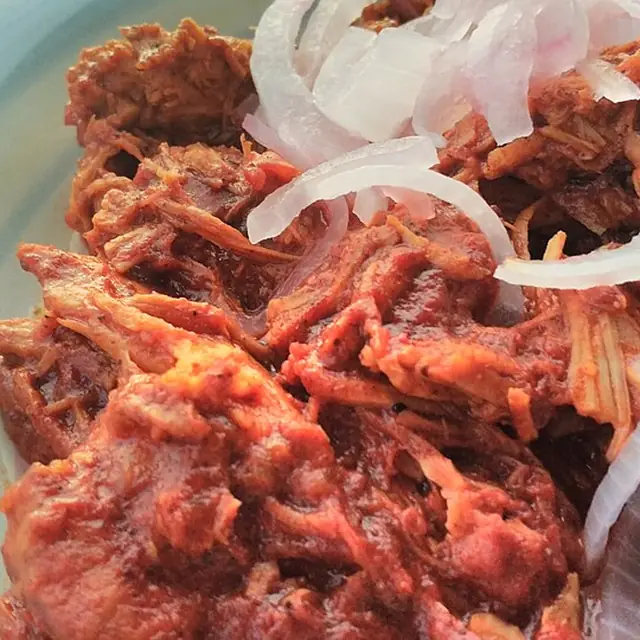
Cochinita pibil is pork marinated in bitter orange and achiote, wrapped in banana leaf and slow-roasted until it falls apart, then piled into tacos and tortas with pickled red onion and habanero.
Where: El Tatich, Mercado 23 fondas, TUCH Cantina Yucateca Huayacán
Price: About US$2-3 a plate at the Mercado 23 fondas
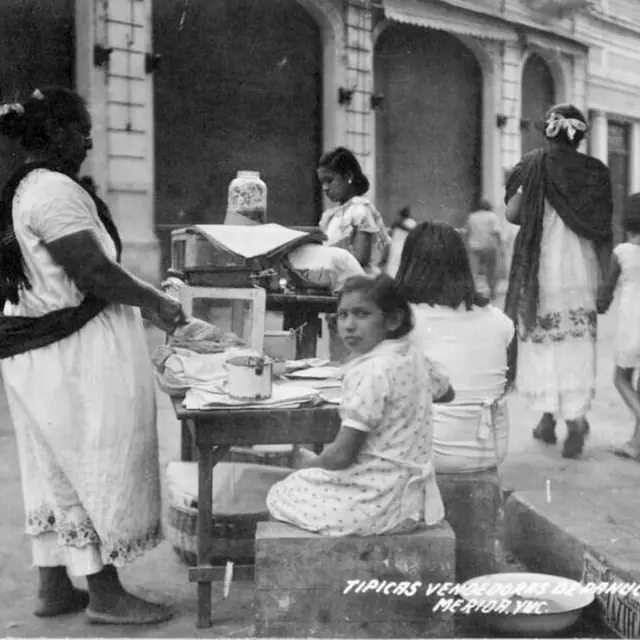
Panuchos are small corn tortillas stuffed with black beans and fried, then topped with shredded turkey or chicken, lettuce or cabbage, tomato, pickled red onion and avocado.
Where: Lonchería El Pocito, TUCH Cantina Yucateca Huayacán
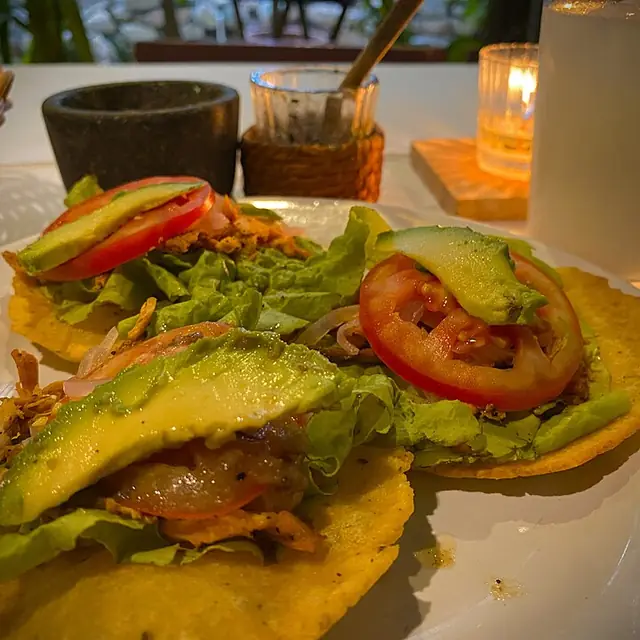
Salbutes are puffed, fried corn tortillas with no filling inside, topped with lettuce, tomato, pickled red onion, shredded turkey or chicken and avocado, with habanero salsa on the side.
Where: Mercado 23 fondas
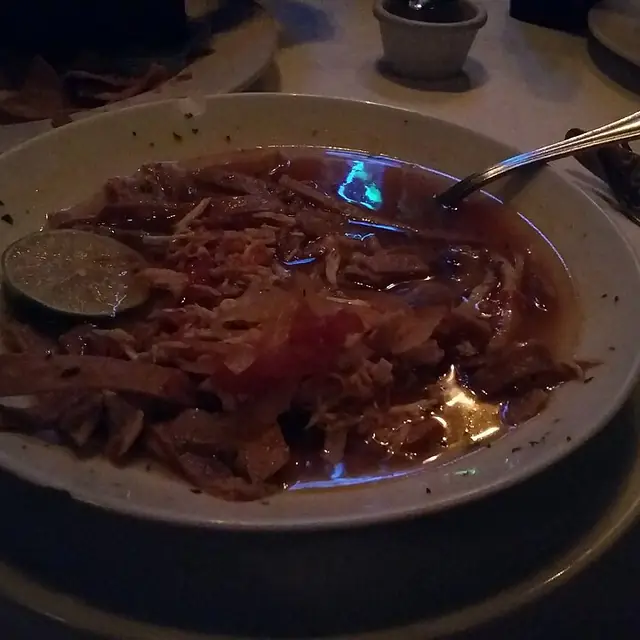
Sopa de lima is a light Yucatecan broth of turkey or chicken, spiced with oregano, clove and cumin and sharpened with the local lima agria, served with fried tortilla strips and habanero.
Where: Lonchería El Pocito
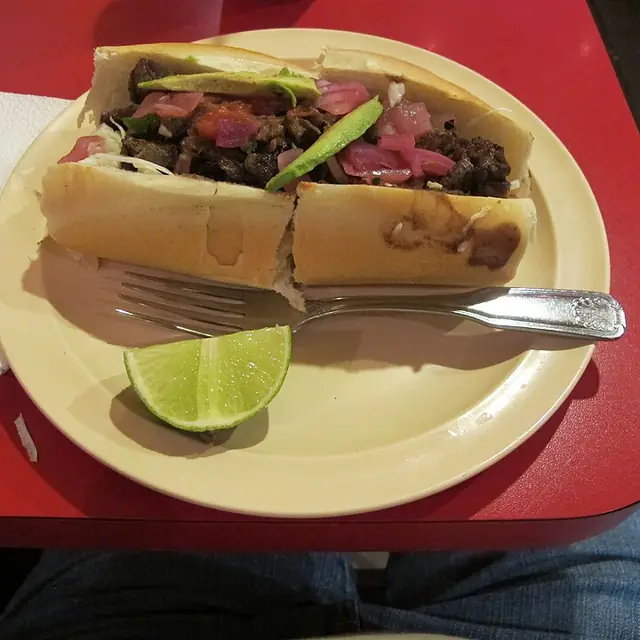
Poc chuc is thin-sliced pork loin marinated in bitter orange, garlic and pepper and grilled over charcoal, served with rice, black beans, chiltomate salsa and charred red onion.
Where: Lonchería El Pocito
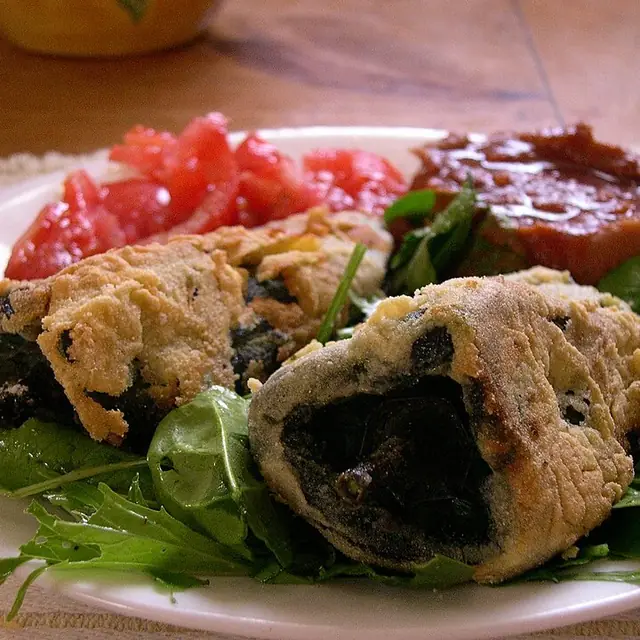
Relleno negro is a black Yucatecan stew of turkey and pork in recado negro, a paste of charred dried chiles, with a pork forcemeat and hard-boiled egg cooked into the dark broth.
Where: El Tatich, Mercado 23 fondas
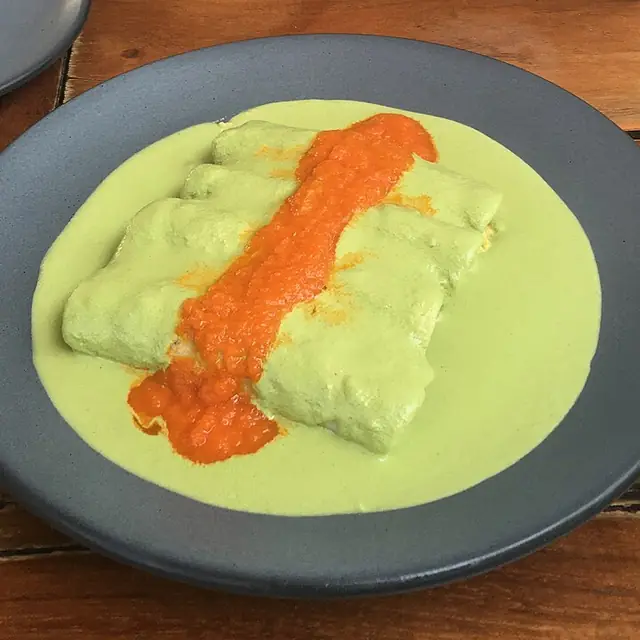
Papadzules are corn tortillas dipped in a pumpkin-seed sauce, rolled around chopped hard-boiled egg and finished with a cooked tomato and habanero sauce, a classic of Yucatecan home cooking.
Where: Lonchería El Pocito, Mercado 23 fondas
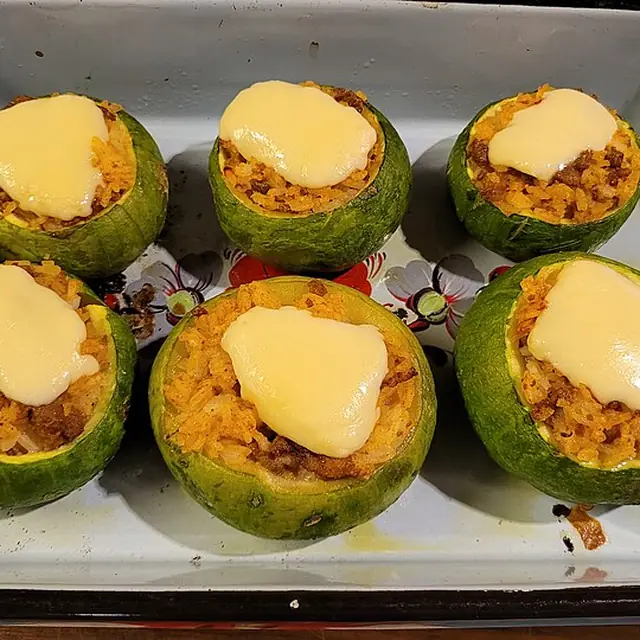
Queso relleno is a hollowed-out ball of Edam cheese stuffed with spiced pork picadillo, capers, raisins and olives, served in a white flour sauce called kol and a tomato sauce.
Where: Lonchería El Pocito
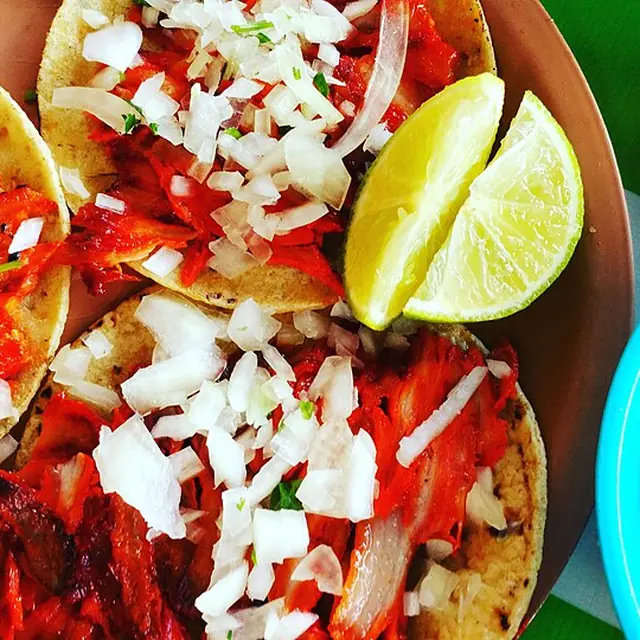
Tacos al pastor are thin slices of chile-marinated pork shaved off a vertical spit, the trompo, onto small corn tortillas with pineapple, onion and coriander.
Where: Los Parejas, Tacos Rigo, Los Chachalacos Bonampak, Taquería El Campeón
Price: MXN 35 a taco at Los Parejas (January 2026)
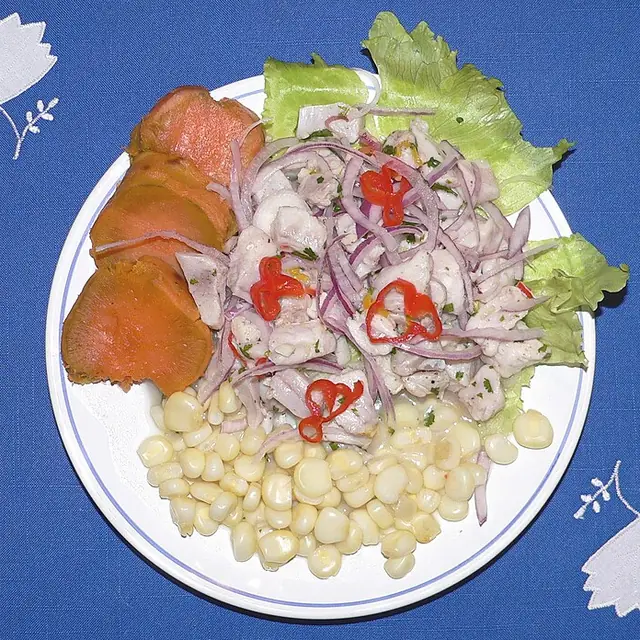
Ceviche is raw fish, shrimp or conch cured in lime juice with onion, tomato, coriander and chile and eaten cold on tostadas; Cancún's seafood palapas build it from the day's catch.
Where: Kiosco Verde, Puerto Santo, Navíos, Los de Pescado
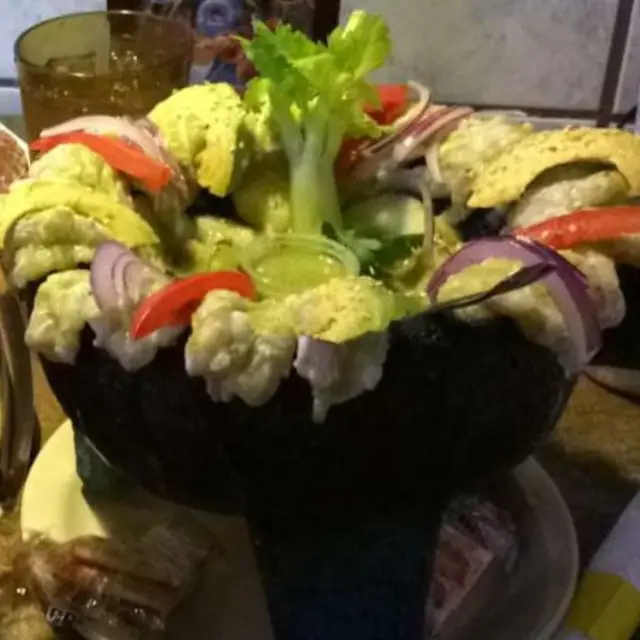
Aguachile is raw shrimp butterflied and drowned in lime juice blended with fresh chile, with cucumber and red onion; Cancún's seafood places serve green and black versions.
Where: Mero 18, Fred's, Porfirio's, El Fish Fritanga
Price: MXN 200 for the shrimp aguachile at Mero 18
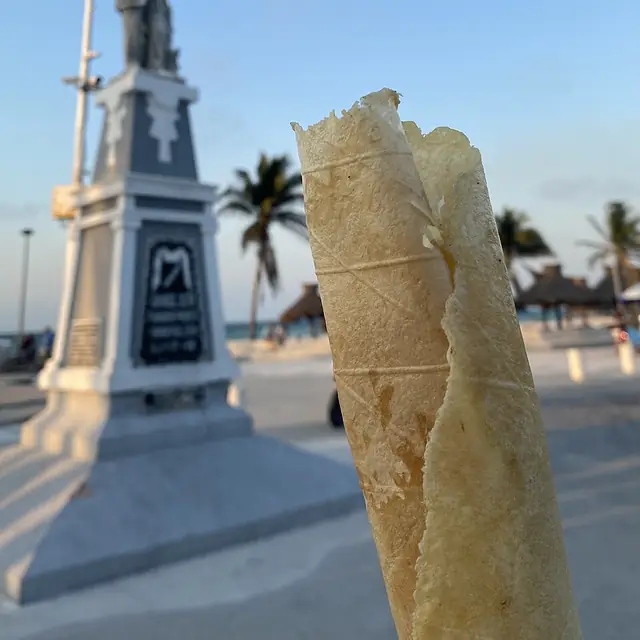
Marquesitas are thin wafers pressed crisp on a hot iron and rolled around grated Edam cheese and a sweet filling such as cajeta, jam or chocolate, sold from carts after dark.
Where: Marquesitas at Parque de las Palapas
Price: About MXN 30 each (two for MXN 60 in 2026)
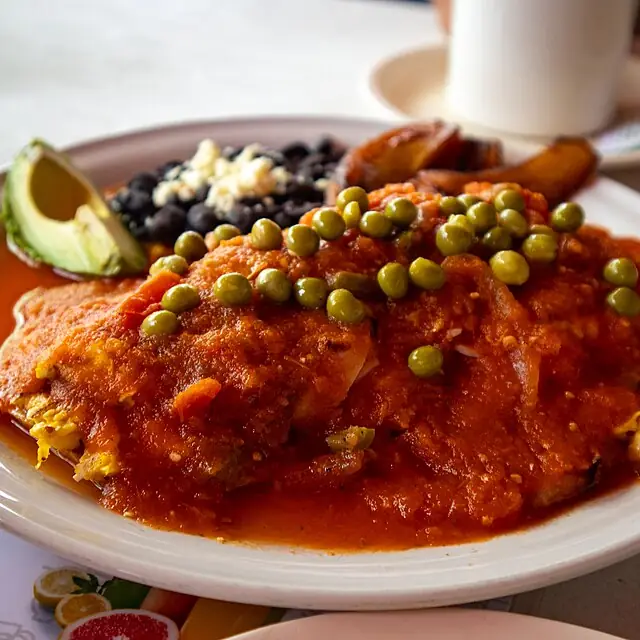
Huevos motuleños are fried eggs on a crisp tortilla spread with black beans, covered in a tomato sauce with ham and peas, and served with fried plantain and cheese: Yucatán's big breakfast.
Where: La Casa de las Mayoras
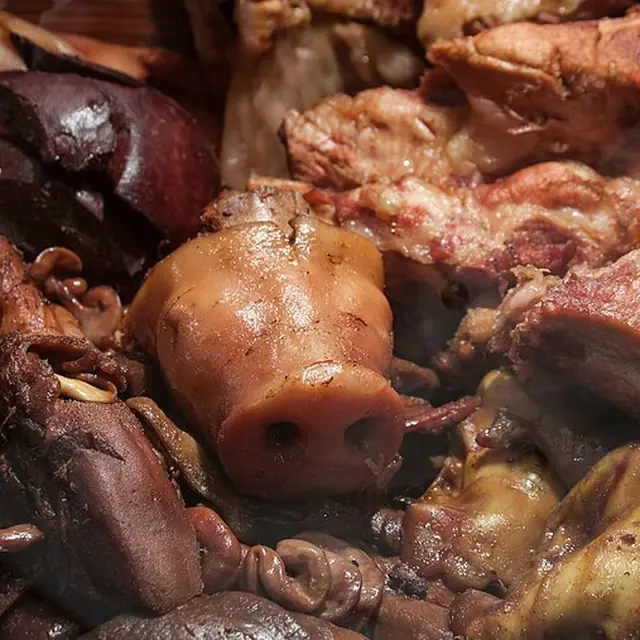
Carnitas are pork cuts braised and then fried in their own lard until tender inside and crisp outside, chopped to order for tacos and tortas with salsa and pickled chiles.
Where: Carnitas Don Enrique, El Polilla
Cochinita pibil
Cochinita pibil is pork marinated in bitter orange and achiote, wrapped in banana leaf and slow-roasted until it falls apart, then piled into tacos and tortas with pickled red onion and habanero.
History: Cochinita pibil is a Yucatec Maya dish from the Yucatán Peninsula. Cochinita means baby pig, so the full version roasts a whole suckling pig, though most cooks use shoulder. The meat is marinated in the juice of bitter (Seville) oranges with achiote, which gives the burnt-orange colour, then wrapped in banana leaf and cooked in a píib, a pit with a fire at the bottom. It comes with corn tortillas, red pickled onion, black beans and habanero. In Cancún it is the morning order at the Mercado 23 fondas and at El Tatich, which sells it as tacos and tortas.
Where to try it: El Tatich, Mercado 23 fondas, TUCH Cantina Yucateca Huayacán
Watch out for: Pork
Panuchos
Panuchos are small corn tortillas stuffed with black beans and fried, then topped with shredded turkey or chicken, lettuce or cabbage, tomato, pickled red onion and avocado.
History: Spanish Wikipedia traces the panucho to Mérida, near the San Sebastián neighbourhood by the Ermita de Santa Isabel, and says it was developed in Kanasín, which still calls itself the capital of the panucho; popular tradition credits a man known as Don Hucho, who fed travellers there. What sets it apart from the salbut is the layer of refried black beans inside the tortilla before it is fried. Panuchos are a supper food, sold in the evening at panucherías alongside salbutes and tortas, and in Cancún they sit on the chalkboard at Lonchería El Pocito.
Where to try it: Lonchería El Pocito, TUCH Cantina Yucateca Huayacán
Watch out for: Gluten-free (corn)
Salbutes
Salbutes are puffed, fried corn tortillas with no filling inside, topped with lettuce, tomato, pickled red onion, shredded turkey or chicken and avocado, with habanero salsa on the side.
History: The salbut takes its name from Yucatec Maya: sáal buutʼ, roughly light and stuffed. It is a Yucatán Peninsula dish of a corn tortilla fried in oil or, preferably, lard until it puffs a little and stays soft, then topped with lettuce, tomato, pickled onion, shredded turkey or chicken and avocado. Unlike the panucho it has no beans inside. Cooks also top it with cochinita pibil, relleno negro or chicken in escabeche. Salbutes are sold in the evening at panucherías, and in Cancún they are one of the plates the Mercado 23 fondas cook.
Where to try it: Mercado 23 fondas
Watch out for: Gluten-free (corn)
Sopa de lima
Sopa de lima is a light Yucatecan broth of turkey or chicken, spiced with oregano, clove and cumin and sharpened with the local lima agria, served with fried tortilla strips and habanero.
History: Sopa de lima is one of the most representative dishes of Yucatecan cooking. It is a light turkey or chicken broth with oregano, clove and cumin, defined by the lima agria, a local citrus. No one knows who first made it, but the lima arrived in the Americas with the Spanish, so the soup, with its pre-Hispanic ingredients and a European fruit, is a product of the culinary mixing of the colony. It is served with strips of fried corn tortilla and habanero, as a lunch or supper dish. In Cancún, Lonchería El Pocito lists it on its chalkboard of Yucatecan home cooking.
Where to try it: Lonchería El Pocito
Watch out for: Gluten-free (corn)
Poc chuc
Poc chuc is thin-sliced pork loin marinated in bitter orange, garlic and pepper and grilled over charcoal, served with rice, black beans, chiltomate salsa and charred red onion.
History: The name comes from Yucatec Maya póok, to toast, and chúuk, charcoal. Poc chuc is pork, preferably loin, sliced thin, marinated in bitter orange, garlic and pepper and grilled over charcoal, then served with rice, pickled red onion, frijoles colados, avocado, radish and a tomato salsa called chiltomate. Neither pork nor bitter orange is native to Yucatán, so the dish is a mestizo one; the Yucatecan historian Gonzalo Navarrete dates it to the mid-20th century at the restaurant Los Almendros in Ticul. In Cancún, Lonchería El Pocito serves it among its Yucatecan home dishes.
Where to try it: Lonchería El Pocito
Watch out for: Pork
Relleno negro
Relleno negro is a black Yucatecan stew of turkey and pork in recado negro, a paste of charred dried chiles, with a pork forcemeat and hard-boiled egg cooked into the dark broth.
History: Relleno negro is a hot dish of the Yucatán Peninsula made with turkey and pork, a sofrito and a paste of burnt dried chiles called chilmole or recado negro, which gives the dish its name and colour. In Yucatec Maya it is boox but': boox, black, and but', the stuffing of ground pork mixed with hard-boiled egg. The original recipe adds tomato, achiote, pepper, clove, cumin, oregano, epazote and garlic. It is traditionally cooked in November for Janal Pixán, the Maya day of the dead. In Cancún, El Tatich serves it on Sundays, and it appears at the Mercado 23 fondas.
Where to try it: El Tatich, Mercado 23 fondas
Watch out for: Pork, Egg
Papadzules
Papadzules are corn tortillas dipped in a pumpkin-seed sauce, rolled around chopped hard-boiled egg and finished with a cooked tomato and habanero sauce, a classic of Yucatecan home cooking.
History: Papadzules are a traditional dish of Yucatán, Campeche and Quintana Roo: corn tortillas dipped in a sauce of ground pumpkin seeds (pepitas), filled with hard-boiled egg and covered in a tomato sauce with habanero. Two theories explain the name. Diana Kennedy derived it from a phrase meaning food of the lords; another reading takes Maya papak', to anoint or smear, and sul, to soak, so smeared and drenched. The dish is often called very old, a forerunner of the enchilada, but it is unclear whether the Maya made it before the conquest in its present form. In Cancún, Lonchería El Pocito and the Mercado 23 fondas serve it.
Where to try it: Lonchería El Pocito, Mercado 23 fondas
Watch out for: Egg, Seeds
Queso relleno
Queso relleno is a hollowed-out ball of Edam cheese stuffed with spiced pork picadillo, capers, raisins and olives, served in a white flour sauce called kol and a tomato sauce.
History: Queso relleno is a popular dish of the Yucatán Peninsula. A ball of Edam, the queso de bola sold across the region, is hollowed out and filled with a picadillo of minced meat, usually pork, with capers, raisins, olives, almonds and egg, then served in kol, a white sauce thickened with wheat flour, and a tomato sauce. It is less famous than cochinita pibil or panuchos, but Yucatecans count it among their most popular plates. In Cancún the Infatuation recommends the version at Lonchería El Pocito, served in a thick tomato broth with capers and chile xcatic.
Where to try it: Lonchería El Pocito
Watch out for: Milk, Pork, Gluten, Egg
Tacos al pastor
Tacos al pastor are thin slices of chile-marinated pork shaved off a vertical spit, the trompo, onto small corn tortillas with pineapple, onion and coriander.
History: Al pastor descends from the shawarma that Lebanese immigrants brought to Mexico in the late 19th and early 20th centuries. By the 1920s pork had mostly replaced lamb, and the Mexican-born children of those immigrants opened their own restaurants; later, in Mexico City, cooks began marinating the meat in adobo of dried chiles and serving it on corn tortillas, which became the al pastor taco, popular by the 1960s. It is cooked on a vertical spit, the trompo, and topped with pineapple. In Cancún it is the taquería standard: Los Parejas sold pastor at 35 pesos a taco in January 2026, and Tacos Rigo and Los Chachalacos serve it late.
Where to try it: Los Parejas, Tacos Rigo, Los Chachalacos Bonampak, Taquería El Campeón
Watch out for: Pork
Ceviche
Ceviche is raw fish, shrimp or conch cured in lime juice with onion, tomato, coriander and chile and eaten cold on tostadas; Cancún's seafood palapas build it from the day's catch.
History: Ceviche, seafood marinated in citrus juice, is eaten along the coasts of Latin America, from Mexico to Peru, where it is the national dish. The acid in the lime juice firms the flesh and turns it opaque, which looks like cooking, though the seafood is still raw, so it must be very fresh. On the Mexican Caribbean, ceviche follows the catch: in Cancún, Kiosco Verde, a family seafood palapa at Puerto Juárez in the MICHELIN Guide, serves a Cozumel-style conch ceviche with stars of yellow habanero, and Puerto Santo, which buys from local fishermen, lists ceviches too.
Where to try it: Kiosco Verde, Puerto Santo, Navíos, Los de Pescado
Watch out for: Fish, Shellfish
Aguachile
Aguachile is raw shrimp butterflied and drowned in lime juice blended with fresh chile, with cucumber and red onion; Cancún's seafood places serve green and black versions.
History: Aguachile comes from the west coast of Mexico, mainly Sinaloa, Nayarit, Sonora, Jalisco, Colima, Michoacán and the Baja peninsula. Its core is shrimp with fresh or dried chiles, lime, onion and cucumber; the classic Sinaloa version lays butterflied shrimp in a bed, salts them, and covers them with lime and chile blended in a molcajete. It has travelled to the Caribbean coast: in Cancún, Mero 18 lists a shrimp aguachile at MXN 200, Fred's a green shrimp aguachile and Navíos a black one.
Where to try it: Mero 18, Fred's, Porfirio's, El Fish Fritanga
Watch out for: Shellfish
Marquesitas
Marquesitas are thin wafers pressed crisp on a hot iron and rolled around grated Edam cheese and a sweet filling such as cajeta, jam or chocolate, sold from carts after dark.
History: The marquesita is a sweet native to the state of Yucatán: a thin crepe, pressed crisp on a grill, rolled and filled with cajeta, condensed milk, jam, chocolate or Edam cheese, the queso de bola. Wikipedia credits Leopoldo Mena, an ice-cream seller short of customers in winter, with creating it in the 1930s by pairing sweet fillings with salty Edam; the name is said to come from the daughters of a marquis who bought them. They are sold in squares, parks and streets, and in Cancún the carts at Parque de las Palapas make them to order in the evening, about 60 pesos for two in 2026.
Where to try it: Marquesitas at Parque de las Palapas
Watch out for: Gluten, Milk, Egg
Huevos motuleños
Huevos motuleños are fried eggs on a crisp tortilla spread with black beans, covered in a tomato sauce with ham and peas, and served with fried plantain and cheese: Yucatán's big breakfast.
History: Huevos motuleños are a breakfast from Motul, Yucatán: a fried tortilla spread with refried black beans, a fried egg on top, and a tomato sauce cooked with diced ham and peas, often with fried plantain, cheese and habanero salsa. Local oral history credits Don Jorge Siqueff, owner of Motul's best-known restaurant, who is said to have created the plate in 1921 when Governor Felipe Carrillo Puerto asked for a special breakfast for visitors from Mexico City, among them José Vasconcelos and Diego Rivera. In Cancún, La Casa de las Mayoras, in the MICHELIN Guide, serves it at breakfast.
Where to try it: La Casa de las Mayoras
Watch out for: Egg, Pork, Milk
Carnitas
Carnitas are pork cuts braised and then fried in their own lard until tender inside and crisp outside, chopped to order for tacos and tortas with salsa and pickled chiles.
History: Carnitas, literally little meats, is a Mexican dish from Michoacán made by braising, simmering and frying pork in lard, its own fat or oil, a process that takes three to four hours and leaves the meat tender with browned edges. The name was historically the Mexican colloquial name for the French rillons de Tours. In Cancún, Carnitas Don Enrique on Avenida Tikal has served it since 1974, by the cut: shoulder, rind, ribs, shank and hog maw, or the mixed surtida. El Polilla on Avenida Nader makes carnitas tacos its house classic.
Where to try it: Carnitas Don Enrique, El Polilla
Watch out for: Pork