
Romantic dinner in front of the sea
Four course menu in Flamingos Seafood Kitchen Restaurant
from$257 Check dates
Also: Food History in Cancun
How Cancún came to eat the way it does: the people, migrations and accidents that shaped the plate.
How Cancún came to eat the way it does: the people, migrations and accidents that shaped the plate.
When work on the resort began on 23 January 1970, Isla Cancún had three residents, caretakers of a coconut plantation, and some 117 people lived in Puerto Juárez, a fishing village and military base. The fish dish of the Yucatán coast is tikin xic, Yucatec Maya for 'dry fin' after its butterfly cut: marinated in achiote and sour orange, wrapped in banana leaf and cooked over wood.
Cancún was built as a federal tourism project, with the government financing the first nine hotels. Downtown grew in numbered supermanzanas for the workers who built and staffed them, and in the late 1970s the Mercado Javier Rojo Gómez, Mercado 23, opened with ten stalls as the city's first traditional market. It now has more than 200, with fondas selling cochinita, salbutes, papadzules and relleno negro.
From 1970 to 1980 the population grew on average by more than 60 percent a year, and most cancunenses came from Yucatán and other Mexican states. Mercado 28 opened as a fresh market with Yucatecan cooking and seafood restaurants; after the 1994 peso crisis it turned mostly to crafts, though counters such as El Cejas, there since 1987, kept cooking.
The Zona Hotelera filled with hotel dining rooms, steakhouses and lagoon-side seafood restaurants along Boulevard Kukulcán, while downtown kept the taquerías, loncherías and cochinita counters. The MICHELIN Guide's Mexico selection lists two Cancún restaurants, Kiosco Verde and La Casa de las Mayoras, both away from the hotel strip.
Four course menu in Flamingos Seafood Kitchen Restaurant
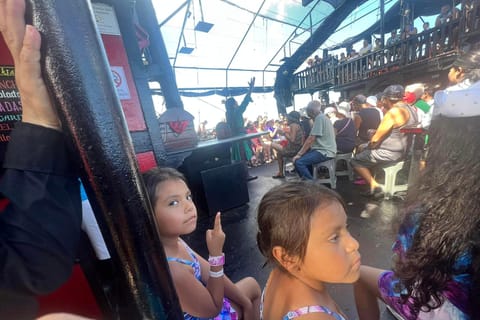
Guided tour · 3 - 3.5 hours
Embark on an unforgettable adventure aboard pirate ship for a night of swashbuckling fun, delicious dining, and captivating entertainment.
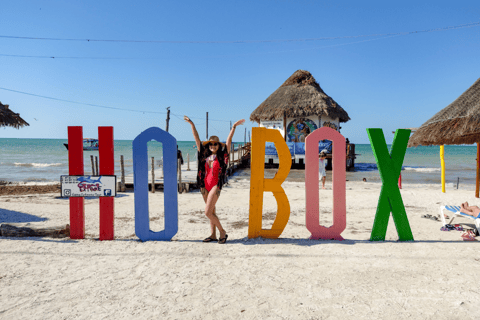
Guided tour · 13 hours
Discover Holbox, a paradise in Quintana Roo. Sail past dreamlike beaches, swim in Yalahau, and explore Isla Pasión and Punta Mosquito. Includes transportation, tour gu...