

History
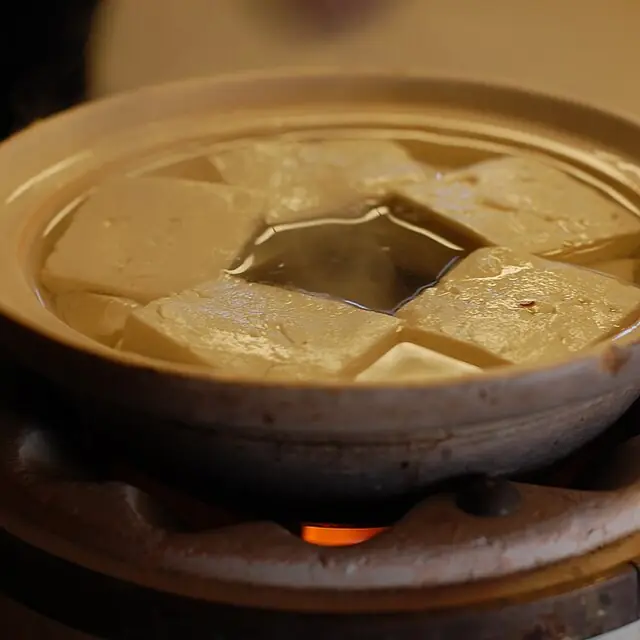
Yudofu traces to the Zen monastic kitchens of Nanzen-ji and Daitoku-ji in Kyoto, where vegetarian shojin-ryori made tofu the centrepiece of every meal. Sohonke Yudofu Okutan has been serving the dish at Nanzen-ji's gate since 1635, making it one of Japan's oldest continuously operating restaurants. The Kyoto-style preparation, using soft silken tofu in a clear kombu broth, became the canonical form against which Tokyo's harder cotton-tofu variants are still compared.
Book a food experience
Tours, tastings and classes from the cities on this page, bookable on GetYourGuide.

Common allergens: Soy
Make it at home
Ingredients
- 400g silken tofu, cut into 4cm cubes
- 10g kombu kelp, one strip
- 600ml cold water
- 60ml light soy sauce, 30ml mirin, 15g katsuobushi for the dipping sauce
- Grated ginger, sliced scallions, shaved katsuobushi to serve
Method
- Cold-soak the kombu in 600ml water in a clay pot or donabe for 30 minutes.
- For the dipping sauce, combine soy, mirin and 100ml of the kombu water, bring to a simmer, add katsuobushi, steep for 5 minutes and strain.
- Heat the kombu pot on a tabletop burner to a gentle 80C; do not boil.
- Add the tofu cubes when the broth shows steam; warm for 3 to 4 minutes until the centre is hot.
- Lift each cube with a slotted spoon to small bowls, ladle a spoon of dipping sauce, top with ginger, scallions and katsuobushi.
- Eat hot; refill the pot with tofu as you go.
Tip from the editors. Never let the broth boil; you want silken curd, not rubbery cubes. Stop the heat the moment the surface trembles.
Where to eat yudofu
Yudofu in Kyoto
Nanzenji Junsei ★ 4.3
A long-running garden-side yudofu room beside Nanzen-ji, set on a 1,200-tsubo strolling-garden plot in Kyoto that changes with every season.
OrderYudofu Gozen course with simmered Kyoto vegetables and tempura
TipBook the garden-side tatami pavilion; walk-ins are turned away in foliage season.
Nanzenji Sando Kikusui ★ 4.4
Nanzenji Sando Kikusui in Sakyo in Kyoto is a sukiya inn near Nanzenji with a Jihei Ogawa garden, yudofu kaiseki featuring Hattori tofu, seasonal courses.
OrderYudofu set with dengaku miso-glazed tofu skewers
TipCloses Thursdays. Aim for the 12:30 sitting before the temple-touring crowd lands.
Toseian ★ 4.2
A Nishijin yudofu room set in a former silk-warehouse machiya, opened in the 1970s. Quiet, courtyard-view tatami; locals know the Matsu Gozen set.
OrderMatsu Gozen set: yudofu, yuba-sashimi and seasonal Kyo-yasai
TipClosed Mondays and Thursdays. Two-minute walk from the Omiya Nakauri bus stop.
Tousuiro Kiyamachi ★ 4.4
Tofu-kaiseki on a Kamogawa riverside terrace, hidden down a narrow Kiyamachi alley in a preserved Taisho-era townhouse just steps from Pontocho.
OrderEight-course tofu kaiseki with yuba sashimi and warmed soy-milk pots
TipBook a tatami room on the riverside for kawayuka decking from mid-May to September.
More cities are in research. Want yudofu covered somewhere specific? Tell us where you want to eat.