
Kyoto
1h 30m
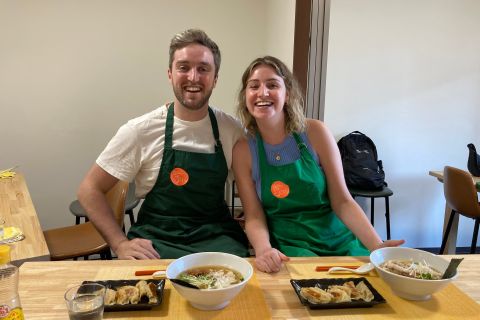
Kyoto: Ramen, Gyoza, and Onigiri Cooking Class
Discover how to make homemade rich and flavorful soy sauce and miso ramen, acquire the perfect gyoza filling, and master the technique of wrapping...
from¥15,200Check dates
Kyoto's contribution to ramen: a balanced shoyu-tonkotsu broth blending soy sauce with pork-bone richness, served with straight noodles and Kujo green onions.
Where to eat it: 4 restaurants across 1 city.
Kyoto's ramen style emerged after World War II at counters near Kyoto Station, codified by Honke Daiichi Asahi from 1947. The bowl blends dark soy with a clear pork-bone broth, lighter than Hakata tonkotsu but richer than Tokyo's pure shoyu. Straight, slightly thick noodles and a topping of finely-sliced Kujo green onions distinguish the form. Today three branches define the city's reference: Honke Daiichi Asahi for the original, Shinpuku Saikan for the blackest broth and Menya Inoichi for the modern Bib Gourmand take.
Tours, tastings and classes that match this page, bookable on GetYourGuide.
1h 30m
Discover how to make homemade rich and flavorful soy sauce and miso ramen, acquire the perfect gyoza filling, and master the technique of wrapping...
3 hours
Learn how to cook 2 of the most popular Japanese dishes in a cooking class in Osaka. Make your own ramen with gyoza or sushi from scratch with fresh...

Guided tour · 3 hours
Enjoy 6, tour-exclusive, mini bowls of delicious ramen. Become a ramen expert, learning about ramen origins, types, preparation, and trends. Visit 3...

1h 30m
Learn how to make ramen from scratch in Sapporo. Knead the dough, cut the noodles, and enjoy your handmade ramen with a delicious broth.
Common allergens: Wheat, Soy, Pork
Tip from the editors. Kujo negi is the distinguishing topping. If you can't find true Kujo from Kyoto, use the thinnest Tokyo-style green onion you can find sliced fine.
Kyoto's 1947-founded reference ramen counter under 1,200 yen a bowl. Open from 06:00 for breakfast ramen, the cheapest sit-down meal in the city.
TryShoyu-tonkotsu ramen with rice
A 1938-founded ramen counter near Kyoto Station, famous for its jet-black soy-sauce broth and chewy noodles. Side yakimeshi is half the order.
OrderBlack-broth ramen and a half order of yakimeshi fried rice
TipCash-only counter. Open from 09:00 if you want pre-train ramen.
A Michelin Bib Gourmand ramen counter three minutes from Kawaramachi Station. Light dashi broth, white soy and a chashu that earns its queue.
OrderWhite-soy ramen with a soft-boiled ajitama
TipLine up before doors open at 11:00, lunch typically sells out by 13:30.
A chicken-paitan ramen counter on Karasuma in Kyoto. House-raised Kyotamba bird boiled to a milky broth and finished with bright grated yuzu skin.
OrderTokusei chicken paitan with chashu and ajitama
TipOpen lunch through dinner without a break; afternoon trade easiest 14:00-17:00.
More cities are in research. Want kyoto-style shoyu-tonkotsu ramen covered somewhere specific? Tell us where you want to eat.