Signature dishes
Spiny lobster boiled, split and served cold under raw tomato and sweet onion dressed with oil and lemon. No cream, no sauce, no heat. The dish Alghero is known for outside Sardinia.
Where: La Lepanto, Rafel
Price: €60 to €90 per kilo
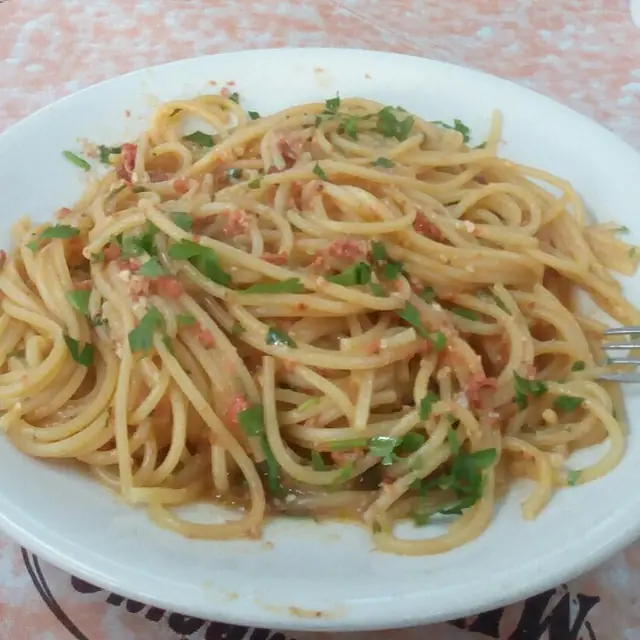
Spaghetti tossed off the heat with raw sea urchin roe, garlic, oil and a little pasta water so the coral melts into a sauce rather than cooking into a paste. Alguerès calls the urchin bogamarì.
Where: Rafel, Mercato del Pescato Locale
Price: €20 to €28
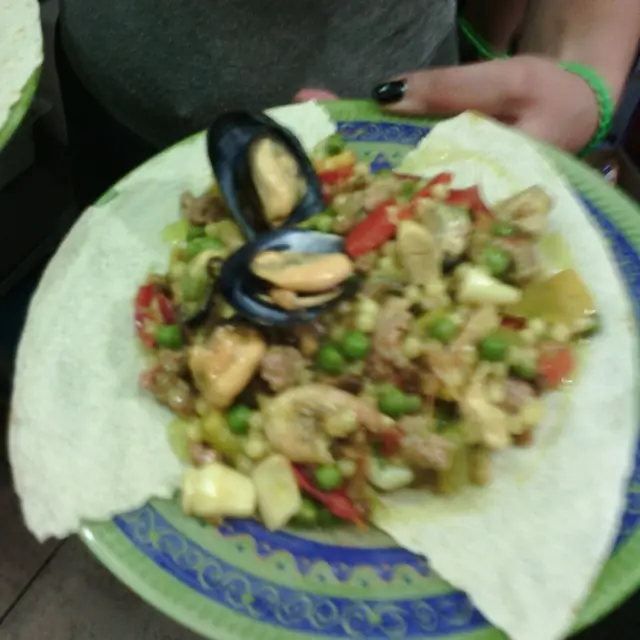
The Valencian dish rebuilt in Catalan Sardinia, cooked wide and shallow with local fish, shellfish and saffron rice, finished dry rather than soupy and served straight from the pan.
Where: La Pergola, Alamo
Price: €25 to €35 per person
Toasted semolina pearls simmered with clams, garlic, tomato and their own liquor until the fregola swells and the broth thickens. Sardinia's answer to a soupy pasta, eaten with a spoon.
Where: La Lepanto, Mos Tapas
Price: €16 to €22
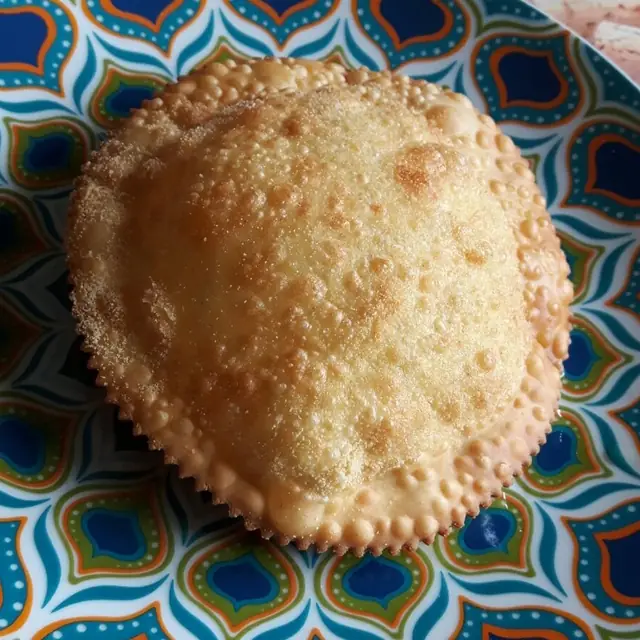
A large semolina pastry filled with fresh acidic sheep's cheese and lemon zest, fried until it blisters and served under warm honey. Sardinia's national dessert, savoury at its core.
Where: Trattoria da Mirko, Trattoria Lo Romanì
Price: €7 to €10
Alghero's Catalan blancmange, a set almond cream scented with lemon and cinnamon, spooned into pastry cases or served plain. The recipe survives in Alguerès rather than Italian.
Where: Bon Bons
Price: €3 to €5
A wide flat bread split and packed with tomato, tuna, hard-boiled egg, anchovy, rocket, onion and pancetta under a house sauce. Alghero's street lunch, eaten standing.
Where: Bar Focacceria Milese
Price: €3 to €4
Suckling pig cooked slowly until the skin crackles and the meat pulls away clean, scented with myrtle. The Sardinian feast dish, ordered a day ahead in most Alghero trattorias.
Where: Trattoria Lo Romanì, Al Refettorio
Price: €18 to €25
Hand-rolled semolina tubes formed around a knitting needle, thick and chewy, dressed with a long-cooked tomato and sausage sugo or with seafood on the Alghero coast.
Where: Trattoria Lo Romanì
Price: €12 to €16
Fine ribbons tossed in oil and pasta water, then blanketed with grated cured grey mullet roe. Salt, iodine and almost nothing else, the plainest good plate in Alghero.
Where: Al Refettorio, Nautilus, Alamo
Price: €15 to €20
Small Alghero sweets whose Catalan name means pocket eggs, built on egg yolk and almond and finished with a sugar glaze. Sold by the box in the old town pastry shops.
Where: Bon Bons
Price: €2 to €4
Aragosta alla catalana
Spiny lobster boiled, split and served cold under raw tomato and sweet onion dressed with oil and lemon. No cream, no sauce, no heat. The dish Alghero is known for outside Sardinia.
History: Catalan settlers arrived in Alghero after Pere IV of Aragon took the town in 1354, and the cold lobster salad came with them. The Sardinian version dropped almost everything, keeping raw tomato, sweet onion, olive oil, lemon and the aragosta itself, the spiny lobster of the western Sardinian coast rather than the clawed northern kind. It is priced by weight and usually chosen from a tank, and it is the plate that most clearly marks Alghero as a Catalan town rather than an Italian one. Restaurants on the bastions serve it as a main course for two, dressed at the table.
Where to try it: La Lepanto, Rafel
Watch out for: Crustaceans
Spaghetti ai ricci di mare
Spaghetti tossed off the heat with raw sea urchin roe, garlic, oil and a little pasta water so the coral melts into a sauce rather than cooking into a paste. Alguerès calls the urchin bogamarì.
History: Sea urchin has been eaten on the Alghero quays for as long as anyone has fished them, split with a knife and scooped out with bread while still dripping. The pasta version is a restaurant refinement of that habit, and the town still runs a spring rassegna named for the urchin at the port fish market. Pressure on the stock changed the picture. The Sardinian regional government now fixes the harvest window by decree each year, reserving it to licensed professional fishermen, closing the season in spring and capping the weekly take, so the dish is genuinely seasonal and disappears from menus for months at a time.
Where to try it: Rafel, Mercato del Pescato Locale
Watch out for: Gluten, Molluscs
Paella algherese
The Valencian dish rebuilt in Catalan Sardinia, cooked wide and shallow with local fish, shellfish and saffron rice, finished dry rather than soupy and served straight from the pan.
History: Paella reached Alghero through six centuries of Catalan and Aragonese rule, and the town kept it when the rest of Sardinia did not. The Algherese version leans hard on the sea, taking in whatever the port lands rather than the rabbit and beans of the Valencian original, and it is treated as a shared centrepiece booked in advance rather than a dish you order for one. La Pergola at Maria Pia has built its reputation on it since 1976 and holds a string of Italian guide listings for it. Alamo in the old town works a 21-ingredient version in the same tradition.
Where to try it: La Pergola, Alamo
Watch out for: Crustaceans, Molluscs, Fish
Fregola con arselle
Toasted semolina pearls simmered with clams, garlic, tomato and their own liquor until the fregola swells and the broth thickens. Sardinia's answer to a soupy pasta, eaten with a spoon.
History: Fregola is made by rubbing semolina and water into irregular pearls and toasting them in the oven, a technique documented in Sardinia since at least the fourteenth century and closely related to North African couscous. Arselle are the small clams of the island's lagoons and shallow bays, including the Calich behind Alghero. The pairing is the standard Sardinian coastal first course and appears in Alghero on almost every fish list, sometimes widened with prawns or mussels. The toasting is the point: it gives the pearls a nutty edge and stops them dissolving into the broth.
Where to try it: La Lepanto, Mos Tapas
Watch out for: Gluten, Molluscs
Seadas
A large semolina pastry filled with fresh acidic sheep's cheese and lemon zest, fried until it blisters and served under warm honey. Sardinia's national dessert, savoury at its core.
History: Seadas began as a shepherd's dish rather than a restaurant one, built from the two things a pastoral household always had, semolina and young unaged sheep cheese, and originally eaten as a main course rather than a sweet. The name traces back to seu, the Sardinian word for the animal fat once worked into the dough, and the pastry is stretched thin and cut with a fluted wheel. The honey is usually corbezzolo, the bitter arbutus honey of the island's maquis, which pulls against the sourness of the cheese. In Alghero it closes almost every trattoria meal and is the one dessert visitors are told to order.
Where to try it: Trattoria da Mirko, Trattoria Lo Romanì
Watch out for: Gluten, Milk
Menjar blanc
Alghero's Catalan blancmange, a set almond cream scented with lemon and cinnamon, spooned into pastry cases or served plain. The recipe survives in Alguerès rather than Italian.
History: Menjar blanc, literally white food, is a medieval Catalan preparation that crossed to Alghero with the Aragonese resettlement of 1354 and stayed. Made from almond milk thickened with starch and perfumed with lemon peel and cinnamon, it belongs to the same family as the blancmanges of medieval Europe, but Alghero kept it as a feast dessert while the Italian mainland largely forgot it. The town's pastry families still hold the recipes, and in some households the working notes are written in Alguerès rather than Italian. It shows up filled into small tarts and as a filling for the Alghero Easter and Christmas sweets.
Where to try it: Bon Bons
Watch out for: Nuts, Gluten
Focaccia sarda ripiena
A wide flat bread split and packed with tomato, tuna, hard-boiled egg, anchovy, rocket, onion and pancetta under a house sauce. Alghero's street lunch, eaten standing.
History: The filled Sardinian focaccia is a modern Alghero invention rather than an old one. Antonio Gavino Fiori and his wife Maria Pasqua Provenzi came home from Australia and bought a bar on Via Garibaldi opposite the port in 1971, where Maria built a sandwich around thin flat bread and a sauce the family has never published. Focaccia del Milese and Focaccia Sarda Ripiena are now registered trademarks, and the queue on Via Garibaldi is a fixture of the Alghero lunch hour. It costs a few euros, it is cut to order, and it is the cheapest good thing to eat in the old town.
Where to try it: Bar Focacceria Milese
Watch out for: Gluten, Fish, Egg
Porceddu
Suckling pig cooked slowly until the skin crackles and the meat pulls away clean, scented with myrtle. The Sardinian feast dish, ordered a day ahead in most Alghero trattorias.
History: Porceddu is the inland counterweight to the Alghero fish tradition, a shepherd's celebration dish that came down to the coast with families from the mountain villages. The pig is young, four to six weeks, and traditionally cooked on a spit over juniper or myrtle embers, then rested under myrtle branches so the leaves perfume the meat as it cools. Restaurants now mostly use ovens, but the myrtle stays. In Alghero it is the plate to order when you want the other half of Sardinia, and kitchens such as Trattoria Lo Romanì cook it from a family repertoire brought from Tonara in the interior.
Where to try it: Trattoria Lo Romanì, Al Refettorio
Macarrones de busa
Hand-rolled semolina tubes formed around a knitting needle, thick and chewy, dressed with a long-cooked tomato and sausage sugo or with seafood on the Alghero coast.
History: Busa is the Sardinian word for the thin iron rod, often a knitting needle, that the pasta is rolled around. The technique belongs to the island's interior, where hard durum semolina and water made pasta without eggs, and each piece is shaped by hand on a wooden board. The tube's thickness is the point: it takes a heavy sugo without collapsing. It reaches Alghero tables through families who came down from mountain villages, and appears on the menu at Trattoria Lo Romanì, where the kitchen's roots are in Tonara in the Barbagia.
Where to try it: Trattoria Lo Romanì
Watch out for: Gluten
Tagliolini alla bottarga
Fine ribbons tossed in oil and pasta water, then blanketed with grated cured grey mullet roe. Salt, iodine and almost nothing else, the plainest good plate in Alghero.
History: Bottarga di muggine is grey mullet roe salted, pressed and air dried into a hard amber block, a Mediterranean preservation technique that Sardinia has practised for centuries and now exports as one of its signature products. The pasta dish is deliberately austere, because the roe carries the whole flavour and heat destroys it. Alghero kitchens grate it over tagliolini at the pass, sometimes with pecorino, sometimes with lemon zest. Al Refettorio serves a version with pecorino, and Nautilus uses the same roe over spaghetti with clams.
Where to try it: Al Refettorio, Nautilus, Alamo
Watch out for: Gluten, Fish
Ous de butxaca
Small Alghero sweets whose Catalan name means pocket eggs, built on egg yolk and almond and finished with a sugar glaze. Sold by the box in the old town pastry shops.
History: Ous de butxaca belong to the Catalan sweet repertoire that Alghero preserved after the Aragonese resettlement, part of a wider Iberian tradition of yolk-and-sugar confections that convent kitchens developed to use the yolks left over from clarifying wine. The name survives only in Alguerès, which is one reason the sweet has stayed local rather than spreading across Sardinia. Bon Bons on Via Einaudi still bakes them from family recipes recorded in Catalan, alongside menjar blanc and the other feast-day sweets of the old town.
Where to try it: Bon Bons
Watch out for: Egg, Nuts, Gluten