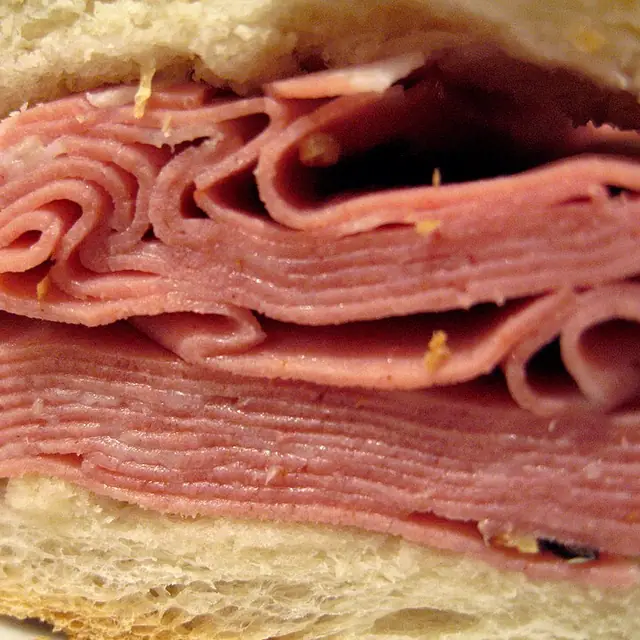
Sanduiche de mortadela ★ 4.4
Bar do Mane's mortadella sandwich in Sao Paulo's Mercado Municipal piles about 350g of sliced mortadella on pao frances, a market symbol since the 1970s.
Where: Bar do Mané
Price: R$ 35 to 45 per sandwich
Also: Signature Dishes in Sao Paulo
The plates that define São Paulo: what they are, and where to eat the canonical version.
The plates that define São Paulo. what they are, where they came from, and where to eat the canonical version.
Bar do Mane's mortadella sandwich in Sao Paulo's Mercado Municipal piles about 350g of sliced mortadella on pao frances, a market symbol since the 1970s.
Where: Bar do Mané
Price: R$ 35 to 45 per sandwich
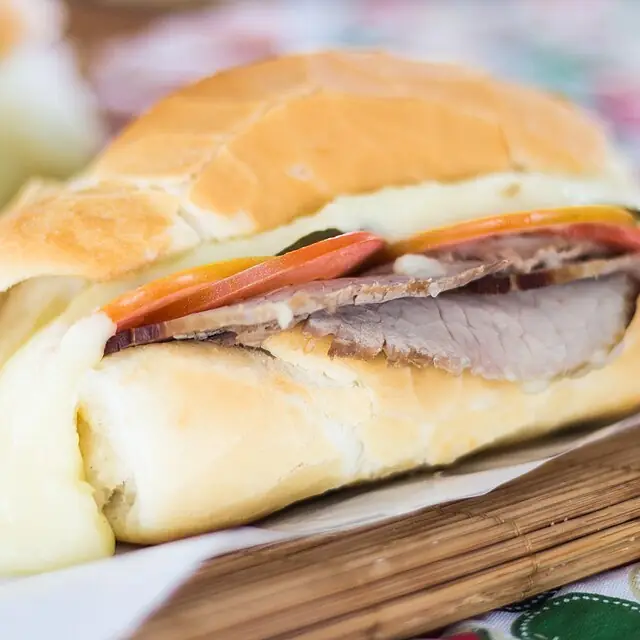
Ponto Chic's Bauru layers roast beef, melted cheese, tomato and pickled cucumber in a hollowed pao frances, invented at this Sao Paulo diner in the 1930s.
Where: Ponto Chic
Price: R$ 30 to 40 per sandwich
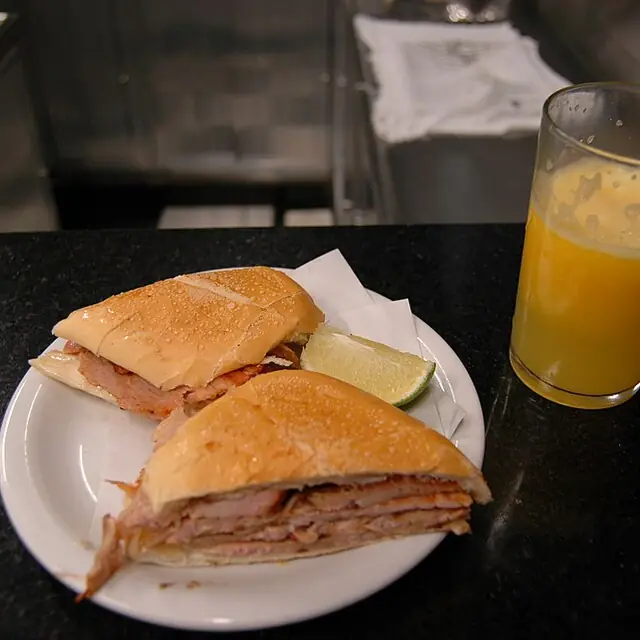
Bar e Lanches Estadao slices roast pork leg to order for its pernil sandwich, a 24-hour Centro fixture once named Sao Paulo's best sandwich by Veja magazine.
Where: Bar e Lanches Estadão
Price: R$ 18 to 26 per sandwich
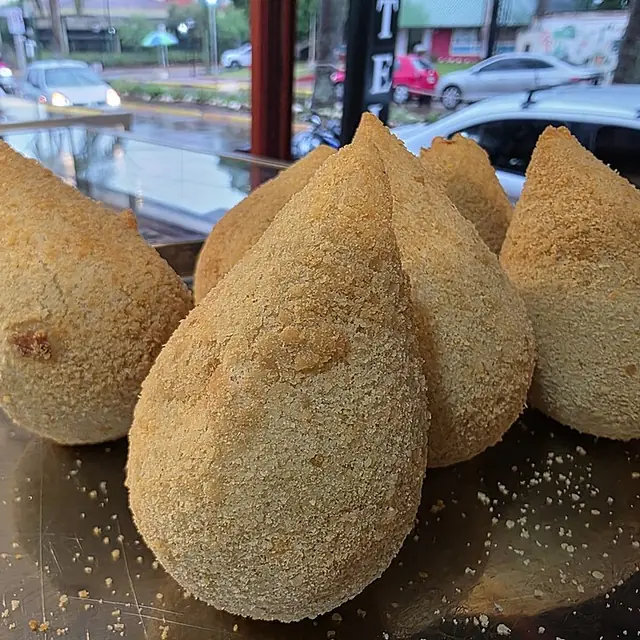
Rotisserie Bologna's coxinha wraps shredded chicken and melted catupiry in a teardrop dough shell, a Rua Augusta staple since 1951 in Sao Paulo.
Where: Rotisserie Bologna
Price: R$ 8 to 14 per piece
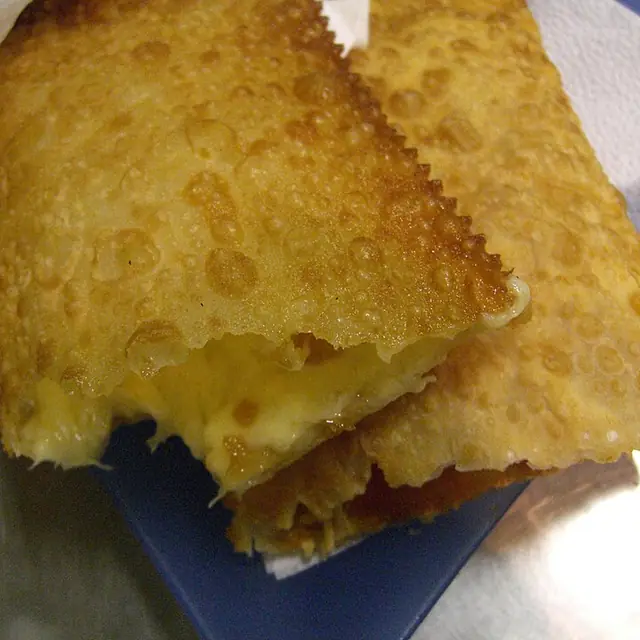
Casa do Pastel fries its beef and cheese pastel to order at a Tatuape counter that never closes, the brand's first unit, opened on Rua Tuiuti in 1981.
Where: Casa do Pastel, Pastel da Maria
Price: R$ 9 to 16 per piece
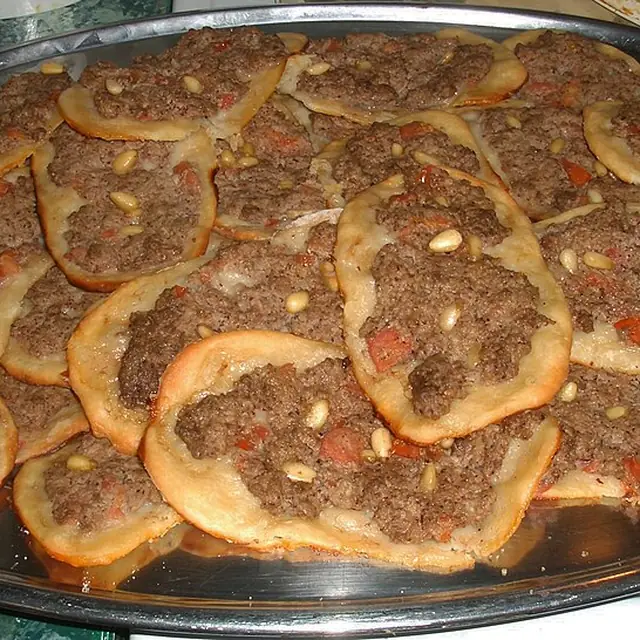
Casa Garabed has baked its lamb and pine nut esfiha in Sao Paulo's Santana district since 1951, one of the open-faced pastries Arab immigrants brought to the city.
Where: Casa Garabed, Almanara, Brasserie Victória
Price: R$ 6 to 10 per piece
Speranza Bixiga has baked its Margherita since the Tarallo family's Neapolitan cantina opened, the Bixiga oven credited with Sao Paulo's own thick-topped pizza style.
Where: Speranza Bixiga, Castelões
Price: R$ 55 to 90 per pizza
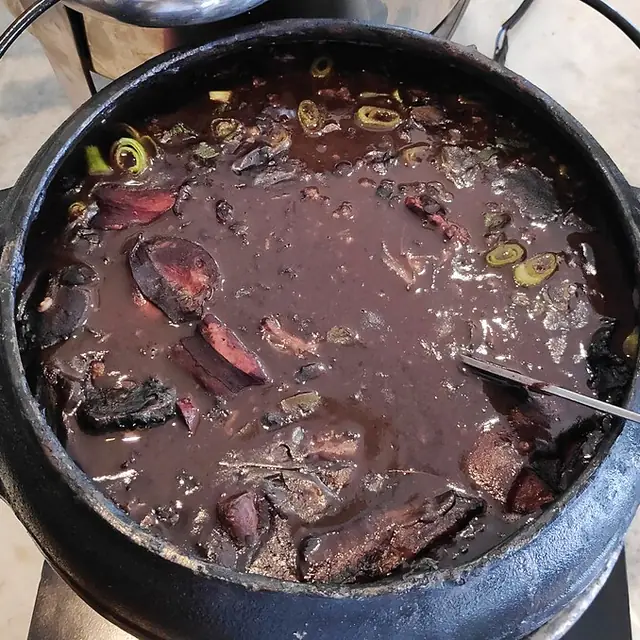
Tordesilhas plates its black bean and pork stew every Saturday, keeping Sao Paulo's own habit of tying feijoada to a fixed day of the week alive.
Where: Tordesilhas, Bar Brahma
Price: R$ 65 to 95 per person
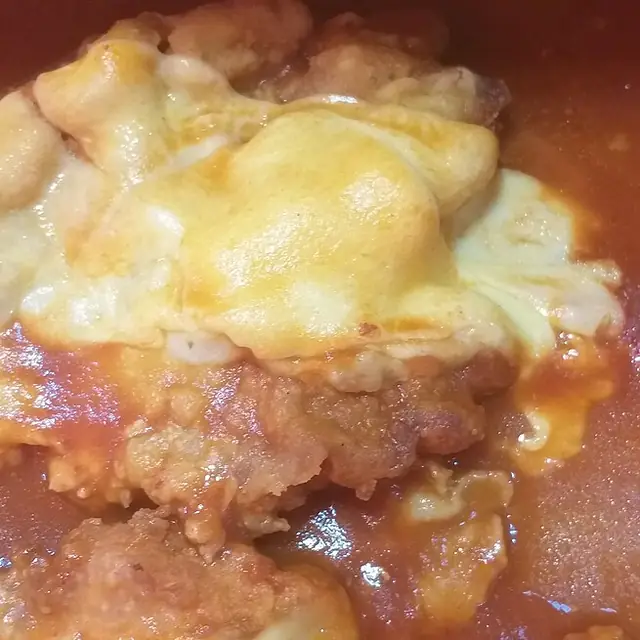
Bar Brahma breads a filet mignon and gratins it under tomato sauce and cheese for its filé à parmegiana, a Brazilian dish that took hold in Sao Paulo's cantinas from 1950.
Where: Bar Brahma
Price: R$ 55 to 80 per plate
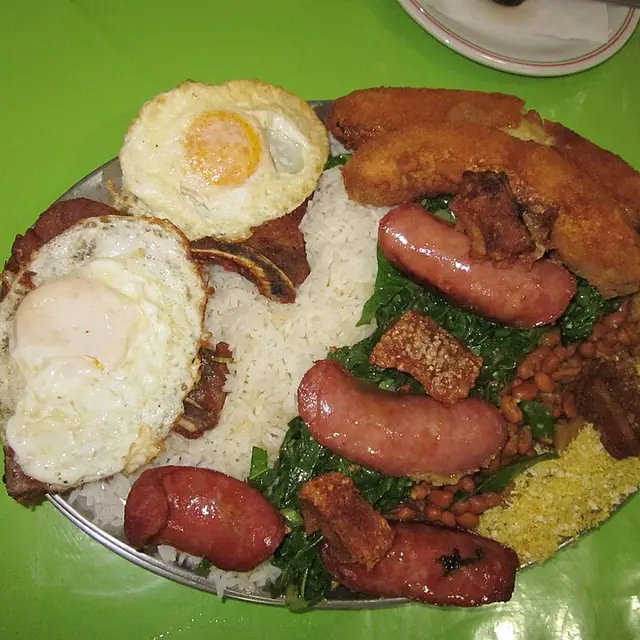
Virado à paulista stacks beans, pork, kale, rice, fried egg and banana on one plate, a bandeirante-era meal the state of Sao Paulo named cultural heritage in 2018.
Price: R$ 35 to 55 per plate
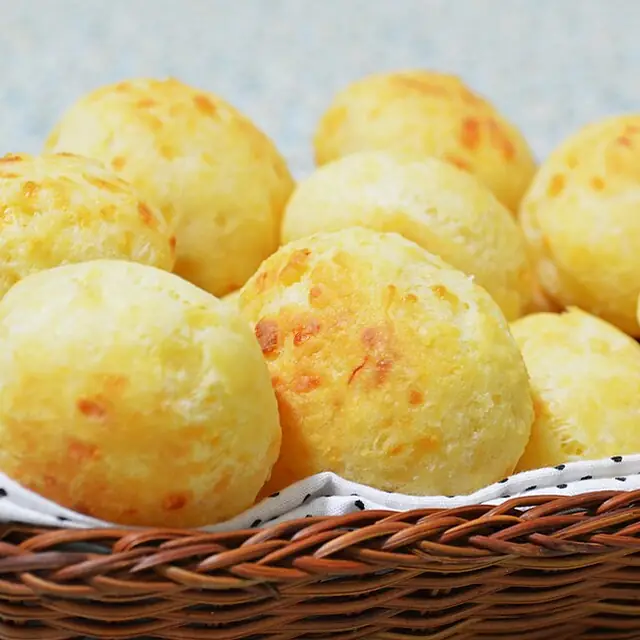
Pao de queijo, Minas Gerais' tapioca and cheese roll, turns up on Sao Paulo tables from padaria counters to A Baianeira, where it opens the meal as a starter.
Where: A Baianeira
Price: R$ 4 to 8 per piece
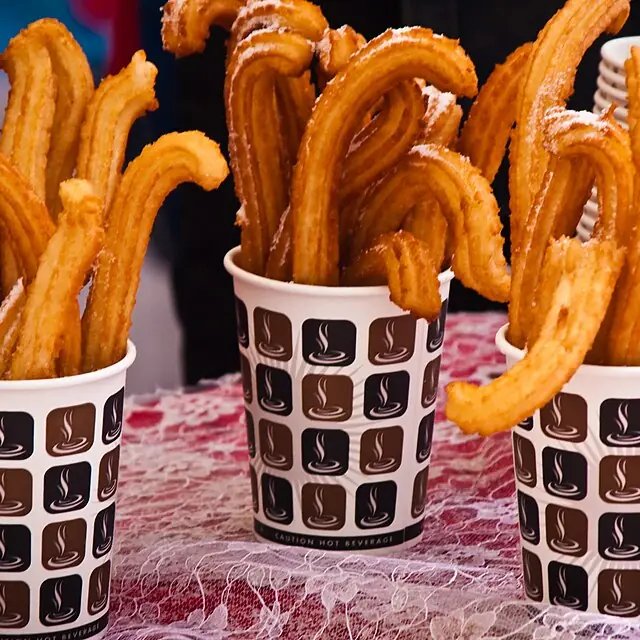
Churros piped into hot oil, rolled in sugar and cinnamon and often filled with doce de leite are sold hot from carts at Sao Paulo fairs, squares and cinemas.
Price: R$ 3 to 6 per piece
Bar do Mane's mortadella sandwich in Sao Paulo's Mercado Municipal piles about 350g of sliced mortadella on pao frances, a market symbol since the 1970s.
History: Bar do Mane began as Bar do Jeremias, opened inside the Mercado Municipal, which opened in 1933, by Portuguese cousins and bakers Jeremias and Alberto Cardoso Loureiro. The mortadella sandwich was then a price-controlled item with a thin filling; when one regular kept asking for more, the staff played along and piled it high, and Jeremias's son Mane, who inherited the bar in the late 1970s and gave it his name, put the oversized version on the menu. O Estado de S. Paulo reported on it in July 1979. Today's sandwich uses about 350g of Ceratti mortadella on a pao frances, sliced in front of the customer.
Where to try it: Bar do Mané
Watch out for: Gluten
Ponto Chic's Bauru layers roast beef, melted cheese, tomato and pickled cucumber in a hollowed pao frances, invented at this Sao Paulo diner in the 1930s.
History: In the 1930s, law student Casimiro Pinto Neto, nicknamed Bauru for his hometown, walked into Ponto Chic on Largo do Paissandu and asked the sandwich maker to build him one to his own specification: melted cheese inside a pao frances with the soft crumb removed, then roast beef and tomato. Pickled cucumber joined the recipe later. The sandwich became the house's best seller and spread across the city under his nickname. The city of Bauru later wrote an official recipe into municipal law to protect the name. Accounts disagree on the exact year, with 1934, 1936 and 1937 all cited, including by Ponto Chic's own current telling, so this account keeps to the decade rather than pick one.
Where to try it: Ponto Chic
Watch out for: Gluten, Dairy
Bar e Lanches Estadao slices roast pork leg to order for its pernil sandwich, a 24-hour Centro fixture once named Sao Paulo's best sandwich by Veja magazine.
History: Bar e Lanches Estadao opened under the Viaduto Nove de Julho in downtown Sao Paulo in 1968 and pioneered 24-hour service in the city. It is named after the O Estado de S. Paulo newspaper, which worked from a neighbouring building in the 1960s. Its pernil, a whole pork leg roasted and sliced to order at the counter, built a reputation among journalists and late-shift workers who needed a cheap, filling meal at any hour. Veja magazine named the sanduiche de pernil the city's best sandwich, a title the counter still leans on. The sandwich is stacked simply: sliced roast pork on bread, with the house getting through about 130 pork legs a week.
Where to try it: Bar e Lanches Estadão
Watch out for: Gluten
Rotisserie Bologna's coxinha wraps shredded chicken and melted catupiry in a teardrop dough shell, a Rua Augusta staple since 1951 in Sao Paulo.
History: Coxinha's documented roots trace to the countryside around Limeira, in Sao Paulo state, in the 19th century, when cooks stretched cheaper cuts of chicken into a durable, portable snack shaped like a drumstick, the coxa the name refers to. A popular legend also credits the Imperial court: a version says a São Paulo palace cook shaped leftover chicken into a drumstick form for a child of Princess Isabel who refused any cut but the leg, and Empress Teresa Cristina liked it enough to have the kitchen adopt it. The dough shell, the shredded chicken filling and the catupiry cream cheese core became standardised in Sao Paulo's 20th century lanchonetes and rotisserias.
Where to try it: Rotisserie Bologna
Watch out for: Gluten, Dairy
Casa do Pastel fries its beef and cheese pastel to order at a Tatuape counter that never closes, the brand's first unit, opened on Rua Tuiuti in 1981.
History: The pastel arrived in Sao Paulo with Chinese and Japanese immigrant cooks in the early 20th century, who adapted the fried dumpling into a thin-skinned, deep-fried pocket sold from street-market stalls and open-air feiras across the city. It grew into a Saturday-market ritual: a pastel eaten standing at a barraca, often with a glass of sugarcane juice on the side. Sao Paulo runs its own municipal pastel contest, and shops like Pastel da Maria have built a following on winning it. Fillings run from beef and cheese to hearts of palm and pizza style, but the defining feature stays the same: a paper-thin, blistered shell fried until it crackles.
Where to try it: Casa do Pastel, Pastel da Maria
Watch out for: Gluten
Casa Garabed has baked its lamb and pine nut esfiha in Sao Paulo's Santana district since 1951, one of the open-faced pastries Arab immigrants brought to the city.
History: Syrian and Lebanese immigration to Sao Paulo concentrated from 1880 around the old market square and Rua 25 de Março, an area known as the street of the Arabs that grew into Brazil's largest wholesale trading district. Arab immigrants opened the city's first esfiha counters in the early 20th century, in neighbourhoods like Bras and Mooca, selling the open, boat-shaped pastry topped with seasoned lamb or beef, and later a closed version folded shut. Casa Garabed, an Armenian family bakery since 1951, and Brasserie Victoria, founded on Rua 25 de Marco in 1947 and now on Avenida JK, are both part of the Levantine bakery wave that made esfiha a Sao Paulo staple.
Where to try it: Casa Garabed, Almanara, Brasserie Victória
Watch out for: Gluten, Tree nuts
Speranza Bixiga has baked its Margherita since the Tarallo family's Neapolitan cantina opened, the Bixiga oven credited with Sao Paulo's own thick-topped pizza style.
History: Italian immigrants, many from Calabria, settled the Bixiga district of Bela Vista from the late 19th century, opening the family cantinas that still line Rua Treze de Maio. Neapolitan pizza travelled with them and changed shape in Sao Paulo's ovens: the crust stayed thin but the toppings grew heavier and more generous, built for sharing at a family table rather than eating solo. Speranza, baking since the Tarallo family opened its Rua Treze de Maio cantina, is often credited with the country's first Margherita pizza and remains a Bixiga landmark. Castelões, in Bras since 1924, represents the same immigrant wave's other pizza tradition, thin-sliced and wood-fired.
Where to try it: Speranza Bixiga, Castelões
Watch out for: Gluten, Dairy
Tordesilhas plates its black bean and pork stew every Saturday, keeping Sao Paulo's own habit of tying feijoada to a fixed day of the week alive.
History: Feijoada, a stew of black beans simmered with pork cuts, is Brazil's national dish, but Sao Paulo turned it into a weekly ritual on Wednesdays and Saturdays. Local write-ups trace the fixed days to a Portuguese habit of pairing set dishes to set days of the week; Saturday's heavy plate also suits a day off, with time for a long lunch and the rest a rich stew calls for. Restaurants across the city built their schedules around it, serving the stew with rice, collard greens, orange slices and toasted farofa. Tordesilhas, chef Mara Salles' Jardins restaurant since 1990, keeps a Saturday-only feijoada on a menu otherwise built from regional Brazilian recipes.
Where to try it: Tordesilhas, Bar Brahma
Bar Brahma breads a filet mignon and gratins it under tomato sauce and cheese for its filé à parmegiana, a Brazilian dish that took hold in Sao Paulo's cantinas from 1950.
History: Filé à parmegiana, a breaded steak baked under tomato sauce, mozzarella and parmesan, is not an Italian import despite its name: Italian menus have no direct equivalent, where parmigiana usually means aubergine. The dish took shape in Sao Paulo around 1950, in the Italian-run cantinas of Centro, marrying a breaded milanesa-style cutlet with a tomato and cheese gratin closer to a casserole. It spread from downtown cantinas into bars and boteco menus and is now treated as Brazilian rather than Italian. Bar Brahma, pouring chope on the corner of Ipiranga and Sao Joao since 1948, breads its own version with lime zest and Dijon mustard under a house tomato sauce.
Where to try it: Bar Brahma
Watch out for: Gluten, Dairy, Eggs
Virado à paulista stacks beans, pork, kale, rice, fried egg and banana on one plate, a bandeirante-era meal the state of Sao Paulo named cultural heritage in 2018.
History: Virado traces to the earliest bandeirante expeditions inland from Sao Paulo, when explorers carried beans, corn flour and dried meat in their packs; jostled together on the trail, the ingredients turned and mixed, giving the dish its name, from virar, to turn. The earliest written mention dates to a 1602 expedition account. Cassava flour replaced corn flour in the 18th century and rice joined the plate in the 19th. The full plate layers tutu de feijao (mashed, seasoned beans), braised couve, a pork chop, fried linguica, torresmo, a fried egg and fried banana. Sao Paulo's Condephaat council registered virado à paulista as intangible cultural heritage in 2018.
Watch out for: Eggs
Pao de queijo, Minas Gerais' tapioca and cheese roll, turns up on Sao Paulo tables from padaria counters to A Baianeira, where it opens the meal as a starter.
History: Pao de queijo began in 18th-century Minas Gerais, where cassava starch stood in for wheat flour that colonial farming could not reliably grow, and later took on cheese and eggs once dairy farming and Afro-Brazilian cooks combined the two staples after slavery ended. Made from polvilho, a cassava starch, rather than wheat flour, it is naturally free of gluten, a fact Sao Paulo bakeries now use to sell it beyond its Minas origins. It is not native to Sao Paulo and this guide makes no such claim, but the city adopted it wholesale: on breakfast counters and at A Baianeira, whose Minas-born chef opens the meal with a pao de queijo starter.
Where to try it: A Baianeira
Watch out for: Dairy, Eggs
Churros piped into hot oil, rolled in sugar and cinnamon and often filled with doce de leite are sold hot from carts at Sao Paulo fairs, squares and cinemas.
History: Churros trace to Spanish shepherds who needed dough that could be fried over an open fire on long treks, a food that travelled with Spanish migration across Latin America. Spanish traders and vendors brought churros to Sao Paulo, and the snack took hold as street food through the 20th century, sold hot from carts at fairs, squares and outside cinemas rather than served in restaurants. Vendors pipe the dough into hot oil through a star-shaped nozzle, which gives churros their ridged surface and lets sugar and cinnamon cling to the crust, and later added a filled version with a syringe-like tube that pumps doce de leite or chocolate into the middle once fried.
Watch out for: Gluten, Dairy
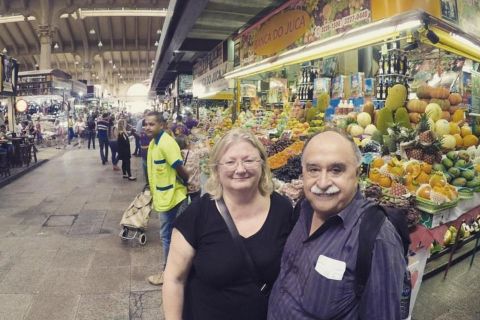
Day trip · 4 hours
Visit the key gastronomic sites of Sao Paulo. See lively local markets and be immersed in the culture of Brazil through the foods and flavors that make it so unique. H...
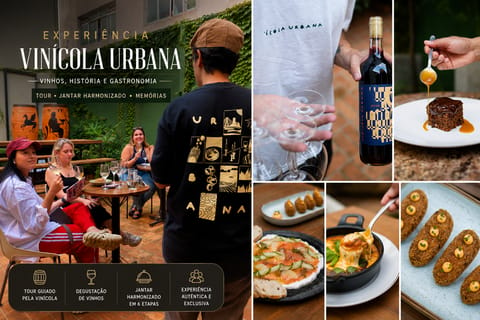
Guided tour · 2 hours
Discover the only urban winery in São Paulo. Take an exclusive tour, learn about winemaking, and enjoy a 6-course dinner paired with award-winning house wines.
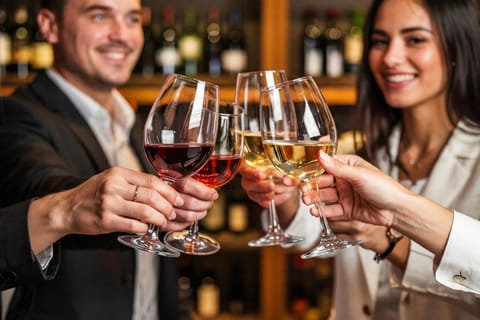
Private tour · 2 hours
Can wine reveal São Paulo’s soul? Taste 4 to 6 wines with pairings from Praça Franklin Roosevelt to Praça da República, tracing immigration and culture. Flexible optio...
São Paulo's signature dishes include Sanduiche de mortadela, Bauru, Sanduiche de pernil, Coxinha, Pastel de feira. See our signature dishes chapter for where to eat each.