Key eras
1554, the Jesuit founding
Jesuit priests Manuel da Nobrega and Jose de Anchieta founded the mission of Sao Paulo de Piratininga on 25 January 1554, near twelve Tupi villages. Bandeirante expeditions that later pushed inland carried beans, corn flour and dried meat in their packs, provisions that jostled and mixed on the trail and gave rise to dishes such as virado and cuscuz paulista, still eaten in the city today.
1887 to 1933, coffee, immigration and the Mercadão
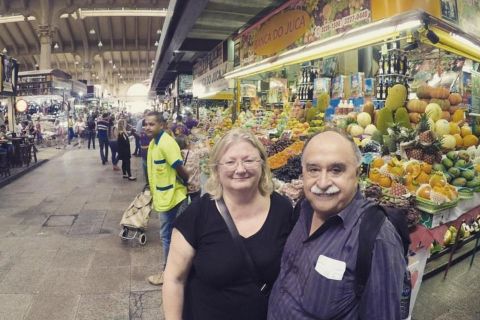
Coffee wealth and the labour shortage left by the 1888 abolition of slavery drove Sao Paulo to recruit European workers; the Hospedaria dos Imigrantes opened in Bras in 1887 and processed over 2.5 million arrivals over 91 years before the city built the Mercado Municipal, which opened on 25 January 1933 and later gave rise to Bar do Mane's oversized mortadella sandwich.
Late 1800s to early 1900s, Italian Bixiga
Italian immigrants, many from Calabria, settled Bixiga in Bela Vista from the late 19th century, opening family cantinas that still line Rua Treze de Maio. Neapolitan pizza changed shape in their ovens, gaining heavier, more generous toppings built for sharing, while Centro's cantinas later shaped filé à parmegiana into a dish Sao Paulo now claims as its own.
1908 to 1912, Japanese Liberdade
The Kasato Maru docked at Santos on 18 June 1908 with 781 Japanese workers bound for Sao Paulo's coffee farms, the start of a wave that brought 242,171 Japanese immigrants to Brazil by 1963. Many who did not adapt to farm work moved to the capital from 1912 and settled Liberdade, opening the tofu makers and grocers that grew into the city's Japantown and its temaki and yakisoba counters.
1880s to 1920s, Arab traders on Rua 25 de Março
Syrian and Lebanese immigration concentrated from 1880 around the old market square and Rua 25 de Março, an area known as the street of the Arabs that grew into Brazil's largest wholesale trading district. Arab immigrants opened the city's first esfiha counters in Bras and Mooca in the early 20th century, a tradition Almanara and the Armenian Casa Garabed still carry.
1930s to 1950s, Northeastern migration
Drought and economic stagnation drove a wave of migration from Brazil's Northeast to Sao Paulo between 1930 and 1950, settling heavily in Bras, Bom Retiro, Pari and Se. The community brought Bahian and sertaneja dishes such as acaraje, cuscuz and carne de sol into the city's everyday eating, carried today by restaurants like Mocoto and stalls such as Rota do Acaraje.
1999 onward, the native-ingredient era
Chef Alex Atala opened D.O.M. in 1999 and built tasting menus around ingredients gathered on Amazon expeditions, among them the herb jambu, the fermented tucupi and the river fish pirarucu, at a time when Brazilian cooking abroad meant little beyond churrasco. The approach earned D.O.M. two stars in Brazil's first Michelin Guide, launched in March 2015.