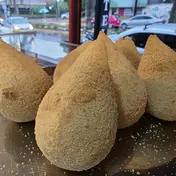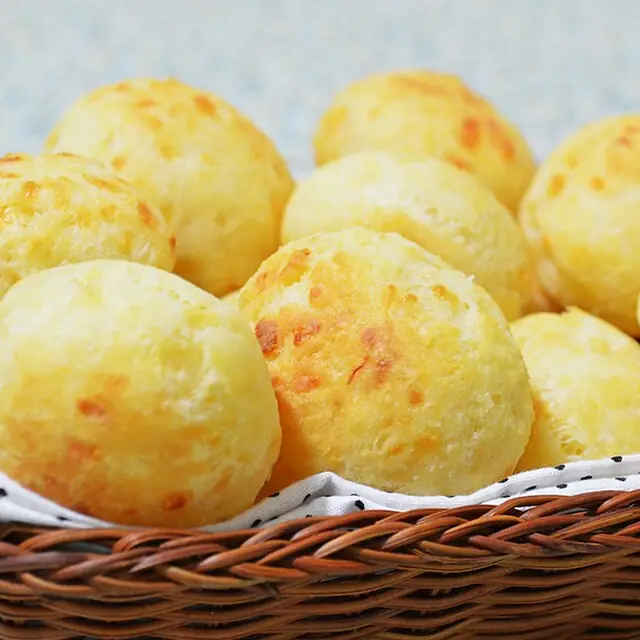
Pao de queijo, Minas Gerais' tapioca and cheese roll, turns up on Sao Paulo tables from padaria counters to A Baianeira, where it opens the meal as a starter.

Pao de queijo began in 18th-century Minas Gerais, where cassava starch stood in for wheat flour that colonial farming could not reliably grow, and later took on cheese and eggs once dairy farming and Afro-Brazilian cooks combined the two staples after slavery ended. Made from polvilho, a cassava starch, rather than wheat flour, it is naturally free of gluten, a fact Sao Paulo bakeries now use to sell it beyond its Minas origins. It is not native to Sao Paulo and this guide makes no such claim, but the city adopted it wholesale: on breakfast counters and at A Baianeira, whose Minas-born chef opens the meal with a pao de queijo starter.

Where to eat Pao de queijo in São Paulo

1 editor pick for Pao de queijo in São Paulo, ranked by editorial score. All São Paulo signature dishes · Pao de queijo across every city.

  • A Baianeira

    Order Pão de queijo, then baião de dois with slow-cooked beef

    A Baianeira is a lively restaurant in the Pietro Maria Bardi Building at MASP, where chef Manuelle Ferraz serves Brazilian cooking rooted in tradition.

Book food experiences in São Paulo

See all 674 food experiences in São Paulo

More places near A Baianeira

Not on this list, but close by, nearest first. Every one is in our guide with its address, hours and what to order.

Make it at home

Serves Makes about 20 small rolls50 minEasy

Ingredients

  • 250ml whole milk
  • 100ml oil
  • 1 teaspoon salt
  • 500g polvilho doce (sweet cassava starch)
  • 2 eggs
  • 250g Minas cheese or a mix of parmesan and mozzarella, grated

Method

  1. Bring the milk, oil and salt to a boil in a saucepan.
  2. Pour the hot liquid over the polvilho in a large bowl and mix with a spoon until it forms a rough, sticky mass. Let cool 10 minutes.
  3. Add the eggs one at a time, mixing well after each, then knead in the grated cheese until the dough is smooth and slightly elastic.
  4. With oiled hands, roll the dough into golf-ball sized pieces and place on a lined tray, spaced apart.
  5. Bake at 180C for 25 to 30 minutes, until puffed and lightly golden, with a hollow centre.
  6. Serve warm; they deflate slightly and firm up as they cool.

Editor tip. The raw dough is sticky by nature; oiling your hands rather than adding flour keeps the texture right.

Common allergens: Dairy, Eggs.