Signature dishes
Feijoada carioca is black beans stewed with salted and smoked pork and beef, served with rice, collard greens, farofa and orange. Rio eats it on Fridays and Saturdays, often to samba.
Where: Academia da Cachaça, Rubaiyat Rio, Beco do Rato, Yayá Comidaria Pop Brasileira
Price: R$40 to R$90 per person
Bolinho de feijoada packs feijoada into a fried dumpling with kale and bacon, served with pork crackling and a lime batidinha; Aconchego Carioca in Praça da Bandeira made it the house signature.
Where: Aconchego Carioca
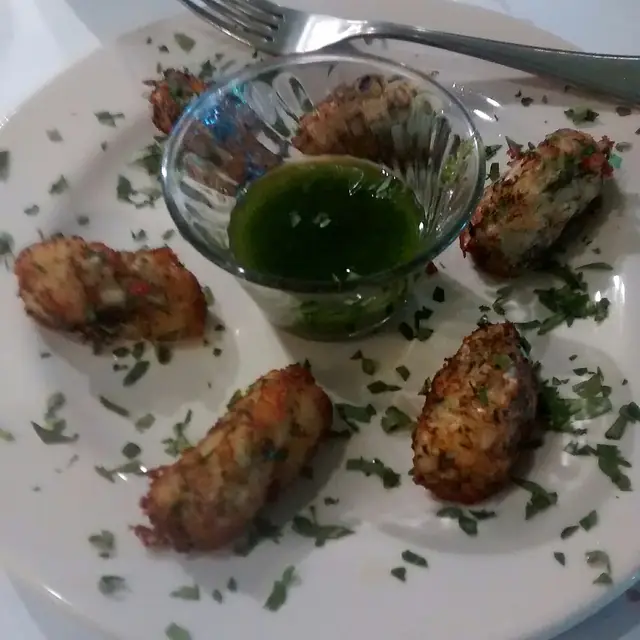
Bolinho de bacalhau is a fried fritter of salt cod and potato, a fixture on Rio botequim counters, eaten hot with a cold chope. Prices ran from about R$8 to R$14 each in 2024.
Where: Bar Urca, Bar da Portuguesa, Velho Adonis, Petisqueira Martinho
Price: About R$8 to R$14 per bolinho (2024)
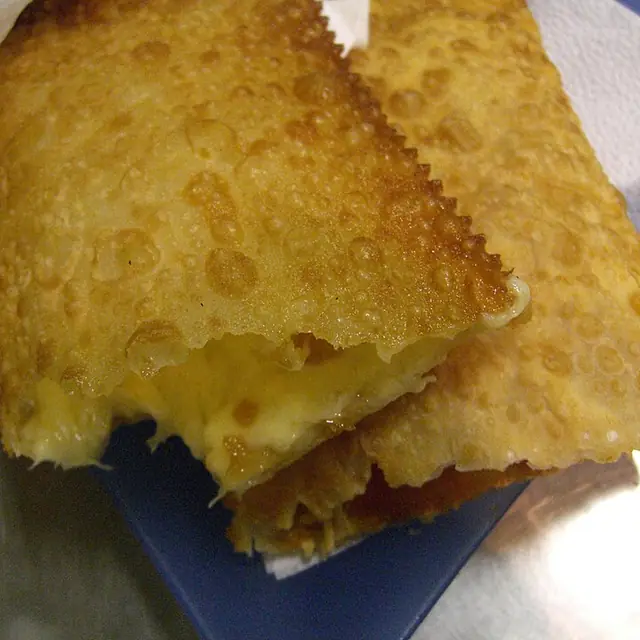
Pastel de feira is a thin rectangle of wheat dough filled with cheese, meat or shrimp and fried to order, the fair-day snack that Rio pairs with a glass of caldo de cana.
Where: Bar Urca, Siri Tijuca, Beco do Rato
Price: About R$9 each at Siri Tijuca (2025)
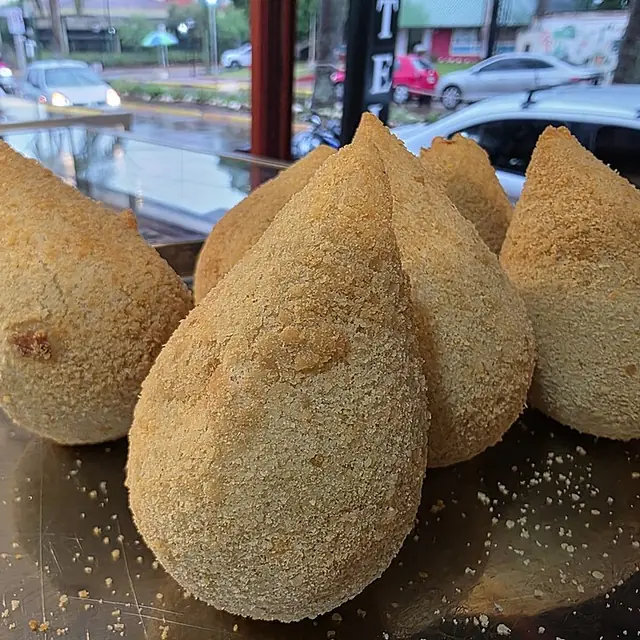
Coxinha is a teardrop of dough around shredded chicken, breaded and fried; in Rio's botequins it is a petisco, with a rabada version at Bar do Momo and a coxinha fondue at Bar da Frente.
Where: Bar do Momo, Bar da Frente
Price: About R$9 per coxinha in the fondue at Bar da Frente (2025)
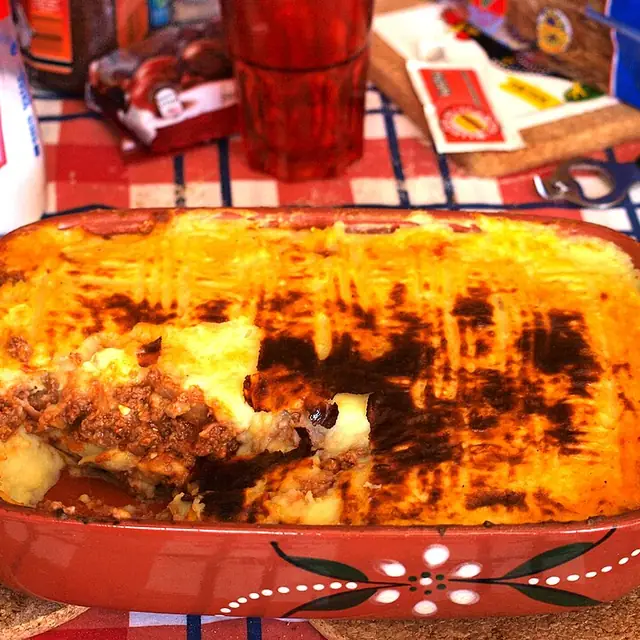
Empada is a small crumbly pie with a lid, baked with shrimp, siri crab, palm heart or chicken; Rio's botequins sell it from the counter next to a draught chope.
Where: Bar Urca, Restaurante Salete
Price: About R$14 each at Bar Urca (2024)
Filé à Oswaldo Aranha is a thick steak covered in fried garlic, served with batatas portuguesas, white rice and egg farofa, named for a diplomat who ordered it in Lapa.
Where: Nova Capela
Price: About R$49 for the chorizo version at Nova Capela (2024)
Picadinho carioca is beef cut into small pieces and stewed with tomato, served with rice, farofa and an egg; Casa Porto in Saúde lists it as a plate of the day.
Where: Casa Porto
Price: About R$45 at Casa Porto (2023)
A galeto is a young chicken grilled over embers, served with lime-and-garlic or orange-and-garlic sauce; Galeto Sat's in Copacabana grills them to order and keeps pouring chope late into the night.
Where: Galeto Sat's
Price: About R$86 for a full galeto at Galeto Sat's (2024)
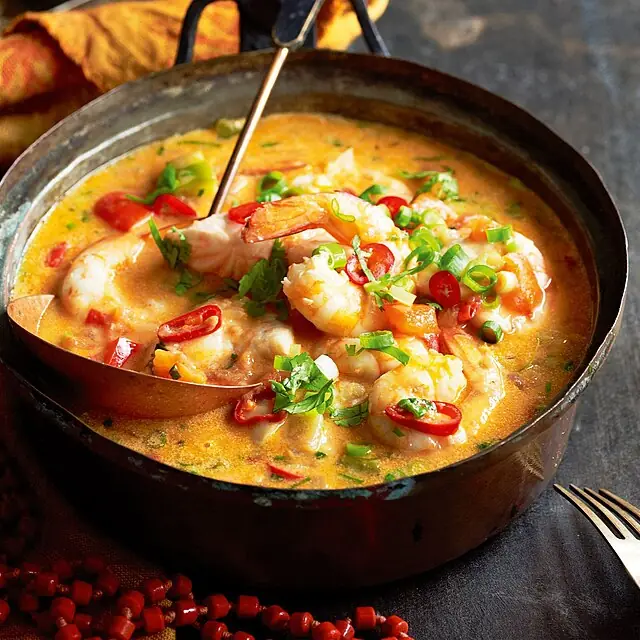
Moqueca is a stew of fish or seafood with tomato, onion and coriander, brought to Rio from Bahia; vegetarian versions use heart of palm in place of the fish.
Where: Aconchego Carioca, Marine Restô, Bar Lagoa
Price: About R$155 for the shrimp moqueca at Bar Lagoa (2024)
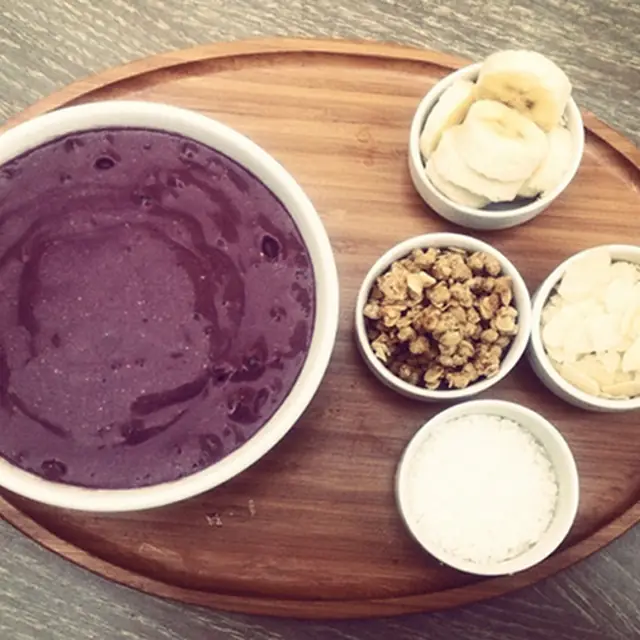
Açaí na tigela in Rio is frozen açaí pulp blended into a cold cream, served in a bowl or a big cup with banana and granola, sold at beach kiosks, juice bars and specialist shops.
Where: Bibi Sucos, Tapí Leblon
Biscoito Globo is a polvilho (manioc starch) biscuit made in Rio and sold by vendors on the beaches and streets, paired with iced mate, the drink the city has sold on the sand since about 1950.
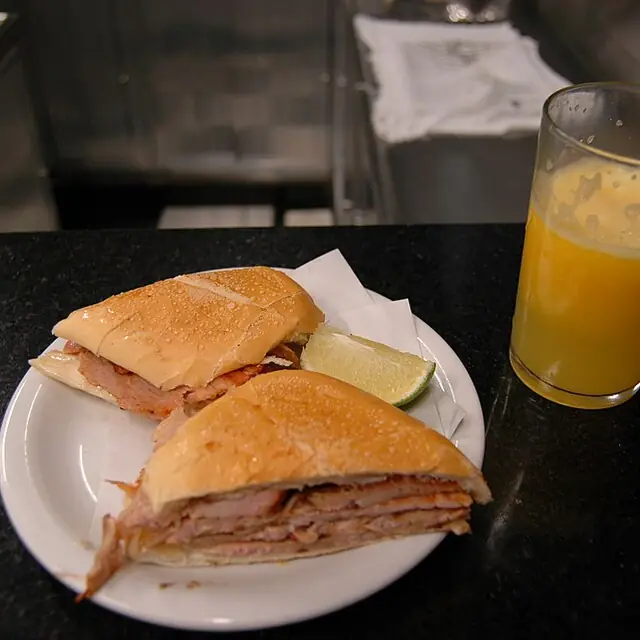
The pernil sandwich piles slow-roast pork leg into a pão francês or pão de leite, often with cheese or pineapple; Opus in Centro and Casa Clipper in Leblon are both known for it.
Where: Opus, Casa Clipper
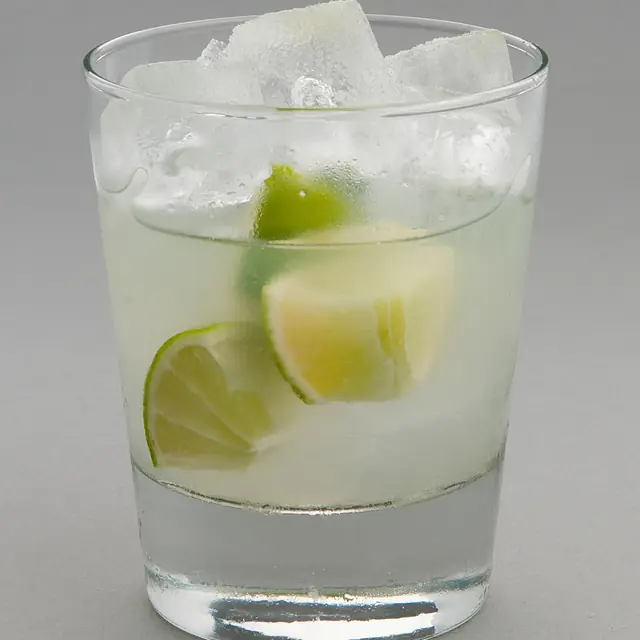
Caipirinha is cachaça muddled with lime and sugar over ice. São Paulo state claims its origin, but Rio listed it as intangible heritage in 2019, and its bars pour fruit versions.
Where: Academia da Cachaça, Jobi
Price: R$29 to R$58 per caipirinha (2024 to 2025)
Chope is draught beer, which Brazilian rules reserve for beer that has not been pasteurised, poured cold with a collar of foam; Rio's botequins serve it in small glasses from about R$8.
Where: Jobi, Bar Urca, Casa Clipper, Nova Capela
Price: About R$8.50 to R$11 for a small chope (2024)
Feijoada carioca
Feijoada carioca is black beans stewed with salted and smoked pork and beef, served with rice, collard greens, farofa and orange. Rio eats it on Fridays and Saturdays, often to samba.
History: Feijoada made with black beans and pork and beef cuts is printed as early as 2 March 1827, when a Recife inn advertised an excellent feijoada à brasileira on Thursdays. In Rio it is served in botequins and restaurants on Fridays or Saturdays all year, often beside rodas de samba. On 23 April, Dia de São Jorge, houses cook it for the saint: Time Out Rio explains that black beans are considered food of Ogum, the orixá linked with Saint George.
Where to try it: Academia da Cachaça, Rubaiyat Rio, Beco do Rato, Yayá Comidaria Pop Brasileira
Bolinho de feijoada
Bolinho de feijoada packs feijoada into a fried dumpling with kale and bacon, served with pork crackling and a lime batidinha; Aconchego Carioca in Praça da Bandeira made it the house signature.
History: Aconchego Carioca opened in Praça da Bandeira in 2002, and a 2022 profile in O Povo na Rua calls the bolinho de feijoada the house's flagship, created by its own cook. The idea set off a series of Brazilian classics shrunk into bolinhos: croquete de vaca atolada, white beans with rabada, pumpkin with carne seca, aipim with bobó. The profile calls it one of the most copied petiscos in Brazil and counts about 10,000 made a month.
Where to try it: Aconchego Carioca
Bolinho de bacalhau
Bolinho de bacalhau is a fried fritter of salt cod and potato, a fixture on Rio botequim counters, eaten hot with a cold chope. Prices ran from about R$8 to R$14 each in 2024.
History: Portuguese food historians place the fritter's origin in the Minho, where a cookbook of 1841 already printed bolinhos de bacalhau, nearer to a patanisca; the first modern recipe appeared in 1904 as bacalhau em bolos enfolados. Brazil took it with the Portuguese kitchen, and Rio's botequins still list it among the petiscos, beside empadas, coxinhas and pastéis.
Where to try it: Bar Urca, Bar da Portuguesa, Velho Adonis, Petisqueira Martinho
Watch out for: Fish, Eggs
Pastel de feira
Pastel de feira is a thin rectangle of wheat dough filled with cheese, meat or shrimp and fried to order, the fair-day snack that Rio pairs with a glass of caldo de cana.
History: The pastel is an immigrant dish with two accounts: one traces it to Chinese spring rolls sold from about 1890, the other to Japanese families in Santos in the 1940s who swapped sake for cachaça in the dough. The habit reached Rio in the 1950s. A food writer quoted by Problemas Brasileiros calls caldo de cana the pastel's perfect partner at street fairs, and Rio's bars now sell it too, among them Bar Urca with its siri filling.
Where to try it: Bar Urca, Siri Tijuca, Beco do Rato
Watch out for: Gluten
Coxinha
Coxinha is a teardrop of dough around shredded chicken, breaded and fried; in Rio's botequins it is a petisco, with a rabada version at Bar do Momo and a coxinha fondue at Bar da Frente.
History: Food historians place the coxinha's origin in greater São Paulo in the 19th century, developed as a cheaper, longer-lasting stand-in for the chicken thighs sold at factory gates; by the 1950s it was already popular in Rio de Janeiro and Paraná, and the first variations appeared. In May 2025 Time Out Rio listed ten coxinhas worth seeking out in the city, among them the Bar do Momo and Bar da Frente entries.
Where to try it: Bar do Momo, Bar da Frente
Watch out for: Gluten
Empada
Empada is a small crumbly pie with a lid, baked with shrimp, siri crab, palm heart or chicken; Rio's botequins sell it from the counter next to a draught chope.
History: The empada probably descends from the large Portuguese pastelões; by the 19th century the small ones were called empadas de caixa, and they served as meals on Catholic days of abstinence from beef and pork. Rio's botequim tradition lists empadas filled with shrimp, palm heart, cheese, siri or cod, and Restaurante Salete in Tijuca built its name on its house-made dough.
Where to try it: Bar Urca, Restaurante Salete
Watch out for: Gluten, Dairy, Eggs
Filé à Oswaldo Aranha
Filé à Oswaldo Aranha is a thick steak covered in fried garlic, served with batatas portuguesas, white rice and egg farofa, named for a diplomat who ordered it in Lapa.
History: The dish is named for the diplomat Oswaldo Aranha, who in the 1930s and 1940s lunched at the Restaurante Cosmopolita in Lapa, a politicians' haunt nicknamed Senadinho, and ate the plate that came to carry his name. He also ordered it at Café Lamas, founded on 4 April 1874, which added it to its menu. Nova Capela, a Lapa bar-restaurant, lists a chorizo version today.
Where to try it: Nova Capela
Watch out for: Eggs
Picadinho carioca
Picadinho carioca is beef cut into small pieces and stewed with tomato, served with rice, farofa and an egg; Casa Porto in Saúde lists it as a plate of the day.
History: Two accounts place the picadinho's rise in the Rio night. One says it fed artists and journalists in the all-night restaurants of Lapa. The other, from Ruy Castro's book A noite do meu bem (2015), says the Austrian Max von Stuckart put it on the menu of the Meia-Noite nightclub near the Copacabana Palace, where the French chef Paul Ruffin used filet mignon tips, butter, tomato and herbs, served with rice, watercress, farinha and a poached egg. Sources date this to the 1940s or the 1950s.
Where to try it: Casa Porto
Watch out for: Eggs
Galeto
A galeto is a young chicken grilled over embers, served with lime-and-garlic or orange-and-garlic sauce; Galeto Sat's in Copacabana grills them to order and keeps pouring chope late into the night.
History: The galeto belongs to the Italian-settled south of Brazil, where small chickens replaced the birds of the Italian passarinhada. Galeto ao primo canto, from the Caxias do Sul area, is named for a chicken of about 25 days; Galeteria Peccini, opened in February 1931 for the first Festa da Uva, is named as the first to sell it. In Rio, Riotur describes Galeto Sat's birds as slaughtered at up to 25 days, about 700g, and recognised the house as Carioca cultural heritage in 2022.
Where to try it: Galeto Sat's
Moqueca
Moqueca is a stew of fish or seafood with tomato, onion and coriander, brought to Rio from Bahia; vegetarian versions use heart of palm in place of the fish.
History: The name comes from Quimbundo mu'keka, a fish stew, or Tupi opokeka, to make a wrapping. Some scholars link the dish to the Portuguese peixada, with African ingredients added; the Bahian version uses dendê palm oil and sometimes coconut milk, and is cooked in a clay pot. Rio drew heavily on Bahia for seafood and Afro-Brazilian dishes, moqueca among them, and today's menus range from shrimp to peach-palm hearts.
Where to try it: Aconchego Carioca, Marine Restô, Bar Lagoa
Watch out for: Fish, Shellfish
Açaí na tigela
Açaí na tigela in Rio is frozen açaí pulp blended into a cold cream, served in a bowl or a big cup with banana and granola, sold at beach kiosks, juice bars and specialist shops.
History: In the Amazon, açaí is traditionally eaten unfrozen and unblended with manioc flour or tapioca, beside fried fish or charque. In the Northeast and South it is blended with frozen fruit, guaraná and cereals into the cold cream popular in Rio, sold at most beach kiosks and juice bars. Its national and export rise began in the 1990s, with demand for healthier foods, and Pará still supplies about 85 percent of Brazil's crop.
Where to try it: Bibi Sucos, Tapí Leblon
Biscoito Globo com mate gelado
Biscoito Globo is a polvilho (manioc starch) biscuit made in Rio and sold by vendors on the beaches and streets, paired with iced mate, the drink the city has sold on the sand since about 1950.
History: Diário do Rio traces Biscoito Globo to 1953, when the brothers Milton, Jaime and João Ponce learned to make polvilho biscuits from a cousin in São Paulo. They sold them in Rio from 1954 and in 1955 named them for the Globo bakery in Botafogo that hired them; in 1963 they partnered with Francisco Nunes Torrão. Iced mate followed around 1950: vendors already sold a home-made iced infusion from drums on Rio's beaches, and Matte Leão then launched its own iced version.
Sanduíche de pernil
The pernil sandwich piles slow-roast pork leg into a pão francês or pão de leite, often with cheese or pineapple; Opus in Centro and Casa Clipper in Leblon are both known for it.
History: Cervantes in Copacabana, open since 1955, says its pernil sandwich was invented by its founding partners Cândido Villar Lema and Cândido Carballo Perez, with pineapple and cheese in pão de leite; the pork is marinated for three to five days and roasted for about six hours. Opus has sold its pernil with cheese on pão francês in Centro since 1968, and Riotur says it is considered the best pernil sandwich in the city.
Where to try it: Opus, Casa Clipper
Watch out for: Gluten, Dairy
Caipirinha
Caipirinha is cachaça muddled with lime and sugar over ice. São Paulo state claims its origin, but Rio listed it as intangible heritage in 2019, and its bars pour fruit versions.
History: Scholars agree the caipirinha was created in the São Paulo countryside; Luís da Câmara Cascudo places it among Piracicaba landowners in the 19th century, while the Brazilian cachaça institute dates it to about 1918 and a flu remedy of lime, garlic and honey with cachaça. By the 1930s it was served in Rio, which listed it as intangible heritage in 2019. A 2009 decree defines it as cachaça, lime and sugar.
Where to try it: Academia da Cachaça, Jobi
Chope
Chope is draught beer, which Brazilian rules reserve for beer that has not been pasteurised, poured cold with a collar of foam; Rio's botequins serve it in small glasses from about R$8.
History: Jacob Wendling opened the Zum Schlauch on Rua da Assembleia in Centro on 3 January 1887, named for the ice-chilled serpentines that cooled the chope; it is described as the city's first beer hall, possibly Brazil's. It moved to Rua da Carioca in 1927 and became Bar Luiz, was declared bankrupt in 2022 and its brand sold at auction in 2023. Time Out Rio's 2024 listings show Bar Urca and Nova Capela pouring Brahma chope at R$10 and R$11.
Where to try it: Jobi, Bar Urca, Casa Clipper, Nova Capela
Watch out for: Gluten