

Tampa is the only American city that invented two regional sandwiches that are still on local menus a century later. The Cuban sandwich was born in Ybor City's cigar factories in the 1890s, when Cuban, Spanish, Sicilian and German immigrants rolled tobacco side by side and ate lunch out of the bread Cuban bakeries baked daily. The deviled crab was born thirty years later during the 1920 cigar workers strike, when those same workers stretched crab meat with day-old Cuban bread and deep-fried portable torpedoes for the picket line. These two dishes plus Cuban bread (La Segunda since 1915), the 1905 Salad (Columbia since 1934), boliche, mojo pork and the cafecito Cuban-coffee ritual together form a regional cuisine that exists only here.
The Tampa Cuban includes Genoa salami. That is the line that separates Tampa's original from Miami's later 1959 exile version. Miami's omits the salami. The Genoa is the Sicilian-immigrant contribution from Ybor City's cigar factories, and the City of Tampa formally declared the Cuban sandwich its signature sandwich in 2012. Cuban bread comes from La Segunda Central Bakery, which has baked the long, light loaves with a palmetto frond on top to vent steam since 1915. La Segunda still bakes 18,000-plus loaves a day and supplies most Cuban-sandwich shops in Tampa.
The deviled crab is the second canonical Tampa dish and the harder one to find outside the city. The torpedo-shaped croquette of blue crab and tomato sofrito, wrapped in Cuban bread crumbs and deep-fried, is the 1920 cigar strike invention. Brocato's on East Columbus Drive has fried them since 1948 with peppers and onions in the Italian-Cuban style. Michelle Faedo's On the Go food truck runs the spicy family recipe. Mauricio Faedo's Bakery on North Florida Avenue runs Cuban bread and deviled crab side by side.
Signature dishes
-
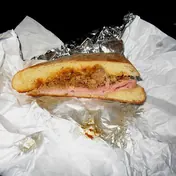
Cuban sandwich (Tampa style) ★ 4.9
The Tampa Cuban: pressed Cuban bread with roast pork, ham, Genoa salami, Swiss cheese, yellow mustard and dill pickles. The Genoa salami separates a real Tampa Cuban from anything else.
Where to try it: Columbia Restaurant, Brocato's Sandwich Shop, Wright's Gourmet House, La Segunda Central Bakery, Alessi Bakery
Price: $10-14
The Cuban sandwich was invented in Ybor City's cigar factories in the 1890s. Cuban, Spanish, Sicilian and German immigrants worked rolling cigars side by side, and the sandwich is a fusion of their cuisines. The Sicilian Genoa salami is the Tampa-Miami line: Miami's later 1959 exile version omits the salami. The City of Tampa formally declared the Cuban sandwich its signature sandwich in 2012. Roast pork is mojo-marinated overnight with sour orange and garlic before going on the bread.
Watch out for: Gluten, Dairy
-
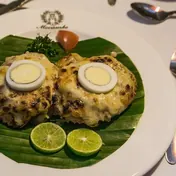
Deviled crab (Tampa devil crab) ★ 4.7
A torpedo-shaped croquette of blue crab meat in spicy tomato sofrito, wrapped in a paste made from Cuban bread crumbs and deep-fried until golden.
Where to try it: Brocato's Sandwich Shop, Michelle Faedo's On the Go, Mauricio Faedo's Bakery, Alessi Bakery, La Teresita
Price: $4-7 each
Deviled crabs originated in Ybor City's Spanish-Cuban-Italian immigrant community during the 1920 cigar workers strike. Cigar workers caught blue crabs from Tampa Bay and used day-old Cuban bread to stretch the meat into a portable, deep-fried croquette they could carry on the picket line. The Spanish croquette tradition mixed with Cuban sofrito and Sicilian peppers and onions. Francisco Oscar Miranda sold devil crabs from a motorized bike across Tampa from 1920 to 1953. The torpedo shape is the signature.
Watch out for: Gluten, Shellfish
-
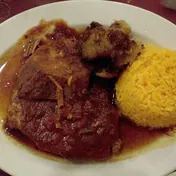
Boliche (Cuban stuffed pot roast) ★ 4.6
Eye-of-round beef stuffed with chorizo, garlic and olive paste, slow-braised in red wine and tomato until the meat slices clean and the stuffing.
Where to try it: Columbia Restaurant, La Teresita, Brocato's Sandwich Shop
Price: $22-32
Boliche is the Cuban Sunday roast that Tampa inherited from Cuban immigrants in the 1890s. The original recipe uses eye-of-round or top round, butterflied and rolled around a stuffing of chorizo, garlic, olives and capers. Braised slow with red wine, tomato and sour orange, the dish is a Sunday dinner staple at the Columbia Restaurant and La Teresita. The Spanish version is similar but Tampa's adds the Cuban sour orange and the mojo accent.
Book food experiences in Tampa
-
1905 Salad ★ 4.5
Iceberg lettuce, julienned ham, Swiss cheese, grated Romano, pimento-stuffed olives, tomato and Worcestershire-and-garlic dressing. The patio fills first.
Where to try it: Columbia Restaurant
Price: $12-16
The 1905 Salad was created at the Columbia Restaurant in Ybor City by maitre d' Tony Noriega in 1934, named for the restaurant's 1905 founding year. The salad became the Columbia's signature dish over five Gonzmart family generations and is now served at all six Florida Columbia locations. Tampa Magazine and the Tampa Bay Times rank it as the city's most-served signature plate. The Columbia keeps the dressing recipe secret and trains waitstaff to toss tableside in a chilled wood bowl.
Watch out for: Dairy
-
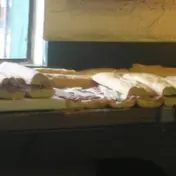
Cuban bread (Pan Cubano) ★ 4.8
Long, light, crusty bread with a tender crumb. A palmetto frond is baked into the top of each loaf to vent steam and give the signature Tampa Cuban bread.
Where to try it: La Segunda Central Bakery, Mauricio Faedo's Bakery, Alessi Bakery
Price: $5-8 per loaf
Cuban bread arrived in Tampa with Cuban cigar workers in the 1880s and 1890s. La Segunda Central Bakery in Ybor City has baked it daily since 1915 using the same long-form recipe: high-hydration dough, a quick rise and a hot, steamy oven. The palmetto frond baked on top is a Florida-Cuba innovation: the frond was cheap, abundant, and the trapped steam gave the bread its signature crackly crust. La Segunda bakes 18,000+ loaves a day and supplies most Cuban-sandwich shops in Tampa.
Watch out for: Gluten
-
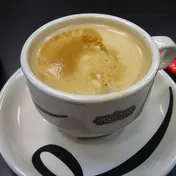
Cafe con Leche (Cuban coffee with milk) ★ 4.7
Cuban espresso shot pulled with sugar (the cafecito), then pulled long with hot steamed milk. Tampa's morning ritual on every Cuban counter from West.
Where to try it: La Teresita, Etto's Cuban Coffee, Cafe Don Jose, La Segunda Central Bakery, Mauricio Faedo's Bakery
Price: $2-4
Cafe con leche arrived with Cuban immigrants to Tampa in the 1880s and has run on every Cuban counter in the city since. The Cuban method (the cafecito): pull espresso through a stovetop moka pot, dump the first dark shot over sugar in a cup, beat with a spoon until pale brown and frothy (espumita), then top with the rest. Cafe con leche extends this with steamed milk. La Teresita on Columbus Drive has poured cafecito since 1972; Versailles in Miami serves the same. Tampa's daily Cuban coffee culture is the longest-running unbroken food tradition in the city.
Watch out for: Dairy
-
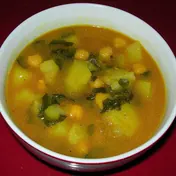
Spanish bean soup (Garbanzo) ★ 4.5
Garbanzo bean and chorizo soup with potato, ham hock and saffron broth. The Sunday-dinner staple at the Columbia Restaurant since 1905, plus Cuban diners.
Where to try it: Columbia Restaurant, La Teresita, Cafe Don Jose
Price: $8-12
Spanish bean soup is the Sunday-dinner classic that the Columbia Restaurant in Ybor City has served since 1905. The Asturian-Spanish recipe combines garbanzo beans, smoked chorizo, ham hock, potato and saffron in a clear broth, served as a starter or a meal. Cuban diners across Tampa now run the same soup. The Columbia plates over 5,000 bowls a week between its six Florida locations.
-
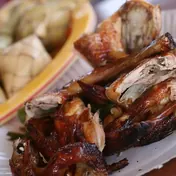
Mojo Pork (Lechon Asado) ★ 4.6
Whole pork shoulder marinated in sour orange, garlic, oregano and cumin, then slow-roasted until the skin crackles and the meat pulls apart with a fork.
Where to try it: La Teresita, Columbia Restaurant, Brocato's Sandwich Shop, Wright's Gourmet House
Price: $14-22 (per plate)
Mojo-marinated pork is the Cuban Christmas Eve (Nochebuena) tradition that runs through Tampa Cuban kitchens. The mojo marinade (sour orange juice, garlic, oregano, cumin, salt) tenderizes the pork over 12 to 24 hours, and the slow roast gives the signature pulled-pork texture used in the Cuban sandwich. La Teresita and the Cuban bakeries take Nochebuena pork orders by late November every year.
-
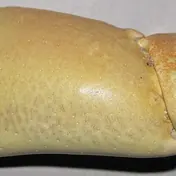
Florida stone crab claws ★ 4.7
Cold-boiled stone crab claws served with mustard sauce. Reservations recommended on weekends. The chef sources from local Florida producers.
Where to try it: Ulele, Bern's Steak House, The Pearl, Lilac
Price: $45-90 (depending on claw size)
Florida stone crab is a sustainable fishery in which only the larger claw is taken from the live crab, which is then returned to the water to regrow the claw. The fishery is regulated October 15 to May 1. Joe's Stone Crab in Miami built the regional reputation in 1913; Tampa carries claws at the Sparkman Wharf fish counters and Tampa restaurants like Ulele and Bern's serve them in season.
Watch out for: Shellfish
-
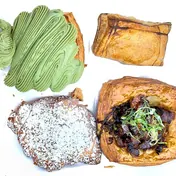
Guava pastelito ★ 4.5
Flaky puff-pastry turnover filled with guava paste, dusted with sugar. Walk-ins welcome at the bar. The bar program is a strong second visit.
Where to try it: La Segunda Central Bakery, Mauricio Faedo's Bakery, Alessi Bakery, La Caridad Bakery
Price: $1.50-3 each
The guava pastelito (sometimes pastelitos de guayaba) arrived in Tampa with Cuban bakers in the late 1800s. La Segunda Central Bakery has filled them with sweet guava paste since 1915. The cream-cheese-and-guava variant (pastelito de guayaba y queso) appeared later. Cuban bakeries in Ybor and West Tampa sell pastelitos by the dozen for $1.50 to $3 each.
Watch out for: Gluten, Dairy
-
Florida grouper sandwich ★ 4.4
Fresh Gulf grouper, fried or grilled or blackened, on a toasted brioche or Cuban bun with tartar sauce, lettuce, tomato and lemon. The Tampa Bay regional.
Where to try it: Ulele, Half Moon Seafood Company, The Rusty Pelican, Wright's Gourmet House
Price: $16-22
The Florida grouper sandwich is the Gulf Coast regional fish sandwich, anchored on the daily catch from Madeira Beach and St Petersburg fish markets. Frenchy's Cafe in Clearwater Beach claims the regional benchmark since 1981, with the Original Grouper Sandwich on a kaiser roll. Tampa restaurants (Ulele, Doc Ford's, Half Moon Seafood at Sparkman Wharf) all carry versions through grouper season.
Watch out for: Gluten, Fish
-
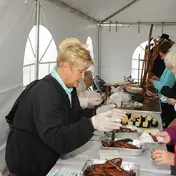
Smoked mullet ★ 4.4
Whole Florida mullet smoked over oak or pecan until the flesh is golden and the skin crispy. The Old Florida fish that runs on Tampa Bay docks and at fish.
Where to try it: Ulele
Price: $12-18
Smoked mullet is the most-Florida fish dish: mullet is the working-class catch from Tampa Bay, abundant and oily, and the smoking tradition runs back to the Tocobaga who built shell mounds on the Hillsborough River. Ted Peters Famous Smoked Fish in St Petersburg has run since 1951; Skipper's Smokehouse in Tampa keeps the tradition with daily-smoked mullet plates and a Sunday Smokehouse Brunch.
Watch out for: Fish
-
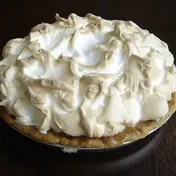
Key lime pie ★ 4.5
Tart Key lime juice mixed with sweetened condensed milk and egg yolks, poured into a graham cracker crust, baked just until set, then chilled.
Where to try it: Columbia Restaurant, Bern's Steak House, Ulele, Wright's Gourmet House
Price: $9-14
Key lime pie originated in the Florida Keys in the 1890s when sweetened condensed milk became widely available. The Joe's Stone Crab and Columbia Restaurant versions cemented the regional reputation. Florida designated it the official state pie in 2006. Tampa restaurants serve a version close to the Conch Republic original: pale yellow filling (true Key limes are yellow, not green) in a graham cracker crust with whipped cream.
Watch out for: Gluten, Dairy, Eggs
-
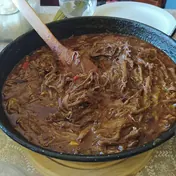
Ropa Vieja (Cuban braised beef) ★ 4.5
Slow-braised shredded flank steak in tomato, peppers, onion and white wine, served with yellow rice and black beans. Cuba's national dish and the staple.
Where to try it: Columbia Restaurant, La Teresita, Cafe Don Jose
Price: $18-26
Ropa vieja (literally 'old clothes' for the shredded appearance) is the national dish of Cuba and arrived in Tampa with the Cuban cigar workers of the 1880s. La Teresita and the Columbia Restaurant both run versions. The dish stretches flank or skirt steak by braising it in a tomato-pepper-onion sofrito until the meat falls apart.
-
Yuca fries (Yuca frita) ★ 4.4
Cassava root boiled, then deep-fried until golden, served with garlic mojo dipping sauce. The Cuban alternative to french fries on every Cuban diner menu.
Where to try it: La Teresita, Brocato's Sandwich Shop, Columbia Restaurant, Wright's Gourmet House
Price: $5-9
Yuca (cassava) has been a Cuban staple for centuries, brought to Cuba by indigenous Taino people and adopted by Spanish colonists. Tampa Cuban kitchens fry yuca after boiling to give a crispy outside and a fluffy interior. La Teresita and Brocato's serve them with mojo (sour orange and garlic) on the side. The crispy mojo-yuca is the side dish that pairs with Cuban sandwiches and palomilla steak across Tampa.
-

Florida strawberry shortcake ★ 4.4
Buttermilk biscuit split and layered with macerated Plant City strawberries and whipped cream. The seasonal Florida dessert that runs February through.
Where to try it: Bern's Steak House, Wright's Gourmet House, Datz
Price: $9-14
Florida strawberry shortcake is the seasonal dish of the Plant City strawberry harvest, which runs February through April. Parkesdale Farm Market in Plant City has served the most-famous version since 1956 (a generation before the Florida Strawberry Festival, which runs every March since 1930). Tampa restaurants run shortcake specials throughout the season.
Watch out for: Gluten, Dairy, Eggs
-

Jai Alai IPA ★ 4.5
Cigar City Brewing's flagship India Pale Ale. Tampa craft beer's calling card since 2009, with citrus-forward hops and a 7.5% ABV.
Where to try it: Cigar City Brewing
Price: $5-8 (pint)
Jai Alai IPA launched in 2009 from Cigar City Brewing's West Spruce Street brewery. The beer is named after the Basque-Cuban handball sport that ran at Tampa's Jai Alai fronton from 1953 until 1998. Founder Joey Redner built Cigar City around Florida-themed beers; Jai Alai became the flagship and is now distributed across Florida and the eastern US. The taproom at 3924 W Spruce pours fresh Jai Alai plus the variants (Black Magick, Florida Man, Hunahpu's Imperial Stout).
Watch out for: Gluten

Tampa Cuban vs Miami Cuban: the Genoa salami rule
The Tampa Cuban includes Genoa salami; the Miami Cuban does not. Both use Cuban bread (longer in Tampa, shorter and softer in Miami), roast pork, ham, Swiss cheese, yellow mustard and dill pickles. Both are pressed flat on a plancha or under a foil-wrapped brick until the cheese melts. Neither uses mayonnaise. The salami is the line. Tampa claims the original sandwich from the 1890s Ybor City cigar factories. Miami's variant came later through the 1959 Cuban exile counters along Calle Ocho. Smithsonian historians and the Florida Memory archives both place the original in Tampa. The City of Tampa formally codified the recipe in 2012 with the Genoa included.
Cuban bread: the bread that holds everything together
Cuban bread is the bread that holds Tampa's regional cuisine together. La Segunda Central Bakery on 15th Street in Ybor has baked it daily since 1915 using the same recipe: high-hydration dough, a quick rise, a hot steamy oven, and a palmetto frond placed on top of each long loaf to vent steam. The bread is light, with a crackly crust and a tender open crumb. La Segunda bakes 18,000+ loaves a day. Alessi Bakery (since 1912 in West Tampa) and Mauricio Faedo's Bakery (since 1955 on North Florida Avenue) bake versions. Cuban bread tastes best the day it is baked; by the next morning it is for Cuban toast (buttered and griddled). For the Cuban sandwich, the bread must be fresh.
The deviled crab: the 1920 cigar-strike invention
The deviled crab is a torpedo-shaped croquette of blue crab meat in spicy tomato sofrito, wrapped in a paste made from Cuban bread crumbs and deep-fried until golden. The dish was born during the 1920 Ybor cigar workers strike. Cigar workers caught blue crabs from Tampa Bay, stretched the meat with day-old Cuban bread, peppers, onions and tomato sofrito, and deep-fried the portable torpedoes to carry on the picket line. Francisco Oscar Miranda sold devil crabs from a motorized bike across Tampa from 1920 to 1953. The Spanish croquette tradition mixed with Cuban sofrito and Sicilian peppers to create a dish that exists nowhere else in America. Best at Brocato's Sandwich Shop (1948), Michelle Faedo's On the Go truck and Alessi Bakery's deli counter.
Cafecito and the Tampa Cuban coffee ritual
Cuban coffee is the morning ritual that connects every Cuban counter in Tampa. The cafecito is the small espresso pulled with sugar already in the cup: dump the first dark drops from the moka pot over sugar, beat with a spoon until pale and frothy (espumita), then add the rest. The cafe con leche is the cafecito extended with hot steamed milk. The colada is a larger cafecito served with small paper cups for sharing. Best at La Teresita's counter on Columbus Drive (since 1972), Etto's Cuban Coffee in Ybor (modern coffee-shop version plus Cuban toast), Cafe Don Jose on West Columbus and Mauricio Faedo's Bakery counter. Cash works at most; a cafecito costs $2 to $4.
Frequently asked: signature dishes in Tampa
What is the difference between a Tampa Cuban and a Miami Cuban?
The Tampa Cuban includes Genoa salami; the Miami Cuban omits it. Both use Cuban bread, roast pork, ham, Swiss cheese, yellow mustard and dill pickles, pressed flat. The Genoa salami is the Sicilian contribution from Ybor City's 1890s cigar factories. Tampa claims the original sandwich; Miami's later version came through 1959 Cuban exile counters. Never mayonnaise. The City of Tampa formally declared the Cuban sandwich its signature sandwich in 2012 with the Genoa included.
What is a Tampa deviled crab?
A deviled crab (or devil crab) is a torpedo-shaped croquette of blue crab meat in spicy tomato sofrito, wrapped in a paste made from Cuban bread crumbs and deep-fried. Born in Ybor City during the 1920 cigar workers strike, when workers stretched crab with day-old Cuban bread for portable lunches. Best at Brocato's Sandwich Shop, Michelle Faedo's On the Go food truck and Mauricio Faedo's Bakery.
Where to buy authentic Cuban bread in Tampa?
La Segunda Central Bakery on 15th Street in Ybor City has baked Cuban bread daily since 1915, with 18,000-plus loaves a day. Alessi Bakery on West Cypress (since 1912) and Mauricio Faedo's Bakery on North Florida Avenue (since 1955) are the other two. The bread is best the day it is baked; the long loaves keep about 48 hours.
What is the 1905 Salad?
The 1905 Salad is iceberg lettuce, julienned ham and Swiss cheese, grated Romano, pimento-stuffed olives and tomato in a Worcestershire-and-garlic dressing, tossed tableside in a wood bowl at the Columbia Restaurant in Ybor City. Created in 1934 by maitre d' Tony Noriega and named for the Columbia's 1905 founding year. Served at all six Florida Columbia locations under the Gonzmart family.
What is boliche?
Boliche is the Cuban Sunday-dinner classic: eye-of-round beef stuffed with chorizo, garlic, olives and capers, slow-braised in red wine and sour orange. Served with yellow rice and black beans. The dish arrived in Tampa with Cuban immigrants in the 1890s and is on every Cuban menu in the city, plus the Columbia Restaurant's Sunday special.