
The plates that define Lima: what they are, where they came from, and where to eat the canonical version.
Signature dishes
-
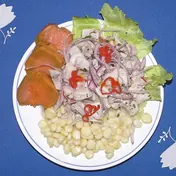
Ceviche ★ 4.9
Lima ceviche is the Pacific-coast dish of raw white fish cured in lime juice for 5 minutes, dressed with red onion, aji limo, salt, served with sweet potato and choclo (Andean corn).
Where to try it: La Mar Cebicheria, Pescados Capitales, Punto Azul, El Mercado, Canta Rana
Price: S/35-65
Pre-Inca Moche coastal cooks marinated fish in tumbo passionfruit for centuries. Spanish citrus from 1532 replaced tumbo; Japanese Nikkei technique from 1899 shortened the marinade to 5 minutes, abandoning the Mexican-style long cure. Ceviche became Peru's national dish; June 28 is the national day since 2008.
Watch out for: Fish, Shellfish
-
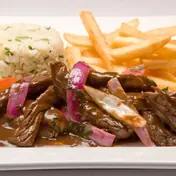
Lomo Saltado ★ 4.9
Lomo saltado is the canonical chifa dish: beef strips stir-fried in a wok with red onion, tomato, aji amarillo and soy sauce, served with French fries and white rice.
Where to try it: Madam Tusan, Wa Lok, Salon Capon, El Bolivariano, Isolina
Price: S/35-55
Lomo saltado emerged from the 1849-1874 Chinese contract-labour wave that settled around Calle Capon in Lima's Barrio Chino. Cantonese wok technique met Peruvian aji and the Spanish-introduced beef and tomato; the French fries arrived in the 20th century. Now the most-ordered Peruvian dish nationwide.
Watch out for: Gluten, Soy
-
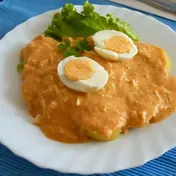
Aji de Gallina ★ 4.8
Aji de gallina is shredded poached chicken in a cream sauce of yellow aji amarillo, walnuts, queso fresco and bread soaked in milk, served over white rice with potato and olive.
Where to try it: El Bolivariano, Isolina, Astrid y Gaston, Cosme
Price: S/25-45
A Spanish-colonial criolla dish descended from manjar blanco, the medieval Spanish almond-thickened poultry. Walnut and queso fresco replaced the almonds in viceregal Lima kitchens; aji amarillo gave the sauce its yellow colour and gentle heat. Now the canonical Sunday lunch criolla dish across Lima homes. El Bolivariano in Pueblo Libre, Isolina in Barranco and Astrid y Gaston all keep defensible versions on the menu year-round.
Watch out for: Dairy, Gluten, Tree nuts
Book food experiences in Lima


-
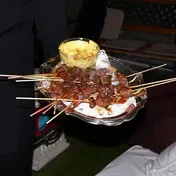
Anticuchos ★ 4.8
Anticuchos are skewers of beef heart marinated in aji panca, garlic, cumin and red wine vinegar, grilled over coals and served with corn and boiled potato.
Where to try it: Grimanesa Vargas Anticuchos, Ayahuasca, Isolina, El Bolivariano
Price: S/15-30 per stick
Anticuchos descend from the African enslaved communities of colonial Lima (1530s-1850s), who received the rejected beef-heart cuts and turned them into the city's signature street grill. Doña Grimanesa Vargas opened her Miraflores anticucho cart in 1974; the dish carries Lima's evening grill culture.
-
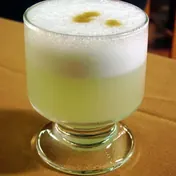
Pisco Sour ★ 4.9
Peru's national cocktail: pisco (grape brandy), fresh lime juice, simple syrup, egg white and three drops of Angostura bitters, shaken hard and double-strained.
Where to try it: Carnaval, Lady Bee, Ayahuasca, Bar Cordano
Price: S/22-45
Invented in the early 1920s at Lima's Morris Bar by American bartender Victor Vaughen Morris; Peruvian bartender Mario Bruiget codified the modern recipe by adding Angostura bitters and egg white. The first Saturday of February is the Dia Nacional del Pisco Sour since 2003; Peru and Chile both claim it.
Watch out for: Egg
-
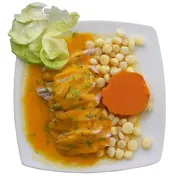
Tiradito ★ 4.7
Tiradito is the Nikkei sliced cousin of ceviche: thin sashimi-cut slices of raw fish dressed with aji amarillo cream, lime and salt, served without onion.
Where to try it: Maido, La Mar Cebicheria, Pescados Capitales, Mayta
Price: S/35-65
Tiradito emerged from the Japanese Nikkei community of 1899 onwards, when the first wave of Japanese contract workers settled in Lima and Callao. Japanese sashimi cutting technique met Peruvian aji and citrus; without onion, the slice stays pristine. Maido under Mitsuharu Tsumura made tiradito a global Nikkei signature; Costanera 700 and Osaka are the other modern reference rooms in Miraflores and San Isidro.
Watch out for: Fish
-
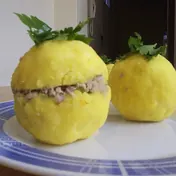
Causa Rellena ★ 4.7
Causa rellena is a cold layered terrine of mashed yellow potato seasoned with aji amarillo, lime and oil, layered with chicken, tuna, crab or avocado, plated as a cylinder.
Where to try it: La Mar Cebicheria, Punto Azul, Cosme, El Bolivariano
Price: S/22-38
Causa descends from pre-Columbian Andean potato cuisine; the modern layered form emerged in 19th century Lima, the name meaning a fundraising cause during the War of the Pacific (1879-1883). The yellow papa amarilla and aji amarillo give the canonical Lima version its colour. Cosme, Isolina and Wa-Lok keep the classic chicken or tuna stuffing alive; the modern Nikkei versions stack avocado, mayo and sashimi-grade fish.
Watch out for: Fish if tuna-filled
-
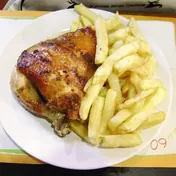
Pollo a la Brasa ★ 4.7
Pollo a la brasa is Peru's charcoal-roasted whole chicken marinated in soy, vinegar, beer, cumin and aji panca, served with French fries, salad and three aji sauces.
Where to try it: Pardos Chicken Benavides, Tanta Larcomar
Price: S/35-65 per quarter chicken
Invented in 1950 by Swiss-Peruvian Roger Schuler at Granja Azul in Santa Clara, Ate, outside Lima; the rotisserie technique used a custom spit built by fellow Swiss metalworker Franz Ulrich. Declared a Peruvian cultural patrimony in 2010; the third Sunday of July is the Dia Nacional del Pollo a la Brasa nationwide.
Watch out for: Gluten if marinade includes soy
-
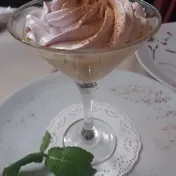
Suspiro a la Limena ★ 4.7
Suspiro a la limena is Lima's signature dessert: a layer of manjar blanco (dulce de leche) topped with port-flavoured Italian meringue and dusted with cinnamon, served in a glass.
Where to try it: El Bolivariano, Astrid y Gaston, Cosme, Isolina
Price: S/18-32
The name 'sigh of a Lima woman' was given by 19th-century poet and writer Jose Galvez Barrenechea to his wife Amparo Ayarza's recipe. The dish formalised in mid-19th-century Lima patisseries; queso fresco-fortified manjar replaced earlier almond-thickened versions. Now the canonical end of every criolla meal in Lima.
Watch out for: Dairy, Egg
-
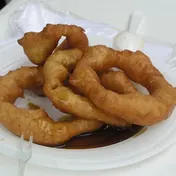
Picarones ★ 4.7
Picarones are Lima's ring-shaped fritters of sweet potato (camote) and squash (zapallo) dough, deep-fried in vegetable oil and served warm with chancaca (raw cane syrup).
Where to try it: Picarones Mary, Anticucheria El Tio Mario, El Bolivariano
Price: S/12-22 per plate of six
Picarones descend from Spanish-colonial bunuelos adapted in Lima with native sweet potato and Andean squash, recorded as far back as the 1600s. They were the dessert of the African and indigenous Andean communities of viceregal Lima; the Sunday-evening picarones cart is a Lima tradition unbroken since.
Watch out for: Gluten
-
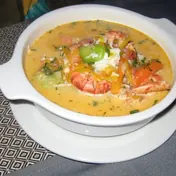
Chupe de Camarones ★ 4.6
Chupe de camarones is the Lima-Arequipa creamy river-shrimp chowder: prawns simmered with aji panca, potato, evaporated milk, queso fresco, choclo, rice and a poached egg per bowl.
Where to try it: El Bolivariano, Astrid y Gaston, Pescados Capitales
Price: S/45-75
A criolla colonial chowder built on the Arequipa river-shrimp catch and brought along the highway to Lima during the 19th century. The queso fresco-and-milk thickener is the limena innovation; the aji panca colour comes from the Andean foothills. The Wednesday lunch standard for criolla restaurants since the 19th century. Las Brujas de Cachiche, El Bolivariano and Punto Azul keep the dish in regular rotation through the Lima winter.
Watch out for: Shellfish, Dairy, Egg
-
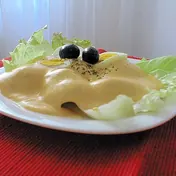
Papa a la Huancaina ★ 4.6
Papa a la huancaina is sliced boiled yellow potato served cold under a thick sauce of queso fresco, aji amarillo, evaporated milk and crackers, garnished with olive and egg.
Where to try it: El Bolivariano, Isolina, Cosme, Astrid y Gaston
Price: S/18-32
Named for Huancayo in the central Andes; the dish emerged in the late 19th century along the central railway between Lima and the Mantaro valley. The cracker thickener replaced bread; aji amarillo and queso fresco give the canonical yellow sauce. Now a Sunday lunch starter across criolla Lima rooms; El Bolivariano, Isolina and La Choza Nautica run the most-cited versions in the city.
Watch out for: Dairy, Gluten
Signature Dishes in Lima, FAQ
What food is Lima known for?
Lima's signature dishes include Ceviche, Lomo Saltado, Aji de Gallina, Anticuchos, Pisco Sour. See our signature dishes chapter for where to eat each.