


How Lima came to eat the way it does: the people, migrations and accidents that shaped the plate.
Key eras
-
Pre-Columbian Moche and Inca (200-1532)
The Pacific-coast Moche civilisation (200-700 AD) cured raw fish in tumbo, banana passionfruit, and ajies, the technique that became ceviche. The Andean Inca built food on the trio of potato (over 4000 varieties), maize and quinoa; the chuno (freeze-dried potato) and the pachamanca earth oven both pre-date the Spanish.
Taste it todayCeviche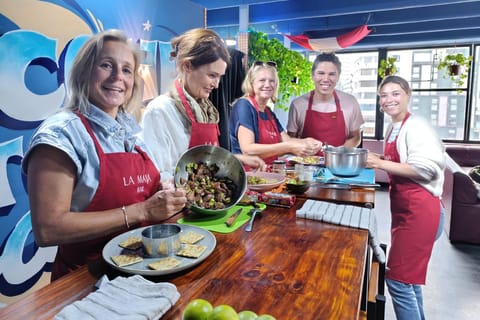 Book now
Taste this chapter
Miraflores, Lima: Peruvian cooking class with ceviche, tartare, and pisco sour
-
Spanish colonial Lima (1535-1821)
Pizarro founded Lima in 1535 as Ciudad de los Reyes. Spanish lemons and limes replaced tumbo in ceviche, onions arrived, and beef and pork joined the Andean larder. African enslaved cooks shaped tacu tacu, anticuchos (beef-heart skewers) and the early picanteria tradition. Cantinas opened around Plaza Mayor.
-
Chinese contract labour and chifa (1849-1874)
Between 1849 and 1874 around 100000 Chinese contract workers (mostly Cantonese) arrived to work coastal sugar plantations after slavery was abolished. After their contracts they settled around Calle Capon in Centro Lima; Barrio Chino emerged. The fusion of Cantonese stir-fry technique with Peruvian aji and rice produced chifa: lomo saltado, arroz chaufa, wantan frito.
Taste it todayLomo Saltado -
Japanese immigration and Nikkei (1899-1940)
From 1899 Japanese immigrants arrived as plantation workers and later opened bodegas and barber shops in Lima. The crossover of Japanese sashimi technique with Peruvian ceviche produced tiradito, the sliced ceviche with no onion; the broader Nikkei cuisine matured under Humberto Sato at Costanera 700 and reached the world via Mitsuharu Tsumura at Maido.
-
Mistura era and the Gaston Acurio movement (2005-2019)
Gaston Acurio reframed Peruvian food as a national project: Astrid y Gaston (1994), La Mar cevicheria (2005), then the Mistura food festival (2008-2019) that gathered street vendors, chefs and producers under one tent. Central, Maido and Astrid y Gaston entered The World's 50 Best top 10 by 2015. Lima became the South American food capital.
-
Maido #1 World's 50 Best (2025)
On 19 June 2025 in Turin, Mitsuharu Tsumura's Maido was named The World's Best Restaurant 2025, the first Peruvian house to hold the top spot since Central did in 2023. The Nikkei Experience tasting menu (14 courses across the Lima coast and Peruvian Amazon) is the headline. Lima held both #1 and #4 (Kjolle) in Latin America's 50 Best 2025.
Immigrant influences
- Spanish (1532-1821)
- Citrus (lemons and limes for ceviche), beef and pork, wheat for the morning bread, the cantina format around Plaza Mayor.
- African (1530s-1850s)
- Anticuchos (beef-heart skewers seasoned with aji panca, originally rejected cuts given to enslaved workers), tacu tacu (rice and beans pan-fried patty), picarones (sweet-potato and squash fritters).
- Chinese Cantonese (1849-1874 wave)
- Chifa: lomo saltado (the wok-stirred beef, onion, tomato and fries dish), arroz chaufa (Peruvian fried rice), wantan frito, aeropuerto (rice plus noodles plus meat combo), Madam Tusan and Wa Lok institutionalised it.
- Japanese Nikkei (1899 onwards)
- Nikkei cuisine: tiradito (sliced ceviche without onion), miso anticuchos, Nikkei sushi rolls, the 5-minute citrus marinade for ceviche. Maido under Mitsuharu Tsumura made it global.Taste it todayMaido
- Italian (1860s-1930s)
- Pasta and minestrone in Lima homes, the Cordano brothers founding Bar Cordano in 1905, panettone for Christmas, and the Italian-Peruvian sandwich counters around Centro.Taste it todayBar Cordano
Signature innovations
- Ceviche short-marinade (5 minutes vs Mexican 30+)Taste it todayCeviche
- Tiradito (Nikkei sashimi-cut ceviche, no onion, citrus dressed at the pass)Taste it todayTiradito
- Lomo saltado (wok-cooked criollo-Cantonese stir-fry)Taste it todayLomo Saltado
- Pisco sour (1920s Lima cocktail, Morris Bar)Taste it todayPisco Sour
- Pachamanca earth oven (Andean, served at weekend Lurin pueblos)
- Pollo a la brasa (Peruvian rotisserie, 1950s Lima invention)Taste it todayPollo a la Brasa
- Mistura food festival (2008-2019, national-pride food project)
Book food experiences in Lima

