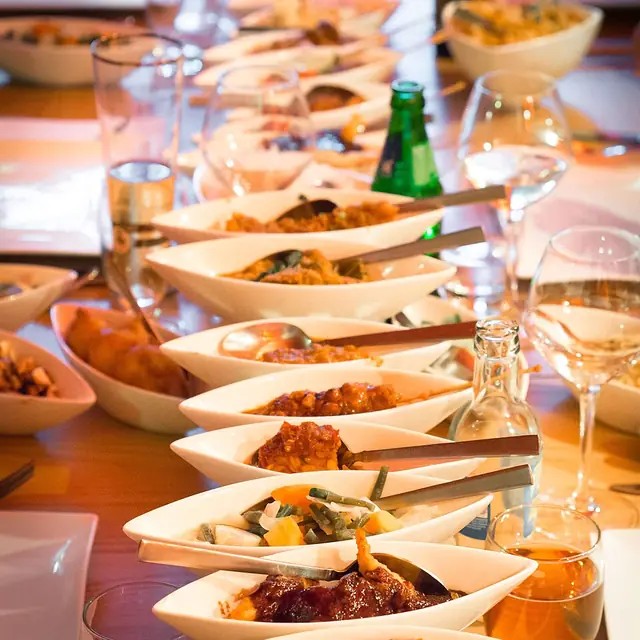
Rijsttafel is a banquet of rice with many small dishes such as satay, rendang and gado-gado, served at the Indonesian restaurants of Amsterdam.

Rijsttafel was created in the Dutch East Indies as a festive banquet showing the many cuisines of the colony, with up to 40 small bowls around a cone of rice. Former colonials, exiled Indonesians and Indo-Europeans brought it to the Netherlands after Indonesia gained independence, where it was first popular with Dutch families of colonial origin. It is now rare in Indonesia itself, and Indonesian restaurants multiplied in the Netherlands from about 1990. In Amsterdam, Restaurant Blauw, Indrapura, Sampurna and Mama Makan all serve it.

Where to eat Rijsttafel in Amsterdam

4 editor picks for Rijsttafel in Amsterdam, ranked by editorial score. All Amsterdam signature dishes · Rijsttafel across every city.

Make it at home

Serves 43 hrAdvanced

Ingredients

  • 400g jasmine rice, rinsed
  • 500g beef chuck, cut into 3cm cubes, for rendang
  • 400ml coconut milk and 200ml coconut cream
  • 6 shallots, 4 garlic cloves, 3cm ginger, 3cm galangal, 2 lemongrass stalks, blended to a paste
  • 2 tsp ground coriander, 1 tsp turmeric, 4 kaffir lime leaves
  • 500g chicken thigh, cubed, threaded onto 12 satay skewers
  • 200g raw peanuts, fried then ground with 2 tbsp kecap manis and 1 tsp tamarind paste for sate sauce
  • 300g long beans, 200g bean sprouts, 200g cabbage, blanched separately for gado-gado
  • 2 large red chillies plus 3 bird's eye chillies, pounded with 1 tsp shrimp paste and 1 tbsp lime juice for sambal
  • Vegetable oil, sea salt

Method

  1. For rendang: fry the spice paste in 3 tbsp oil for 5 minutes, add beef and brown for 4 minutes, pour in the coconut milk plus 200ml water and the lime leaves. Simmer uncovered 90 minutes until the sauce thickens to a dark paste clinging to the meat.
  2. Cook the rice with 600ml water and a pinch of salt; bring to a boil, cover and steam on the lowest heat for 12 minutes, then rest off heat 10 minutes.
  3. Grill the chicken satay over high heat 3 minutes per side, basting with a spoonful of coconut cream in the last minute.
  4. Blend the peanuts, kecap manis, tamarind, 1 chopped garlic clove and 250ml hot water into a pourable sate sauce; loosen with more water if needed.
  5. Plate gado-gado: arrange the blanched vegetables on a platter, top with sliced hard-boiled egg and a generous ladle of the same peanut sauce.
  6. Pound the sambal ingredients in a mortar until a wet paste forms; serve in a small dish.
  7. Lay the rice bowl in the centre of the table and arrange every component in small bowls around it. Each diner builds their own plate.

Editor tip. Cook the rendang uncovered until the oil separates and the sauce fries the meat; stopping earlier leaves a wet curry rather than rendang.

Common allergens: Peanuts, Shellfish, Soy, Gluten.