Key eras
1602, the VOC and the spice trade
Amsterdam founded the Dutch East India Company (VOC) in 1602, becoming the European port for nutmeg, mace, cloves, cinnamon and pepper. The spice trade shaped the city's pantry for the next three centuries, embedding nutmeg into Dutch winter cooking and cinnamon into pastries and ontbijtkoek. It also seeded the city's later Indonesian inheritance.
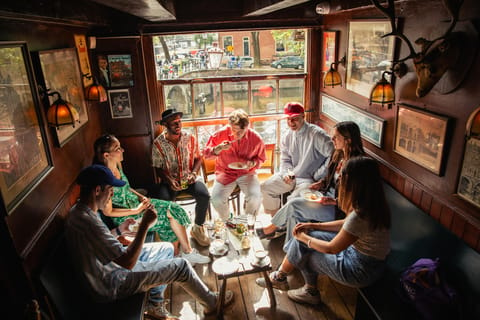
1670s, the rise of the brown cafe
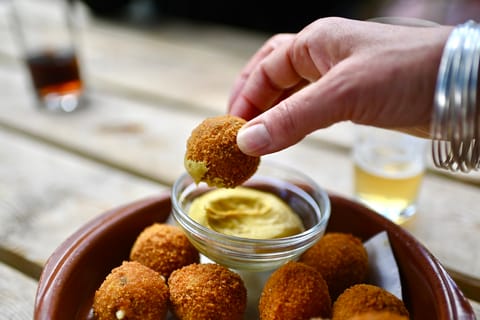
Cafe Hoppe opened on Spui in 1670, Cafe Chris on Bloemstraat as early as 1624. The brown cafes (named for the smoke-darkened wood) became the anchor of Amsterdam neighbourhood life, pouring jenever and pilsner, serving bitterballen and cheese plates. They remain the city's most resilient food institution four centuries later.
1949, Indonesia independence and the rijsttafel
After Indonesian independence, a generation of Indo-Dutch citizens settled in the Netherlands, bringing rijsttafel (rice table) into mainstream Amsterdam dining. Indrapura, Sampurna and Restaurant Blauw later codified the form: a single bowl of rice surrounded by twelve to twenty-five small dishes. By the 1970s rijsttafel was the city's standard Sunday-evening meal.
1975-1980, Surinamese kitchens after independence
Suriname's 1975 independence brought a large community to Amsterdam who opened roti shops and warungs through the 1970s and 1980s. Spang Makandra (1978) anchored the format in De Pijp. Today Surinamese roti, saoto soep, bara and pom rank alongside rijsttafel as a defining everyday cuisine in the city.
2013 onward, third-wave coffee and natural wine
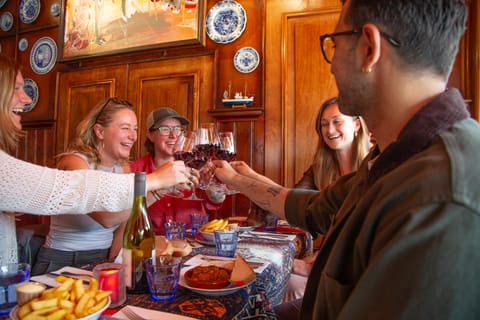
Scandinavian Embassy opened on Sarphatipark in 2013 and Lot Sixty One on Kinkerstraat the same year, kickstarting Amsterdam's third-wave coffee scene. GlouGlou opened in De Pijp in 2015 as the city's natural-wine pioneer. Flore at De L'Europe earned two Michelin stars and a Green Star with an entirely dairy-free menu, completing the city's pivot to vegetable-forward fine dining.