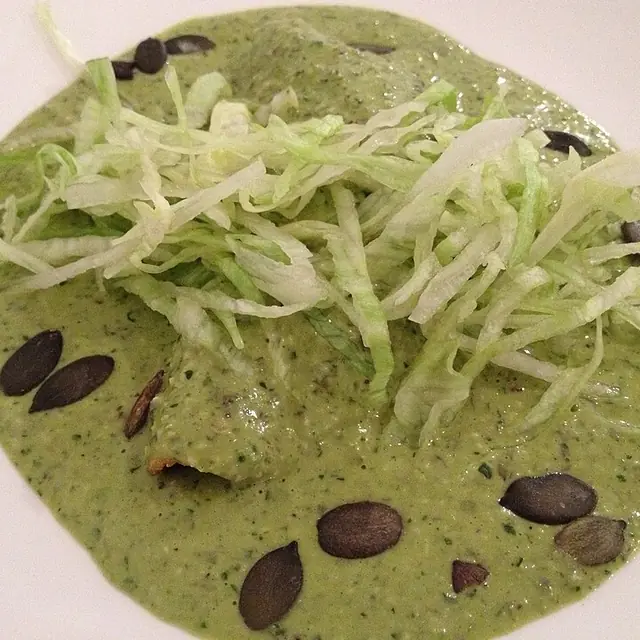
A sauce built on ground pumpkin seeds rather than chiles and chocolate, made green with tomatillo and herbs or red with dried chile, and served over chicken, pork or vegetables.
Pipian predates mole poblano and uses the older technique: seeds ground to a paste and let down with stock, rather than a long list of fried and blended ingredients. Green pipian leans on pumpkin seed, tomatillo, epazote and serrano; red pipian swaps in dried chiles and sometimes sesame. In Puebla it is served alongside mole rather than instead of it, and the enchiladas de tres moles at Comal put pipian verde, pipian rojo and mole poblano on one plate so you can taste the difference. La Casa del Mendrugo and Casareyna both hold it on the menu year round.
Restaurante La Noria works the grounds of an old hacienda in Puebla, cooking mole, pipian and huazontles, plus chiles en nogada from July to September.
OrderHuazontles in season, or the house mole poblano any month of the year.
TipChiles en nogada run from July to September here, and the kitchen also teaches a workshop on how the nogada is made.
Comal looks straight at Puebla cathedral from 16 de Septiembre, cooking blue-corn chilaquiles, chanclas, pelonas and mole poblano from breakfast to midnight.
OrderBlue-corn chilaquiles at breakfast, chanclas in guajillo salsa after dark.
TipThe upstairs tables look straight at the cathedral, and they are the first to go on Saturday and Sunday mornings.
Antojitos Mellos is the weekend mole and pipian stop in Barrio de los Remedios, Puebla, with pozole and mole de panza on the board the rest of the week.
OrderMole poblano or pipián, but only at the weekend when both are cooked.
TipPozole and mole de panza cover the weekdays; the mole and pipián are Saturday and Sunday only, from one in the afternoon.
Explore the trails that connected the Aztec empire and walk between Iztaccíhuatl and Popocatépetl, feel the power of the earth under your feet, and see an active volcano.



.jpg)