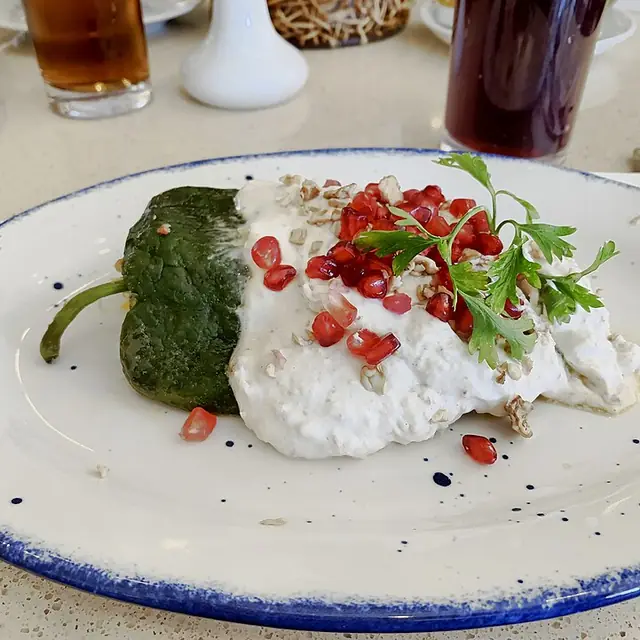
A roasted poblano chile stuffed with sweet and savoury picadillo, covered in a cream of fresh criollo walnuts and finished with pomegranate seeds and parsley. Strictly a seasonal dish.
The plate is tied to 1821 and the signing of the Treaty of Cordoba, and its green, white and red are read as the Mexican flag. What matters more for eating it is the calendar: the criollo walnut and the pomegranate both ripen in the Puebla valley between July and September, and outside those months the nogada is made with dried or imported nuts and loses its point. Atlixco, forty minutes from the city, runs a nogada route through the season with kitchens across the town taking part. In Puebla, El Mural de los Poblanos, Augurio, Casareyna, La Noria and Salon Mezcalli all put it on when the walnuts arrive and take it off when they stop.
Augurio is chef Angel Vazquez's Pueblan dining room on 9 Oriente, added to the 2026 Michelin Guide selection and built around a six-mole tasting in Puebla.
OrderThe six-mole tasting menu, which is the fastest education in Puebla cooking.
TipSunday service stops at 20:00, so book the mole tasting for a weekday if you want the full run of the kitchen.
Restaurante La Noria works the grounds of an old hacienda in Puebla, cooking mole, pipian and huazontles, plus chiles en nogada from July to September.
OrderHuazontles in season, or the house mole poblano any month of the year.
TipChiles en nogada run from July to September here, and the kitchen also teaches a workshop on how the nogada is made.
Salon Mezcalli sits in Barrio de Analco in Puebla, matching manchamanteles con lechon and mixiote de cordero with a wall of artisanal agave distillates.
OrderManchamanteles con lechón, with a Puebla mezcal poured alongside it.
TipAnalco is a fifteen-minute walk east of the Zocalo, so allow for the crossing if you are coming from the cathedral.
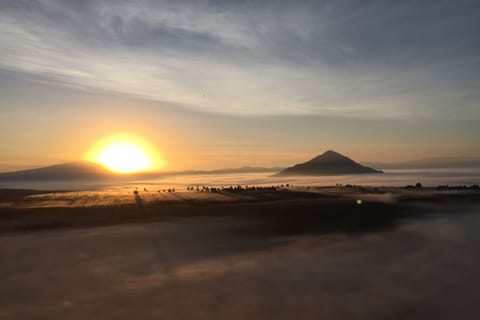
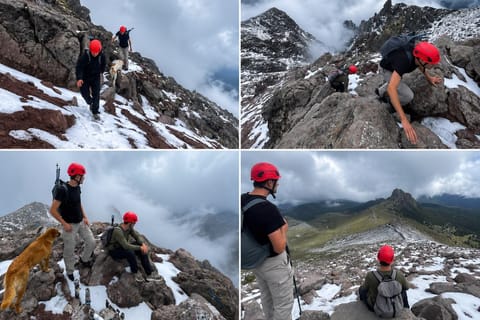
Explore the trails that connected the Aztec empire and walk between Iztaccíhuatl and Popocatépetl, feel the power of the earth under your feet, and see an active volcano.