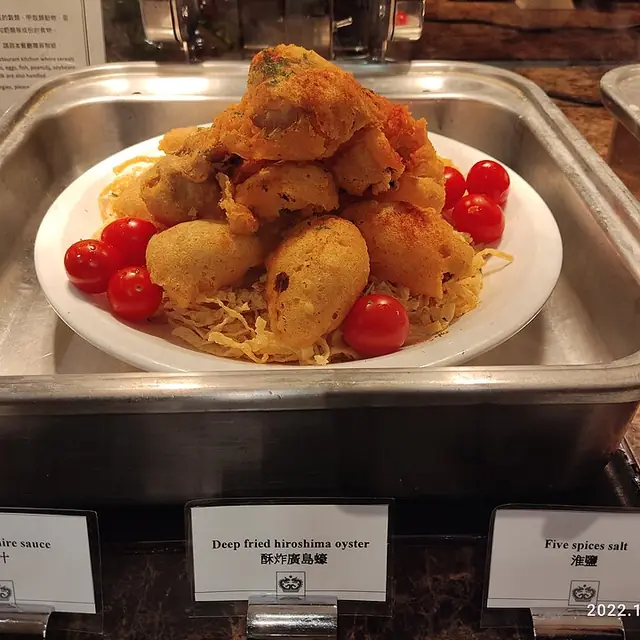
Deep-cupped Seto Inland Sea oysters, farmed on hanging rafts and eaten raw, grilled in the shell, steamed in a can or deep-fried in panko between roughly October and March.
Oyster farming in Hiroshima Bay is documented from the sixteenth century, and the hanging-raft method perfected here made the prefecture the dominant producer in Japan, supplying the majority of the national farmed crop. Kanawa has worked its own rafts since 1867 and still moors a restaurant boat on the Motoyasu river. The kaki-goya, a plain shed where customers grill their own shells over a burner, is a winter fixture along the Ujina and Kusatsu waterfronts, opening around October and closing in early May when the season ends.
Kakibune Kanawa moors on the Motoyasu river in Hiroshima and serves oysters from the family's own rafts, raw downstairs and in courses above.
OrderThe oyster course, built around raft-grown Seto Inland Sea oysters
TipThe kaki-zukushi course on the Seto boat runs 9,000 yen and is worth booking ahead; raw, fried and grilled plates are ordered a la carte at both services.
Hiroshima oysters (kaki) makes more sense with someone from Hiroshima explaining it. These are the classes and tours we have checked, with booking links.
Taste Hiroshima's foods in one night in its biggest nightlife district. You'll explore the city with a local guide, visit 3 local bars, and try the best food and drink...
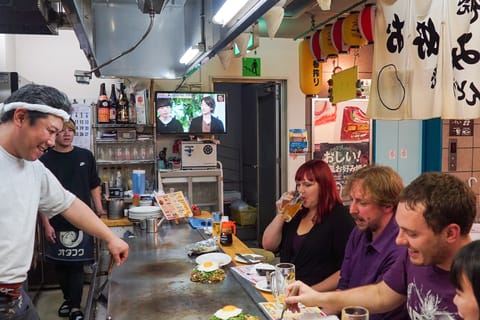
Cook authentic Hiroshima-style okonomiyaki at a beloved local restaurant. Step into a real teppanyaki kitchen, cook with the owner, and enjoy the okonomiyaki you made ...