

The plates that define Turin: what they are, where they came from, and where to eat the canonical version.
Signature dishes
-
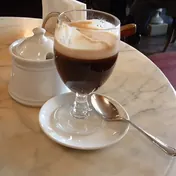
Bicerin ★ 4.9
Bicerin is Turin's layered coffee, chocolate and fior di latte drink, served in a small handle-less glass. Invented in 1763 at Caffe Al Bicerin on Piazza della Consolata.
Where to try it: Caffe Al Bicerin, Caffe Baratti & Milano, Caffe Platti 1875
Price: €5-9
Bicerin evolved from the 18th-century bavareisa, a fashionable mix of coffee, chocolate, milk and syrup served in large glasses. By the early 19th century three variants existed: pur e fiur (coffee and milk), pur e barba (coffee and chocolate) and 'n poc 'd tut (a little of everything). The third won, taking its name from the small handle-less bicerin glass. The recipe at Caffe Al Bicerin remains a contractually-guarded secret in 2026.
Watch out for: Milk
-
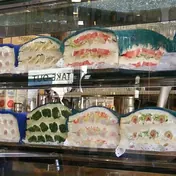
Tramezzino ★ 4.8
Tramezzino is the crustless triangular soft-bread sandwich invented in Turin in 1926. Mulassano runs over 30 fillings; the classic is tuna, anchovy and capers.
Where to try it: Caffe Mulassano, Caffe Baratti & Milano, Caffe Platti 1875
Price: €2-5
Onorino and Angela Nebiolo returned from Detroit in 1925 to take over Caffe Mulassano on Piazza Castello, and in 1926 invented the tramezzino: crustless, triangular, on pillowy white bread. Gabriele D'Annunzio, a Mulassano regular, gave the sandwich its name. The cafe still serves 30-plus fillings; Mulassano's display case is the canonical reference. The tramezzino turns 100 in 2026.
Watch out for: Gluten, Egg
-
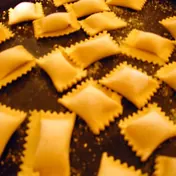
Agnolotti del Plin ★ 4.9
Agnolotti del plin are tiny pinched-pasta squares filled with leftover roast meat, from Langhe and Monferrato in Piedmont. Served with butter and sage, or with their own sugo.
Where to try it: Consorzio, Tre Galline, Pastificio Defilippis, Le Vitel Etonne
Price: €16-28
Agnolotti del plin originated in farming Langhe, Roero and Monferrato in the 19th century to use leftover roasted veal, pork or rabbit (often with cabbage or escarole). Plin is Piedmontese dialect for the small pinch that closes each tiny square. There is no single recipe; each family adds its own touches and meat combinations. The dish has spread from Alba and Asti to every osteria in Piedmont as the regional pasta canon.
Watch out for: Gluten, Egg
Book food experiences in Turin


-
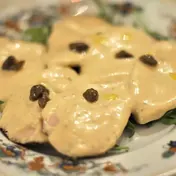
Vitello Tonnato ★ 4.8
Vitello tonnato is sliced cold poached veal under a creamy tuna, caper and anchovy sauce. A Piedmontese summer classic from the late 18th century.
Where to try it: Le Vitel Etonne, Tre Galline, Consorzio, Trattoria Valenza
Price: €14-22
The name tonnato comes from the French tannè (tanned), referencing leftover veal slow-cooked for tenderness. The original 18th-century sauce had no tuna, only anchovy, capers and egg yolks. Pellegrino Artusi added tuna in his 1891 cookbook, which standardised the modern version. Today the dish is canonical Piedmont, in summer with a glass of cool Roero Arneis or Gavi.
Watch out for: Fish, Egg
-
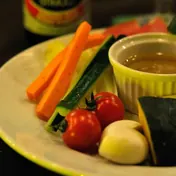
Bagna Cauda ★ 4.7
Bagna cauda is the Piedmont winter dip of garlic, anchovies, olive oil and butter, eaten warm with raw cardoons, peppers and bread. The dish was UNESCO-nominated.
Where to try it: Trattoria Valenza, Tre Galline, Consorzio, Le Vitel Etonne
Price: €18-28
Bagna cauda dates to 16th-century Piedmont as food of the poor, despised by the rich for its garlic. Anchovies travelled the salt roads from Liguria; garlic was farmhouse staple. The Asti Delegation of the Italian Academy of Cuisine notarised the canonical recipe in Costigliole d'Asti in 2005. The last two weekends of November are Bagna Cauda Day across Piedmont.
Watch out for: Fish
-
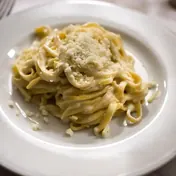
Tajarin ★ 4.8
Tajarin is Langhe and Monferrato's fine egg-yolk-rich pasta, traditionally cut very thin and tossed in butter with white truffle from Alba in season.
Where to try it: Pastificio Defilippis, Consorzio, Tre Galline, Le Vitel Etonne
Price: €18-35 (€60+ with truffle)
Tajarin (Piedmontese for taglierini) is fresh egg pasta brought to its highest expression in Langhe and Monferrato. The historic recipe uses 30 to 40 egg yolks per kilo of flour, giving the pasta its bright yellow and silken texture. It was originally festive food; today, with white truffle shaved on top, it is the canonical autumn Piedmontese plate.
Watch out for: Gluten, Egg
-
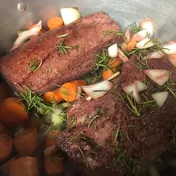
Brasato al Barolo ★ 4.7
Brasato al Barolo is Piedmontese beef pot-roast slowly braised in Barolo wine for hours, served sliced with the wine-rich pan sauce and polenta.
Where to try it: Tre Galline, Consorzio, Trattoria Valenza, Antico Ristorante Porto di Savona
Price: €22-30
Brasato (from brasa, embers) is the Piedmontese pot-roast braised low and long. The Barolo version uses an entire bottle of Nebbiolo-based Barolo DOCG; the high tannin and acidity cut through the chuck or shoulder, and the wine reduces over hours to a dense glossy sauce. A Sunday-lunch standard in autumn and winter.
-
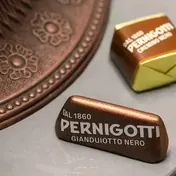
Gianduiotto ★ 4.9
Gianduiotto is the foil-wrapped hazelnut-chocolate ingot Caffarel invented in Turin in 1865, made of cocoa, sugar and ground Tonda Gentile delle Langhe hazelnut.
Where to try it: Guido Gobino, Pasticceria Stratta 1836, Caffe Baratti & Milano, Caffe Al Bicerin
Price: €1-3 each
The hazelnut-and-cocoa paste behind gianduiotto was born of mid-1800s cocoa scarcity in Europe. In 1865 Caffarel's Michele Prochet completely ground hazelnuts (Tonda Gentile delle Langhe) to a paste before adding them to cocoa and sugar, shaping the boat-form gianduiotto for the Turin Carnival. Gianduja, the traditional Piedmontese mask, gave its name to the chocolate. It was also the first chocolate to be individually wrapped.
Watch out for: Tree nuts (hazelnut), Milk
-
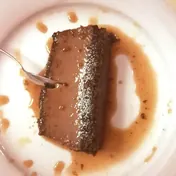
Bonet ★ 4.5
Bonet is the Piedmontese dessert pudding of eggs, milk, cocoa and crushed amaretti, baked in a caramel-lined mould. From Monferrato, originally without chocolate.
Where to try it: Tre Galline, Trattoria Decoratori e Imbianchini, Le Vitel Etonne, Antico Ristorante Porto di Savona
Price: €7-12
Bonet (Piedmontese for hat) dates to the 13th century in Monferrato when noble-court cooks made a pudding of eggs, milk and amaretti. The cocoa version appeared after the Americas introduced chocolate to Europe in the 17th century. The name may reference the hat-shaped copper mould; today it is Piedmont's canonical end-of-meal dessert.
Watch out for: Milk, Egg, Tree nuts
-
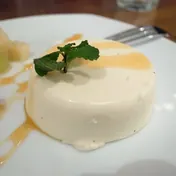
Panna Cotta ★ 4.5
Panna cotta is the Piedmontese set-cream dessert: cooked cream, sugar and gelatin, unmoulded and served with berries, caramel or wild-strawberry sauce.
Where to try it: Tre Galline, Consorzio, Pastificio Defilippis, Le Vitel Etonne
Price: €6-10
Panna cotta was first documented in Piedmont in the early 20th century; the simplest version uses three ingredients (cream, sugar, gelatin) and a slow gentle simmer. It crossed into international restaurant menus in the 1980s as nouvelle Italian. The canonical Piedmontese version is unflavoured, served with a fruit coulis or caramel.
Watch out for: Milk
-
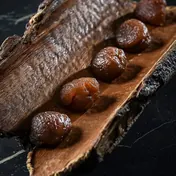
Marron glace ★ 4.4
Marron glace is the candied chestnut Turin claims as its sweet: skinless chestnuts soaked in heavy syrup for days, then wrapped in silver paper.
Where to try it: Pasticceria Stratta 1836, Caffe Baratti & Milano, Caffe Platti 1875, Pasticceria Pfatisch
Price: €2-5 each
Marron glace, candied chestnuts, has been made at Stratta on Piazza San Carlo in Turin since 1836 and the family supplied the House of Savoy. The marrons are the larger sweet-chestnut cultivar from the Cuneo hills; the candying process takes several days of slow syrup penetration. Today they cost about 4 euros each and appear at every formal Piedmontese table for Christmas.
Watch out for: Sulphites
-
Pinguino ★ 4.6
Pinguino is the chocolate-covered gelato on a stick invented at Gelateria Pepino on Piazza Carignano in 1939. Italy's original gelato-on-a-stick, the wrapper printed with a small penguin.
Where to try it: Gelateria Pepino
Price: €3-5
Pepino opened on Piazza Carignano in 1884 and patented Pinguino in 1939: vanilla gelato dipped in a thin layer of dark chocolate, served on a stick. The wrap was once printed with a small penguin, hence the name. The American Eskimo Pie was patented seventeen years earlier in 1922, but Pinguino remains Italy's original take on the form. Pepino still makes Pinguini in the original Piazza Carignano shop today, the wrappers collectible.
Watch out for: Milk, Soy (chocolate)
Signature Dishes in Turin, FAQ
What food is Turin known for?
Turin's signature dishes include Bicerin, Tramezzino, Agnolotti del Plin, Vitello Tonnato, Bagna Cauda. See our signature dishes chapter for where to eat each.