

The plates that define Modena: what they are, where they came from, and where to eat the canonical version.
Signature dishes
-
Aceto Balsamico Tradizionale di Modena ★ 4.9
Aceto Balsamico Tradizionale di Modena DOP is cooked grape must aged for at least 12 years in a battery of shrinking wooden barrels in attic lofts, a dense, sweet-sour condiment used by the drop.
Where to try it: Antica Moka, Caffetteria Drogheria Giusti, Da Danilo, Trattoria Ermes
Price: €40-150 for a 100ml bottle
Modena's vinegar is documented from 1046, when Boniface of Canossa sent Emperor Henry III a silver barrel of it. The Este court kept many barrels from 1288, Count Giorgio Gallesio described the Salimbeni acetaia at Nonantola in 1839, and Francesco Aggazzotti wrote down his family method in 1862. A 1983 ministerial decree split the tradizionale from industrial balsamic, and since 2000 it has been an EU DOP aged at least 12 years, or 25 for the extravecchio.
Watch out for: Sulphites
-
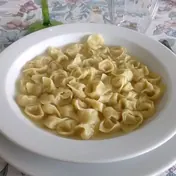
Tortellini in brodo ★ 4.9
Tortellini in brodo are small rings of egg pasta filled with pork loin, prosciutto, mortadella, Parmigiano, egg and nutmeg, served in capon broth; Modena and Bologna both claim them.
Where to try it: Hosteria Giusti, L'Erba del Re, Trattoria Aldina, Zemian Piccola Osteria, Osteria di Modena Rossi
Price: €14-20
Bologna and Modena both claim the tortellino. Bartolomeo Scappi recorded tortelletti in 1570, and Vincenzo Tanara's 17th-century writing may have fixed the name. The best-known legend is set in Castelfranco Emilia, between the two cities, where an innkeeper spying on Venus through a keyhole saw only her navel and shaped the pasta after it. Castelfranco Emilia still honours the legend with a ten-day tortellino sagra every September, serving them in capon broth.
Watch out for: Gluten, Egg, Dairy, Celery
-
Tortelloni burro e salvia ★ 4.5
Tortelloni are the large, meatless cousin of tortellini: egg pasta filled with ricotta and Parmigiano, and in Modena with spinach too, tossed in melted butter and sage.
Where to try it: Da Danilo, Il Fantino, Trattoria Tagliatella, Trattoria L'Antica Grama
Price: €12-16
Tortelloni belong to eastern Emilia and southern Lombardy. They share the tortellino's shape but are larger and filled di magro, without meat. The Bologna filling is ricotta, Parmigiano, parsley, egg and nutmeg; the Modenese version adds spinach, which the Bolognese tradition leaves out. They are boiled in water and served dry, dressed with melted butter and sage or with butter and a little tomato.
Watch out for: Gluten, Egg, Dairy
Book food experiences in Modena


-
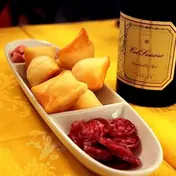
Gnocco fritto ★ 4.6
Gnocco fritto is Modena's puffed fried dough, made with flour, lard and sparkling water, cut into diamonds and eaten hot with prosciutto, salame, mortadella and soft cheese.
Where to try it: Il Fantino, Da Enzo, Dispensa Emilia, La Chersenta, Antica Trattoria Cervetta
Price: €8-14 with salumi
Gnocco fritto belongs to the Po plain of Modena and Reggio Emilia, where it is listed as a traditional regional product; Bologna calls the same thing crescentina, Parma torta fritta. The Modenese recipe uses 00 flour, lard, sparkling water and salt with no yeast: the dough is kneaded again every 20 to 30 minutes so it traps air and swells when fried. Some sources read the lard as a sign of a Lombard origin.
Watch out for: Gluten
-
Crescentine (tigelle) ★ 4.6
Crescentine, called tigelle almost everywhere outside the Apennines, are small round breads of flour, milk, yeast and lard, split while hot and filled with cunza, salumi or soft cheese.
Where to try it: La Chersenta, L'Or-Ma Crescenteria, Sosta Emiliana, Dispensa Emilia, Trattoria La Stalla
Price: €10-16 for a basket with fillings
Crescentine come from the Modenese Apennines, where the dough was baked in a stack between red-hot terracotta discs called tigelle, lined with chestnut or walnut leaves, in front of the fire. The name of the disc passed to the bread in the plains, which is why Modena argues over it: in a 2016 Gazzetta di Modena poll 64 per cent voted for crescentine and 36 per cent for tigelle. At home most cooks now use an aluminium mould that holds four to seven at a time.
Watch out for: Gluten, Dairy
-
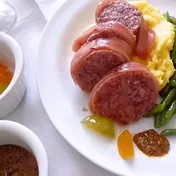
Zampone ★ 4.5
Zampone Modena IGP is a spiced mix of pork, fat and rind stuffed into the skin of a pig's foreleg, simmered for hours and served in thick slices with lentils or mashed potatoes.
Where to try it: Da Enzo
Price: €14-22
Modenese tradition dates the zampone to the 1511 siege of Mirandola by the troops of Pope Julius II, when the besieged townspeople stuffed their last pork into the skin of pigs' trotters to keep it. The 18th century saw Modena and Ferrara argue over the zampone and the cotechino. Zampone Modena is now an IGP, eaten at Christmas and at the New Year dinner with lentils, and since 1991 Castelnuovo Rangone has cooked a giant one for the crowd each December.
Watch out for: Celery
-
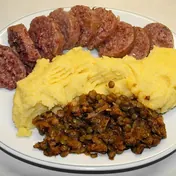
Cotechino ★ 4.4
Cotechino Modena IGP is a fresh pork sausage of lean meat, fat and rind, cooked slowly and sliced into soft, rosy rounds, the Modenese partner of lentils at the New Year dinner.
Where to try it: Hosteria Giusti, Trattoria Pomposa - Al Re Gras
Price: €12-18
Vincenzo Tanara mentioned the cotechino in his 1644 treatise, and Modena and Ferrara disputed its invention for more than a century: Antonio Frizzi's 1772 Salameide gave the cotechino to Ferrara and the zampone to Modena, while the Modenese Tigrinto Bistonio had already claimed a Modenese origin in 1761. The IGP for Cotechino Modena settled the matter in Modena's favour, and the sausage is still made with meat ground through 7 to 10mm plates.
Watch out for: Celery
-
Bensone ★ 4.1
Bensone is Modena's oldest everyday cake: an oval loaf of flour, milk, eggs, butter and sugar, sliced thick and dipped in Lambrusco or eaten with morning coffee.
Where to try it: Antica Pasticceria San Biagio, Forno Cristini
Price: €3-5 a slice
In the 13th century Modena's commune offered bensone to the guild of smiths and goldsmiths on their patron's feast day. The name may come from the French pain de son, bran bread, because unsifted flour was once used. The recipe of flour, milk, eggs, butter and honey has barely changed, except that sugar replaced the honey. It can be filled with jam or savor, and the same dough makes the ring-shaped ciambella.
Watch out for: Gluten, Egg, Dairy
-
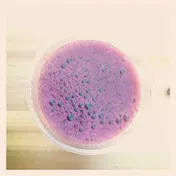
Lambrusco ★ 4.5
Lambrusco is Modena's sparkling red wine, drunk young and cool with gnocco fritto and salumi; the province makes the pale, violet-scented Sorbara and the Grasparossa di Castelvetro.
Where to try it: La Lambruscheria, Enoteca Ducale, Il Fantino, Franceschetta 58
Price: €3-6 a glass
The Lambrusco vine has a long history in Emilia: there is archaeological evidence that the Etruscans grew it, and Cato the Elder praised its yields. Lambrusco di Sorbara is grown only in Modena province, and the Grasparossa di Castelvetro zone runs through the hills from Castelvetro and Vignola into part of the comune of Modena. Sorbara, called the Lambrusco of the violet, is pollinated by Salamino vines planted beside it, since its own flowers give too little pollen.
Watch out for: Sulphites
-
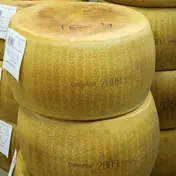
Parmigiano Reggiano ★ 4.8
Parmigiano Reggiano is the hard cow's milk cheese made in Parma, Reggio Emilia, Modena, part of Bologna and part of Mantua, aged at least 12 months and eaten in chunks or grated over pasta.
Where to try it: Trattoria Pomposa - Al Re Gras, Osteria Francescana, Franceschetta 58, Mercato Albinelli
Price: €20-35 a kilo for 24 months
Legend places the cheese's birth in the Middle Ages at Bibbiano in Reggio Emilia, from where it spread to the Parma and Modena areas. The first written record dates from 1254, and in 1348 Boccaccio's Decameron imagined a mountain of grated Parmesan whose people did nothing but make macaroni and ravioli, boil them in capon broth and roll them down it. Modena province lies inside the protected production zone.
Watch out for: Dairy
Signature Dishes in Modena, FAQ
What food is Modena known for?
Modena's signature dishes include Aceto Balsamico Tradizionale di Modena, Tortellini in brodo, Tortelloni burro e salvia, Gnocco fritto, Crescentine (tigelle). See our signature dishes chapter for where to eat each.