
The plates that define Thessaloniki: what they are, where they came from, and where to eat the canonical version.
Signature dishes
-
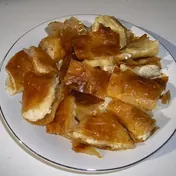
Bougatsa Thessalonikis ★ 4.7
Crisp phyllo pastry layers encasing cold pastry cream, dusted with cinnamon and powdered sugar. The Thessaloniki version is distinguished by its cold cream filling and the marble-counter morning ritual at Bantis.
Where to try it: Bantis Bougatsa, Bougatsa Giannis, Estrella
The Thessaloniki bougatsa was consolidated by Asia Minor refugee bakers who arrived after the 1923 population exchange. The combination of thin-pulled phyllo, cold semolina cream and the morning-counter format is specific to this city. Bantis on Panagias Faneromenis has run continuously since 1969 and remains the canonical Thessaloniki address, opening at 06:30 every day.
-
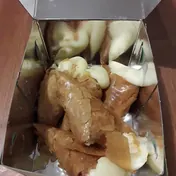
Trigona Panoramatos ★ 4.8
A crisp phyllo triangle baked empty and filled to order with cold pastry cream. The Elenidis family in Panorama invented the format in the 1960s; the post-bake filling gives a shatteringly crisp shell.
Where to try it: Trigona Elenidis, Trigona Elenidis Centre, Trigona Elenidis Panorama
Invented at the Elenidis patisserie in Panorama as a creative variation on the phyllo-cream tradition. The post-bake filling was the technical breakthrough; every competing pastry shop in Thessaloniki has attempted to replicate it and the Elenidis original has never been displaced. The family now operates three Thessaloniki locations alongside the Panorama original.
-
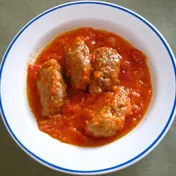
Soutzoukakia Smyrneika ★ 4.5
Elongated spiced meatballs in cumin and cinnamon tomato sauce, the most directly traceable Asia Minor refugee dish in the Thessaloniki kitchen.
Where to try it: Nea Folia, Ouzeri Tsinari
Brought to Thessaloniki by the 1923 refugees from Smyrna (Izmir). The spice profile of cumin and cinnamon in savoury preparations was characteristic of the Asia Minor kitchen and unusual in mainland Greek cooking. The dish became so associated with Thessaloniki that it is now taught as a Macedonian classic.
Book food experiences in Thessaloniki
-
Koulouri Thessalonikis ★ 4.5
A sesame-crusted ring of bread dough, baked at dawn and sold from street carts. The Thessaloniki koulouri is distinguished from the Athens version by its larger diameter, denser crumb, and heavier sesame coating.
Where to try it: Koulouri Thessalonikis, Bantis Bougatsa, Thanasis, Koukos 1953
The koulouri dates to the Ottoman bazaar tradition and was sold around the Covered Market in Thessaloniki before refrigeration, baking, or any modern food infrastructure existed. The specific Thessaloniki recipe with the sesame-dough ratio has been transmitted through a network of family bakeries for generations.
-
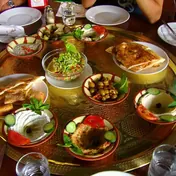
Tsipouro with Meze ★ 4.6
Cold tsipouro, the Macedonian pomace spirit, arrives in a small carafe and meze plates follow in relay: taramosalata, fried whitebait, octopus, saganaki and whatever is fresh that day.
Where to try it: Ouzeri Tsinari, Rouga, Ladadika Tsipouradika
The tsipouro relay format emerged from the convergence of the pre-war ouzeri tradition and the tsipouro distilling culture of the Macedonian and Epirus highlands. The no-ordering format, where plates arrive continuously, is specific to the Macedonian tsipouradiko and differs from the Athenian ouzo-bar tradition.
-
Kavourmas ★ 4.4
Pork cooked in its own fat and stored in sealed terracotta pots, a Macedonian preservation technique. Served spread on country bread with pickled peppers as a cold meze, or heated warm.
Where to try it: Nea Folia, Ouzeri Tsinari
Kavourmas is one of the oldest preserved meat traditions in the Macedonian highlands, a winter food preparation that sustained households through the cold months. The technique is cognate with French confit; the flavour profile is distinctive for the allspice, bay and pepper combination. In Thessaloniki the cold cuts arrive as the opening meze plate at Ladadika tsipouradika.
-
Htapodi Sti Schara (Chargrilled Octopus) ★ 4.6
Whole octopus dried on the line then chargrilled over wood until the tentacles caramelise and the body tenderises. Served with lemon, oregano, and a cold carafe of tsipouro.
Where to try it: Ouzeri Tsinari, Rouga, Mavri Thalassa
The chargrilled octopus is a pan-Aegean tradition present in every fishing community from the Adriatic to the Turkish Aegean coast. In Thessaloniki it is the signature tsipouradiko accompaniment, inseparable from the cold tsipouro ritual that begins every evening in Ladadika and along the waterfront tavernas of Nea Krini.
-

Ekmek Kataifi ★ 4.5
A multi-layer dessert of shredded wheat pastry soaked in sugar syrup, topped with cold custard cream, and finished with whipped cream and cinnamon.
Where to try it: Terkenlis 1948, Charalampos Patisserie, Floros, Trigona Elenidis Centre
Ekmek kataifi entered Thessaloniki's pastry shops via the Ottoman bakery tradition and was preserved by Greek Orthodox zacharoplasteia after 1912. The multiple-textured format with crisp pastry base, syrup-soaked layer, cold custard middle, and cream top requires more skill than any other Greek pastry.
-
Xinomavro Wine ★ 4.7
The indigenous grape of the Naoussa and Amindeon PDO zones in western Macedonia produces Greece's most structured red wine, often compared to Nebbiolo for its high tannin and acidity and its decade-plus ageing capacity.
Where to try it: Clochard, Super Ioulios, Charoupi
Xinomavro has been cultivated in Macedonia since antiquity; its name means 'sour black' in Greek, describing its high acid and deep colour when young. The Naoussa PDO established quality standards in the 1970s; the contemporary revival by producers including Thymiopoulos and Kir-Yianni has brought international attention to the variety.
-
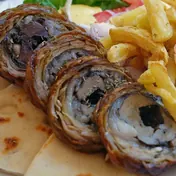
Kokoretsi ★ 4.3
Lamb or pork offal (heart, liver, sweetbreads, lungs) wrapped in intestine and slow-roasted on a spit until the exterior is crisp and the interior is tender.
Where to try it: Xanthopoulos, Diagonios 1977
Kokoretsi is the Easter ritual spit of the Greek countryside, present in some form in every Balkan food culture under different names. The Thessaloniki version uses lamb and pork offal mixed, rather than lamb-only. The city eats it year-round at dedicated grill restaurants rather than only at Easter.
-
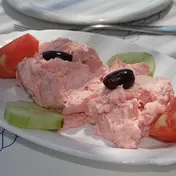
Taramosalata ★ 4.5
Whipped carp roe with olive oil, lemon and stale bread, the most important cold meze in the Thessaloniki tsipouradiko. Typically pale pink, from white salted carp rather than smoked cod roe.
Where to try it: Ouzeri Tsinari, Rouga, Akti Ntovil
Tarama, the salted carp roe used in the traditional Thessaloniki version, was sourced from the Macedonian lakes and rivers and from Black Sea imports. The meze survived both the Jewish and Asia Minor food cultures of the city and is now the first plate to arrive at every tsipouradiko, paired with a carafe of cold tsipouro and a basket of bread.
-
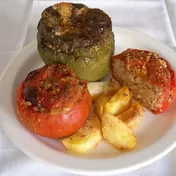
Gemista ★ 4.4
Tomatoes, peppers and aubergines hollowed and stuffed with rice flavoured with herbs, pine nuts, raisins and tomato pulp, baked until the vegetables collapse and the rice absorbs the juice. The Thessaloniki summer table.
Where to try it: Olympos Naoussa, Nea Folia, Salonika Restaurant, Palia Athina
Gemista (the stuffed ones) belong to the Ottoman-rooted family of dolmades that runs across the Eastern Mediterranean. The Thessaloniki version leans heavily on Macedonian summer produce and is traditionally lathera, cooked in olive oil with no meat, eaten through the Lenten fasts and the August heat.

Signature Dishes in Thessaloniki, FAQ
What food is Thessaloniki known for?
Thessaloniki's signature dishes include Bougatsa Thessalonikis, Trigona Panoramatos, Soutzoukakia Smyrneika, Koulouri Thessalonikis, Tsipouro with Meze. See our signature dishes chapter for where to eat each.