


History
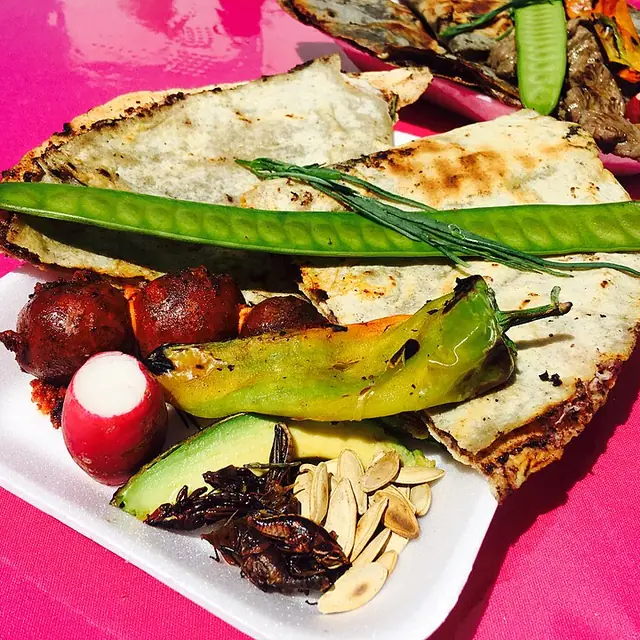
Tlayuda is a Zapotec dish from the Valles Centrales of Oaxaca, where the giant thin tortilla was originally a travel ration for traders. Mexico City adopted the tlayuda through Oaxacan migration in the 1980s and 90s; specialist Oaxacan restaurants opened in Roma Sur, Condesa and the Centro Historico. The toppings break into three traditional meats: cecina enchilada (chilli-cured pork), tasajo (cured beef), and chorizo. La Ventana del Ticuchi (chef Enrique Olvera, 2019) introduced the vegetarian quelites tlayuda. Best places to eat: Mercado Medellin Oaxacan stalls, Guzina Oaxaqueña in Polanco.
Book a food experience
Tours, tastings and classes that match this page, bookable on GetYourGuide.


Common allergens: Dairy
Make it at home
Ingredients
- 4 large corn tortillas, 30 to 35cm diameter (or 8 standard tortillas overlapping)
- 200g asiento (unrefined pork lard) or substitute 100g lard mixed with 100g pork drippings
- 300g refried black beans (frijoles de la olla, pureed)
- 300g quesillo (Oaxacan stringy cheese), torn into strands
- 300g tasajo (cured beef) or cecina (chilli-cured pork), thinly sliced
- 1 head romaine lettuce, finely shredded
- 2 ripe avocados, sliced
- 100g pickled jalapenos or salsa borracha
- 1 white onion, sliced into thin rings
- Small bunch coriander
- 2 limes, quartered
Method
- Heat a comal or a wide cast-iron pan to medium-high. Char the tlayuda tortilla directly on the dry surface for 90 seconds until it begins to crisp.
- Flip. Smear 2 tbsp asiento across the warm tortilla.
- Spread 2 tbsp refried black beans on top. The base layers should completely cover the tortilla.
- Scatter a handful of quesillo strands evenly. Return to the comal for 60 seconds; the cheese melts and binds the layers.
- Meanwhile, grill the tasajo or cecina on a separate hot pan: 90 seconds per side until char-marked.
- Slide the tlayuda onto a board. Top with shredded lettuce, avocado, pickled jalapenos, onion rings, coriander.
- Lay the grilled tasajo or cecina across the top.
- Serve uncut; the tlayuda is folded in half and eaten taco-style at the table, or sliced into wedges if shared.
Tip from the editors. Real asiento (unrefined pork lard with crispy bits) is the make-or-break ingredient; if unavailable mix lard with finely chopped chicharron.
Where to eat oaxacan tlayuda
Oaxacan tlayuda in Los Angeles
Guelaguetza ★ 4.3
Guelaguetza is an Oaxacan eatery at 3014 W Olympic Blvd, where the negro and rojo moles are absolute favorites alongside tlayudas, enchiladas and pozole.
OrderMole estofado slathered onto chicken or pork, after a taste of mole coloradito over gratis chips.
TipTake the mole home: just add broth, tomato sauce, and a little salt and brown sugar; shipping is free on orders over $75.
Oaxacan tlayuda in Mexico City
Mercado Medellin ★ 4.3
Mercado Medellin in Mexico City is the Roma Sur Latin American import market on Campeche, the pan-Latin grocery hall with Cuban, Colombian and Argentine.
Oaxacan tlayuda in Oaxaca
Tlayudas Libres ★ 4.7
Tlayudas Libres on Calle de Los Libres opens at 21:00 and runs to 03:00 with wood-fire tlayudas, tasajo and quesillo, the canonical Oaxaca late-night stop.
TryTlayuda
Tlayudas Las Animas ★ 4.4
Tlayudas Las Animas on Mariano Matamoros 203 runs Thursday-Saturday 18:00-23:30 near Carmen Alto, quieter than the Libres stand just blocks away.
TryTlayuda
Itanoni ★ 4.6
Itanoni in Reforma serves the Oaxacan breakfast canon from 07:00 daily: memelas with frijol, tetelas with hierba santa and a chocolate or atole de granillo.
OrderMemelas with frijol and quesillo, atole
Tierra del Sol ★ 4.8
Tierra del Sol on Reforma is Olga Cabrera's three-floor Oaxaca room, named Mexico's Restaurant of the Year for 2026, with a rooftop comal of tetelas.
Book2 weeks ahead
TipSkip the prix fixe and graze through the rooftop comal section; the chichilo and mole amarillo are the headlines.
Ancestral Cocina Tradicional ★ 4.5
Ancestral in Xochimilco is the thatched-roof grove on Lopez Alavez, well away from Centro tourist flow, with the seven-moles tasting platter as the headline.
Why locals goIn Barrio de Xochimilco, the weaving quarter most tourists never reach; thatched-roof grove.
TipTake a taxi (the Lopez Alavez block is a steep climb); book the moles tasting for two.
Levadura de Olla 1 ★ ★ 4.9
Levadura de Olla in Oaxaca is Thalia Barrios Garcia's Garcia Vigil room, Mexico's first regional Michelin star (2024, retained 2025) on the Andador.
Book3 to 6 weeks ahead
TipReservations open one month out on the website and disappear within hours; the Sierra Sur tasting menu (six courses) lands around $1,800 pesos.
Almu ★ 4.4
Almu is the open-air room in San Martin Tilcajete (alebrijes village), an open-fire kitchen of memelas, enmoladas and tlayudas in the 2025 Michelin Guide.
Book3 weeks ahead
TipLunch only, from 1pm; the menu is handwritten daily on butcher paper. Allow an hour from the centro by taxi.
More cities are in research. Want oaxacan tlayuda covered somewhere specific? Tell us where you want to eat.