

History
Kaiseki crystallised in Kyoto in the Edo era around the chanoyu tea ceremony and the city's tea houses, formalising course progression, vegetable focus and seasonal naming. The form spread nationally through Kyoto's ryotei from the late 19th century onward and earned its modern definition through Hyotei from 1837 and Kikunoi from 1912. The 2009 arrival of the Michelin Guide cemented Kyoto's status; today the city counts the highest per-capita three-star kaiseki density outside Tokyo.
Book a food experience
Tours, tastings and classes from the cities on this page, bookable on GetYourGuide.

Common allergens: Fish, Soy
Make it at home
Ingredients
- 8g kombu kelp and 20g katsuobushi bonito flakes for dashi base
- Seasonal vegetables: 200g Kyoto-style turnip, 8 takenoko bamboo shoots, 4 ebi-imo potatoes
- 300g white-flesh fish (sea bream or red snapper)
- 120g uni sea urchin
- Mirin, light soy, sake for seasoning
- Dashi-soaked rice and pickled vegetables for closing course
Method
- Make a kombu-and-katsuobushi dashi: cold-soak kombu for an hour, heat to 60C for an hour, then strain.
- Add katsuobushi to the strained kombu dashi, heat to 80C for 10 minutes and strain again. This is the ichiban dashi.
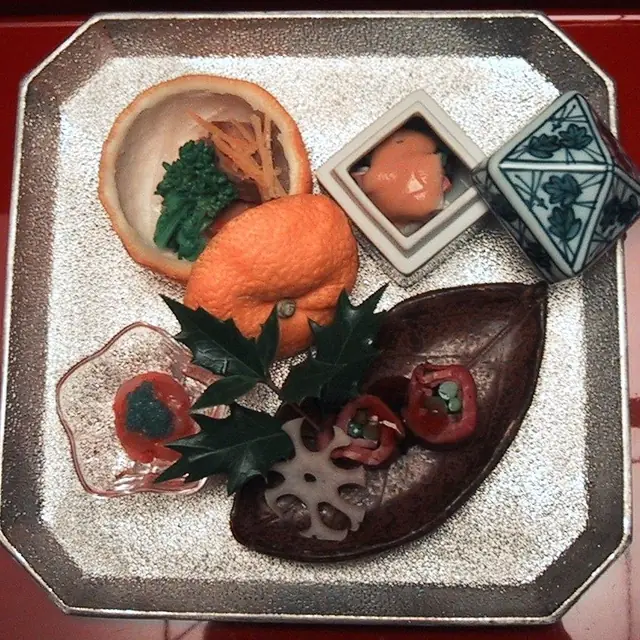
- Build a course progression: sakizuke amuse, hassun seasonal-platter, mukozuke sashimi, takiawase simmered vegetables, yakimono grilled fish, gohan rice with pickles.
- For takiawase, simmer ebi-imo potatoes in dashi with a touch of light soy for 20 minutes until tender; serve with poached takenoko bamboo.
- Grill the fish whole with salt over a charcoal brazier; serve with a yuzu wedge.
- Finish with seasoned rice and tsukemono pickles in the same lacquer bowl.
Tip from the editors. The defining element is dashi clarity, not the ingredients. Spend the time on the cold-water kombu soak; never boil it.
Where to eat kaiseki
Kaiseki in Kyoto
Kikunoi Honten 3 ★ ★ 4.9
The defining three-Michelin-star kaiseki room in Kyoto. Third-generation Yoshihiro Murata runs Kikunoi Honten, a 1912 ryotei below Kodaiji. Priced at ¥¥¥¥.
SignatureKaiseki, Hamo, Ayu
Book1 to 3 months ahead
Hyotei 3 ★ ★ 4.9
An Edo-era teahouse at the gate of Nanzen-ji in Kyoto, restyled as a ryotei in 1837. Located in Northern Higashiyama. Led by chef Yoshihiro Takahashi.
SignatureMorning gruel, Hyotei tamago, Hassun
Book1 to 3 months ahead
Kitcho Arashiyama Honten 3 ★ ★ 4.9
Three-Michelin-star kaiseki on the Hozugawa river bend in Arashiyama, Kyoto, run by chef Kunio Tokuoka in a sukiya-style garden tatami room.
SignatureKaiseki, Hassun, Hamo
Book2 to 4 months ahead
Mizai 3 ★ ★ 4.9
Hitoshi Ishihara opened Mizai in a corner of Maruyama Park, Kyoto, after years at Kitcho Arashiyama. One nightly seating, all guests served in sync.
SignatureKaiseki omakase
Book3 to 6 months ahead
Gion Sasaki 3 ★ ★ 4.8
Hiroshi Sasaki runs a teacher-and-apprentice kitchen on Komatsu-cho. Counter seats deliver a 12-course kaiseki with a freer hand than the old ryotei.
SignatureKaiseki, Crab, Charcoal-grilled wagyu
Book2 to 4 months ahead
Gion Nishikawa 2 ★ ★ 4.7
Masayoshi Nishikawa earned a star a year after opening at 33 in Kyoto. A quiet sukiya counter on a Yasaka Shrine alley with two stars for over a decade.
SignatureKaiseki, Sesame tofu
Book1 to 2 months ahead
Kaiseki in Osaka
Kashiwaya ★ 4.8
One of Osaka's three three-Michelin-starred restaurants: kaiseki in a wooden sukiya house in Senriyama, built on Naniwa vegetables and Awaji produce.
OrderSeasonal kaiseki course
Koryu 2 ★ ★ 4.8
Two Michelin stars; chef Shintaro Matsuo builds Osaka-style kaiseki with Naniwa produce, richer dashi, and deeper umami than Kyoto counterparts.
Book4-6 weeks ahead
Ajikitcho Horieten ★ 4.2
One Michelin star; a sukiya-style kaiseki room in Kitahorie where the second-generation chef sources seasonal Kansai produce in the Kitcho tradition.
OrderSeasonal kaiseki course
More cities are in research. Want kaiseki covered somewhere specific? Tell us where you want to eat.