
Taipei
2 hours
Taipei: Taiwanese Street Food Cooking Class
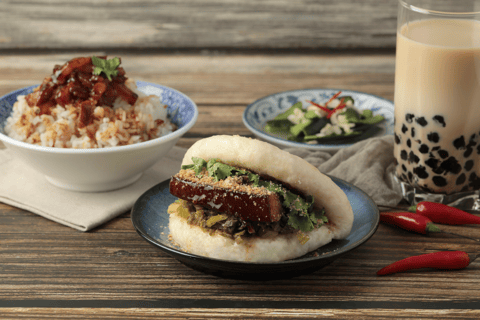
Learn to make Taiwanese street food in a fun and hands-on cooking class. Make Gua Bao, Lu Rou Fan, and Bubble Tea from scratch, and take home the...
from$82Check dates
61 editor-picked taiwanese restaurants across 13 cities.
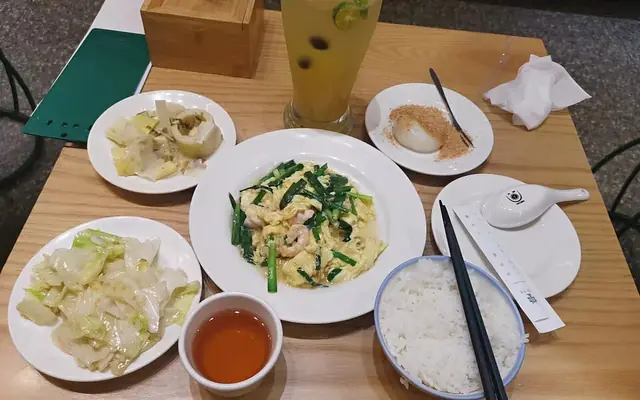
Taiwanese cuisine is the food of the island of Taiwan, descended from multiple overlapping traditions: Fujianese Hokkien settlers (the largest historical wave, arriving from the 17th century), Hakka migrants, indigenous Austronesian peoples, the 50-year Japanese colonial period (1895-1945), and the post-1949 mainland Chinese influx that brought Beijing, Shandong, Sichuan, and Hunan cooking traditions in concentrated form. The result is one of the most layered island cuisines in Asia.
The night market is the defining Taiwanese eating format. Cities have multiple permanent night markets (Shilin, Raohe, Ningxia in Taipei; Liuhe in Kaohsiung; Fengjia in Taichung) where 50 to 300 stalls sell street food from sundown until midnight. The night market is where most Taiwanese eat dinner two or three times a week, and where most visitors should focus their food efforts. The stall-to-restaurant pipeline is strong; many of Taiwan's best-known dishes (oyster omelet, bubble tea, stinky tofu, beef noodle soup) started in night-market stalls and remain there.
The sit-down side of Taiwanese cuisine runs from family-run rice-and-noodle shops to the high-end restaurants that draw from regional Chinese traditions filtered through Taiwanese ingredients. Soup dumplings (xiaolongbao) became globally famous via Din Tai Fung, founded in Taipei in 1972. The lu rou fan (braised pork over rice) is the national comfort food. Beef noodle soup, despite the name, is a post-1949 invention (the Beijing Sichuan beef tradition adapted to Taiwan with hong shao technique). And the convenience-store food scene (FamilyMart, 7-Eleven) is genuinely good and a national snack institution.
Tours, tastings and classes that match this page, bookable on GetYourGuide.
2 hours
Learn to make Taiwanese street food in a fun and hands-on cooking class. Make Gua Bao, Lu Rou Fan, and Bubble Tea from scratch, and take home the...
Guided tour · 3 hours
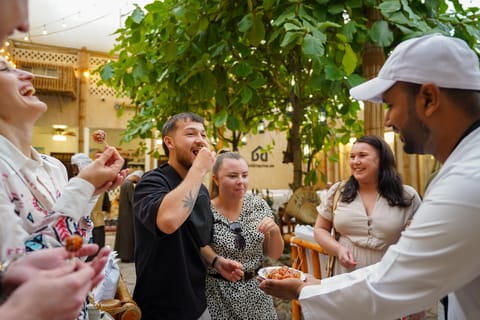
Experience Dubai's old town on a guided tour in the Al Fahidi district. Visit an Emirati Heritage House, savor street food, explore vibrant souks,...
Guided tour · 3 hours
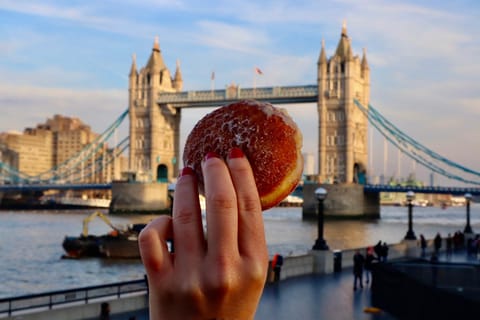
Taste London’s best bites on a guided food tour through Borough Market and London Bridge. Enjoy 6 classic British dishes, a drink, dessert, and a...

Guided tour · 2 hours
Choose a 2-hour express or 3-hour full Boston food tour. Taste clam chowder, arancini, brick oven pizza, cannoli, and more while exploring the North...
The best-scored taiwanese place in each of 12 cities.
Mountain and Sea House in Taipei revives 1930s Taiwanese banquet cuisine in a restored heritage mansion. One Michelin star and a wine list with depth.
OrderHoney-glazed pork lard rice and the seasonal banquet tasting.
TipClosed Mondays. Lunch and dinner sittings only.
Everyday Noodles on Forbes Avenue in Squirrel Hill is good-value Taiwanese in Pittsburgh. A bowl of hand-pulled noodles or soup dumplings is a filling meal.
TrySoup dumplings and hand-pulled noodles
Bao Soho counter on Lexington Street in central London, opened 2015 by Erchen Chang and Shing Tat Chung, runs late Taiwanese steamed buns and grilled skewers.
TryTaiwanese bao and grilled meat skewers
TipWalk-up only. After 21:30 is the easy slot; weekday last orders at 22:30. The Borough sibling runs to midnight on weekends.
Vivian Ku's Pine and Crane in Silver Lake, Los Angeles serves Taiwanese family recipes at a counter and a dozen tables on Griffith Park Boulevard.
OrderDan dan noodles and the three-cup chicken.
TipCounter service, fast turnover; this is the casual sibling of the more formal Joy in Highland Park.
BAO Goteborg serves fluffy steamed bao buns stuffed with pork belly, crispy fried chicken and seasonal fillings alongside Asian-inspired sides in a casual.
OrderPork belly bao, Crispy chicken bao, Yuzu coleslaw
Din Tai Fung folds its xiao long bao on the third floor of Santa Monica Place, garlicky string beans and spicy wontons with an ocean-view patio queue.
OrderPork xiao long bao, spicy wontons and garlicky string beans
TipJoin the waitlist before you shop; the third-floor patio tables catch the ocean air and clear fastest at lunch.
Maketto in Washington DC is Erik Bruner-Yang's H Street Cambodian-Taiwanese cafe and dining room, with a sneaker boutique on the ground floor and a courtyard.
OrderThe Taiwanese fried chicken sandwich on a Maketto-baked bun; the menu has carried it since opening.
TipBrunch service runs Cambodian breakfast plates that the dinner menu skips; the courtyard bar is the local move.
Bao Haus steams Taiwanese bao in a Jeonpo back street in Busan, a Bib Gourmand counter the Michelin Guide marks as one of the queues worth joining.
OrderA classic bao at 5,000 won with the fish-fragrant fried aubergine.
TipOrder at the counter before sitting; a Gwangalli branch handles the beach side of town.
Dumpling Cafe on Washington Street rolls Taiwanese soup dumplings until 02:00 in Boston's Chinatown since 2009. At 695 Washington St. Booking recommended.
TryMini juicy buns
TipThe 01:00-02:00 line is short; the dumplings come out faster. The beef pancake roll is the late-night second order.
Din Tai Fung at Dubai Hills Mall is the Dubai Hills branch of the Taiwanese dumpling chain, known citywide for its steamed pork xiaolongbao.
SignatureXiaolongbao, Fried rice
BAO DAO on Rue de la Clavurerie in Nantes was the city's first fully Taiwanese counter, steaming gua bao and pulling bubble tea daily until 22:00.
TryGua bao
TipHalf the card is vegetarian and gua bao start around €6; go off-peak, the room is small.
Vampire Penguin in Old Sacramento at 2nd Street serves the signature shaved snow bowl under $10, the original 2013 storefront of the now-national chain.
TryShaved snow bowl with toppings
Mountain and Sea House in Taipei revives 1930s Taiwanese banquet cuisine in a restored heritage mansion. One Michelin star and a wine list with depth.
OrderHoney-glazed pork lard rice and the seasonal banquet tasting.
TipClosed Mondays. Lunch and dinner sittings only.
Tairroir holds two Michelin stars for chef Kai Ho's French-Taiwanese tasting menu, fusing bistronomy technique with native bamboo and pomelo.
OrderThe chef's seven-course tasting with wine pairing.
Book4 weeks ahead
TipClosed Mondays. Reservations open online via the restaurant's own platform; lunch is easier.
Yong Kang Beef Noodle has been pulling beef and braising shank since 1963 on a two-floor counter at Lane 31 in Da'an. Bib Gourmand listed, half-tendon bowl.
OrderHalf-tendon, half-brisket bowl with hand-cut noodles.
TipOpen 11:00-15:30 and 16:30-21:00 daily. Cash and mobile pay; share the table at peak.
Everyday Noodles on Forbes Avenue in Squirrel Hill is good-value Taiwanese in Pittsburgh. A bowl of hand-pulled noodles or soup dumplings is a filling meal.
TrySoup dumplings and hand-pulled noodles
Bao Soho counter on Lexington Street in central London, opened 2015 by Erchen Chang and Shing Tat Chung, runs late Taiwanese steamed buns and grilled skewers.
TryTaiwanese bao and grilled meat skewers
TipWalk-up only. After 21:30 is the easy slot; weekday last orders at 22:30. The Borough sibling runs to midnight on weekends.
Vivian Ku's Pine and Crane in Silver Lake, Los Angeles serves Taiwanese family recipes at a counter and a dozen tables on Griffith Park Boulevard.
OrderDan dan noodles and the three-cup chicken.
TipCounter service, fast turnover; this is the casual sibling of the more formal Joy in Highland Park.
BAO Goteborg serves fluffy steamed bao buns stuffed with pork belly, crispy fried chicken and seasonal fillings alongside Asian-inspired sides in a casual.
OrderPork belly bao, Crispy chicken bao, Yuzu coleslaw
Vivian Ku's Joy on York Boulevard, Highland Park, Los Angeles serves Taiwanese family-style on a covered patio. Sister room to Pine and Crane in Silver Lake.
OrderBeef noodle soup and the scallion pancakes.
TipSister to Pine and Crane but takes bookings; ask the host for the back patio when you book.
Din Tai Fung folds its xiao long bao on the third floor of Santa Monica Place, garlicky string beans and spicy wontons with an ocean-view patio queue.
OrderPork xiao long bao, spicy wontons and garlicky string beans
TipJoin the waitlist before you shop; the third-floor patio tables catch the ocean air and clear fastest at lunch.
Maketto in Washington DC is Erik Bruner-Yang's H Street Cambodian-Taiwanese cafe and dining room, with a sneaker boutique on the ground floor and a courtyard.
OrderThe Taiwanese fried chicken sandwich on a Maketto-baked bun; the menu has carried it since opening.
TipBrunch service runs Cambodian breakfast plates that the dinner menu skips; the courtyard bar is the local move.
Bao Haus steams Taiwanese bao in a Jeonpo back street in Busan, a Bib Gourmand counter the Michelin Guide marks as one of the queues worth joining.
OrderA classic bao at 5,000 won with the fish-fragrant fried aubergine.
TipOrder at the counter before sitting; a Gwangalli branch handles the beach side of town.
Dumpling Cafe on Washington Street rolls Taiwanese soup dumplings until 02:00 in Boston's Chinatown since 2009. At 695 Washington St. Booking recommended.
TryMini juicy buns
TipThe 01:00-02:00 line is short; the dumplings come out faster. The beef pancake roll is the late-night second order.
Din Tai Fung at Dubai Hills Mall is the Dubai Hills branch of the Taiwanese dumpling chain, known citywide for its steamed pork xiaolongbao.
SignatureXiaolongbao, Fried rice
Niurou Mian Guanzi ladles Taiwanese hongshao beef noodles in Namcheon, Busan, a Bib Gourmand shop that sells through around 150 bowls on a normal day.
OrderHongshao beef noodle soup, 11,900 won under a big yellow signboard.
TipThe braised beef can run out before close; pickled mustard greens on the table are self-serve.
BAO DAO on Rue de la Clavurerie in Nantes was the city's first fully Taiwanese counter, steaming gua bao and pulling bubble tea daily until 22:00.
TryGua bao
TipHalf the card is vegetarian and gua bao start around €6; go off-peak, the room is small.
Yongkangzzie plates Taiwanese beef noodle soup a street back from Gwangalli Beach in Busan, a Michelin Guide room styled like a Taipei corner shop.
OrderBeef noodle soup with a side of Taiwanese pickles; portions run generous.
TipTakeaway and delivery run from the same counter; plan around the 15:00-16:00 break.
Shan Dao is a Franco-Taiwanese café on Quai de Versailles in Nantes, serving bento boxes, milk-bread sando and organic bubble tea from early morning.
TryTaiwanese bento and sando
TipThe bread for the sando is baked in house; the Erdre-side quay outside is the picnic spot.
Vampire Penguin in Old Sacramento at 2nd Street serves the signature shaved snow bowl under $10, the original 2013 storefront of the now-national chain.
TryShaved snow bowl with toppings
Aiô sits on Rua Aurea in Sao Paulo on the same street as sister restaurant Mapu, a glass-fronted room with an entrance bar built around Taiwanese cooking.
OrderThe crudo de peixe: aged raw fish with ponzu, chilli oil and crunchy black-rice popcorn.
TipThe menu skips the starter-and-main split, so it works best shared across the table rather than ordered as a solo plate.
 Taipei40 places
Mountain and Sea House, Tairroir
Taipei40 places
Mountain and Sea House, Tairroir
 Busan3 places
Bao Haus, Niurou Mian Guanzi
Busan3 places
Bao Haus, Niurou Mian Guanzi
 London3 places
Bao Soho
London3 places
Bao Soho
 Boston2 places
Dumpling Cafe
Boston2 places
Dumpling Cafe
 Gothenburg2 places
BAO Goteborg
Gothenburg2 places
BAO Goteborg
 Los Angeles2 places
Pine & Crane, Joy
Los Angeles2 places
Pine & Crane, Joy
 Nantes2 places
BAO DAO, Shan Dao
Nantes2 places
BAO DAO, Shan Dao
 Pittsburgh2 places
Everyday Noodles
Pittsburgh2 places
Everyday Noodles
 Dubai1 place
Din Tai Fung
Dubai1 place
Din Tai Fung
 Sacramento1 place
Vampire Penguin Old Sacramento
Sacramento1 place
Vampire Penguin Old Sacramento
 Santa Monica1 place
Din Tai Fung Santa Monica
Santa Monica1 place
Din Tai Fung Santa Monica
 São Paulo1 place
Aiô
São Paulo1 place
Aiô
 Washington DC1 place
Maketto
Washington DC1 place
Maketto
The most cosmopolitan food scene. Lu rou fan, beef noodle soup, soup dumplings, the night markets of Shilin, Raohe, and Ningxia. The strongest mainland-influence (Beijing, Sichuan, Shanghai) restaurants concentrate here, alongside the modern Taiwanese fine-dining scene (Mume, Raw, Akame).
The sun cake (tai yang bing) and the strong bakery and dessert culture; Taichung is considered Taiwan's confectionery capital. Fengjia Night Market is the largest in Taiwan. Beef tomato noodles is a regional signature.
The oldest Han-Chinese settlement in Taiwan and historically the cultural capital. Sweeter palate than the north (Tainan dishes often contain more sugar). Danzai noodles (a small bowl of shrimp-and-pork noodles), shrimp rolls, beef soup, milkfish congee, and the temple-food tradition.
Port city. Stronger seafood emphasis, abalone porridge, fish-ball soup, and the Liuhe Night Market for the southern night-market experience.
Indigenous (Austronesian) traditions: millet wine, stone-grilled meats, foraged plants, the use of pork and bamboo. Hakka traditions: lei cha (pounded tea), bantiao flat noodles, stuffed tofu, salt-baked chicken.
At a night market, walk first, then commit. Identify three or four stalls, queue or order at each, eat standing or at a nearby table. Cash is still king at older stalls; LINE Pay and EasyCard are accepted at newer ones. Portions are small by design; one stall is one or two dishes per visit. The lu rou fan rice bowl is the universal opener; the next dish is usually noodle (beef noodle, danzai noodle, or sesame oil noodle) or oyster omelet. At a sit-down restaurant, family-style ordering applies as in mainland China, but Taiwanese restaurants are more individual-portion-friendly than mainland ones. Tea is the default drink. The bill is paid at the counter on the way out. Tipping is not customary. The rookie mistakes are skipping stinky tofu because of the smell (the taste is mild), ordering soup dumplings at random places (the technique matters; Din Tai Fung and Hangzhou Xiaolong Tangbao set the standard), and eating only at famous chain night markets (smaller neighborhood markets are often better).
Tea is the default and the strongest local product: Taiwanese oolong (especially high-mountain oolong from Alishan, Lishan, and Dayuling) is among the best oolong tea in the world. Bubble tea is the daytime casual drink. Beer (Taiwan Beer, 18 Days craft beer) for night markets and casual dinners. Kaoliang (a sorghum spirit, 38 to 58% ABV) is the traditional toasting alcohol, made on Kinmen Island. Plum wine and rice wine for sweeter courses. Taiwanese whisky (Kavalan) has won global awards and is the modern Taiwan luxury drink.
Taipei holds the deepest Taiwanese food scene: Shilin, Raohe, and Ningxia night markets, plus the Yongkang Street restaurant district (Din Tai Fung's original), the beef noodle institutions (Lin Dong Fang, Yong Kang Beef Noodle), and the modern fine-dining scene (Raw, Mume, Akame, JL Studio). Tainan for the older, sweeter southern food culture. Taichung for night markets and pineapple cake. Outside Taiwan, Los Angeles's San Gabriel Valley has the deepest Taiwanese food cluster outside Asia. New York (Win Son, Mama Lin, 886), Vancouver, Sydney, and Tokyo all hold credible Taiwanese kitchens.
Taiwanese cuisine took its modern shape across four overlapping waves: Hokkien Fujianese immigration starting in the 17th century, the Japanese colonial period (1895-1945) that left lasting marks (the obsession with bento, the bakery and dessert culture, the convenience-store food traditions), the post-1949 mainland Chinese influx that brought Beijing and Sichuan dishes, and the post-1980 economic boom that codified the night market into its current institutional form. UNESCO has not formally listed Taiwanese cuisine, but the night-market tradition is recognized as one of Asia's most distinctive food cultures.
It is descended from Chinese (especially Hokkien Fujianese) cooking but has its own grammar, formed by Japanese colonial influence, indigenous Austronesian traditions, and 70 years of separate development. The night-market tradition, lu rou fan, the bubble tea invention, and the modern fine-dining scene are Taiwan-specific.
Taichung, Taiwan, in the early 1980s. Chun Shui Tang (founded 1983) and Hanlin Tea Room (founded 1986) both claim invention; the courts have not resolved the dispute. The original was iced black tea with milk and tapioca pearls; the modern menu has expanded into hundreds of variants.
Hokkien (Fujianese) is the parent tradition; Taiwanese is descended from it via 400 years of separation. Taiwanese cooking is generally less seafood-heavy than coastal Hokkien, sweeter (especially in Tainan), and includes night-market innovations (oyster omelet, bubble tea, stinky tofu) that are Taiwan-specific.
More cities are in research. Want taiwanese covered somewhere specific? Tell us where you want to eat.