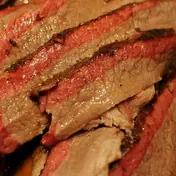
A whole packer brisket rubbed with salt and black pepper, smoked over post-oak wood for 12 to 16 hours, until the bark is nearly black. Served sliced on butcher paper, no sauce required.
Central Texas brisket developed from the meat-market tradition of Czech and German immigrants who smoked unsold cuts to preserve them. The style was codified in Lockhart and Taylor and spread north to Dallas through pit operators in the 1990s. Pecan Lodge founders Justin and Diane Fourton opened in the Dallas Farmers Market in 2010 and created the queue culture that put Dallas brisket on the national map, attracting Texas Monthly coverage and establishing Deep Ellum as a BBQ corridor alongside the original Central Texas towns.
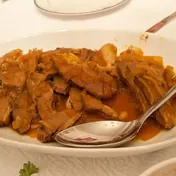
Corn tortillas filled with yellow cheddar, rolled and blanketed in a dark brick-red chili gravy of dried chiles, beef tallow, flour and beef broth. The defining dish of Dallas Tex-Mex, served with rice and refried beans.
Miguel Martinez codified cheese enchiladas with chili gravy at El Fenix in Dallas in the 1920s, adapting a recipe he developed as a cook at the Oriental Hotel. The chili gravy format, distinct from the mole or chile sauce of interior Mexico, became the signature of Dallas and Fort Worth Tex-Mex and spread across every combination-plate restaurant in the state. El Fenix has served the same recipe since 1918.
A flour tortilla folded around scrambled eggs, a protein (brisket, chorizo or bacon), potatoes and a fresh-made salsa. Dallas's default morning meal, served from taqueria windows and chef-driven counters.
The breakfast taco in Texas derives from the Tejano tradition of wrapping eggs and leftover proteins in a fresh flour tortilla for the morning meal. Dallas's version skews toward flour over corn and includes brisket as a distinctly Texan addition. Herrera's Cafe in Oak Cliff has served Tex-Mex breakfast tacos since 1949. The chef-driven iteration began with Resident Taqueria in the 2010s, which introduced house-pressed flour tortillas and slow-smoked brisket filling to the format.
Eat your way through Deep Ellum, where legendary music, bold food and street art come together in one distinctly Dallas experience. Enjoy 8 generous tastings at 4 rest...
Taste the bold flavors of Texas in Dallas’ Deep Ellum. Enjoy BBQ brisket, Texas chili, biscuits, pie, and more while exploring the city’s street art, music culture, an...
An immersive clue-solving adventure around Deep Ellum in Dallas. Search for real-world clues, solve puzzles, and discover the neighborhood with an experience you'll ne...
A Dallas BBQ counter invention: a split russet potato loaded with chopped smoked brisket, white cheese sauce, jalapenos and sour cream. The crossover dish between Texas BBQ and the loaded potato tradition.
The loaded baked potato is a staple of Texas roadside diners, but the brisket version emerged from Dallas BBQ counters in the 2000s as pitmasters looked for ways to use the point and burnt ends. Pecan Lodge and Slow Bone both featured versions and the format spread to casual BBQ restaurants across North Texas through the 2010s.
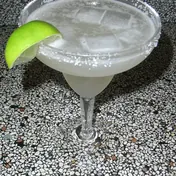
A blended mixture of tequila, triple sec and lime juice served in a salt-rimmed glass from machines that run all day in Tex-Mex restaurants. Dallas claims the 1971 invention of the machine-blended frozen margarita.
Dallas restaurateur Mariano Martinez claims to have invented the first frozen margarita machine in 1971 at his restaurant Mariano's, adapting a 7-Eleven Slurpee machine to dispense a pre-blended margarita. The machine is in the Smithsonian Institution's National Museum of American History in Washington D.C. The frozen margarita subsequently spread from Dallas to every Tex-Mex restaurant in the United States.
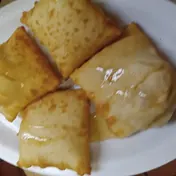
A puffed triangle of fried dough, hollow inside, served hot with a drizzle of honey as a dessert or side bread at Tex-Mex restaurants. The universal Tex-Mex dessert and table bread in Dallas.
Sopapillas arrived in Texas through New Mexican and Northern Mexican culinary traditions, where a similar fried dough was a staple table bread. The Tex-Mex versions served in Dallas are sweeter and puffier than New Mexico's; the honey-drizzle finish became standard through the combination-plate Tex-Mex restaurants of the mid-20th century. El Fenix has served sopapillas as the standard dessert since the 1930s.
A State Fair of Texas institution: a beef frankfurter dipped in a thick sweet cornmeal batter, deep-fried and served on a stick with yellow mustard. Served at Fair Park every autumn since 1942.
Neil Fletcher introduced the corn dog at the 1942 State Fair of Texas, calling it the Corny Dog, and the Fletcher family has sold them from the same booth at Fair Park every autumn since. The recipe and booth location are unchanged since 1942. The corny dog became so associated with the Fair that the terms are interchangeable in Dallas.
A coarse-ground beef sausage stuffed with pickled jalapeños and sharp cheddar cubes, smoked until the casing snaps and the cheese pockets caramelise. The signature sausage of the Dallas BBQ style.
The jalapeño cheddar sausage emerged from Dallas BBQ counters in the 1990s as an evolution of the Czech-German smoked sausage tradition that was already embedded in Central Texas BBQ. The addition of jalapeños and cheddar was a Tex-Mex fusion move that became the default sausage at every major Dallas pit. Pecan Lodge's version, using house-ground beef and house-pickled jalapeños, is the Dallas benchmark.
Dallas bar scene's signature style: a spirit-forward cocktail on American whiskey or agave, with a Southwestern flavour element (dried chile, mole bitters, smoked salt) and a long-form preparation.
Deep Ellum's cocktail scene developed in the early 2010s alongside the BBQ and restaurant renaissance in the neighbourhood. Midnight Rambler opened in The Joule Hotel in 2013 and established the standard for craft cocktails in Dallas, eventually earning a World's 50 Best Bars ranking. The neighbourhood bars that followed borrowed the focus on house-made ingredients and Southwestern flavour profiles while making the format accessible at a walk-in price point.
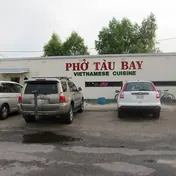
A bone-deep beef broth simmered with charred ginger, onion, star anise and cinnamon for at least 10 hours, poured over rice noodles and thinly sliced raw beef. The Parker Road Vietnamese corridor style.
The largest Vietnamese community in Texas settled in the Richardson and Garland corridor after the fall of Saigon in 1975. Parker Road became the spine of a Vietnamese commercial district by the 1980s, eventually housing more Vietnamese restaurants per block than anywhere in the state outside of Houston. The pho served here is closer to the Hanoi northern style, with a cleaner broth, fewer garnishes, and a higher spice-note emphasis than the southern Ho Chi Minh City style.
Hand-rolled egg-yolk pasta with seasonal fillings or sauces, made daily from soft wheat and local eggs. Set the Dallas Italian cooking standard at Nonna on Lomo Alto since 1999.
Julian Barsotti opened Nonna on Lomo Alto Drive in 1999 as a straightforward Tuscan trattoria. Since 1999, the restaurant has become the Dallas benchmark for Italian pasta: the tagliatelle with short rib ragu and the seasonal ravioli have appeared on best-dish lists across the decades. The commitment to daily-made pasta from scratch distinguishes Nonna from the region's other Italian operators.
Watch out for: Gluten, Eggs
Signature Dishes in Dallas, FAQ
What food is Dallas known for?
Dallas's signature dishes include Texas smoked brisket, Tex-Mex cheese enchiladas with chili gravy, Dallas breakfast taco, Brisket-stuffed baked potato, Frozen margarita. See our signature dishes chapter for where to eat each.