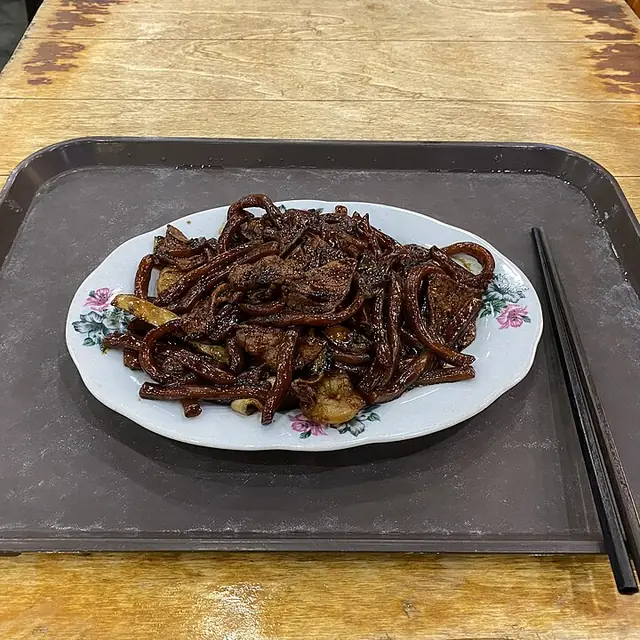
Mee hokkien ★ 4.8
Phuket's defining noodle: thick yellow Hokkien egg noodles wok-fried over charcoal in dark soy gravy with pork, prawns, squid and greens, bound with egg.
Where: Go La, Meesapam Khun Yai Chian
Price: ฿60-120
The plates that define Phuket: what they are, and where to eat the canonical version.
The plates that define Phuket. what they are, where they came from, and where to eat the canonical version.
Phuket's defining noodle: thick yellow Hokkien egg noodles wok-fried over charcoal in dark soy gravy with pork, prawns, squid and greens, bound with egg.
Where: Go La, Meesapam Khun Yai Chian
Price: ฿60-120
The centre of a Phuket Baba meal: pork belly braised for hours in dark soy, pounded garlic, palm sugar and plenty of black pepper until glossy and spoon-tender.
Where: One Chun, Raya Restaurant, Krua Praya
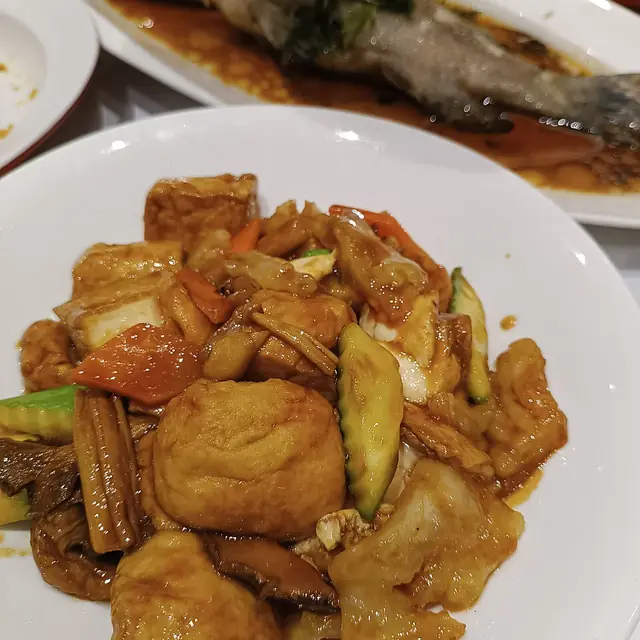
A Phuket street dish found almost nowhere else: oysters or seafood and soft taro fried with egg and batter over charcoal into a crisp, gooey, smoky tangle.
Where: O Tao Bang Niao
Price: ฿50-100
Phuket's Hokkien snack platter: five-spice pork, offal, tofu and bean-curd-skin rolls, fried and sliced to order, with fried taro and a sweet, sour, spicy dip.
Where: Loba Bang Niao
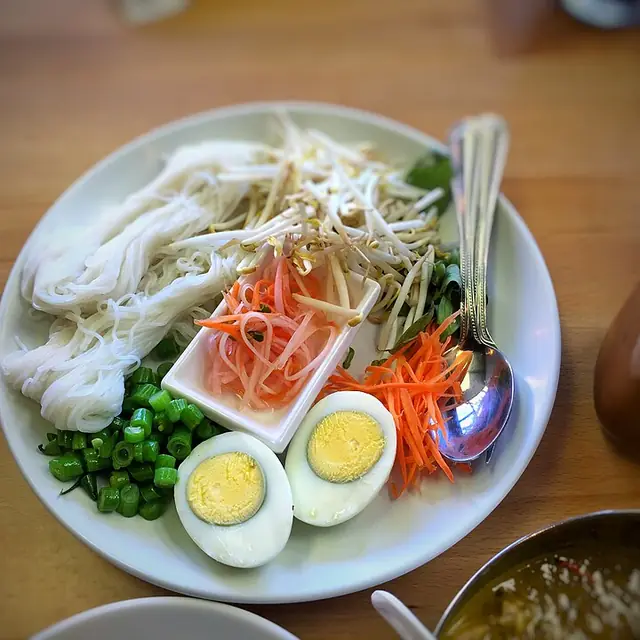
A Phuket favourite: blue swimmer crab in a turmeric-yellow coconut curry, often with wild betel leaf, ladled over soft khanom jeen rice noodles.
Where: Raya Restaurant, One Chun, Blue Elephant
Price: ฿300-400
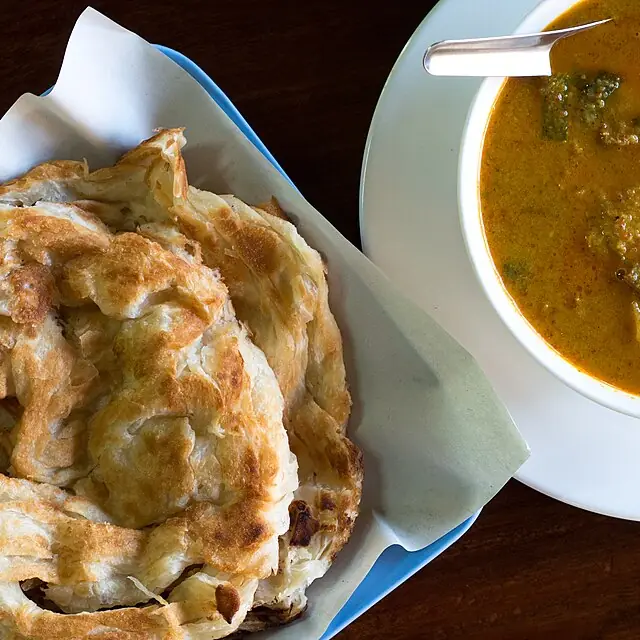
Phuket's Thai-Muslim breakfast: crisp, flaky roti fried on a wide pan, torn and dipped in beef or chicken curry, or eaten sweet with banana and egg.
Where: Roti Chaofa, Roti Taew Nam
Price: ฿30-100
Phuket's early-morning fry: paired dough sticks deep-fried golden and hollow, eaten plain or with sweet dips, often beside soft steamed salapao buns.
Where: Pathongko Mae Pranee
Price: ฿10-40
Phuket's comfort bowl: rice boiled soft in clear broth with fish, pork or a Chinese brown herbal soup, eaten for breakfast or supper at old family counters.
Where: Khao Tom Dibuk, Krua Kao Kuk
Price: ฿50-150
The southern Thai sour curry at its Phuket best: a thin, fiery, tamarind-sharp orange broth with fish such as barramundi and vegetables like green taro stems.
Where: Chom Chan, Go Ang Seafood, Lertrod
A Phuket Old Town street sweet: thin coconut and rice-flour crepes cooked in small woks over charcoal until lacy, light and crisp at the edges.
Where: A Pong Mae Sunee
Price: ฿20-50
Phuket's seven-colour spiny lobster, caught in the Andaman and GI-protected since January 2026, served grilled, stir-fried or in southern Thai curries.
Where: Talung Thai, Mook Manee
Phuket's defining noodle: thick yellow Hokkien egg noodles wok-fried over charcoal in dark soy gravy with pork, prawns, squid and greens, bound with egg.
History: Mee hokkien arrived with the Hokkien Chinese who came to work Phuket's tin mines in the 19th century and stayed to shape its Peranakan culture. Bae Kong, a cook on the ships between Phuket, Penang and Singapore, is said to have opened the first Hokkien noodle restaurant in Phuket Town in 1946, and his grandchildren still run noodle shops there. In 1952 Khun Yai Chian began cooking her version with the morning's shellfish and squid at Sapam pier, the looser, seafood-heavy style now sold as mee Sapam.
Where to try it: Go La, Meesapam Khun Yai Chian
Watch out for: Gluten, Egg, Shellfish, Soy
The centre of a Phuket Baba meal: pork belly braised for hours in dark soy, pounded garlic, palm sugar and plenty of black pepper until glossy and spoon-tender.
History: Moo hong is the soul of Phuket's Baba, or Peranakan, home cooking, a braise that traces directly to the Hokkien Chinese kitchen and its love of dark soy and warming spice. Families of mixed Chinese and local descent in the tin towns cooked it for everyday meals and festivals alike. Unlike most southern Thai food it is gentle rather than chilli-hot, sweet, salty and peppery, and the Michelin Guide singles out the mu hong at One Chun for its soft, tender pork belly.
Where to try it: One Chun, Raya Restaurant, Krua Praya
Watch out for: Soy
A Phuket street dish found almost nowhere else: oysters or seafood and soft taro fried with egg and batter over charcoal into a crisp, gooey, smoky tangle.
History: O-tao is one of Phuket's Hokkien street foods, and the taro sets it apart from the oyster omelettes sold elsewhere in Thailand. Cooks ladle a tapioca and rice-flour batter around seafood and steamed taro cubes on a hot griddle, add egg, and keep chopping and turning until parts crisp and caramelise while others stay soft. Family shops in Phuket Town fry it over charcoal; one of the best known has done so since 1982.
Where to try it: O Tao Bang Niao
Watch out for: Shellfish, Egg
Phuket's Hokkien snack platter: five-spice pork, offal, tofu and bean-curd-skin rolls, fried and sliced to order, with fried taro and a sweet, sour, spicy dip.
History: Loba takes its name from the Hokkien lor bak, and in Phuket it became a market snack that shows the Hokkien influence on the island's food. The spread centres on pork and offal seasoned with five-spice, with tofu, boiled egg and minced pork wrapped in bean-curd skin and fried until crackling. Everything is sliced to order and served with a thick dipping sauce that is sweet, sour and spicy at once, and the Michelin Guide lists a Phuket Town loba shop alongside bean sprout pancakes, fried spring rolls and herbal pork rib soup as Hokkien-style Phuket cooking.
Where to try it: Loba Bang Niao
Watch out for: Soy, Gluten
A Phuket favourite: blue swimmer crab in a turmeric-yellow coconut curry, often with wild betel leaf, ladled over soft khanom jeen rice noodles.
History: Khanom jeen, soft fermented rice noodles, are eaten across Thailand, but in Phuket they are paired most famously with crab. The southern golden curry is rich with turmeric and chilli and carries large pieces of blue swimmer crab, sometimes with wild betel leaf. One long-running Dibuk Road house, founded in 1994, built its name on it, and it is now the dish that restaurant is best known for.
Where to try it: Raya Restaurant, One Chun, Blue Elephant
Watch out for: Shellfish, Fish
Phuket's Thai-Muslim breakfast: crisp, flaky roti fried on a wide pan, torn and dipped in beef or chicken curry, or eaten sweet with banana and egg.
History: Roti with curry came to Phuket with its Muslim communities of Indian and Malay descent, which is why the island's breakfast tables carry roti and chicken curry beside Chinese noodles. Phuket has a large Muslim community, and halal roti shops open at dawn across Phuket Town. Some are long-running: one charcoal-pan stall on Thep Krasattri Road and another on Chaofa Road both hold a Michelin Bib Gourmand for their breakfast roti.
Where to try it: Roti Chaofa, Roti Taew Nam
Watch out for: Gluten, Egg, Dairy
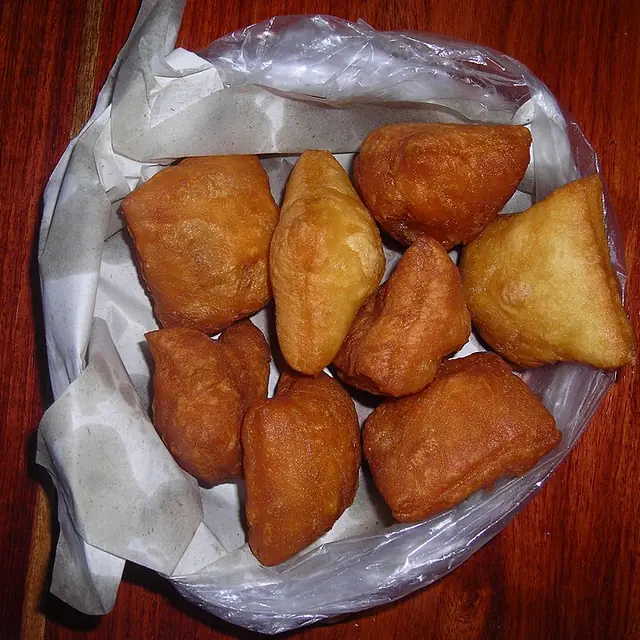
Phuket's early-morning fry: paired dough sticks deep-fried golden and hollow, eaten plain or with sweet dips, often beside soft steamed salapao buns.
History: Pa thong ko are the Chinese fried dough sticks found across Thailand, and in Phuket's Hokkien towns they are a dawn ritual. Stalls start frying at dawn and are done by mid-morning, with the sticks eaten plain, dipped in sweet sauces or alongside soft steamed salapao buns. At a Bib Gourmand stall in Wichit, just outside Phuket Town, customers line up from 6am for sticks and salapao fried fresh each morning.
Where to try it: Pathongko Mae Pranee
Watch out for: Gluten
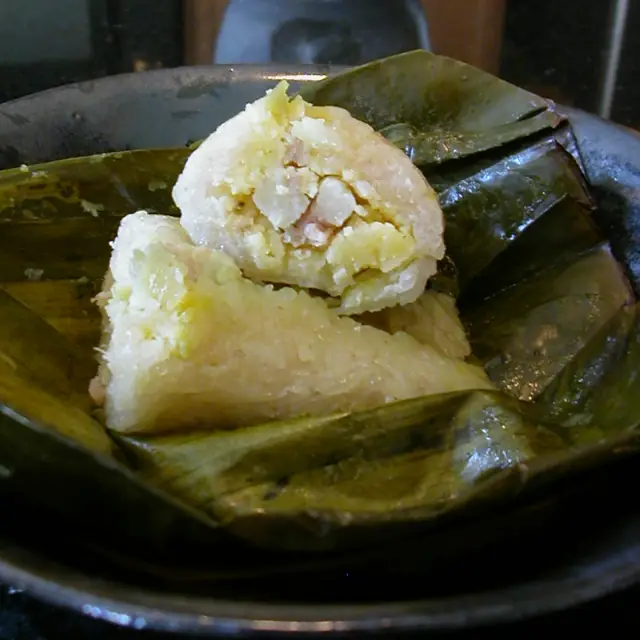
Phuket's comfort bowl: rice boiled soft in clear broth with fish, pork or a Chinese brown herbal soup, eaten for breakfast or supper at old family counters.
History: Khao tom, rice boiled in broth, came to Phuket with its Chinese settlers and became an all-day comfort food. In Phuket Town family counters serve it from early morning, with fish, pork ribs or a Chinese brown soup of herbs, and some shops trace their recipes to roadside stalls run by an earlier generation. Boiled rice with fish, khao tom pla, is the version most associated with the town's older shophouse kitchens.
Where to try it: Khao Tom Dibuk, Krua Kao Kuk
Watch out for: Fish, Soy
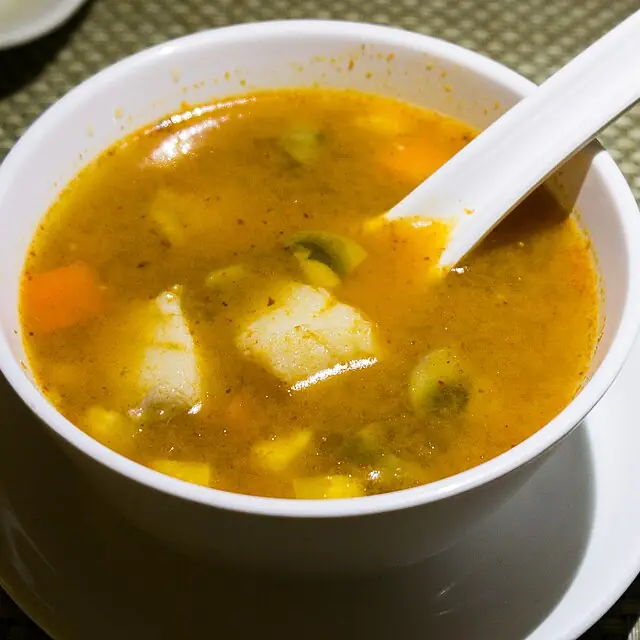
The southern Thai sour curry at its Phuket best: a thin, fiery, tamarind-sharp orange broth with fish such as barramundi and vegetables like green taro stems.
History: Southern Thai cooking is marked by deep flavour and pungent spice, from chilli and turmeric to galangal, kaffir lime and lemongrass, and gaeng som is its everyday sour curry. Made without coconut milk, it relies on tamarind for sourness and fresh chilli for heat, balanced with a little sweetness. In Phuket it is cooked with local fish and vegetables, and seafood houses and family kitchens serve versions with seabass or barramundi belly.
Where to try it: Chom Chan, Go Ang Seafood, Lertrod
Watch out for: Fish, Shellfish
A Phuket Old Town street sweet: thin coconut and rice-flour crepes cooked in small woks over charcoal until lacy, light and crisp at the edges.
History: Khanom a pong are thin coconut crepes sold as a street snack in Phuket Old Town, cooked in small woks over charcoal. The batter of rice flour, coconut milk and sugar is swirled thin so the crepe sets light and crisp at the rim. A stall off Yaowarat Road is known for them and holds a Michelin Bib Gourmand, which its inspectors credit to the light, crisp shell and soft centre.
Where to try it: A Pong Mae Sunee
Watch out for: Egg
Phuket's seven-colour spiny lobster, caught in the Andaman and GI-protected since January 2026, served grilled, stir-fried or in southern Thai curries.
History: Phuket's seven-colour lobster received Geographical Indication status in January 2026, tying the catch and its quality to the island. The province promotes it through the Phuket Lobster Festival, which reached its 11th edition in 2026, with a month of lobster menus across more than 122 restaurants every August. Hotel dining rooms and tasting-menu kitchens now cook it with southern Thai flavours, from stir-fries to spicy curries.
Where to try it: Talung Thai, Mook Manee
Watch out for: Shellfish
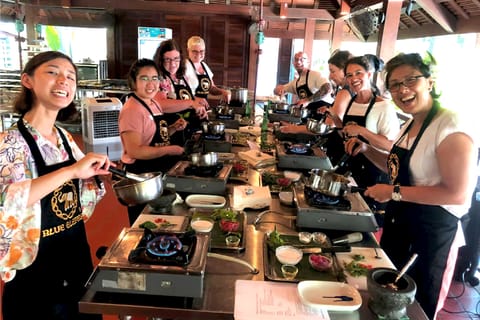
Guided tour · 4 hours
Discover Thai cuisine in Phuket! Explore markets, craft 4 dishes in a colonial mansion, and take home Blue Elephant souvenirs. Ideal for foodies and families!

Private tour
Visit Wat Chalong as the sacred Buddhist temple of Phuket. Prime sightseeing destinations at phuket's unique Big Buddha on the top of Nakerd Hill. then drive to Promth...

Multi-day trip · 13 hours - 2 days
Discover Khao Sok and Cheow Lan Lake on this nature escape in Phuket. Choose from a 1-day trip featuring bamboo rafting or upgrade to a 2-day trip to also include a fl...
Phuket's signature dishes include Mee hokkien, Moo hong, O-tao, Loba, Crab curry with rice noodles. See our signature dishes chapter for where to eat each.