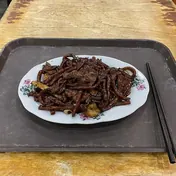
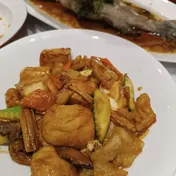
The centre of a Phuket Baba meal: pork belly braised for hours in dark soy, pounded garlic, palm sugar and plenty of black pepper until glossy and spoon-tender.

Moo hong is the soul of Phuket's Baba, or Peranakan, home cooking, a braise that traces directly to the Hokkien Chinese kitchen and its love of dark soy and warming spice. Families of mixed Chinese and local descent in the tin towns cooked it for everyday meals and festivals alike. Unlike most southern Thai food it is gentle rather than chilli-hot, sweet, salty and peppery, and the Michelin Guide singles out the mu hong at One Chun for its soft, tender pork belly.

Where to eat Moo hong in Phuket

3 editor picks for Moo hong in Phuket, ranked by editorial score. All Phuket signature dishes · Moo hong across every city.

Make it at home

Serves Serves 42 hrEasy

Ingredients

  • 800g skin-on pork belly, cut into 3cm cubes
  • 8 cloves garlic
  • 1 tbsp white peppercorns
  • 1 tsp black peppercorns
  • 3 tbsp dark soy sauce
  • 2 tbsp light soy sauce
  • 2 tbsp palm sugar
  • 1 tbsp oyster sauce
  • 500ml water
  • 1 tbsp oil

Method

  1. Pound the garlic and both peppercorns to a coarse paste in a mortar.
  2. Heat the oil in a heavy pot over medium heat and fry the paste for 1 minute until fragrant.
  3. Add the pork and stir for 5 minutes until the edges are sealed.
  4. Add the palm sugar and let it melt and coat the pork for 2 minutes.
  5. Add both soy sauces, the oyster sauce and the water and bring to a simmer.
  6. Cover and cook on the lowest heat for 1 hour 30 minutes, stirring now and then, until the pork is spoon-tender.
  7. Uncover and reduce for 10 minutes until the sauce is thick and glossy, then serve with rice.

Editor tip. Make it a day ahead; the braise tastes deeper after a night in the fridge, and the fat lifts off easily.

Common allergens: Soy.