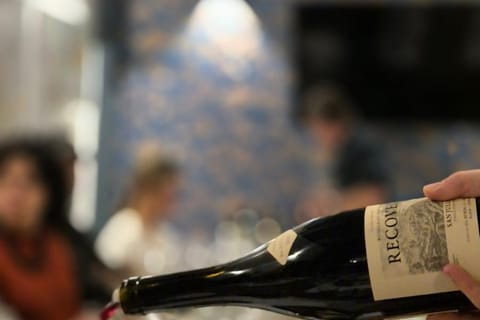

The plates that define Bilbao: what they are, where they came from, and where to eat the canonical version.
Signature dishes
-
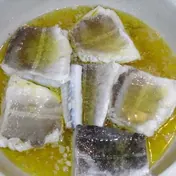
Bacalao al pil pil ★ 4.9
Bacalao al pil pil is a traditional Basque dish of salt cod poached in olive oil and garlic and served in an emulsion of oil, cod juices and gelatin.
Where to try it: Berton
Wikipedia calls bacalao al pil pil a traditional Basque dish popular in Northern Spain for centuries, and its Bilbao entry lists it among the dishes the city shares with the rest of Biscay. Al pil pil imitates the sound of cod frying as its connective tissue breaks down. The cod is cooked gently in the oil for about 20 to 30 minutes while the pan is kept moving to build the emulsion. Berton's menu lists cod in pil-pil sauce and kokotxas of cod in pil-pil sauce.
Watch out for: Fish
-
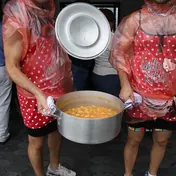
Marmitako ★ 4.7
Marmitako is a Basque stew of albacore tuna, potatoes, onions, peppers and tomatoes, traditionally cooked by tuna fishermen aboard their boats.
Wikipedia describes marmitako as a stew traditionally eaten by tuna fishermen on board boats in the Bay of Biscay and the Cantabrian Sea; the name comes from marmita, a metal pot with a lid. The fish is albacore, known as bonito del norte, which migrates close to the Basque coast between about July and September. In the late 20th century marmitako briefly fell out of fashion in restaurants, then returned to menus across the region, and it is most associated with Bizkaia and Gipuzkoa.
Watch out for: Fish
-
Pintxo Gilda ★ 4.8
The gilda is a pintxo of anchovy, olive and guindilla pepper on a toothpick, named after Rita Hayworth's 1946 film for being green, salty and a little spicy.
Where to try it: Baster, Ola Martin Berasategui
Spanish Wikipedia says the gilda is a banderilla or pincho served in the bars and taverns of Spain, especially the north, and that the name began to be used in San Sebastian. Accounts of its origin differ: Google Arts & Culture credits either Casa Valles or Bar Martinez, both in San Sebastian. Wikipedia's Bilbao entry lists gildas among the snacks of the city. Baster, in the Casco Viejo, lists gildas and rabas on its website, and Ola Martin Berasategui includes a Gilda in its tasting menus.
Watch out for: Fish
Book food experiences in Bilbao
-
Txangurro a la donostiarra ★ 4.7
Txangurro is Basque spider crab; a la donostiarra, the crabmeat is baked with onion, brandy and breadcrumbs in its shell; Bilbao also serves it as a pintxo.
Where to try it: Bar El Globo, Mina
Price: €22 for a plate at Bar El Globo, Plaza Nueva
Saveur calls txangurro a la donostiarra a locally popular dish created by a Basque chef in the early 20th century and named after Donostia, the Basque name for San Sebastian; cooks classically use small centollo (spider crab) or local buey de mar. In Bilbao it is also a pintxo: Bar El Globo, open on Calle Diputacion since 1997, calls its gratinado de txangurro its most famous pintxo and lists it as a plate at 22 euros at its Plaza Nueva branch. Mina's website lists two txangurro dishes.
Watch out for: Shellfish
-
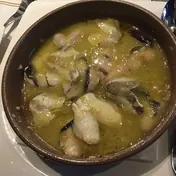
Kokotxas al pil pil ★ 4.7
Kokotxas are the lower chin of hake or cod; al pil pil they are poached in olive oil until the gelatin binds the sauce, which is made only with cod.
Where to try it: Berton, Casa Rufo
Price: €32 at Casa Rufo
Spanish Wikipedia defines the cococha, from the Basque kokotxa, as the lower part of the chin of hake or cod and says the most common preparations are in salsa verde or al pil pil, the latter only with cod. For pil pil the kokotxas are poached in olive oil until they release their gelatin and the cazuela is moved to make the emulsion. Berton lists kokotxas of cod in pil-pil sauce, and Casa Rufo lists kokotxas de bacalao al pil-pil at 32 euros. Nerua's tasting menu includes a hake kokotxa with pochas beans.
Watch out for: Fish
-
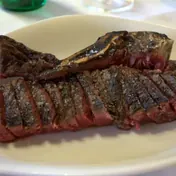
Txuleta ★ 4.8
Txuleta, or chuleton, is a thick bone-in beef steak; the Basque version comes from aged cows and bulls and is grilled over an open flame, as at Casa Rufo.
Where to try it: Casa Rufo
Price: €70 per kilo (grilled T-bone) at Casa Rufo
About Basque Country, translating a Wall Street Journal piece, describes txuletas as steaks from cows and aged bulls that are traditional in the Basque Country. Casa Rufo in Bilbao began as a deli founded in 1955 and its restaurant has been a Bilbao classic since 1995; its specialty is a steak grilled over an open flame, sold by the kilo as a grilled T-bone at 70 euros or a 100-day dry-aged one at 95 euros. Berton also lists a grilled sirloin steak from large cattle.
Watch out for: None typical
-
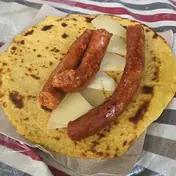
Talo de txistorra ★ 4.6
Talo is a Basque corn-flour flatbread cooked on a hot plate; at Bilbao's Santo Tomas fair on 21 December it is eaten with chorizo and a glass of txakoli.
Where to try it: Feria de Santo Tomas
Talo is made of corn flour, water and a little salt and cooked on a metal plate; after corn reached Basque farms from America in 1520 it served as everyday bread, and in the 1930s workers wrapped food in it for the fields. Wikipedia says that in Bilbao and San Sebastian it is an essential element of the Saint Thomas fair on 21 December. Kulturklik adds that talo with chorizo and txakoli can be tasted at El Arenal and Plaza Nueva, and Tourism Euskadi lists chorizo, talo, cider, cheese and txakoli among the fair's products.
Watch out for: Pork
-
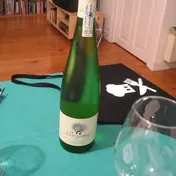
Txakoli ★ 4.6
Txakoli is a slightly sparkling, very dry, high-acid white wine from the Basque Country, usually poured into tall glasses from a height, often with pintxos.
Where to try it: Sorginzulo, Berton
Wikipedia says txakoli has three certified varieties: Getariako Txakolina, the first to gain its denomination of origin in 1989, Bizkaiko Txakolina in 1994 and Arabako Txakolina in 2001. Its Bilbao entry says Bizkaiko Txakolina is the one usually served in Bilbao. Until the 1980s txakoli was mostly a home-made wine. Sorginzulo's website lists a fresh txakoli among its drinks, and Berton's wine list names txakolis from Lezama and Getaria.
Watch out for: Sulphites
-
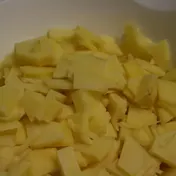
Tortilla de Patata ★ 4.6
The Spanish omelette is made with eggs and potatoes, often with onion, and is often served at room temperature as a tapa, a pintxo or a bar snack.
Where to try it: Sorginzulo, Baster
Wikipedia traces the first written reference to the tortilla to a Navarrese document of 1817 and records a legend that General Zumalacarregui invented it during the 1835 siege of Bilbao, though it is unknown whether that is true. Its Bilbao entry lists the Spanish omelette among the city's bar snacks. Sorginzulo, on Plaza Nueva, won fifth prize at the 2025 National Potato Tortilla Congress, and Baster lists individual tortillas made to order among its specialties.
Watch out for: Egg
-
Rabas ★ 4.5
Rabas are fried or battered squid rings usually served with lemon slices; elsewhere in Spain the dish is called calamares fritos or calamares a la romana.
Where to try it: Baster
Spanish Wikipedia notes that fried squid is known in Spain as calamares fritos, calamares a la romana, rabas or calamares a la andaluza, served as a tapa with a slice of lemon or sometimes in a bocadillo de calamares. Wikipedia's Bilbao entry lists rabas among the city's bar snacks. Baster, in the Casco Viejo, pairs its national vermouths and craft beers with a portion of gildas or rabas.
Watch out for: Shellfish, Gluten, Egg
-
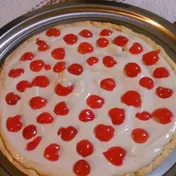
Tarta de Queso (Basque Burnt Cheesecake) ★ 4.7
Basque cheesecake is crustless and baked hot to a caramelised top and creamy centre; Santiago Rivera created it at La Vina in San Sebastian in 1988.
Where to try it: La Vina del Ensanche, Casa Rufo
Price: €7.50 a slice with ice cream at La Vina del Ensanche
Wikipedia says Basque cheesecake was created in 1988 by Santiago Rivera at his pintxo bar La Vina in San Sebastian and became popular online in the 2010s. Other Basque cheesecakes came first, such as the one by Hilario Arbelaitz at Zuberoa in Oiartzun, which was often made with a crust. In Bilbao, La Vina del Ensanche, a bar and restaurant open since 1927, lists a tarta de queso with ice cream at 7.50 euros, and Casa Rufo lists a tarta de queso on its carta.
Watch out for: Dairy, Egg, Gluten
-
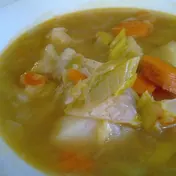
Porrusalda ★ 4.4
Porrusalda is a Basque leek and potato soup, from porru (leek) and salda (broth); in Bizkaia flaked salt cod is usually added to it, and it is eaten all year.
Spanish Wikipedia describes porrusalda as a dish originating in Basque, Navarrese and Riojan cooking, once typical of Lent and thought to be of humble origin, made from the leeks and potatoes of the kitchen garden and sometimes salt cod. It is now eaten all year, often with carrot or other vegetables in place of pumpkin. Versions vary: in Gipuzkoa the porrupatata uses more potato, and in Vizcaya flaked salt cod is usually added.


Signature Dishes in Bilbao, FAQ
What food is Bilbao known for?
Bilbao's signature dishes include Bacalao al pil pil, Marmitako, Pintxo Gilda, Txangurro a la donostiarra, Kokotxas al pil pil. See our signature dishes chapter for where to eat each.