Signature dishes
Benidorm's own rice: fresh anchovies and spinach cooked with rice in a ñora, garlic and tomato picada, served soupy, a recipe the tourist office lists among the town's traditional dishes.
Where: El Barranco
Price: €18-22 per person
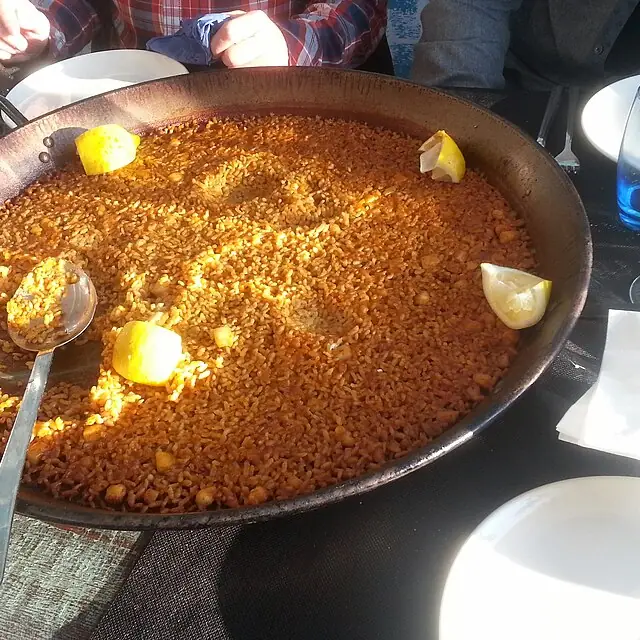
Arroz a banda is the Alicante fishermen's rice cooked in a strong stock of rockfish and ñora, served on its own with allioli, and found on seafront menus all over Benidorm.
Where: Ongi Etorri Manolo 1, Ducado, El Barranco
Price: €17-22 per person
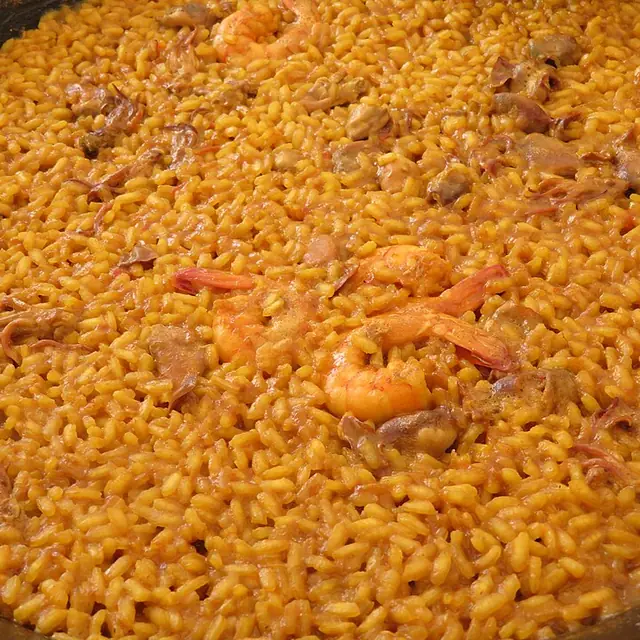
Arroz del senyoret is the gentleman's rice of the Alicante coast: a seafood rice with every prawn and mussel shelled before cooking, so nothing needs peeling at the table.
Where: Casa Toni, Rice, El Barranco
Price: €18-23 per person
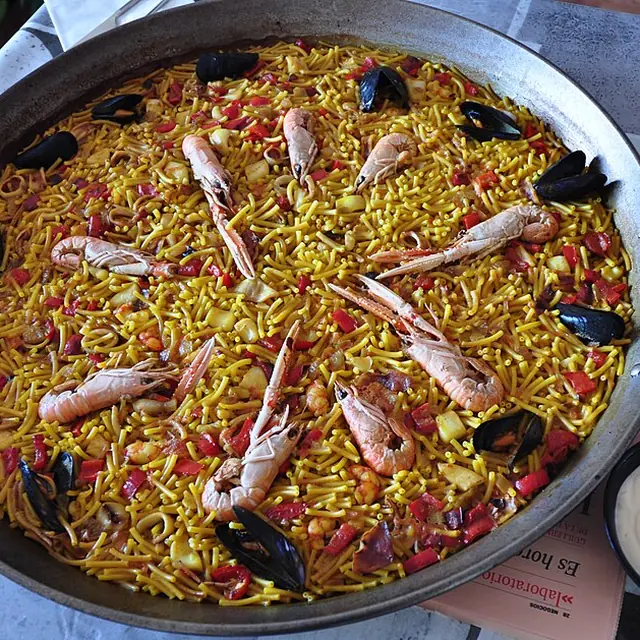
Fideuà swaps rice for short noodles cooked in fish stock in a paella pan, a Valencian dish from Gandía that Benidorm's seafood houses serve beside their rice.
Where: Casa Toni, Rice, El Barranco
Price: €18-26 per person
Salazones are the salted fish of the almadraba coast: mojama tuna loin, tuna belly and roe, served thin with tomato and olive oil in Benidorm's seafood restaurants.
Where: Casa Toni, Malaspina, Rice
Price: €15-20 per plate
Bluefin tuna is Benidorm's oldest catch: the town grew rich on almadraba tuna nets, and each April its restaurants cook bluefin tuna in a ten-day tuna week.
Where: La Fava, Rice
Price: €18-39 per dish
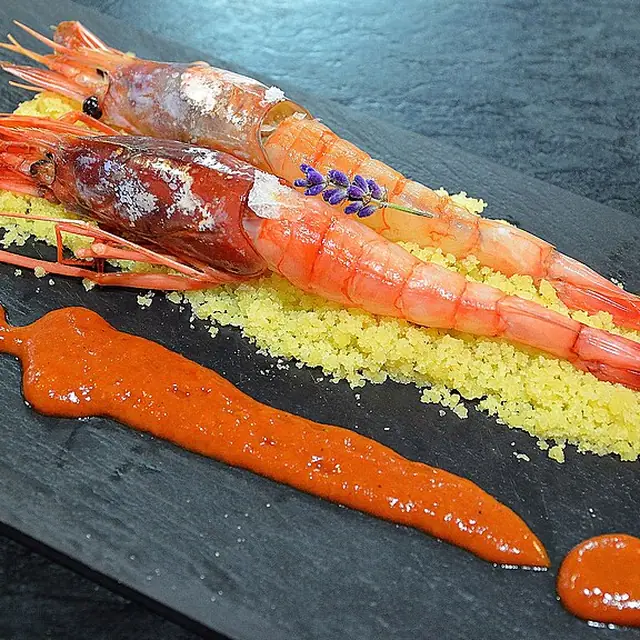
Gamba roja, the deep-water red prawn of the western Mediterranean, is the prized shellfish on Benidorm menus, grilled a la plancha or cooked with garlic.
Where: Casa Toni, ConBrassa, Rice
Price: €18-32 per serving
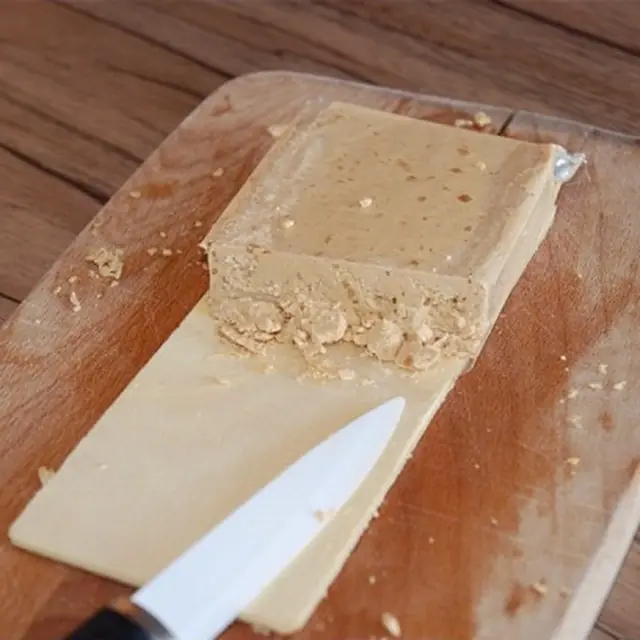
Turrón de Jijona is the soft almond and honey nougat from the hill town of Xixona, inland from Benidorm, made by grinding toasted almonds with honey into a paste.
Price: €8-15 per bar
Faves sacsaes are Benidorm's shaken broad beans, stewed with artichokes, sausages, botifarra and pork belly; the pot is shaken, never stirred, to keep the beans whole.
Price: €12-16 per portion
Coca farcida is the covered savoury pie of Benidorm, a two-crust coca filled with onion, tomato, tuna and onion morcilla, close to an empanada.
Price: €2-4 per slice
The bollo de Sant Blai is Benidorm's own festival sweet, a round almond and cornmeal biscuit flavoured with cinnamon and lemon, baked for Saint Blaise on 3 February.
Price: €2-4 each
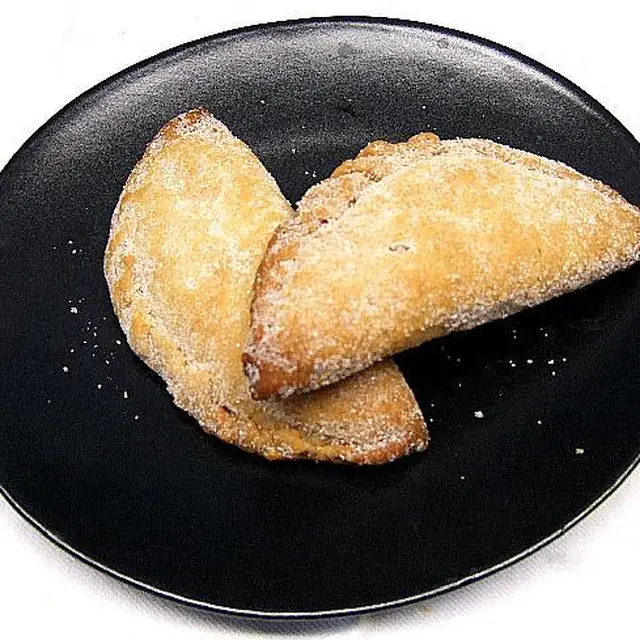
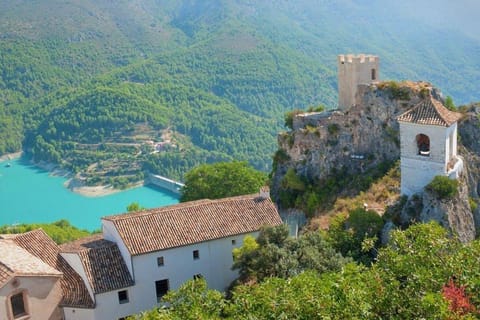
Pastissets de moniato are crescent pastries filled with sweet potato, cinnamon and lemon, baked for Christmas in Benidorm and in hill villages such as Guadalest.
Price: €1-2 each
Arroz con boquerones y espinacas
Benidorm's own rice: fresh anchovies and spinach cooked with rice in a ñora, garlic and tomato picada, served soupy, a recipe the tourist office lists among the town's traditional dishes.
History: The tourist office lists rice with fresh anchovies and spinach among the recipes Benidorm families have passed down for generations, and the version it publishes comes from Una Cuina de Tots, a cookbook from the Associació de Festes Sant Antoni. It joins two things the town had to hand, inshore fish and huerta greens, and is cooked in a caldero and usually served caldoso. Food writers name it as the dish to look for in Benidorm, and El Barranco keeps it on its rice list on Poniente beach.
Where to try it: El Barranco
Watch out for: Fish
Arroz a banda
Arroz a banda is the Alicante fishermen's rice cooked in a strong stock of rockfish and ñora, served on its own with allioli, and found on seafront menus all over Benidorm.
History: Arroz a banda is a rice dish of Alicante province: fishermen boiled cheap, bony rockfish (morralla) with ñora peppers for stock, cooked the rice in that stock separately, a banda, and ate the fish another day. Like other Alicante rices it starts from a salmorreta of ñora, garlic and tomato. On Benidorm's beaches it is a standing order: Ongi Etorri Manolo 1 on Poniente names it among its specialities, Ducado lists it beside its lobster rice, and El Barranco cooks it for two or more.
Where to try it: Ongi Etorri Manolo 1, Ducado, El Barranco
Watch out for: Fish, Crustaceans, Egg (allioli)
Arroz del senyoret
Arroz del senyoret is the gentleman's rice of the Alicante coast: a seafood rice with every prawn and mussel shelled before cooking, so nothing needs peeling at the table.
History: The rice was created in the 1960s by Jaime Baydal at the Restaurant Baydal in Calp, up the coast from Benidorm, for diners who did not want to peel their shellfish; Calp has counted it as a local dish since 1998. Other tellings place it in Alicante or at La Pepica in Valencia. Squid or cuttlefish, prawns and clams or mussels go in already shelled. In Benidorm it is on the menus of Casa Toni, Rice at Sierra Cortina and El Barranco.
Where to try it: Casa Toni, Rice, El Barranco
Watch out for: Crustaceans, Molluscs, Fish
Fideuà
Fideuà swaps rice for short noodles cooked in fish stock in a paella pan, a Valencian dish from Gandía that Benidorm's seafood houses serve beside their rice.
History: Fideuà comes from Gandía, on the Valencian coast north of Benidorm. The best-known story credits Gabriel Rodríguez Pastor, cook on a Gandía fishing boat, who swapped the rice in an arroz a banda for noodles; another names Emilio López Bonías in the 1950s. It is cooked like a paella with fish stock, cuttlefish and prawns and served with allioli. In Benidorm, Casa Toni makes a marinera fideuà and Rice one with langoustine and pumpkin.
Where to try it: Casa Toni, Rice, El Barranco
Watch out for: Gluten, Crustaceans, Fish, Egg (allioli)
Salazones
Salazones are the salted fish of the almadraba coast: mojama tuna loin, tuna belly and roe, served thin with tomato and olive oil in Benidorm's seafood restaurants.
History: Salt-curing tuna belongs to the coasts that fished with the almadraba, the fixed tuna nets that made Benidorm's fortune from the 18th century until its main almadraba closed in 1952. Mojama, from an Arabic word meaning dried like wax, is cured tuna loin and a product of southern Valencia, Murcia and the Andalusian Atlantic. In Benidorm, Casa Toni serves tomato with almadraba salazones, Malaspina lists salazones among its Alicante specialities, and Rice cures its own tonyina de sorra.
Where to try it: Casa Toni, Malaspina, Rice
Watch out for: Fish
Atún rojo de almadraba
Bluefin tuna is Benidorm's oldest catch: the town grew rich on almadraba tuna nets, and each April its restaurants cook bluefin tuna in a ten-day tuna week.
History: From the 18th century Benidorm grew on almadraba fishing, setting fixed nets for migrating tuna, and its men were sought for the craft along the coast from Roses to Morocco until about 1950 to 1960; the main local almadraba closed in 1952. The town hall revived the link in 2021 with the Jornadas del Atún, opened in 2026 by the ronqueo, the butchering, of a 280-kilo fish. La Fava cooks bluefin belly over embers, and Rice serves tuna parpatana and gildas.
Where to try it: La Fava, Rice
Watch out for: Fish
Gamba roja
Gamba roja, the deep-water red prawn of the western Mediterranean, is the prized shellfish on Benidorm menus, grilled a la plancha or cooked with garlic.
History: The red prawn, Aristeus antennatus, lives between 100 and 3,300 metres down and is fished daily across the Mediterranean; on Benidorm menus it often comes from Dénia, up the coast. Its deep red shell and sweet head make it the luxury order at a seafood meal. In Benidorm, Casa Toni grills bay red prawns by the 200 grams, ConBrassa lists Dénia red prawn on its asador menu, and Rice grills it as a starter.
Where to try it: Casa Toni, ConBrassa, Rice
Watch out for: Crustaceans
Turrón de Jijona
Turrón de Jijona is the soft almond and honey nougat from the hill town of Xixona, inland from Benidorm, made by grinding toasted almonds with honey into a paste.
History: Xixona, in the hills of Alicante province, makes the two classic Spanish turrones: soft Jijona, ground almonds and honey, and hard Alicante, whole almonds in a brittle. A regulatory council guards their protected geographical indication. For centuries the town lived on ice cream in summer and turrón in winter, and its ice-cream makers travelled to sell; the family behind Helados Sirvent settled in Benidorm in 1954. The Museo del Turrón shows the process beside a working factory.
Watch out for: Tree nuts, Egg
Faves sacsaes
Faves sacsaes are Benidorm's shaken broad beans, stewed with artichokes, sausages, botifarra and pork belly; the pot is shaken, never stirred, to keep the beans whole.
History: The name means shaken broad beans: the cook moves the pot with a shake rather than a spoon so the tender beans stay whole and the sauce thickens. Benidorm's tourist office counts the stew among its traditional recipes, and food writers name it as one of the four dishes to know in the town. It is a huerta dish made with fresh beans, artichokes and green garlic, enriched with fresh sausages, botifarra and pork belly.
Coca farcida
Coca farcida is the covered savoury pie of Benidorm, a two-crust coca filled with onion, tomato, tuna and onion morcilla, close to an empanada.
History: Cocas, flat pastries made in every town of the Valencian coast, come open or filled, and the farcida, or stuffed, coca is the covered kind, close to an empanada. The version the Benidorm tourist office publishes fills a short oil-and-wine dough with fried onion, tomato and tuna, plus onion morcilla, and food writers list it among the four dishes to know in Benidorm. Fillings vary, from fish to pork belly, but cooked onion and tomato are the base.
Watch out for: Gluten, Fish, Egg, Milk
Bollo de Sant Blai
The bollo de Sant Blai is Benidorm's own festival sweet, a round almond and cornmeal biscuit flavoured with cinnamon and lemon, baked for Saint Blaise on 3 February.
History: Saint Blaise, Sant Blai, falls on 3 February, and in Benidorm households and bakeries make the bollo in the days before it. The recipe has been handed down for decades: ground almonds with their skins, eggs, cornmeal rather than wheat flour, lemon zest and cinnamon, baked flat and marked with a fork. The town's Comissió de Festes Patronals sells batches of them to raise money for the November fiestas.
Watch out for: Tree nuts, Egg
Pastissets de moniato
Pastissets de moniato are crescent pastries filled with sweet potato, cinnamon and lemon, baked for Christmas in Benidorm and in hill villages such as Guadalest.
History: These half-moon pastries are a Christmas sweet along the Mediterranean coast. In Benidorm the tourist office publishes the household recipe: sweet potato cooked down with sugar, cinnamon and lemon zest into a thick jam, wrapped in a dough made with olive oil, lard and aguardiente. In the hills, Guadalest lists its own pastissos de moniato among its village sweets.
Watch out for: Gluten, Egg