


History
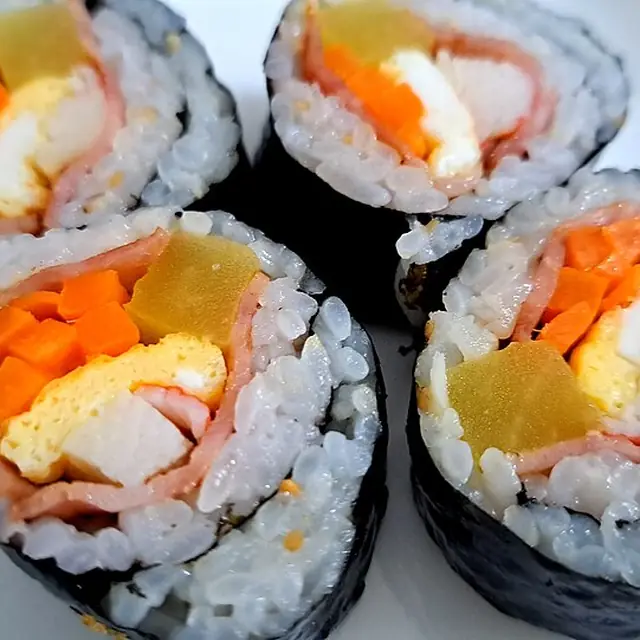
Gimbap (literally seaweed rice) developed in the Japanese colonial period (1910-1945), with visible influence from Japanese maki sushi in the rolling technique. However, Korean gimbap diverged significantly: the rice is dressed with sesame oil (not vinegar), the fillings are cooked (not raw), and the dish is eaten as a portable lunch or snack rather than a restaurant meal. Mayak gimbap, tiny thin rolls served at Gwangjang Market, are made with minimal filling and served with a mustard and soy dipping sauce. The word mayak (narcotic) refers to how addictively compelling the simple roll is, not to any actual ingredient.
Book a food experience
Tours, tastings and classes that match this page, bookable on GetYourGuide.

Common allergens: Sesame oil, Egg, Soy in dipping sauce
Make it at home
Ingredients
- 300g short-grain rice, cooked and warm
- 2 teaspoons sesame oil
- 1 teaspoon salt
- 2 sheets nori (dried seaweed)
- 2 eggs, beaten and cooked as a thin omelette, cut into strips
- 100g danmuji (yellow pickled radish), cut into long strips
- 1 medium carrot, julienned and stir-fried briefly
- 50g spinach, blanched and squeezed dry
- 50g imitation crab or cooked crab meat
Method
- Season the warm rice with sesame oil and salt. Mix gently.
- Place a bamboo rolling mat on a flat surface. Lay a sheet of nori, shiny side down.
- Spread rice evenly over the nori, leaving 3cm clear at the top edge.
- Arrange the fillings in a line across the centre of the rice.
- Using the mat, roll the nori tightly from the near edge, pressing firmly to keep the roll compact. Seal the edge with a small amount of water.
- Rest for 2 minutes before slicing with a wet knife into 2cm rounds.
Tip from the editors. Wet the knife between cuts to prevent the rice from tearing the nori. The roll should be sliced cleanly in one motion, not sawed.
Where to eat gimbap (seaweed rice rolls)
Gimbap (Seaweed Rice Rolls) in Seoul
Gwangjang Market Bindaetteok Stalls ★ 4.7
The bindaetteok stalls in Gwangjang Market are Seoul's most legitimate street food: mung-bean pancakes fried on cast-iron griddles alongside mayak gimbap.
TryBindaetteok (mung bean pancakes) and mayak gimbap
Maru Jayeonsik Kimbap ★ 4.0
Maru Jayeonsik Kimbap is a small counter in Insadong serving gimbap made with natural, MSG-free ingredients and a rotating selection of plant-based banchan.
TryGimbap sets and bibimbap (natural ingredients)
More places near Gwangjang Market Bindaetteok Stalls and Maru Jayeonsik Kimbap
Not on this list, but close by, nearest first. Every one is in our guide with its address, hours and what to order.
- Gwangjang Market Market, under 100 m away
- Gwangjang Market Stalls Street food, under 100 m away
- Woo Lae Oak North Korean, about 200 m away
- Ojangdong Hamheung Naengmyeon North Korean Noodles, about 600 m away
- BLU Seoul Vegan, about 750 m away
- Euljiro Jjajangmyeon Alleys Chinese, about 900 m away
More cities are in research. Want gimbap (seaweed rice rolls) covered somewhere specific? Tell us where you want to eat.