NeighbourhoodJongno and Insadong

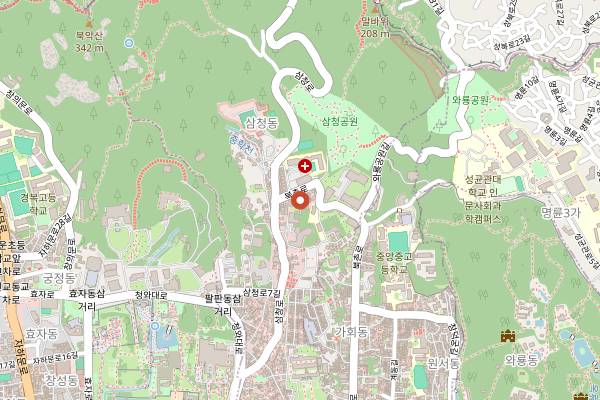
Location

Address: 137-11 Bukchon-ro, Jongno-gu, Seoul

Also in Jongno and Insadong

Kimchi School ★ 4.3

Jongno and Insadong

Kimchi School operates what it describes as Korea's largest traditional culture experience centre in Seoul. The kimchi programme covers the full making process: salting, washing, and pressing napa cabbage; making the gochugaru and jeotgal (salted seafood) paste; and packing the finished kimchi in traditional clay pots. Classes run two to three hours and are available in English with advance booking. The institution also offers Korean costume dress (hanbok), calligraphy, and traditional music sessions as companion experiences.

Institute of Korean Royal Cuisine ★ 4.6

Jongno and Insadong

The Institute of Korean Royal Cuisine preserves and teaches the cooking traditions of the Joseon royal court, the haute cuisine that underpins contemporary Korean fine dining including the menu of Michelin-starred Onjium. Classes cover the complex presentation formats of royal court cooking -- the nine-compartment gujeolpan platter, the multi-coloured gangjeong rice confections -- and the philosophical principles (colour, temperature, texture balance) that govern the cuisine. Instruction is primarily in Korean with translation materials; English-language sessions available on specific dates.

Korea Temple Food Cultural Centre ★ 4.7

Jongno and Insadong

The Korea Temple Food Cultural Centre, affiliated with the Jogye Order of Korean Buddhism, teaches the temple food tradition that is entirely plant-based and excludes the five pungent roots (garlic, onion, chive, green onion, and wild garlic). Temple food is one of Korea's most distinctive culinary traditions, relying on fermentation, drying, and seasoning with sesame, perilla, and doenjang. Classes cover seasonal wild vegetable preparation, soy paste-based dishes, and the philosophical approach to food as a form of meditation practice. One of Seoul's most culturally distinctive cooking experiences.

Full Jongno and Insadong food guide →

More cooking classes in Seoul

Kimchi School ★ 4.3

Jongno and Insadong

Kimchi School operates what it describes as Korea's largest traditional culture experience centre in Seoul. The kimchi programme covers the full making process: salting, washing, and pressing napa cabbage; making the gochugaru and jeotgal (salted seafood) paste; and packing the finished kimchi in traditional clay pots. Classes run two to three hours and are available in English with advance booking. The institution also offers Korean costume dress (hanbok), calligraphy, and traditional music sessions as companion experiences.

Institute of Korean Royal Cuisine ★ 4.6

Jongno and Insadong

The Institute of Korean Royal Cuisine preserves and teaches the cooking traditions of the Joseon royal court, the haute cuisine that underpins contemporary Korean fine dining including the menu of Michelin-starred Onjium. Classes cover the complex presentation formats of royal court cooking -- the nine-compartment gujeolpan platter, the multi-coloured gangjeong rice confections -- and the philosophical principles (colour, temperature, texture balance) that govern the cuisine. Instruction is primarily in Korean with translation materials; English-language sessions available on specific dates.

Korea Temple Food Cultural Centre ★ 4.7

Jongno and Insadong

The Korea Temple Food Cultural Centre, affiliated with the Jogye Order of Korean Buddhism, teaches the temple food tradition that is entirely plant-based and excludes the five pungent roots (garlic, onion, chive, green onion, and wild garlic). Temple food is one of Korea's most distinctive culinary traditions, relying on fermentation, drying, and seasoning with sesame, perilla, and doenjang. Classes cover seasonal wild vegetable preparation, soy paste-based dishes, and the philosophical approach to food as a form of meditation practice. One of Seoul's most culturally distinctive cooking experiences.

See every cooking classes pick in Seoul →

← Back to Cooking Classes in Seoul ← Seoul food guide