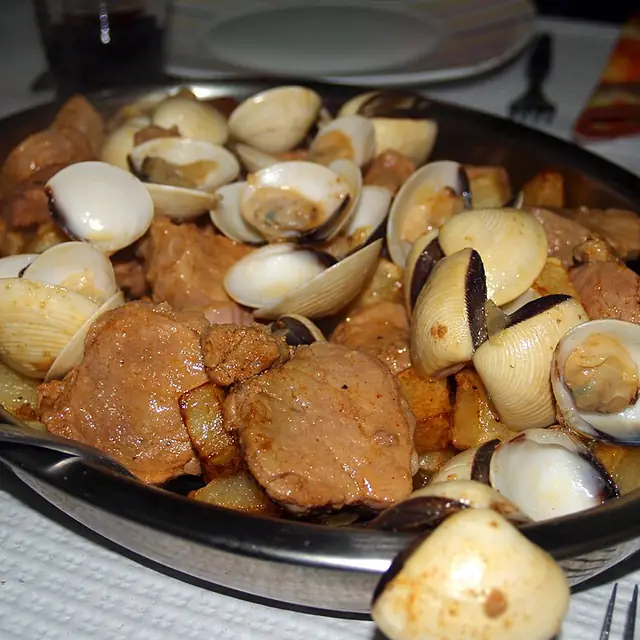

Carne de porco a alentejana pairs pork marinated in white wine, paprika and garlic with clams, potatoes and coriander; its exact origin is disputed.

Carne de porco a alentejana is one of the most traditional Portuguese pork dishes: pork marinated in white wine, paprika, red pepper paste and garlic, fried and finished with clams, and served with cubed fries or baked potatoes. Its origin is uncertain; the name points to the Alentejo but some say its roots are in Alverca, and it may be a fusion of inland pork and coastal seafood dishes. Casa do Alentejo, in the Palacio Alverca on Rua das Portas de Santo Antao, lists it with clams and fried potatoes on its restaurant menu.

Where to eat Carne de porco à alentejana in Lisbon

1 editor pick for Carne de porco à alentejana in Lisbon, ranked by editorial score. All Lisbon signature dishes · Carne de porco à alentejana across every city.

Book food experiences in Lisbon

See all 2,285 food experiences in Lisbon

More places near Casa do Alentejo

Not on this list, but close by, nearest first. Every one is in our guide with its address, hours and what to order.

Make it at home

Serves 44 hr 30 minIntermediate

Ingredients

  • 800g pork shoulder, cut into 3cm cubes
  • For the marinade: 60g massa de pimentão (Portuguese red pepper paste; sold at Iberian groceries, or substitute 2 tbsp sweet paprika mixed with 1 tbsp olive oil and 1 tbsp red wine vinegar)
  • 6 garlic cloves (smashed)
  • 100ml dry white wine
  • 2 bay leaves
  • 1 tsp coarsely ground black pepper
  • 1 tsp salt
  • 60ml extra-virgin olive oil
  • 800g small clams (palourdes or amêijoas), purged in cold salted water 30 minutes
  • 600g waxy potatoes (peeled, cut into 1.5cm cubes)
  • Sunflower oil for frying the potato cubes
  • 1 large bunch fresh coriander, leaves only (chopped at the last moment)
  • 2 lemons, cut into wedges
  • Salt and freshly cracked black pepper
  • Pickled vegetables, to serve

Method

  1. Combine pork, massa de pimentão (or substitute), smashed garlic, white wine, bay leaves, pepper and salt in a bowl. Mix to coat; cover; marinate in the fridge 4 hours, preferably overnight.
  2. Drain the pork well; pat dry on kitchen paper (the marinade must not be wet when it hits the pan or the meat steams rather than sears).
  3. Heat the olive oil in a wide heavy frying pan over high heat. Add the pork in a single layer (in batches if needed); brown deeply on every side, 5 to 6 minutes per batch. Lift out and set aside.
  4. In the same pan, reduce heat to medium. Pour any remaining marinade in; bring to a simmer; cook 2 minutes to drive off the alcohol.
  5. While the pork browns, fry the potato cubes: heat 3cm of sunflower oil to 180°C / 350°F in a separate pan. Fry the potato cubes in batches for 4 to 5 minutes per batch until deep golden and crisp. Drain on kitchen paper; season with salt.
  6. Return the pork to the pan with the reduced marinade. Add the purged clams to the pan; cover with a lid.
  7. Cook over medium-high heat 4 to 6 minutes until the clams open. Discard any clams that stay closed.
  8. Plate: pile the fried potato cubes in a wide shallow bowl. Spoon the pork and opened clams over with their juices. Scatter a generous handful of chopped fresh coriander on top.
  9. Garnish with lemon wedges; the diner squeezes lemon over before eating. Serve with pickled vegetables and crusty bread for mopping.

Editor tip. Massa de pimentão (Alentejo red-pepper paste) is essential; without it the dish goes generic. Purge clams in cold salted water 30 minutes; sandy clams ruin it.

Common allergens: Shellfish, Gluten.