Signature dishes
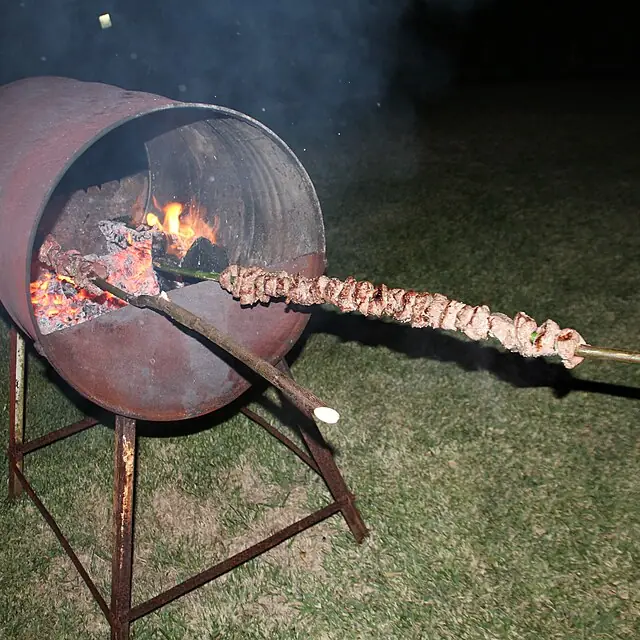
Beef cut into thick cubes, rubbed with garlic and coarse salt, threaded onto a fresh bay-laurel branch and hung over wood coals. The laurel scents the meat from the inside as the fat renders down.
Where: Casa das Espetadas, Casal da Penha, Doca do Cavacas
Price: €14-22
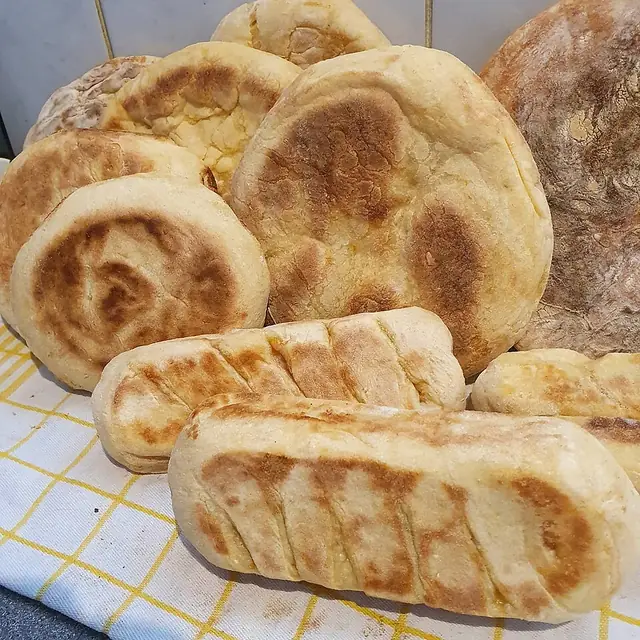
A round, flat sweet-potato bread cooked on a hot basalt stone rather than in an oven, split while still hot and filled with garlic butter until it soaks through. Funchal's default side dish and its default snack.
Where: Casa das Espetadas, Casal da Penha
Price: €2-5
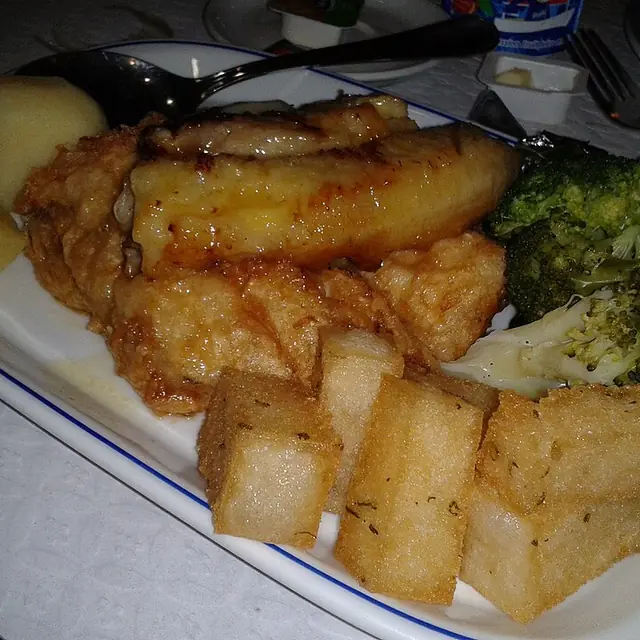
Black scabbard fish, a deep-water eel-like species landed off Madeira, filleted, floured and fried, then served with a fried banana and often a passion fruit sauce. Sweet against salt, and unmistakably Madeiran.
Where: Armazém do Sal
Price: €14-20
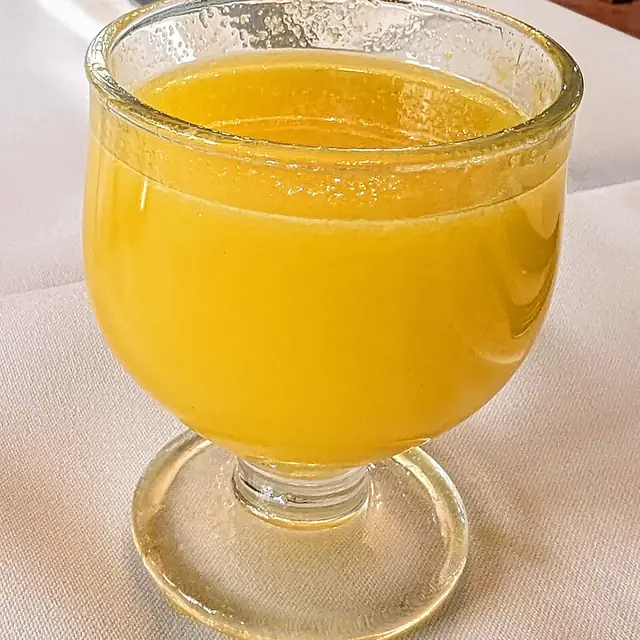
Aguardente de cana, sugarcane spirit distilled on the island, stirred with bee honey and citrus juice using a grooved wooden stick called a caralhinho. Sharp, sweet and considerably stronger than it tastes.
Where: Barreirinha Bar Café
Price: €3-6
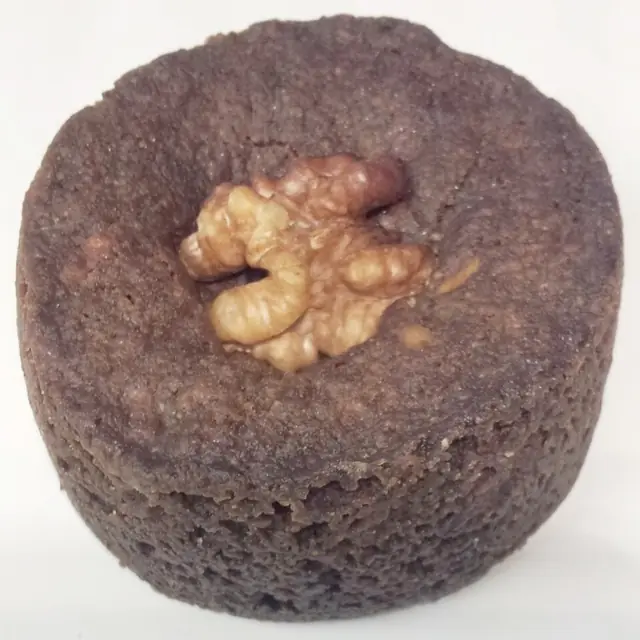
A dark, dense spiced cake built on sugarcane molasses, candied peel, nuts and a long list of spices. It is broken by hand rather than cut, and it keeps for a year.
Where: Fábrica Santo António
Price: €8-18
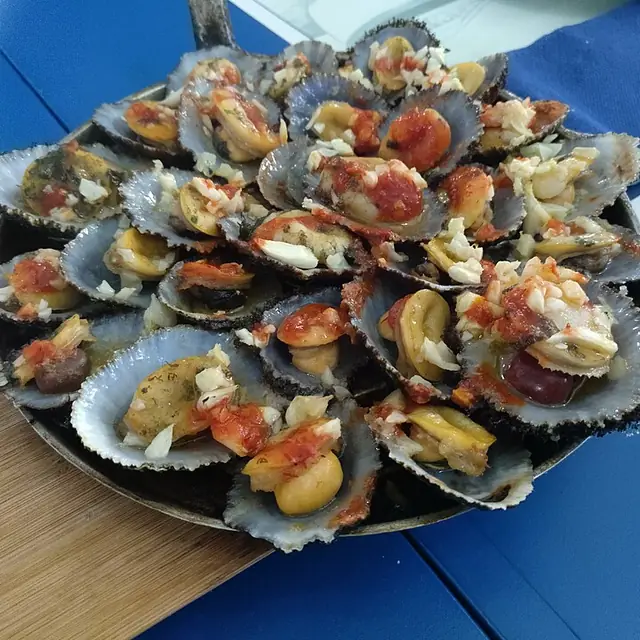
Limpets prised off the basalt at low tide, grilled in their shells on a metal dish with garlic butter and a wedge of lemon squeezed over at the table. Chewy, briny, and eaten with a small fork.
Price: €8-14
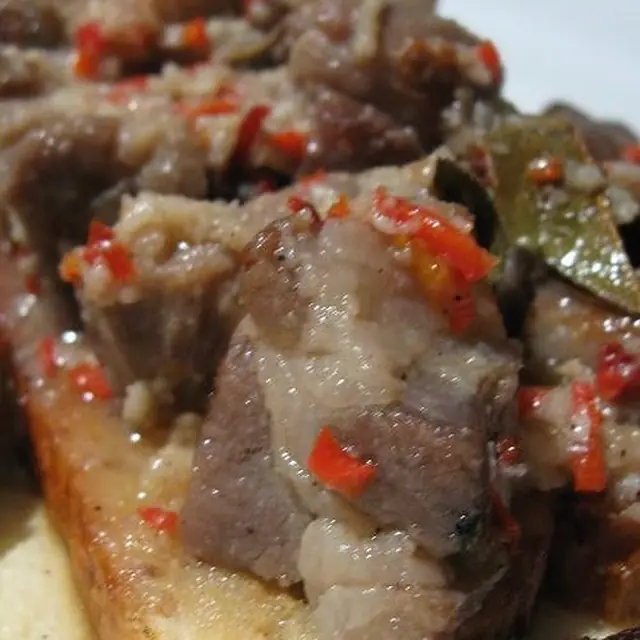
Pork marinated for days in wine, garlic, bay and chilli, then fried hard and stuffed into bolo do caco. Madeira's Christmas dish, eaten at dawn outside churches through December.
Price: €9-15
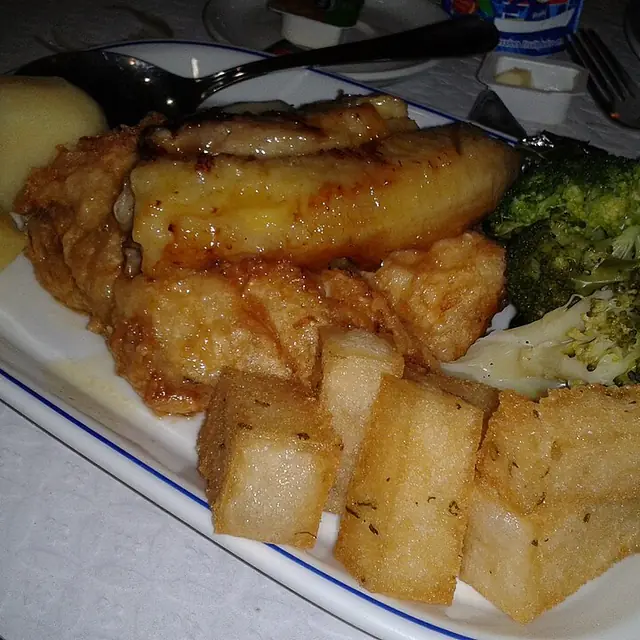
Maize porridge cooked with kale and garlic, set firm overnight, then cut into cubes and deep fried until the outside crackles and the middle stays soft. Madeira's answer to a chip.
Price: €4-7
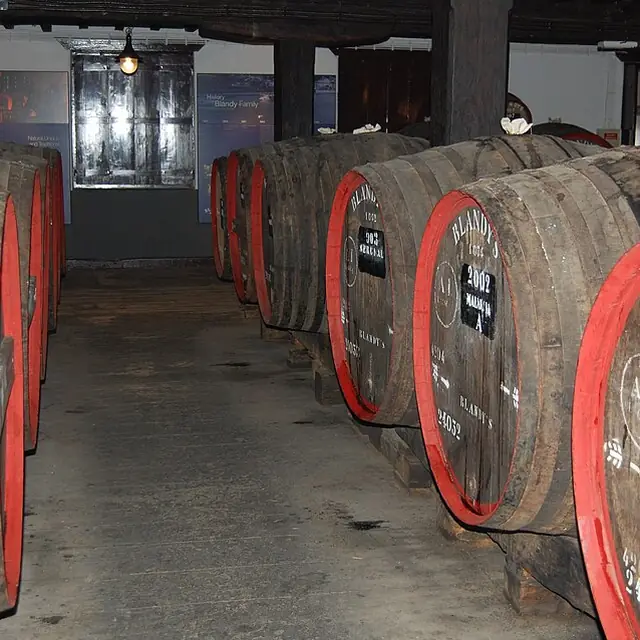
A fortified wine deliberately heated as it ages, made dry to sweet across Sercial, Verdelho, Boal and Malvasia. Almost indestructible once opened, and the reason Funchal has wine lodges on its main avenue.
Where: Blandy's Wine Lodge, H.M. Borges, UVA Restaurant & Wine Bar
Price: €4-15 a glass
A small open tart of fresh cheese, egg and sugar in a thin pastry case, baked until the top blisters and cracks. Sold by the tray in Funchal bakeries from first thing in the morning.
Price: €1-3
Espetada
Beef cut into thick cubes, rubbed with garlic and coarse salt, threaded onto a fresh bay-laurel branch and hung over wood coals. The laurel scents the meat from the inside as the fat renders down.
History: Espetada began as a cattle-herders' and festival dish in the Madeiran interior, cooked on branches cut from the laurel woods that cover the island's slopes. The wooden skewer is not a garnish. Green laurel does not burn through, and its oils pass into the beef while it sits over the embers. Restaurants now hang the finished skewer from a metal stand at the table so the juices drip onto bolo do caco below. Câmara de Lobos and Estreito de Câmara de Lobos built their reputations on it, but every Funchal grill runs a version.
Where to try it: Casa das Espetadas, Casal da Penha, Doca do Cavacas
Bolo do caco
A round, flat sweet-potato bread cooked on a hot basalt stone rather than in an oven, split while still hot and filled with garlic butter until it soaks through. Funchal's default side dish and its default snack.
History: The name comes from the caco, the flat stone disc the bread is baked on, not from any shape of loaf. Sweet potato was a cheap and abundant crop on Madeira's terraces, and mashing it into the dough made a soft bread that stayed edible for days without an oven, which most rural households did not have. The garlic butter is a later addition and now inseparable from it. In Funchal the bread arrives before you order, is used to mop the drippings under an espetada, and is sold split and filled as a street snack.
Where to try it: Casa das Espetadas, Casal da Penha
Watch out for: Gluten, Milk
Poncha
Aguardente de cana, sugarcane spirit distilled on the island, stirred with bee honey and citrus juice using a grooved wooden stick called a caralhinho. Sharp, sweet and considerably stronger than it tastes.
History: Poncha started as a fisherman's drink on Madeira's south coast, made from the cane spirit that was a by-product of the sugar industry and drunk against cold and damp. The traditional version is lemon, honey and aguardente in fixed proportions, stirred rather than shaken with the caralhinho, a stick turned specifically for the job. Passion fruit and tangerine versions came with tourism and are now poured alongside the original in the Zona Velha and in the poncha bars of Câmara de Lobos, which remain the reference point.
Where to try it: Barreirinha Bar Café
Bolo de mel de cana
A dark, dense spiced cake built on sugarcane molasses, candied peel, nuts and a long list of spices. It is broken by hand rather than cut, and it keeps for a year.
History: Bolo de mel is the direct descendant of Madeira's sugar economy. The mel in the name is not bee honey but cane molasses, the residue of the mills that made the island rich in the 15th century. Households baked it in December for Christmas and kept it through the year, which the spice, dried fruit and molasses content allows. Cutting it with a knife is held to bring bad luck, so it is torn apart. Fábrica Santo António has been making it on Travessa do Forno since 1893.
Where to try it: Fábrica Santo António
Watch out for: Gluten, Nuts, Milk
Lapas grelhadas
Limpets prised off the basalt at low tide, grilled in their shells on a metal dish with garlic butter and a wedge of lemon squeezed over at the table. Chewy, briny, and eaten with a small fork.
History: Limpets were subsistence food on Madeira long before they were a starter, gathered off the volcanic shelf by anyone with a knife and a low tide. They are cooked in the shell so the liquor stays in, on a flat metal plate set straight over the heat, with a lump of garlic butter dropped on each one. Harvesting is now regulated to protect the beds, and the season closes for part of the year, which is why the price on a Funchal menu moves. Lemon is not optional.
Watch out for: Molluscs, Milk
Carne de vinha d'alhos
Pork marinated for days in wine, garlic, bay and chilli, then fried hard and stuffed into bolo do caco. Madeira's Christmas dish, eaten at dawn outside churches through December.
History: Vinha d'alhos means wine and garlic, and the technique is a preservation method that predates refrigeration on the island: submerge pork in acidic wine with garlic and it keeps through the festive weeks. The dish is bound to the Missas do Parto, the early-morning masses held from mid-December to Christmas Eve, after which the meat is shared in sandwiches in the church squares alongside homemade liqueurs and carols. It is also the ancestor of Goan vindaloo, carried east by Portuguese ships.
Watch out for: Sulphites
Milho frito
Maize porridge cooked with kale and garlic, set firm overnight, then cut into cubes and deep fried until the outside crackles and the middle stays soft. Madeira's answer to a chip.
History: Maize arrived on Madeira from the Americas and became the cheap staple of the island's terraces. Cooked as a thick polenta with couve, the local kale, and garlic, it fed families on almost nothing. Setting the porridge and frying it the next day turned leftovers into something better than the original. Milho frito now arrives beside espetada and grilled fish on almost every Funchal menu, in cubes about the size of a large dice.
Vinho da Madeira
A fortified wine deliberately heated as it ages, made dry to sweet across Sercial, Verdelho, Boal and Malvasia. Almost indestructible once opened, and the reason Funchal has wine lodges on its main avenue.
History: The Malvasia vine was planted on Madeira in the 15th century on Prince Henry's orders, to break the Venetian and Genoese hold on the wine trade. Barrels loaded as ballast crossed the tropics twice, and shippers found the heat and motion improved rather than ruined the wine. Producers reproduced the effect on land through the canteiro method, ageing casks in warm lofts for years or decades. Blandy's and H.M. Borges still do it in central Funchal, and the wine goes from bone dry Sercial through to sweet Malvasia.
Where to try it: Blandy's Wine Lodge, H.M. Borges, UVA Restaurant & Wine Bar
Watch out for: Sulphites
Queijada da Madeira
A small open tart of fresh cheese, egg and sugar in a thin pastry case, baked until the top blisters and cracks. Sold by the tray in Funchal bakeries from first thing in the morning.
History: Queijadas are a Portuguese convent sweet, and Madeira's version leans on the fresh cheese made on the island rather than the harder mainland curd. They are eaten as breakfast with a galão, or mid-afternoon, and they are always small enough to finish in three bites. Unlike the pastel de nata, the filling is set rather than custardy, and the sugar on top caramelises into a thin crackled crust.
Watch out for: Gluten, Milk, Egg