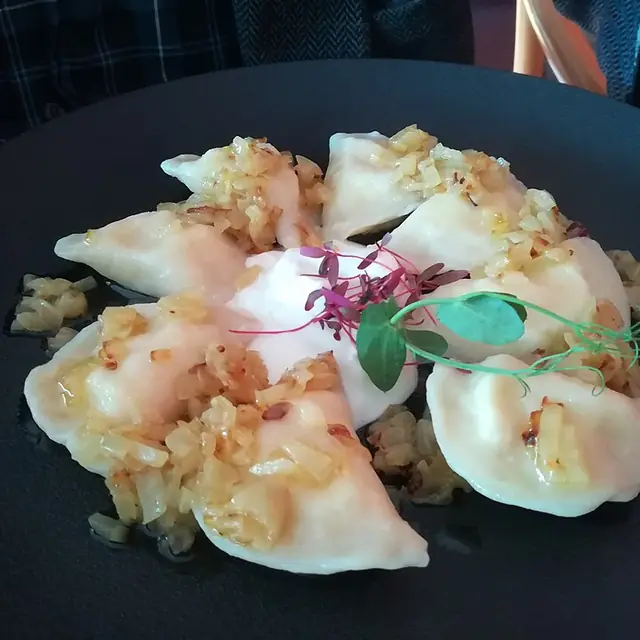
Pierogi ruskie are the canonical potato-and-farmer's-cheese pierogi, served boiled with butter-fried onions and a dollop of sour cream; in Poland we have verified places to eat it in Kraków, Warsaw and Wrocław.
Pierogi ruskie are the canonical potato-and-farmer's-cheese pierogi, served boiled with butter-fried onions and a dollop of sour cream. Despite the name, the filling is Polish through and through.
The pierogi ruskie filling, despite the name (Ruthenian or Ukrainian), is the most-cooked pierogi filling in Polish home kitchens. The combination of potato, farmer's cheese (twaróg) and fried onion entered Polish cooking from western Ukraine (Galicia) in the 19th century, after the 1772 partition placed both regions under Habsburg control. The pierogi were already a Polish form; the ruskie filling adapted Ukrainian varenyky filling to it. By the 1920s pierogi ruskie were standard at every Polish bar mleczny. Pierogarnia Krakowiacy on Szewska and Przystanek Pierogarnia each serve a half-and-half ruskie option boiled or pan-fried.
Pierogi ruskie are the canonical potato-and-quark dumplings that anchor every Warsaw milk bar, pierogarnia and wedding table. The name traces to the Ruthenian Carpathian uplands, not Russia.
Pierogi were already a Polish staple by the 13th century, but pierogi ruskie in their canonical potato-and-quark form emerged through the 19th century in the Ruthenian (western Ukrainian) Carpathian uplands of the old Polish-Lithuanian Commonwealth. Polish repatriation from the eastern borderlands after 1945 carried the recipe west into Warsaw kitchens, where it became the default pierogi at the new socialist milk bars in the 1950s. Today every Warsaw pierogarnia plates the dish; the spelling 'ruskie' is etymologically tied to Rus, not Russia, and remained on menus throughout the Cold War.
Poland's most-eaten pierogi: half-moon dumplings of yeast-free dough filled with mashed potato and twarog farmer's cheese. Boiled then pan-fried in browned butter, served with caramelised onion and sour cream.
Pierogi ruskie despite the name (literally Ruthenian pierogi) are not Russian but originate from the Kresy region of eastern Poland and western Ukraine (formerly Galicia), where they have been the everyday peasant dumpling since at least the 17th century. After World War II, the population transfer from Lwów (now Lviv) brought hundreds of thousands of eastern Poles to Wrocław as Soviet-imposed border changes shifted the city's demographics; they brought the dumpling with them. Today pierogi ruskie are the most popular pierogi variety in Poland and the canonical Wrocław bar-mleczny dish, served at Pierogarnia Stary Młyn and most casual menus.
Get ready for a pierogi adventure! Learn time-honored secrets, make dough and fillings from scratch, and enjoy your delicious creations with a local drink, guided by o...
Savor the flavors of Poland on a 4-hour food tasting tour of Krakow. Learn about the local food culture, and hear fascinating stories about the Polish relationship to ...
Go on a journey through the vodka culture of Poland on a 3.5-hour tasting tour in Krakow, and visit 3-4 different shot bars to taste 6-7 different types of vodka. Hear...


.jpg)