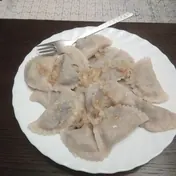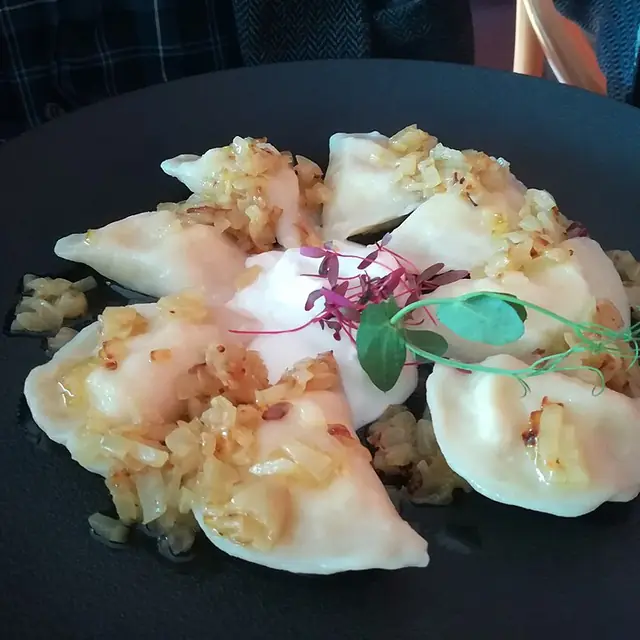
Pierogi ruskie, or Ruthenian pierogi, are filled with fresh quark, boiled mashed potato and fried onion, and are often mistaken abroad for Russian pierogi.

Cookbooks from the 17th century describe pierogi as a staple of the Polish diet, with each holiday having its own special kind. Polish pierogi filled with quark, mashed potatoes and fried onions are known as pierogi ruskie, Ruthenian pierogi. After 1945 Wrocław was resettled partly by people from Lviv (Lwów), Volhynia and the Vilnius region, and Karczma Lwowska on the Rynek describes its menu as old Polish cooking with Kresy accents; it lists pierogi ruskie with pork scratchings.

Where to eat Pierogi Ruskie in Wrocław

6 editor picks for Pierogi Ruskie in Wrocław, ranked by editorial score. All Wrocław signature dishes · Pierogi Ruskie across every city.

Make it at home

Serves 402 hrIntermediate

Ingredients

  • For the dough: 500g all-purpose flour
  • 1 tsp fine sea salt
  • 1 large egg
  • 250ml warm water
  • 2 tbsp sunflower oil
  • For the filling: 600g floury potatoes (peeled, quartered)
  • 350g twaróg (Polish dry farmer's cheese; substitute with full-fat curd cheese or pressed ricotta)
  • 1 large yellow onion (finely diced and fried in 30g butter until deep gold)
  • 1 1/2 tsp fine sea salt
  • 1 tsp freshly ground black pepper
  • pinch of grated nutmeg
  • For serving: 60g unsalted butter, 1 large yellow onion (sliced thin), 200ml soured cream
  • Optional: 100g smoked bacon lardons (fried crisp for the meaty-Silesian touch)
  • Snipped chives or chopped dill

Method

  1. Boil the potatoes in salted water 18 to 20 minutes until very tender; drain, steam-dry in the pan for 60 seconds, then mash smooth with a ricer or fork. Cool to room temperature.
  2. Combine the cooled mashed potato with the twaróg, fried onion, salt, pepper and nutmeg. Mix thoroughly with a wooden spoon; the filling should be soft but hold its shape.
  3. Make the dough: combine flour and salt in a bowl. Beat the egg with the warm water and oil, then pour into the flour. Knead 8 to 10 minutes by hand or 5 minutes in a stand mixer until smooth, soft and elastic.
  4. Wrap in cling film, rest 30 minutes at room temperature.
  5. Divide the dough in half. Roll one piece on a lightly floured bench to 3mm thick. Cut out 7cm circles with a glass or cookie cutter.
  6. Place 1 heaped teaspoon of filling in the centre of each circle. Fold over into a half-moon and pinch the edges firmly closed, working from one end to the other (the seal must be complete; gaps split during boiling).
  7. Lay finished pierogi on a clean floured tea towel in a single layer. Repeat with remaining dough.
  8. Bring a wide pot of well-salted water to a steady simmer (not a rolling boil, which can split them).
  9. Drop in 10 to 12 pierogi at a time; they will sink, then float to the surface in 60 to 90 seconds. Cook a further 90 seconds after they float.
  10. Lift out with a slotted spoon onto a warm plate, brush with melted butter to stop sticking.
  11. Meanwhile, melt 60g butter in a wide pan and fry the sliced onion 12 minutes until deeply caramelised; add the bacon lardons in the last 4 minutes if using.
  12. To serve: pan-fry the boiled pierogi in the same hot butter 60 seconds per side until lightly golden. Plate, top with caramelised onion, a generous dollop of sour cream and a sprinkle of chives or dill.

Editor tip. The seal is the structural step; pinch each edge firmly and check there are no gaps. The pierogi must be made the same day and either eaten immediately or arranged in a single layer (not touching) on a floured tray and frozen; from frozen they go directly into boiling water for an extra 90 seconds.

Common allergens: Gluten, Dairy, Egg.