
Guided tour · 1 hour
From Puebla: Hot Air Balloon with breakfast in Huamantla
Embark on a once-in-a-lifetime experience on your visit to Puebla with a morning hot air balloon ride followed by a wine toast and breakfast.
from$215 Check dates
How Puebla came to eat the way it does: the people, migrations and accidents that shaped the plate.
How Puebla came to eat the way it does: the people, migrations and accidents that shaped the plate.
Puebla was founded in 1531 as a Spanish city with no indigenous settlement underneath it, and its convents became the laboratory where European technique met Mexican ingredients. Nuns at Santa Rosa and Santa Clara ground chiles, chocolate, nuts and spices into the sauces that became mole poblano, and turned pumpkin seed and sugar into the tortita de Santa Clara.
The dish tied to the signing of the Treaty of Cordoba pairs a stuffed poblano chile with a walnut cream and pomegranate seeds. It is genuinely seasonal: the criollo walnut and the pomegranate both ripen in the Puebla valley between July and September, which is why the plate leaves menus in the autumn and comes back the following summer.
La Gran Fama opened on Avenida 6 Oriente in the 19th century as the first camote counter in the city, and the street around it turned into a single trade. Camotes, cocadas, borrachitos, muéganos and rompope are still sold along the same block, one shopfront after another, with the ex-convent of Santa Clara opposite.
Migrants from the Levant set up vertical spits in central Puebla in the early 1930s. Tacos Arabes Bagdad and the first Oriental counter on 16 de Septiembre both date their recipe to 1933, and Bagdad moved to its 2 Poniente counter in 1945, and both served spit-roast pork in flatbread rather than tortillas. The taco al pastor is the descendant of that idea.
The Michelin Guide arrived in Mexico and put Puebla on the map without awarding the city a star. Eight kitchens across the state took a 2026 Bib Gourmand, including Casareyna, Moyuelo, Cultivo, Los Camellos and Semitas Beto, and six more were listed as recommended, among them Augurio, Casa Bacuuza and La Noria.
Guided tour · 1 hour
Embark on a once-in-a-lifetime experience on your visit to Puebla with a morning hot air balloon ride followed by a wine toast and breakfast.
Guided tour · 12 hours
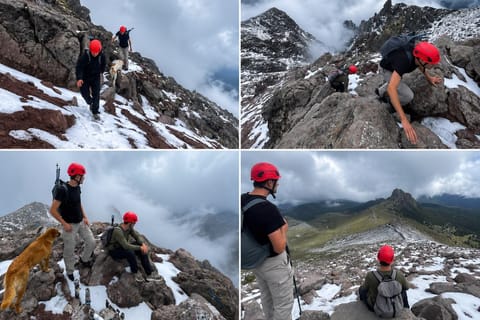
High Mountain, hiking through pine and oak forests, connection with Nature

Guided tour · 10 hours
Explore the trails that connected the Aztec empire and walk between Iztaccíhuatl and Popocatépetl, feel the power of the earth under your feet, and see an active volcano.