History

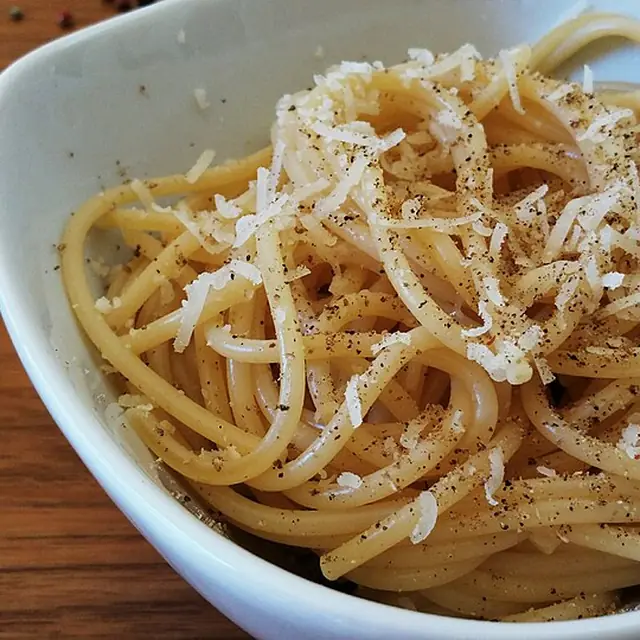
Cacio e pepe predates carbonara by centuries. Shepherds in the Lazio mountains carried pecorino romano, black pepper and dried pasta on long transhumance routes from the 1700s onward; the three ingredients kept and combined into a hot meal at any inn. The Roman bistro form emerged in the 19th-century working-quarter trattorias. The dish has only three ingredients and zero margin for error: the emulsion must be glossy, not lumpy. Tonnarelli (Lazio's egg-pasta cousin to spaghetti) is the canonical shape. Da Cesare al Casaletto serves the famous fried-cup variation; Felice a Testaccio's table-side toss is the classic Roman service ritual.

Common allergens: Gluten, Dairy

Make it at home

Yield Serves 2Hands-on 10 minTotal 20 minDifficulty Intermediate

Ingredients

  • 200g tonnarelli (or spaghetti)
  • 120g pecorino romano, very finely grated
  • 2 teaspoons whole black peppercorns, freshly ground coarse
  • Sea salt for the pasta water (use less than usual; pecorino is salty)

Method

  1. Bring a small pot of salted water to a rolling boil (use less water than usual to keep the starch concentrated). Cook the pasta until 2 minutes from al dente.
  2. Toast the cracked pepper in a dry pan over medium heat for 30 seconds until fragrant. Set aside.
  3. In a bowl, mix the grated pecorino with 4 tablespoons of starchy pasta water and the toasted pepper, stirring to a thick paste.
  4. Drain the pasta, reserving more pasta water. Add the pasta to the bowl and toss vigorously, adding pasta water tablespoon by tablespoon, until the cheese melts into a glossy emulsion that coats every strand.
  5. Serve immediately on warm plates with more black pepper on top.

Tip from the editors. The pecorino must be at room temperature, not cold from the fridge. Use less pasta water than feels right; the cheese needs heat and motion to emulsify, not flood.

This is the TableJourney editorial recipe, modelled on the canonical bistro / counter version. The first place to try the dish in its city of origin is below.

Where to eat cacio e pepe

Cacio e pepe in Rome

Felice a Testaccio ★ 4.5

Roman trattoria€€testaccio

Felice a Testaccio in Rome has served the Testaccio working-quarter cucina since 1936. The tonnarelli cacio e pepe is tossed table-side; the saltimbocca alla romana is the late-lunch order.

Signature: Tonnarelli cacio e pepe, Saltimbocca alla romana, Tiramisu

Order: The tonnarelli cacio e pepe tossed at the table, then saltimbocca alla romana and tiramisu.

Tip: Book a fortnight ahead on the website. Lunch is calmer; the 21:00 dinner sitting is the longest wait.

Armando al Pantheon ★ 4.6

Roman trattoria€€centro-storico

Armando al Pantheon in Rome has cooked the four Roman pastas and the quinto quarto canon since 1961, a few steps from the Pantheon. The Gargioli family still runs the dining room.

Signature: Cacio e pepe, Coda alla vaccinara, Abbacchio

Order: Cacio e pepe, coda alla vaccinara, and the abbacchio when it's on the carte.

Tip: Bookings open exactly two months ahead on the website. Walk-up tables exist but only for lone diners and only at 12:30.

Da Cesare al Casaletto ★ 4.6

trastevere

Why locals love it: Twenty minutes from Trastevere by tram 8, this Sunday-lunch trattoria stays off the tourist circuit while running the city's most-discussed fried cacio e pepe.

Tip: Book a week ahead for Sunday lunch. Tram 8 from Trastevere terminates 200m from the door; cab back is 12 euros.

Salumeria Roscioli ★ 4.7

Roman, salumeria€€€centro-storico

Roscioli in Rome's Centro Storico runs deli, restaurant and wine cellar as one room. The carbonara and the buffalo mozzarella with Cantabrian anchovies still set the city benchmark in 2026.

Signature: Carbonara, Cacio e pepe, Burrata with anchovies

Order: The carbonara, the burrata with anchovies, and any cheese flight from the counter.

Tip: Book three weeks ahead for dinner. Lunch is the easier seating and the same kitchen runs both services.

Santo Palato ★ 4.6

esquilino

Why locals love it: Off the Re di Roma metro stop in the Esquiline edge, Sarah Cicolini's modern Roman kitchen runs trippa and pasta under most tourist itineraries.

Tip: Closed Sunday all day, Monday dinner. Book three weeks ahead for the 35-cover room.
More cities are in research. Want cacio e pepe covered somewhere specific? Tell us where you want to eat.

Browse all dishes →