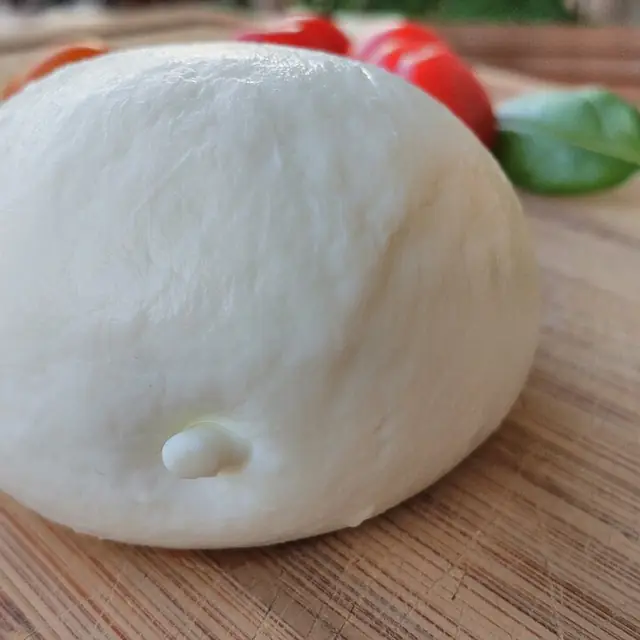

Mozzarella di bufala campana is a fresh pasta filata cheese made from Italian Mediterranean buffalo milk, protected by an EU designation of origin since 1996.

Wikipedia says references to cheese made from water buffalo milk first appear at the beginning of the 12th century, that buffalo mozzarella spread across southern Italy from the second half of the 18th century, and that it is traditionally produced in Campania, particularly in the provinces of Caserta and Salerno. Tenuta Vannulo, an organic farm in Capaccio Paestum, runs a dairy, a tasting room and a yogurt and gelato bar, open daily.


Where to eat Mozzarella di Bufala Campana DOP in Naples

The editor picks for Mozzarella di Bufala Campana DOP in Naples are still in research. Meanwhile, see the Naples signature-dishes index or the Naples food guide.

Book food experiences in Naples

See all 2,220 food experiences in Naples

Make it at home

Serves 42 hrAdvanced

Ingredients

  • 2 litres fresh whole buffalo milk (or a 50/50 blend of buffalo and cow's milk)
  • 2g citric acid dissolved in 50ml cold water
  • 0.25g liquid rennet diluted in 50ml cold water
  • 30g fine sea salt per litre of brine
  • Thermometer, cheese cloth

Method

  1. Warm milk to 32 degrees Celsius. Add citric acid solution and stir gently. Add rennet, stir for 30 seconds and leave undisturbed for 30 to 40 minutes until a firm curd forms.
  2. Cut the curd into 2cm cubes with a long knife. Let rest 5 minutes, then slowly warm to 40 degrees Celsius over 15 minutes, gently stirring. The curds will contract and expel whey.
  3. Drain curds into a colander lined with cheese cloth. Press gently. Let drain for 30 minutes.
  4. Bring a pot of water to 85 to 90 degrees Celsius. Stretch the curd: add a fist-sized piece to the hot water and knead with gloved hands or spoons until it becomes smooth, glossy and elastic (about 2 minutes). Do not overwork.
  5. Pinch off balls of about 125g each, rolling smooth. Drop immediately into a bowl of cold salted brine.
  6. Let rest in brine for 30 minutes before eating. Best at room temperature.

Editor tip. Temperature control is everything; underheated curd will not stretch and overheated curd will granulate. A thermometer is not optional.

Common allergens: Dairy.