Signature dishes
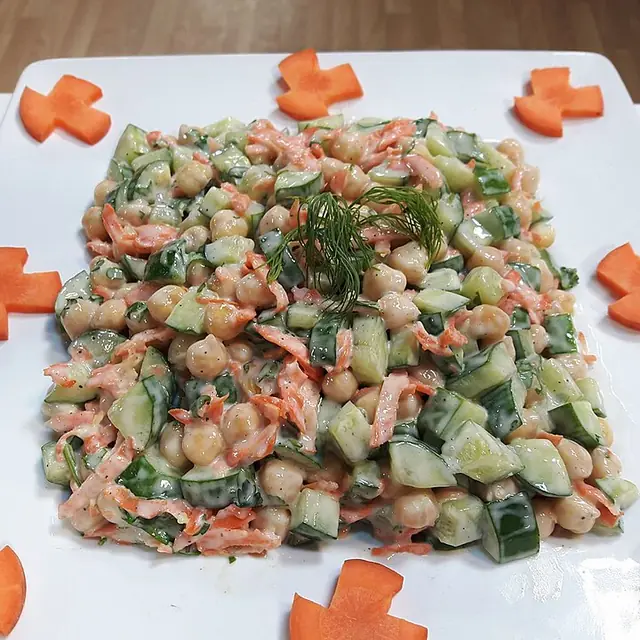
Warm chickpeas pureed with tahini, lemon and garlic, spooned into a shallow bowl with olive oil, whole chickpeas and pita for scooping, the everyday lunch at Tel Aviv's hummusias.
Where: Abu Hassan, Hummus Abu Adham, Shlomo and Doron, Shemaya
Price: ₪20-30
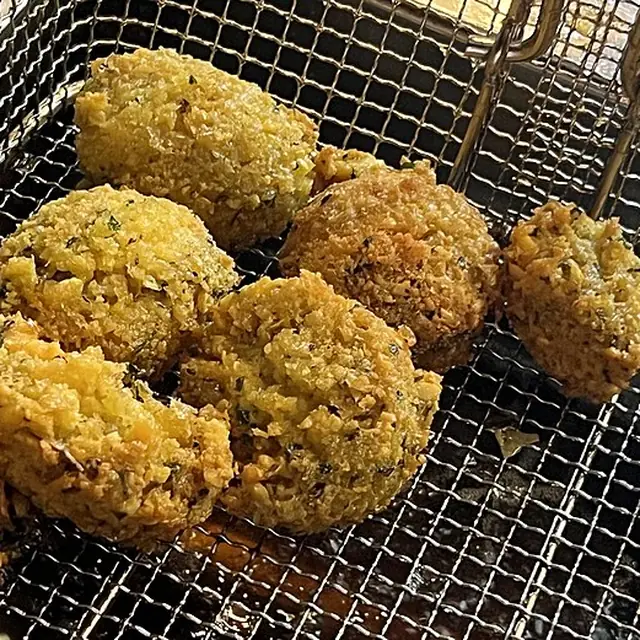
Ground chickpeas bound with herbs, garlic and cumin, formed into balls and deep fried to a dark crust, then stuffed into pita with salad, tahini and pickles at counters across the city.
Where: HaKosem, Falafel Gabay
Price: ₪19-25
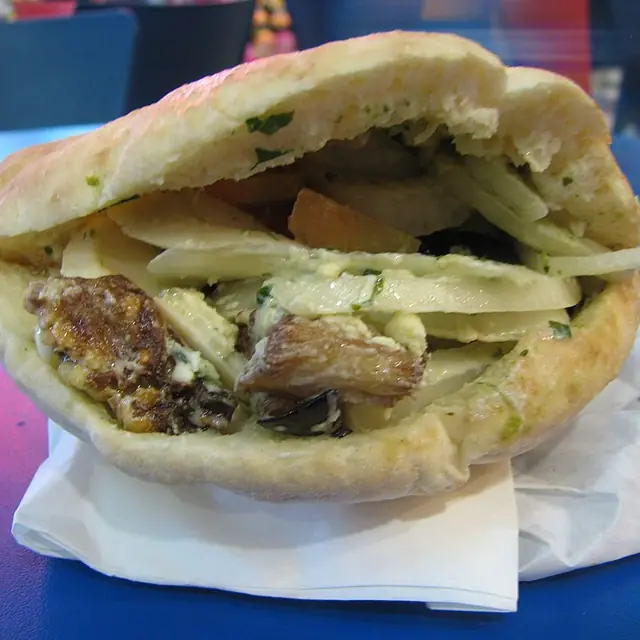
Fried aubergine, a hard-boiled egg, hummus, Israeli salad and amba mango pickle stuffed together into a pita, the Iraqi Jewish Shabbat breakfast turned into Tel Aviv's favourite lunch sandwich.
Where: Sabich Tchernichovsky, Sabich Frishman
Price: ₪25-35
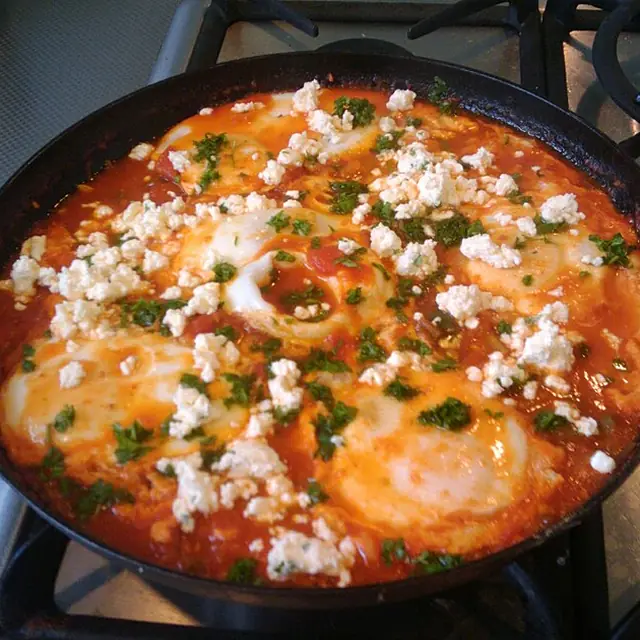
Eggs poached in a simmering pan of tomatoes, peppers, garlic and cumin, served straight from the skillet with bread for dipping, the breakfast dish Tel Aviv's cafes now run all day.
Where: Dr. Shakshuka, Meshek Barzilay
Price: ₪38-45
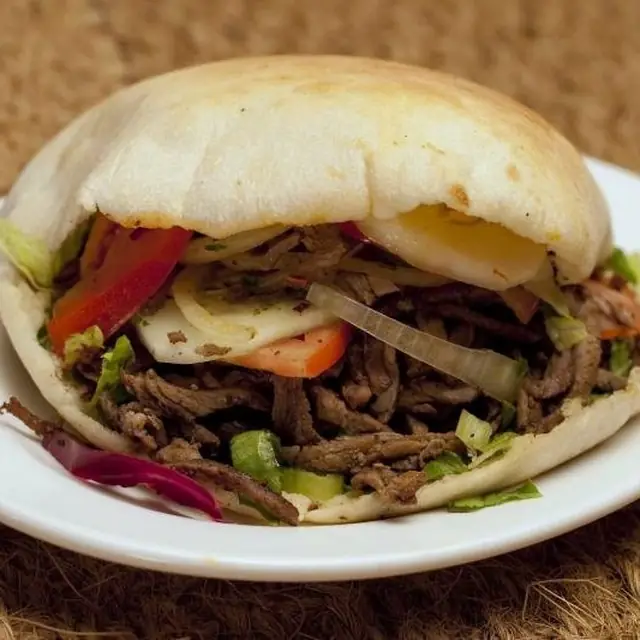
Turkey and lamb fat shaved off a rotating vertical spit, piled into pita or laffa with tahini, pickles and fries, Israel's own spin on the Ottoman doner served fast and cheap across the city.
Where: Mifgash Rambam, M25
Price: ₪46-50
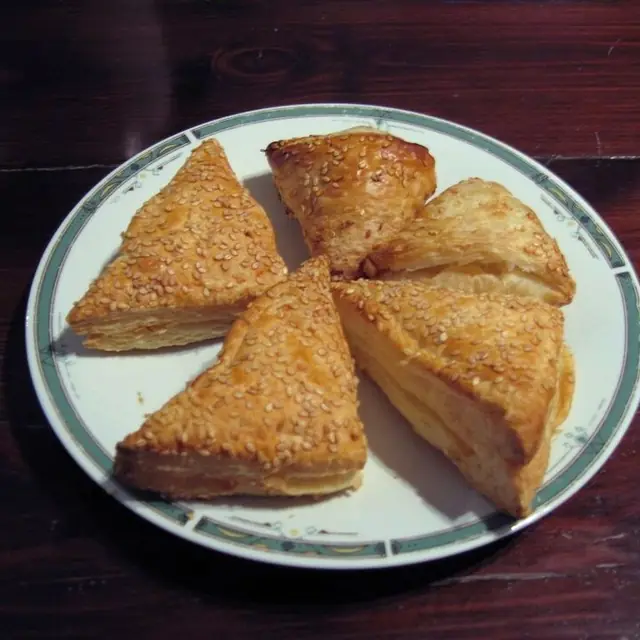
Flaky pastry parcels filled with cheese, potato or spinach, brushed with egg and sesame or poppy seed, sold hot from bakery trays across the city as breakfast, snack or Shabbat morning ritual.
Where: Haim Bourekas, Abulafia
Price: ₪10-16
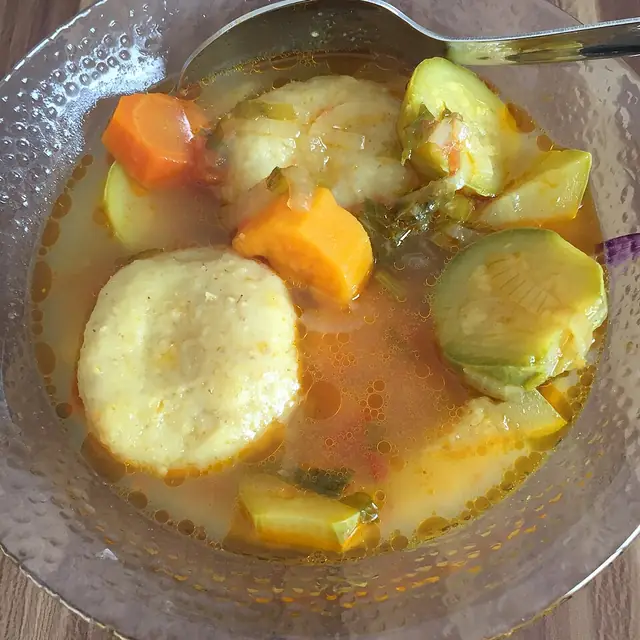
Semolina dumplings stuffed with minced beef, simmered in a sour, vegetable-thickened broth, most often beetroot-red or lemony with chard, the Iraqi Jewish soup that anchors Levinsky Market's counters.
Where: Levinsky 53
Price: ₪40-60
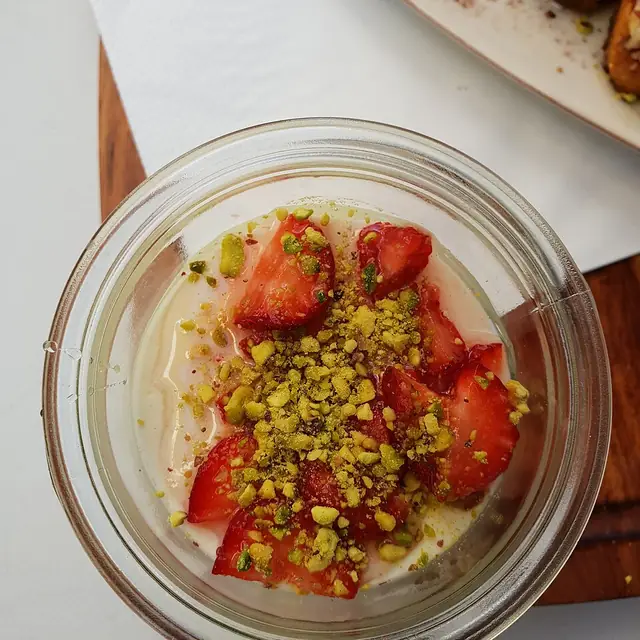
A cold, rosewater-scented milk pudding set with cornflour, poured into small cups and finished with syrup, coconut and chopped nuts, sold from corner stalls near Carmel Market.
Where: HaMalabia
Price: ₪10-15
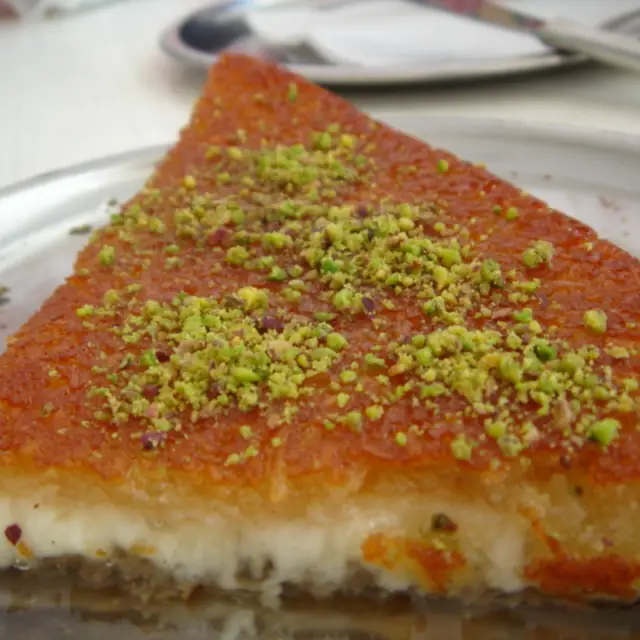
Shredded pastry dough baked golden over a layer of soft cheese, drenched in sugar syrup and finished with crushed pistachio, the Nablus-style dessert now baked fresh in Tel Aviv's Arab bakeries too.
Where: Abulafia
Price: ₪17-25
A fried bun split open and packed with tuna, boiled egg, potato, olives, preserved lemon and harissa, the tuna sandwich Tunisian Jewish immigrants carried to Tel Aviv's markets.
Where: Tunisian Sandwich Center
A spongy, bubbled flatbread cooked on one side only like a thick crumpet, served warm with grated tomato, skhug chilli paste or honey, the Yemenite Jewish bread of a Tel Aviv Saturday morning.
Where: Irit's Lachuch
A ring of chewy bread studded with sesame seeds, split and filled with hard cheese or za'atar, baked around the clock at the Jaffa counter that predates the State of Israel by nearly seventy years.
Where: Abouelafia
Hummus
Warm chickpeas pureed with tahini, lemon and garlic, spooned into a shallow bowl with olive oil, whole chickpeas and pita for scooping, the everyday lunch at Tel Aviv's hummusias.
History: A chickpea puree appears in a 13th-century Aleppo cookbook, though tahini and garlic entered the recipe later, recorded in an 1885 Lebanese cookbook. The dish was already a Levantine staple when Tel Aviv's hummus counters opened: the Yemenite family behind Shlomo and Doron has made it since 1937, and Ali Karavan, known as Abu Hassan, sold it from a Jaffa cart from 1959 before opening his HaDolfin Street shop in 1972. Israeli industrial production from 1958 turned hummus into a packaged supermarket product, but the city's hummusias still serve it the older way, warm from the pot with whole chickpeas and a slick of olive oil, eaten at a shared counter until the pot empties for the day.
Where to try it: Abu Hassan, Hummus Abu Adham, Shlomo and Doron, Shemaya
Watch out for: Sesame, Gluten
Falafel
Ground chickpeas bound with herbs, garlic and cumin, formed into balls and deep fried to a dark crust, then stuffed into pita with salad, tahini and pickles at counters across the city.
History: Falafel most likely began in Egypt, made with fava beans, and spread through the Levant after the First World War, reaching Beirut by 1933 and swapping in chickpeas along the way. Food rationing in Israel from 1949 pushed the cheap, protein-rich fritter into daily eating, and historian Gil Marks credits Yemenite Jewish immigrants of the 1950s with popularising the pita sandwich version, though a 1939 Palestine Post article already describes falafel sold in pita as street food. HaKosem, open on the Shlomo HaMelech corner since 2001, and Falafel Gabay on Bograshov Street both serve it crisp in a soft pita, piled with salads and pickles.
Where to try it: HaKosem, Falafel Gabay
Watch out for: Gluten, Sesame
Sabich
Fried aubergine, a hard-boiled egg, hummus, Israeli salad and amba mango pickle stuffed together into a pita, the Iraqi Jewish Shabbat breakfast turned into Tel Aviv's favourite lunch sandwich.
History: Sabich Tzvi Halabi, an Iraqi Jewish immigrant born in Baghdad in 1938, opened a kiosk on Uziel Street in Ramat Gan in 1961 with his wife Rina. Bus drivers on line 63 asked for something more filling, so Halabi folded his family's Iraqi Jewish Shabbat breakfast, fried aubergine and egg, into a single pita. Customers began asking to be served sabich, and the name stuck to the sandwich itself. New stands spread across Israel in the early 1990s, and Ramat Gan named the original junction Sabich Square in 2020. Tel Aviv's own stands, Sabich Tchernichovsky and Sabich Frishman among them, layer the aubergine, egg, hummus, salad and amba to the same formula.
Where to try it: Sabich Tchernichovsky, Sabich Frishman
Watch out for: Eggs, Sesame, Gluten
Shakshuka
Eggs poached in a simmering pan of tomatoes, peppers, garlic and cumin, served straight from the skillet with bread for dipping, the breakfast dish Tel Aviv's cafes now run all day.
History: The name comes from an Arabic root meaning to mix or shake, and food historians disagree on its path: Gil Marks traces it to the Turkish sakshuka spreading through Ottoman rule into the Maghreb, while others group it with menemen and piperade as a wider Mediterranean vegetable-and-egg family. Absent from Palestinian and Levantine kitchens until the 1950s, shakshuka arrived in Israel with Maghrebi Jewish immigrants that decade and only reached restaurant menus in the 1990s. Dr. Shakshuka in Jaffa has plated its Tripolitan version since the early 1990s, while Meshek Barzilay's vegan take shows how far the dish has spread across the city's kitchens since.
Where to try it: Dr. Shakshuka, Meshek Barzilay
Watch out for: Eggs, Gluten
Shawarma
Turkey and lamb fat shaved off a rotating vertical spit, piled into pita or laffa with tahini, pickles and fries, Israel's own spin on the Ottoman doner served fast and cheap across the city.
History: The vertical rotating spit was developed in the Ottoman Empire in the 19th century, credited by some accounts to a Bursa butcher named Iskender; both Levantine shawarma and Greek gyros descend from that doner kebab technique. Israel's own variation adds turkey to the traditional lamb, cut into thin slices and layered with lamb fat between them on the spit so the meat self-bastes as it turns, a workaround born of turkey's low cost and low fat compared with lamb or beef alone. Mifgash Rambam runs its spit through the day near Nahalat Binyamin, and M25 in the Carmel Market meat alley smokes and fries its version at the butcher counter.
Where to try it: Mifgash Rambam, M25
Watch out for: Gluten, Sesame
Bourekas
Flaky pastry parcels filled with cheese, potato or spinach, brushed with egg and sesame or poppy seed, sold hot from bakery trays across the city as breakfast, snack or Shabbat morning ritual.
History: Borek pastry traces to Ottoman kitchens, descended from Byzantine layered pies and the Turkic yufka dough tradition; the word comes from the Turkish burmek, to roll or twist. After the 1492 expulsion of Jews from Spain, Sephardic communities settling across the Ottoman Empire adopted borek, and it reached Israel with Sephardi immigrants from Turkey, Bulgaria and Thessaloniki, spelled bourekas in Hebrew. Serving them at Shabbat breakfast became customary in Sephardic households. Haim Bourekas bakes the Bulgarian-style cheese and spinach version in Shapira, now with a vegan one beside it, and Abulafia's Allenby branch bakes its own tray around the clock.
Where to try it: Haim Bourekas, Abulafia
Watch out for: Gluten, Dairy, Eggs, Sesame
Kubbeh soup
Semolina dumplings stuffed with minced beef, simmered in a sour, vegetable-thickened broth, most often beetroot-red or lemony with chard, the Iraqi Jewish soup that anchors Levinsky Market's counters.
History: Kubbeh has roots in ancient Mesopotamian cooking, its name possibly tracing to the Akkadian kubbu, and Iraqi Jewish communities refined their own stuffed-dumpling versions over centuries. When most of Iraq's Jews left for Israel in the early 1950s, they brought kubbeh with them, and it became a fixture of Israeli home cooking, served fried or simmered in soup depending on the family. Levinsky 53, run by Dalit and Avi on Levinsky Street beside the market, cooks kubbeh hamusta, a sour chard-based version, and the classic fried kibbeh in a room that feels like a grandmother's kitchen.
Where to try it: Levinsky 53
Watch out for: Gluten
Malabi
A cold, rosewater-scented milk pudding set with cornflour, poured into small cups and finished with syrup, coconut and chopped nuts, sold from corner stalls near Carmel Market.
History: Legend credits a Persian cook in the Sasanian court with serving this pudding to Arab general Al-Muhallab ibn Abi Sufra in the late 7th century, lending the dessert his name. The earliest written recipes date to the 10th century, and an Ottoman-era version flavoured with rose water and without the earlier chicken filling appears from around 1530. Israeli malabi is typically made with almond milk instead of dairy so it can follow a meat meal under kashrut, and that pareve version turned an old court dessert into an everyday street sweet. HaMalabia pours its rosewater malabi, in dairy and vegan versions, from a corner stall by Carmel Market, letting regulars pick their own syrups and toppings.
Where to try it: HaMalabia
Watch out for: Dairy, Tree nuts
Knafeh
Shredded pastry dough baked golden over a layer of soft cheese, drenched in sugar syrup and finished with crushed pistachio, the Nablus-style dessert now baked fresh in Tel Aviv's Arab bakeries too.
History: Accounts trace knafeh to Fatimid Egypt or the Umayyad court in Damascus, where legend says it was invented to satisfy caliphs during Ramadan, and a 13th-century Damascus market inspector already monitored its quality that month. Historian Mary Isin notes the cheese-filled version does not appear in records before the 19th century; an 1885 Beirut cookbook gives four recipes. The Palestinian city of Nablus became linked with knafeh filled with firm white Nabulsi cheese from at least 1923, remaining the dish's defining style. Abulafia's Allenby Street branch bakes its own tray of knafeh around the clock alongside sambousak and bourekas at the Jaffa bakery's round-the-clock counter.
Where to try it: Abulafia
Watch out for: Dairy, Gluten, Tree nuts
Tunisian sandwich
A fried bun split open and packed with tuna, boiled egg, potato, olives, preserved lemon and harissa, the tuna sandwich Tunisian Jewish immigrants carried to Tel Aviv's markets.
History: The sandwich traces to a 19th-century story from La Goulette, the Jewish port suburb of Tunis: a young Tunisian Jewish woman left with more fried buns than a party needed filled them savoury with tuna, harissa, egg and potato instead of sugaring them as planned. Tunisian Jews carried the sandwich with them when they left in the 1950s and 1960s; in France it became le fricasse, and it stayed popular through Israel's own Tunisian Jewish community, sold from market stalls and side-street counters. The Tunisian Sandwich Center, run by Haim Bukovza of the original Ramla Market stand, serves it on HaPatish Street in south Tel Aviv in baguettes baked on site, with merguez as a second filling.
Where to try it: Tunisian Sandwich Center
Watch out for: Gluten, Eggs
Lachuch
A spongy, bubbled flatbread cooked on one side only like a thick crumpet, served warm with grated tomato, skhug chilli paste or honey, the Yemenite Jewish bread of a Tel Aviv Saturday morning.
History: Lachuch, also spelled lahoh, originated across the Horn of Africa and Yemen, where it is still eaten daily in Somalia, Djibouti and parts of Ethiopia as well as Yemen itself, traditionally made from a naturally fermented white sorghum batter and cooked on a single side. Yemenite Jewish immigrants, who founded Tel Aviv's Kerem HaTeimanim quarter beside Carmel Market from 1906, brought lachuch with the rest of their Shabbat breads, jachnun and malawach among them, and it became one of the neighbourhood's defining street foods. Irit cooks lachuch in a small shack-like cafe beside her childhood home on the edge of Carmel Market, behind a bright blue door.
Where to try it: Irit's Lachuch
Watch out for: Gluten
Jaffa ka'ak
A ring of chewy bread studded with sesame seeds, split and filled with hard cheese or za'atar, baked around the clock at the Jaffa counter that predates the State of Israel by nearly seventy years.
History: Ka'ak, a sesame-crusted ring bread, is recorded as early as the 10th-century Baghdad cookbook Kitab al-Tabikh and again in a 13th-century Syrian manuscript that gives three separate recipes, and ring-shaped, sesame-covered versions remain common across the Levant today. In Jaffa, the Abulafia family opened its bakery in 1879, baking ka'ak alongside pita and sambousak from a counter that has run ever since and become one of the city's standing symbols of Jewish and Arab coexistence. Abouelafia on Yefet Street still bakes the sesame-studded ka'ak fresh through the day and night, best ordered warm and cheese-filled straight from the oven.
Where to try it: Abouelafia
Watch out for: Gluten, Sesame, Dairy, Eggs