Key eras
Jaffa's port and orange groves, 19th century
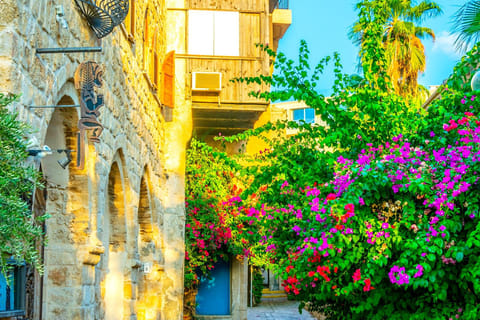
Before Tel Aviv existed, Jaffa was the port. Arab farmers around the town developed the Jaffa or shamouti orange as a mutation of the local Baladi tree in the mid-19th century, and British consular reports record it shipping to Europe by the 1850s. Late in the century the orchard and export trade ran as a joint Jewish and Arab business out of Jaffa port.
Ahuzat Bayit and the first markets, 1906 to the 1930s
Yemenite Jewish immigrants founded Kerem HaTeimanim in 1906, and on 11 April 1909 sixty-six Jewish families drew lots with seashells for plots on the dunes north of Jaffa, the founding of Ahuzat Bayit, later Tel Aviv. The Carmel Market grew up beside the Yemenite Quarter in the 1920s, and Jews from Thessaloniki opened the spice shops of Levinsky Market in Florentin in the late 1920s.
Tzena, the austerity decade, 1949 to 1959
The new state rationed food from 1949 to 1959, with a diet modelled on wartime Britain. Cooks improvised: aubergine stood in for chopped liver, turkey for veal schnitzel, and in 1953 Osem devised ptitim, a wheat substitute for rice, at David Ben-Gurion's request. Tel Aviv and Jaffa were joined in 1950 and renamed Tel Aviv-Yafo that August.
Mass immigration and the Mizrahi table, 1950s to 1970s
After 1948 the largest culinary impact came from Jews arriving from Iraq, Yemen, Kurdistan, Turkey and North Africa. Maghrebi Jews brought shakshuka in the 1950s, Iraqi Jews brought amba and kubba, and an Iraqi Jewish immigrant folded the Shabbat breakfast of fried aubergine and egg into one pita as sabich in the early 1960s. The hummusia and the grill-house steakiya became everyday Israeli eating.
Chefs, wine and food halls, 1980s to today
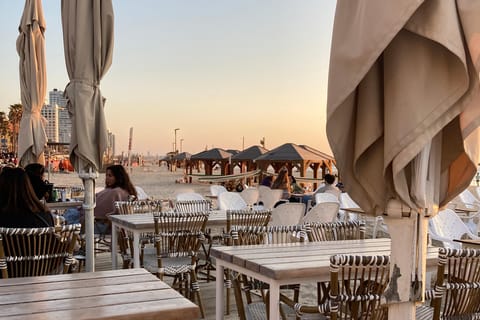
From the 1980s boutique dairies, the Golan Heights Winery (1983) and a travelling public changed what Tel Aviv expected from a restaurant; sushi and fusion followed in the 1990s. The disused port reopened as the Namal boardwalk in 2008, and Sarona Market opened in 2015 as Israel's largest indoor food market, with about 90 businesses in the restored Templer colony.