
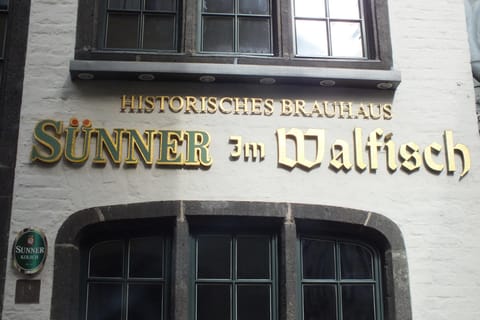
The plates that define Cologne: what they are, where they came from, and where to eat the canonical version.
Signature dishes
-

Kölsch ★ 4.9
Cologne's protected pale top-fermented ale, cold-conditioned to lager clarity, served in a strict 0.2L Stange glass by a kobes who replaces the glass without being asked until you cover it with a coaster.
Where to try it: Brauerei Päffgen, Brauerei zur Malzmühle, Früh am Dom
Price: €2.50 per 0.2L glass
Kölsch is one of two beers legally protected by city of origin in Germany (alongside Düsseldorfer Altbier), regulated under the 1986 Kölsch Konvention which restricts production to roughly 60 breweries within the Cologne area. The pale top-fermenting yeast and cold conditioning combine ale character with lager clarity. Früh, Gaffel and Päffgen are the most widely available brands; the city pours roughly 1.5 million hectolitres each year, almost all in 0.2L glasses.
Watch out for: Gluten
-
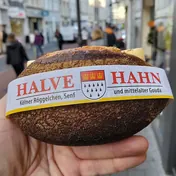
Halve Hahn ★ 4.4
Cologne's most famous linguistic joke: the name means 'half a rooster' but contains no poultry. Half a rye roll served with a thick slice of medium-aged Gouda, a gherkin and mustard.
Where to try it: Brauerei Päffgen, Peters Brauhaus, Brauhaus Sion
Price: €3-5
The Halve Hahn became a Brauhaus staple in 19th-century Cologne; the name's mismatch with the contents is the city's running joke. Several origin stories circulate; the most cited involves Cologne wits ordering 'half a rooster' to confuse outsiders. The dish anchors the bar-snack tradition that pairs with cold Kölsch. Brauerei Päffgen, Peters Brauhaus and Brauhaus Sion still plate the canonical version with Dutch medium-aged Gouda.
Watch out for: Gluten, Dairy
-

Himmel un Ääd ★ 4.5
Heaven and earth: mashed potato (earth) with unsweetened apple puree (heaven) and blood sausage or fried liver and onions. A Rhenish classic eaten in Cologne since at least the 18th century.
Where to try it: Haus Töller, Lommerzheim, Brauhaus Pütz
Price: €12-16
Himmel un Ääd combines root vegetables from underground with fruit from the tree, the dialect name 'sky and earth' capturing the contrast. The dish entered Cologne kitchens during the 18th century when apples were a year-round Rhenish staple and potatoes had settled into the regional diet. The pairing with Blutwurst (blood sausage) became canonical in the 19th century working-class Brauhäuser. Lommerzheim, Haus Töller and Brauhaus Pütz still serve it on every winter menu.
Watch out for: Dairy
Book food experiences in Cologne


-
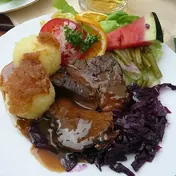
Sauerbraten ★ 4.7
Rhine Sauerbraten: beef marinated for 3 to 7 days in wine vinegar, onion, bay and cloves, braised until tender and finished with a sweet-sour sauce of raisins and Lebkuchen crumbs.
Where to try it: Brauerei zur Malzmühle, Peters Brauhaus, Gaffel am Dom
Price: €16-22
Sauerbraten dates to the medieval German tradition of preserving meat in acid, with regional variants developing across the country. The Rhineland version, traditionally made from horse meat until the 20th century shift to beef, is defined by its sweet-sour finish with raisins and crumbled Lebkuchen (gingerbread). The dish has been the canonical Cologne Sunday roast in Brauhäuser since the 19th century. Served with Kartoffelklösse (potato dumplings) and braised red cabbage.
Watch out for: Gluten
-

Reibekuchen (Rievkooche) ★ 4.7
Cologne's established street food: thick, roughly textured potato pancakes fried in hot fat until the exterior is crisp and the interior soft. Served with apple sauce or pickled-turnip syrup.
Where to try it: Rievkoochbud, Reibekuchen at Nippesser Wochenmarkt, Brauerei zur Malzmühle
Price: €3-5
Reibekuchen are the Rhenish potato pancakes, called Rievkooche in the Kölsch dialect. The dish entered Cologne kitchens with the wider arrival of potatoes from the 18th century and became a market and Brauhaus staple. The Rievkoochbud kiosk in the Altstadt is the canonical city-centre operator; the weekly Wochenmarkt stalls and the Christmas markets in December multiply the city's daily output. The traditional partner is Rübenkraut, the dark Rhenish pickled-turnip syrup.
Watch out for: Gluten, Eggs
-
Flönz (Blutwurst) mit Musik ★ 4.4
Cologne dialect Blutwurst served with raw pickled onion (the Musik), rye bread and mustard. A Brauhaus snack staple and the canonical bar food alongside cold Kölsch.
Where to try it: Brauerei Päffgen, Brauhaus Sion, Haus Töller
Price: €5-8
Flönz is the Kölsch dialect word for Blutwurst (blood sausage), and 'Musik' is the city's polite way of describing what the raw onion does in the stomach afterwards. The combination became a Brauhaus snack staple in the 19th century working-class quarters, and stayed on the menus through the 20th century even as the wider Cologne food scene gentrified. Today it is the standard mid-morning second-breakfast and the cheapest order on most Brauhaus snack lists.
Watch out for: Gluten
-

Mettbrötchen ★ 4.2
Raw minced pork (Mett) seasoned with salt, pepper and onion, spread onto a fresh Brötchen. A German raw-meat tradition consumed daily at every bakery and market.
Where to try it: Nippesser Wochenmarkt, Backerei Zimmermann, Bastians
Price: €2-3
Mett is German lean minced pork, traditionally from the shoulder, served raw on bread as Mettbrötchen. The tradition is centuries old in northern and western Germany; food-safety regulations require Mett to be ground and sold the same day. Cologne's Wochenmarkt stalls and Bäckereien like Backerei Zimmermann and Bastians serve it from early morning. The most common breakfast or second-breakfast order at any Cologne market.
Watch out for: Gluten
-
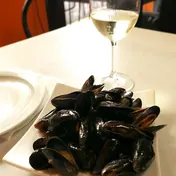
Muscheln in Weißwein ★ 4.5
Rhine mussels steamed in white wine with onion, celery, leek and parsley. Served in the deep pot, with crusty bread and cold Kölsch, from September through April.
Where to try it: Peters Brauhaus, Brauerei zur Malzmühle, Lommerzheim
Price: €14-18
Cologne's position on the Rhine made river and coastal seafood a historical part of the city's diet, and the Rhenish tradition of cooking mussels in Mosel or Rheingau Riesling persists in Brauhäusern. The mussel season runs September to April (months with an R in German), tied to North Sea and Belgian-Dutch coastal harvests delivered overnight by truck. Peters Brauhaus and Brauerei zur Malzmühle plate the canonical version with rye bread for soaking the broth.
Watch out for: Molluscs, Gluten
-
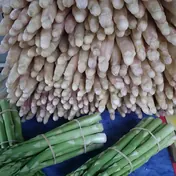
Weißer Spargel ★ 4.6
White asparagus, Germany's most anticipated seasonal vegetable. Cologne Brauhäuser and brasseries build full Spargel menus around it from late April to St John's Day on 24 June.
Where to try it: Brauerei zur Malzmühle, maiBeck, Nippesser Wochenmarkt
Price: €16-24 for a main course
White asparagus is grown under mounded earth to prevent sunlight reaching the spears, keeping them pale and tender. The German season runs from late April to 24 June (St John's Day) when growers traditionally stop cutting to let the plants recover. Cologne's Brauhäuser and Brasserien run full Spargel menus during the window, often pairing the asparagus with butter sauce, new potatoes, and either smoked ham (Schinken) or Wiener schnitzel.
Watch out for: Dairy, Eggs
-
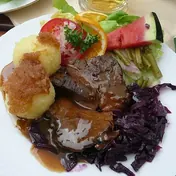
Rheinischer Sauerbraten (fine-dining) ★ 4.8
The Michelin-starred Cologne kitchens' modern Sauerbraten: Wagyu, aged regional beef or venison, with the traditional Rhenish raisin-and-Lebkuchen sauce reduced and refined.
Where to try it: Maximilian Lorenz, Pottkind, maiBeck
Price: €32-48 as a tasting course
Cologne's modern fine-dining scene took Sauerbraten as a national dish to match, with Maximilian Lorenz developing the canonical reference version using dry-aged venison, the classic long marinade, toasted pumpernickel breadcrumbs and pickled raisins. Pottkind in the Belgisches Viertel and maiBeck near the cathedral run their own modern interpretations. The tradition of marinating in Rhenish vinegar and finishing with Lebkuchen sauce is preserved while protein and presentation evolve.
Watch out for: Gluten, Dairy
Signature Dishes in Cologne, FAQ
What food is Cologne known for?
Cologne's signature dishes include Kölsch, Halve Hahn, Himmel un Ääd, Sauerbraten, Reibekuchen (Rievkooche). See our signature dishes chapter for where to eat each.