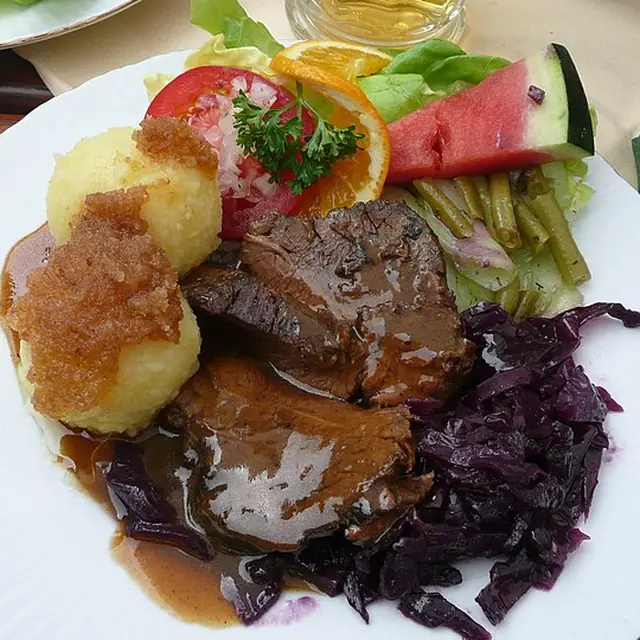

Rhine Sauerbraten: beef marinated for 3 to 7 days in wine vinegar, onion, bay and cloves, braised until tender and finished with a sweet-sour sauce of raisins and Lebkuchen crumbs.

Sauerbraten dates to the medieval German tradition of preserving meat in acid, with regional variants developing across the country. The Rhineland version, traditionally made from horse meat until the 20th century shift to beef, is defined by its sweet-sour finish with raisins and crumbled Lebkuchen (gingerbread). The dish has been the canonical Cologne Sunday roast in Brauhäuser since the 19th century. Served with Kartoffelklösse (potato dumplings) and braised red cabbage.


Where to eat Sauerbraten in Cologne

3 editor picks for Sauerbraten in Cologne, ranked by editorial score. All Cologne signature dishes · Sauerbraten across every city.

  • Brauerei zur Malzmühle

    Order Halve Hahn, the traditional rye roll with aged Gouda, alongside a freshly tapped Mühlen Kölsch

    Brauerei zur Malzmühle on Cologne's Heumarkt has brewed Mühlen Kölsch since 1858 and once served Bill Clinton; consistently fresh pours in the Altstadt.

  • Peters Brauhaus

    Order Himmel un Ääd: blood sausage with mashed potato and apple sauce, the most Cologne dish on the menu

    Peters Brauhaus in Cologne's Altstadt serves hearty Rhenish brewery food alongside Peters Kölsch 350 metres from the Cathedral in a wood-panelled room.

  • Gaffel am Dom

    Order Rhenish Sauerbraten with raisin sauce and Kartoffelklösse, the defining Cologne Sunday dish

    Gaffel am Dom occupies Cologne's main station forecourt, pouring Gaffel Kölsch from table taps opposite the Cathedral with Rhenish classics and Friday.

Book food experiences in Cologne

See all 496 food experiences in Cologne

Make it at home

Serves 6P5DIntermediate

Ingredients

  • 1.5kg beef topside or rump in one piece
  • For the marinade: 500ml red wine vinegar
  • 500ml dry red wine
  • 2 onions sliced
  • 2 carrots sliced
  • 4 cloves
  • 6 juniper berries
  • 4 bay leaves
  • 8 black peppercorns
  • 1 tablespoon mustard seeds
  • 60g lard or duck fat for browning
  • 2 tablespoons plain flour
  • 100g Rhenish Lebkuchen or Pfefferkuchen, crumbled
  • 60g dark raisins
  • 60g sultanas
  • 2 tablespoons dark brown sugar
  • Salt and black pepper

Method

  1. Combine the marinade ingredients in a deep glass or ceramic dish. Submerge the beef, cover, and refrigerate 5 days, turning daily.
  2. Lift the beef out and pat thoroughly dry. Strain and reserve the marinade.
  3. Heat the lard in a heavy casserole. Season the beef and brown on all sides over high heat, around 10 minutes total.
  4. Lift the beef out. Sprinkle the flour into the casserole, stir 1 minute, then pour in 750ml of the strained marinade, scraping the base.
  5. Return the beef. Cover and braise at 150C for 2.5 to 3 hours until a fork slides in easily.
  6. Lift the meat out, rest under foil. Reduce the cooking liquid by a third over high heat.
  7. Stir in the crumbled Lebkuchen, raisins, sultanas and brown sugar. Simmer 5 minutes until the sauce thickens and turns glossy. Adjust seasoning.
  8. Slice the beef across the grain. Plate with potato dumplings and braised red cabbage; ladle the sauce over.

Editor tip. The 5-day marinade is the dish; anything under 72 hours gives a flat Sauerbraten. Lebkuchen is essential for the Rhenish version; molasses won't substitute.

Common allergens: Gluten.