Signature dishes
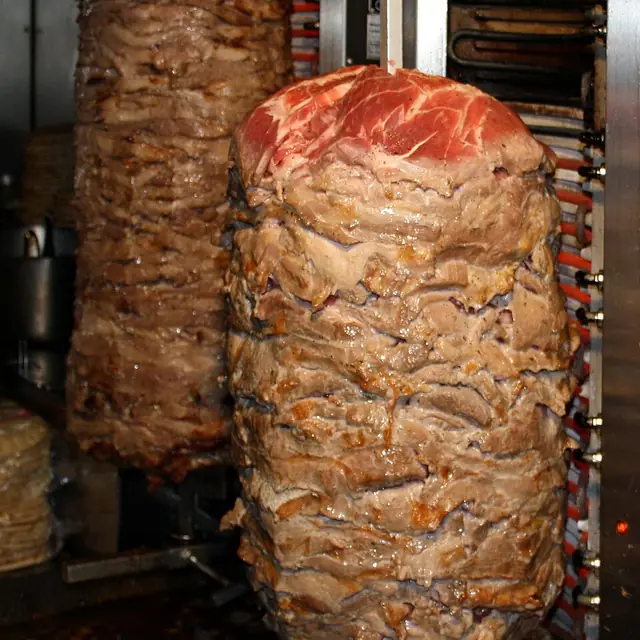
Berlin's doener is the city's defining street food: roasted lamb or veal shaved from a vertical spit, tucked into pita with cabbage, tomato, onion, white sauce, chili and a touch of harissa.
Where: Mustafas Gemuese Kebap, Rueyam Gemuese Kebap, Imren Grill
Price: €5-9
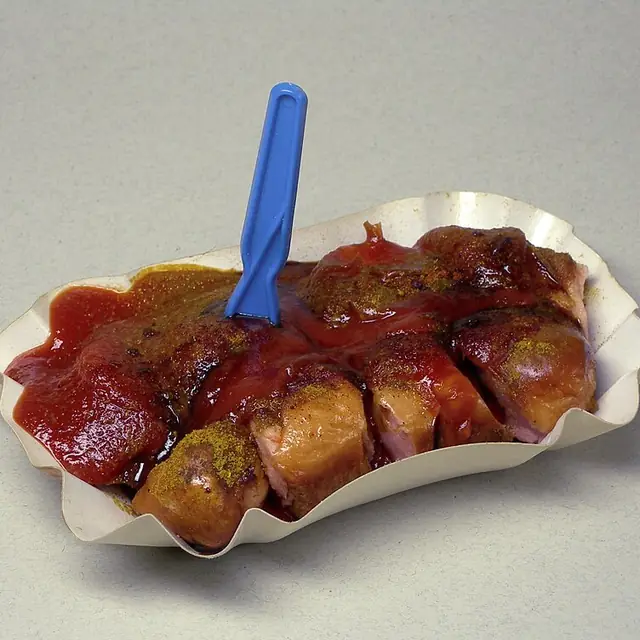
Currywurst is the post-war Berlin Imbiss invention: a sliced bratwurst doused in spiced ketchup, dusted with curry powder, served with a paper plate, a wooden fork and a side of pommes.
Where: Curry 36, Konnopke's Imbiss, Curry 61
Price: €3-6
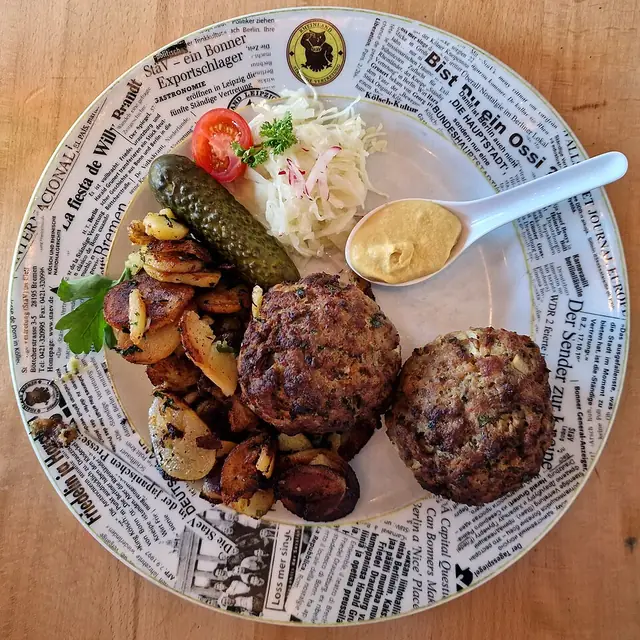
Buletten are Berlin's hand-shaped meat patties: minced beef or pork-and-beef bound with onion, soaked bread, egg and parsley, pan-fried until deeply browned on the outside and juicy within.
Where: Konnopke's Imbiss, Lutter und Wegner, Zum Schusterjungen
Price: €3-8
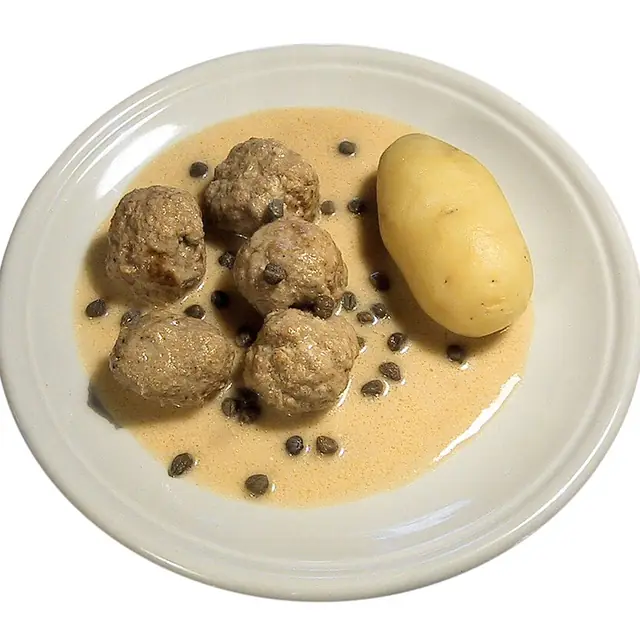
Koenigsberger Klopse are East-Prussian veal-and-anchovy meatballs poached in a caper-cream sauce; the dish travelled to Berlin with refugees in 1945 and stays on every Berlin tavern carte.
Where: Max und Moritz, Lutter und Wegner, Henne
Price: €14-22
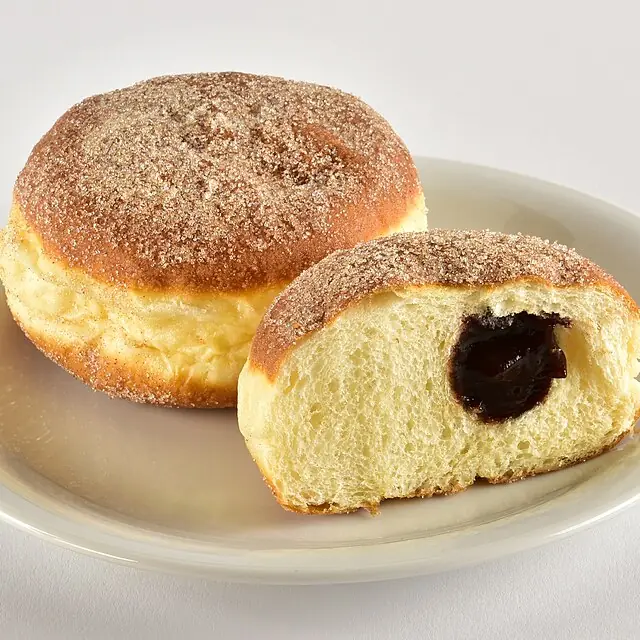
Berliner Pfannkuchen are the city's defining doughnut: deep-fried yeasted-dough rounds, filled with plum or rosehip jam, dusted with powdered sugar, sold at every bakery before Silvester.
Where: Zeit fuer Brot, Brotgarten
Price: €1.50-3
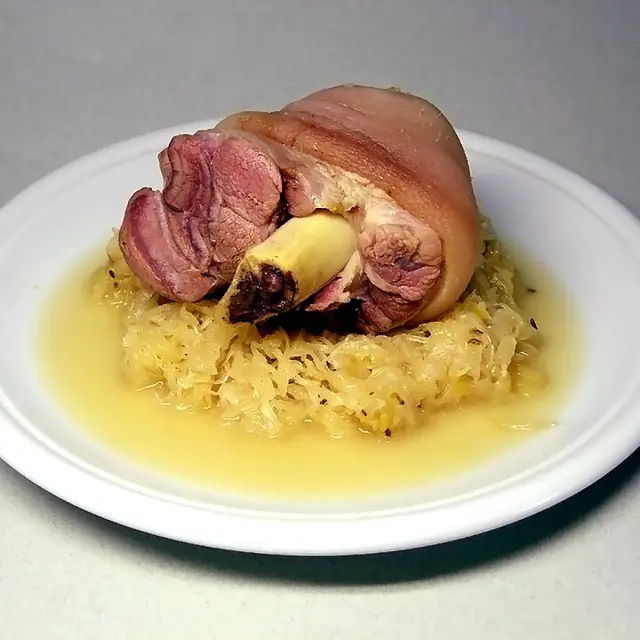
Eisbein is the Berlin pork-knuckle classic: a cured-and-boiled hind leg served with sauerkraut, pease pudding and boiled potatoes. The dish defines the city's heavy-winter tavern grammar.
Where: Max und Moritz, Henne, Lutter und Wegner
Price: €18-26
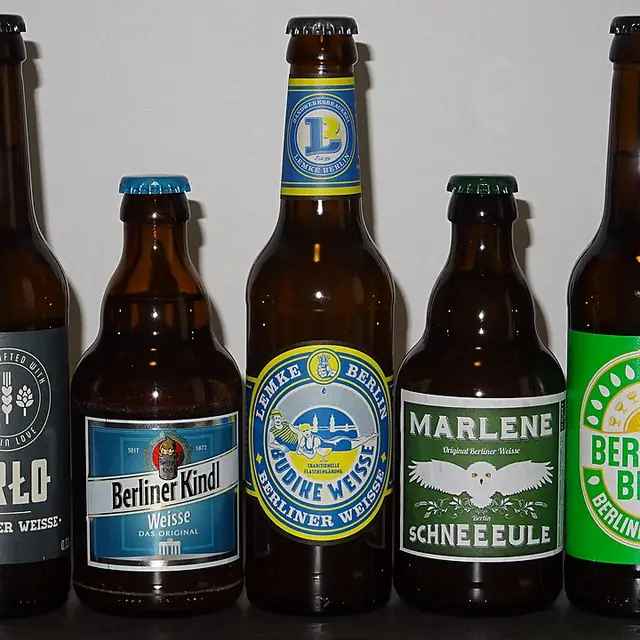
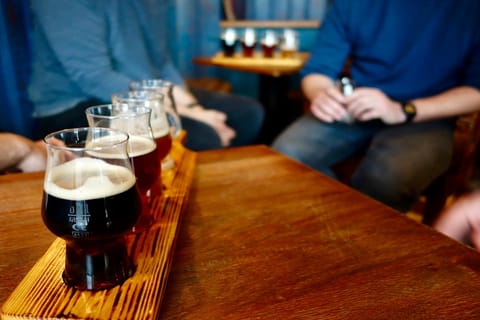
Berliner Weisse is the city's traditional sour wheat beer: 3 percent ABV, tart-fermented with lactobacillus, served in a half-litre coupe with a green woodruff or red raspberry syrup shot.
Where: Berliner Berg Brauerei, BRLO Brwhouse, Vagabund Brauerei
Price: €4-7
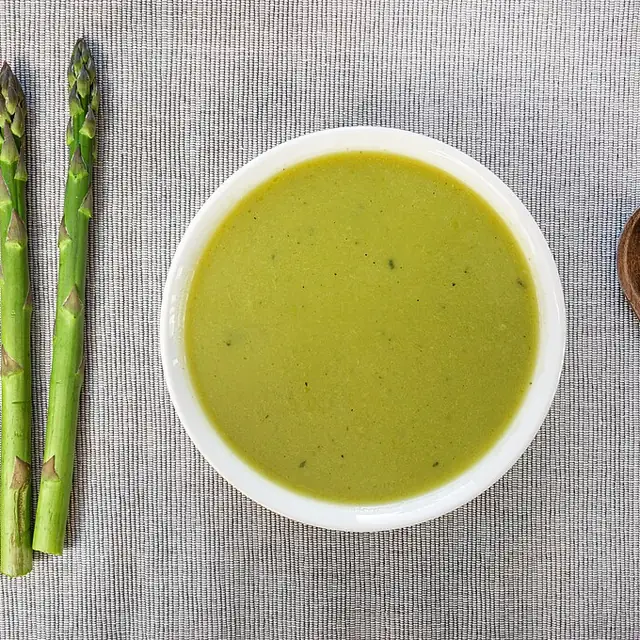
Spargel is Brandenburg's white asparagus, peeled thick, boiled in salted water with butter and lemon, served with hollandaise, boiled new potatoes and a slice of Schinken. May to June only.
Where: Lutter und Wegner, Borchardt, Lokal
Price: €18-32
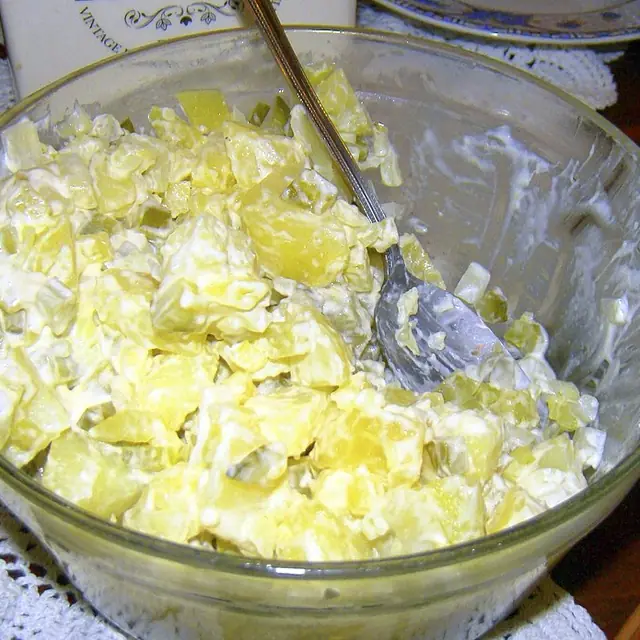
Berlin Kartoffelsalat is the city's vinegary potato salad: waxy potatoes sliced warm, dressed with hot broth, vinegar, mustard and onion. Served with Buletten or Wiener Schnitzel.
Where: Borchardt, Lutter und Wegner, Henne
Price: €4-9
Rote Gruetze is the summer Berlin and northern German dessert: a thickened compote of red summer fruits (raspberry, redcurrant, cherry, strawberry) served warm or cold with vanilla cream.
Where: Lutter und Wegner, Borchardt, Lokal
Price: €6-12
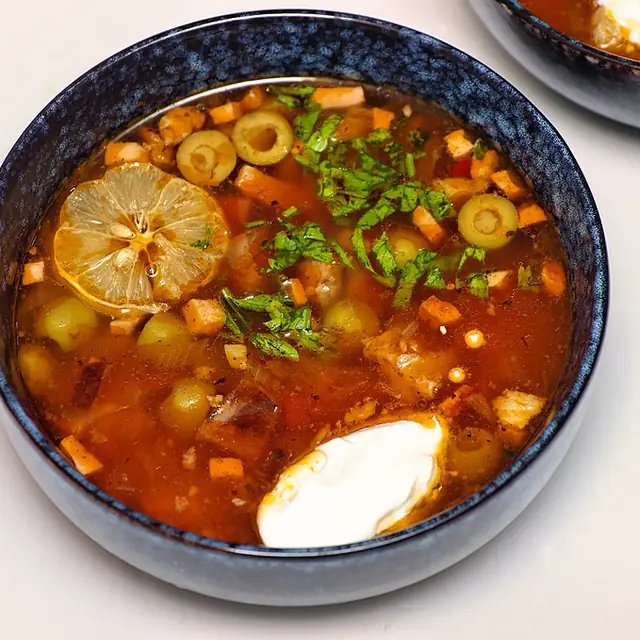
East Berlin's signature sour-spicy soup: long-simmered tomato-and-paprika broth packed with smoked sausages, pickled cucumbers, capers and dark olives. Finished with sour cream and lemon. The DDR-era Sunday lunch.
Where: Zur Letzten Instanz, Max und Moritz, Lutter und Wegner
Price: €8-14 a bowl
Berlin's traditional raw pork tartare: finely minced raw pork shoulder seasoned with onion, salt, pepper and caraway, spread on a fresh Schrippe bread roll and topped with raw onion rings.
Where: Zur Letzten Instanz, Max und Moritz, Lutter und Wegner
Price: €3-8 per portion (60-100g)
Crisp green-flecked chickpea balls in pita with sumac onion, tahini, pickled turnip and crunchy salads. The Berlin Levantine sandwich, sold at corner kiosks across Kreuzberg and Mitte.
Where: Dada Falafel, Maroush, Hummus and Friends
Price: €7-11
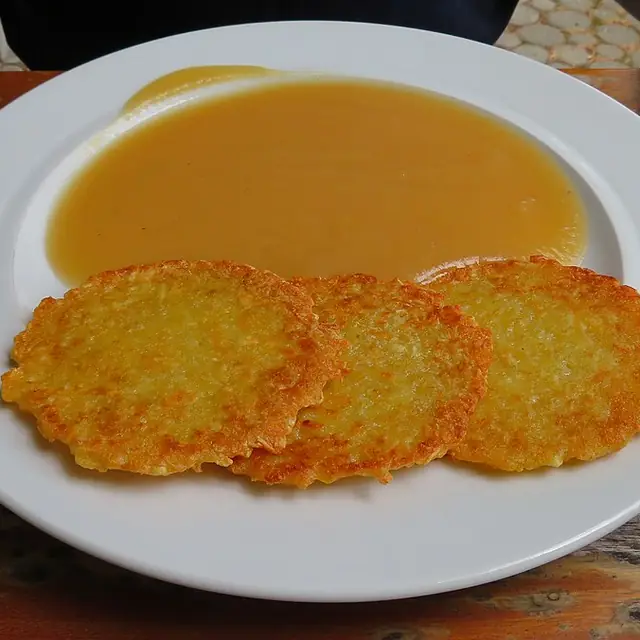
Crisp shredded-potato pancakes fried in plenty of fat, eaten with a heavy dollop of cold apple compote and a glass of beer. The Berlin Christmas-market and Kneipe staple.
Where: Konnopke's Imbiss, Max und Moritz, Zum Schusterjungen
Price: €6-12
Doener Kebab
Berlin's doener is the city's defining street food: roasted lamb or veal shaved from a vertical spit, tucked into pita with cabbage, tomato, onion, white sauce, chili and a touch of harissa.
History: The doener kebab as Berlin knows it was invented in the city in 1972 by Kadir Nurman, a Turkish immigrant working at a snack bar near Bahnhof Zoo. Nurman adapted the Turkish iskender (meat on rice with sauce) into a portable pita sandwich suited to West Berlin's fast-food lunch culture. The form spread through the city's Turkish quarter in Kreuzberg through the 1970s and 1980s; by 2026, Berlin has an estimated 1,600 doener counters, more than any city outside Istanbul. Mustafas Gemuese Kebap at Mehringdamm 32 codified the modern grilled-vegetable variant in 2003. The doener is the only Berlin dish recognised by the city government with a commemorative plaque.
Where to try it: Mustafas Gemuese Kebap, Rueyam Gemuese Kebap, Imren Grill
Watch out for: Gluten, Dairy
Currywurst
Currywurst is the post-war Berlin Imbiss invention: a sliced bratwurst doused in spiced ketchup, dusted with curry powder, served with a paper plate, a wooden fork and a side of pommes.
History: Currywurst was invented in Berlin in 1949 by Herta Heuwer at her Imbiss at the corner of Kantstrasse and Kaiser-Friedrich-Strasse in Charlottenburg. Heuwer obtained ketchup and curry powder from British soldiers, mixed her own spiced sauce and ladled it over a sliced grilled sausage. The dish was patented in 1959 (under the name Chillup) but the form had already spread across West Berlin. Konnopke's Imbiss at the Eberswalder Strasse U-Bahn arch has cooked currywurst since 1960, claiming East Berlin's earliest version. The dish remains the city's most consumed street food.
Where to try it: Curry 36, Konnopke's Imbiss, Curry 61
Watch out for: Gluten in some sausages
Buletten
Buletten are Berlin's hand-shaped meat patties: minced beef or pork-and-beef bound with onion, soaked bread, egg and parsley, pan-fried until deeply browned on the outside and juicy within.
History: Buletten arrived in Berlin from French Huguenot refugees in the late 17th century, who brought the term boulette (small ball) from their Paris kitchens. By the 18th century, the dish had become a Prussian working-class staple. Buletten were standard Imbiss food across Berlin's 19th-century factory districts and remained a kneipe and butcher-counter classic through both world wars. The 1950s East-West Berlin split saw the dish hold steady on both sides of the wall, with the GDR's HO-Gaststaetten serving Buletten as a staple lunch protein. The version is hot or cold, with mustard or potato salad on the side; many Berlin butchers still cook Buletten daily at the counter.
Where to try it: Konnopke's Imbiss, Lutter und Wegner, Zum Schusterjungen
Watch out for: Gluten, Egg
Koenigsberger Klopse
Koenigsberger Klopse are East-Prussian veal-and-anchovy meatballs poached in a caper-cream sauce; the dish travelled to Berlin with refugees in 1945 and stays on every Berlin tavern carte.
History: Koenigsberger Klopse originated in 18th-century Koenigsberg (now Kaliningrad) as a refined version of the German Klops meatball, distinguished by chopped anchovy in the mince and capers in the white sauce. When East Prussia was lost to the Soviet Union in 1945, Koenigsberg refugees brought the dish to West Berlin and West Germany. By the 1960s, Klopse had become a Berlin tavern standard. In the GDR, the dish appeared on HO-Gaststaetten menus under the politically scrubbed name Kochkloesse. After 1990, the original name returned. Max und Moritz on Oranienstrasse has cooked the dish unchanged since 1902; the boiled-potato side is non-negotiable.
Where to try it: Max und Moritz, Lutter und Wegner, Henne
Watch out for: Gluten, Dairy, Egg, Fish (anchovy)
Berliner
Berliner Pfannkuchen are the city's defining doughnut: deep-fried yeasted-dough rounds, filled with plum or rosehip jam, dusted with powdered sugar, sold at every bakery before Silvester.
History: The Berliner Pfannkuchen took its modern form in Prussia in the 18th century, reportedly invented by a Berlin sugar baker conscripted by Friedrich the Great who, unable to bake field bread, fried small round balls of dough in fat over a campfire. The Silvester (New Year's Eve) tradition of eating Berliner dates to the 1900s; one in a tray may be filled with mustard as a prank. The dish is called Berliner only outside Berlin (within the city it is Pfannkuchen). After 1990, the East-German Pfannkuchen-with-rosehip-jam variant returned to Berlin alongside the Western plum-jam standard. Berlin's bakeries (Brotgarten, Zeit fuer Brot) fry batches daily from October through Silvester.
Where to try it: Zeit fuer Brot, Brotgarten
Watch out for: Gluten, Dairy, Egg
Eisbein
Eisbein is the Berlin pork-knuckle classic: a cured-and-boiled hind leg served with sauerkraut, pease pudding and boiled potatoes. The dish defines the city's heavy-winter tavern grammar.
History: Eisbein has been on Berlin tavern menus since the 17th century, when the city's pork-curing economy on the Spreewald edge supplied salt-cured hind legs to working-class kneipen. The boiled (not roasted) preparation is the Berlin specific, distinct from the southern German Schweinshaxe (roasted). The dish was the Prussian soldier's evening meal in barracks across the 18th and 19th centuries. In the GDR, Eisbein was the Sunday family dish at HO-Gaststaetten. Today it survives at traditional taverns like Zur Letzten Instanz (since 1621), Max und Moritz and Henne. Pease pudding (Erbsenpueree) and Sauerkraut are the non-negotiable sides.
Where to try it: Max und Moritz, Henne, Lutter und Wegner
Berliner Weisse
Berliner Weisse is the city's traditional sour wheat beer: 3 percent ABV, tart-fermented with lactobacillus, served in a half-litre coupe with a green woodruff or red raspberry syrup shot.
History: Berliner Weisse was first brewed in the late 16th century and reached its peak in the late 19th century when over 700 Berlin breweries produced the style; Napoleon's troops in 1809 reportedly called it the Champagne of the North. Production collapsed through the 20th century to two industrial brands (Berliner Kindl Weisse and Schultheiss Berliner Weisse), both heavily sweetened. The 21st-century revival was led by small Berlin brewers including Brauerei Lemke and Berliner Berg, who restored the wild-fermentation traditional methods alongside contemporary takes. The syrup tradition (Schuss Waldmeister green or Himbeer red) dates to the 1950s.
Where to try it: Berliner Berg Brauerei, BRLO Brwhouse, Vagabund Brauerei
Watch out for: Gluten
Spargel (White Asparagus)
Spargel is Brandenburg's white asparagus, peeled thick, boiled in salted water with butter and lemon, served with hollandaise, boiled new potatoes and a slice of Schinken. May to June only.
History: White asparagus has been grown in Brandenburg's sandy Beelitz soil since the 17th century, when monks at Brandenburg's cloisters cultivated the spears as a Lenten food. Friedrich the Great in the 18th century made Spargel a court delicacy. Beelitz, 40km south of Berlin, became the asparagus capital of Germany in the late 19th century when railway lines connected its farms to Berlin's markets. Today, Beelitz produces 7,000 tonnes of Spargel per season. The Berlin Spargel ritual runs from late April to St John's Day on 24 June (Spargelsilvester), after which all harvesting stops by tradition. Restaurants from Lutter und Wegner to Lokal run a Spargelkarte for these eight weeks only.
Where to try it: Lutter und Wegner, Borchardt, Lokal
Watch out for: Dairy, Egg in hollandaise
Kartoffelsalat
Berlin Kartoffelsalat is the city's vinegary potato salad: waxy potatoes sliced warm, dressed with hot broth, vinegar, mustard and onion. Served with Buletten or Wiener Schnitzel.
History: Berlin's Kartoffelsalat tradition diverges sharply from southern German versions: the Berlin form uses no mayonnaise, instead dressing waxy potatoes with hot stock and vinegar while still warm so they absorb the dressing. The technique dates to 19th-century Prussian kitchens and remains the orthodox Berlin Imbiss accompaniment for Buletten, Currywurst and Schnitzel. The Charlottenburg-style adds chopped pickles; the working-class East Berlin variant skips them. Borchardt and Lutter und Wegner serve the cucumber-potato variant (Gurkenkartoffelsalat) with their Schnitzel; bakeries and butchers sell take-away tubs daily.
Where to try it: Borchardt, Lutter und Wegner, Henne
Watch out for: Mustard
Rote Gruetze
Rote Gruetze is the summer Berlin and northern German dessert: a thickened compote of red summer fruits (raspberry, redcurrant, cherry, strawberry) served warm or cold with vanilla cream.
History: Rote Gruetze (literally red groats) takes its name from the 16th-century practice of binding the fruit compote with semolina or oat groats. The modern Berlin and Schleswig-Holstein version uses cornflour instead. The dish is the canonical Brandenburg summer dessert: a use-up for the red fruit glut of June and July from Werder's strawberry farms and the local raspberry and currant patches. By tradition, every Berlin Gartenrestaurant serves Rote Gruetze through the summer season; the vanilla-cream pour (Vanillesauce) is non-negotiable. Lutter und Wegner has plated the version unchanged since the 1990s; many Berlin bakeries sell the jam-jar take-away version year-round.
Where to try it: Lutter und Wegner, Borchardt, Lokal
Watch out for: Dairy, Egg in vanilla cream
Soljanka
East Berlin's signature sour-spicy soup: long-simmered tomato-and-paprika broth packed with smoked sausages, pickled cucumbers, capers and dark olives. Finished with sour cream and lemon. The DDR-era Sunday lunch.
History: Soljanka is a Russian-Ukrainian classic that migrated west to East Germany through Soviet influence in the postwar GDR period; the dish became standardised at virtually every East German cafeteria, school canteen and Sunday family kitchen between 1949 and 1989. After reunification, the dish nearly disappeared from West German consciousness but remained a Berlin staple, particularly in the eastern districts of Prenzlauer Berg, Friedrichshain and Treptow. The dish is now a Berlin Eastern-bloc-nostalgia (Ostalgie) icon, served at Zur Letzten Instanz, Mogg and most traditional East Berlin restaurants.
Where to try it: Zur Letzten Instanz, Max und Moritz, Lutter und Wegner
Watch out for: Dairy, Sulphites
Hackepeter (Mett)
Berlin's traditional raw pork tartare: finely minced raw pork shoulder seasoned with onion, salt, pepper and caraway, spread on a fresh Schrippe bread roll and topped with raw onion rings.
History: Hackepeter (or Mett in northern Germany) has been a Berlin and German staple since the 19th century, when meat was preserved by salt-curing and the freshest, leanest cuts were eaten raw. The dish is famously breakfast or morning-snack food in Berlin: butcher shops (Fleischereien) sell Hackepeter by the gram from a glass counter, often pre-shaped into a small hedgehog (Igel) with onion rings forming the spines. The structural rule is freshness: Hackepeter must be eaten the same day it is ground. The cliché serving format is a Brötchen mit Hackepeter with raw onion.
Where to try it: Zur Letzten Instanz, Max und Moritz, Lutter und Wegner
Watch out for: Gluten
Berliner falafel
Crisp green-flecked chickpea balls in pita with sumac onion, tahini, pickled turnip and crunchy salads. The Berlin Levantine sandwich, sold at corner kiosks across Kreuzberg and Mitte.
History: Berlin's Levantine community grew sharply after 2015 with the arrival of Syrian refugees, building on a Lebanese and Palestinian base that has been in the city since the 1980s. Dada Falafel opened on Linienstrasse in Mitte in the late 1990s and remains a city reference; Maroush in Kreuzberg, Hummus and Friends, and the wider Sonnenallee and Oranienstrasse counters carry the broader Levantine canon. The Berlin street pita is heavier on the tahini and lighter on the chilli than its Tel Aviv ancestor.
Where to try it: Dada Falafel, Maroush, Hummus and Friends
Watch out for: Sesame, Gluten
Kartoffelpuffer mit Apfelmus
Crisp shredded-potato pancakes fried in plenty of fat, eaten with a heavy dollop of cold apple compote and a glass of beer. The Berlin Christmas-market and Kneipe staple.
History: Kartoffelpuffer (also reibekuchen in the Rhineland) is a German potato-pancake tradition centuries old, but Berlin's particular Imbiss-window and Christmas-market version is what most visitors taste: a shredded-potato cake with a tight light crust, served from a steel hatch with apple compote in a paper boat. Konnopke's Imbiss under the Eberswalder S-Bahn, Max und Moritz on Oranienstrasse, and Zum Schusterjungen in Prenzlauer Berg all serve the canonical Kneipe version.
Where to try it: Konnopke's Imbiss, Max und Moritz, Zum Schusterjungen
Watch out for: Gluten, Egg