The plates that define Nice: what they are, where they came from, and where to eat the canonical version.

Signature dishes

  • Socca ★ 4.9

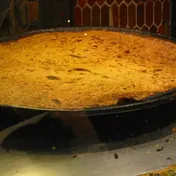
    Socca is Nice's chickpea flour pancake: thin batter baked on a large copper plate in a very hot oven until golden and crisp, then peppered and eaten hot.

    Where to try it: Chez Pipo

    Where to eat it

    The City of Nice says socca comes from Liguria, where the same pancake is called farinata, and describes a large thin galette cooked on tinned copper plates in a pizza oven. Chez Pipo's history of the dish says sellers carried it through the old town in the early 1900s, among them a woman called Theresa who sold it from a stove on the Quai du Midi, and that it nearly disappeared in the 1960s, when only a few places still made it. Chez Pipo, on Rue Bavastro, serves it plain or topped with anchovy, marinated peppers or confit tomatoes, and says its socca has baked in the same oven for nearly 100 years.

  • Pissaladiere ★ 4.7

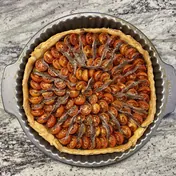
    Pissaladiere is the Nicois flatbread of slowly cooked onions on bread dough, topped with anchovies and black olives and named for pissalat, a fish paste.

    Where to try it: Chez Pipo, Cave de la Tour, La Merenda, Lou Balico

    Price: €17 at La Merenda

    Where to eat it

    Chez Pipo explains that pissaladiere takes its name from pissalat, a purée of salted sardines or anchovies that the dough was historically brushed with before the onions went on; today whole anchovy fillets usually replace it. The City of Nice recipe tops slow-cooked onions with salted anchovies and Nice black olives and bakes the flatbread for 20 minutes in a very hot oven. Chez Pipo, Cave de la Tour, La Merenda and Lou Balico all list it.

    Watch out for: Gluten, Fish

  • Pan Bagnat ★ 4.6

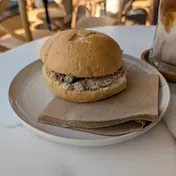
    Pan bagnat is the Nicois sandwich: a round loaf soaked in tomato and olive oil, filled with raw vegetables, tuna, egg, anchovy and olives, never mayonnaise.

    Where to try it: Chez Pipo, Lou Balico

    Where to eat it

    Pan bagnat means soaked bread in Niçois, and Chez Pipo says the name refers to bread wetted by tomato juice and olive oil. The City of Nice calls it the take-away snack of fishermen and morning workers, made from simple, cheap local ingredients; tuna, now in every version, replaced anchovy because tuna was an expensive fish in the 19th and early 20th centuries, which makes the tuna version the rich one. Chez Pipo serves a mini pan bagnat as a starter, and Lou Balico lists pan bagnat among its specialities.

    Watch out for: Gluten, Fish, Egg

  • Book food experiences in Nice

    See all 1603 food experiences in Nice

  • Salade Nicoise ★ 4.7

    Salade nicoise began in Nice: tomatoes, hard-boiled eggs, black olives and anchovies or tuna in olive oil, with cooked vegetables left out by traditionalists.

    Where to try it: Le Safari, Lou Balico

    Where to eat it

    Wikipedia describes salade nicoise as a salad that originated in Nice, traditionally of tomatoes, hard-boiled eggs, Nicoise olives and anchovies or tuna, dressed with olive oil, and notes that traditionalists exclude cooked vegetables. The City of Nice's own recipe builds it on mesclun, tomatoes, spring onions, celery heart, small violet artichokes, green peppers, radishes, black olives, tuna, anchovies and eggs, with basil and olive oil added at the last moment. Le Safari and Lou Balico list salade nicoise on their menus.

    Watch out for: Fish, Egg

  • Petits Farcis ★ 4.6

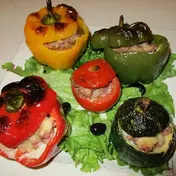
    Petits farcis are Nice's stuffed vegetables, tomatoes, courgettes, onions, peppers and courgette flowers, hollowed out, filled with stuffing and baked.

    Where to try it: Lou Balico, Le Safari, Cave de la Tour

    Where to eat it

    The City of Nice describes farcis as a Mediterranean speciality very common in Nice and Provence, made of tomatoes, courgettes, onions or peppers hollowed out and filled, and eaten hot or cold. Its summer recipe stuffs them with salt pork, grated cheese, egg, bread soaked in milk, basil, garlic and parsley, and says leftover daube can go into the filling. Cave de la Tour has held a world championship of petits farcis every year since 2012 (the 12th edition was on 14 June 2026); Le Safari and Lou Balico list petits farcis on their menus.

    Watch out for: Gluten, Egg

  • Ratatouille ★ 4.5

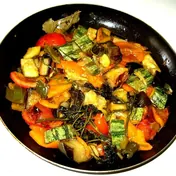
    Ratatouille nicoise is a summer stew of aubergine, courgette, tomato, peppers, onion and garlic in olive oil, the vegetables browned separately first.

    Where to try it: Lou Balico

    Where to eat it

    Wikipedia places ratatouille in rural Provençal cooking, a way to use surplus summer vegetables, and links it closely to Nice. The City of Nice recipe is for summer and autumn, July to October: peppers, long courgettes, aubergines, onions and ripe tomatoes, each browned separately in olive oil, then simmered together for 40 to 45 minutes, with basil added at the end. Lou Balico lists a gluten-free ratatouille among its starters.

  • Daube de Boeuf ★ 4.5

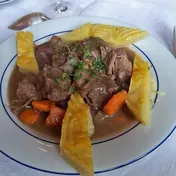
    Daube de boeuf is the Provencal beef stew braised slowly in red wine with vegetables, garlic and herbs; in Nice its sauce also dresses ravioli and gnocchi.

    Where to try it: La Merenda, Le Safari, Cave de la Tour, Lou Balico

    Price: €27 at La Merenda

    Where to eat it

    Wikipedia describes daube as a French slow-cooked stew, the best known being the boeuf en daube a la provencale, made with cheaper cuts of beef braised in wine with vegetables, garlic and herbs and traditionally cooked in a daubiere pot. In Nice the City's gnocchi recipe serves them with daube sauce, and Le Safari's menu offers daube nicoise with house ravioli. La Merenda lists daube de boeuf a la provencale with panisse, and Cave de la Tour serves a beef cheek daube with Nicois ravioli.

  • Tarte de Blettes ★ 4.3

    Tarte de blettes, or tourte de blettes, is Nice's Swiss chard pie, savoury or sweet, with pine nuts and raisins, and usually dusted with icing sugar.

    Where to try it: Chez Pipo, Lou Balico, La Merenda, Cave de la Tour

    Where to eat it

    Wikipedia traces the chard pie to the Middle Ages, with a first written recipe in the 15th century; it is one of the thirteen Christmas desserts in the Nicois version of the Provencal tradition and is also eaten on New Year's Eve. The City of Nice lists tourte de blettes among its specialities and its recipe pairs chard with apples, rum-soaked raisins, pine nuts, grated cheese and anise. Chez Pipo and Lou Balico serve a sweet version, and La Merenda and Cave de la Tour list it too.

    Watch out for: Gluten, Egg, Tree nuts

  • Estocaficada ★ 4.4

    Estocaficada is the Nicois stew of dried stockfish simmered slowly with tomatoes, peppers, onions, garlic, potatoes and olives, a dish of the winter table.

    Where to try it: La Merenda, Lou Balico, Cave de la Tour

    Price: €27 at La Merenda

    Where to eat it

    French Wikipedia says the habit of cooking stockfish came from Scandinavia and probably reached Nice with merchant ships from Flanders that anchored under the citadel; estocafic is the Nicois word for stockfish and the meal at which it is served is also called an estocaficada. The City of Nice recipe soaks the fish for eight days, then cooks it for three hours with tomatoes, onions, peppers, garlic, black olives and potatoes. La Merenda and Lou Balico list stockfish, and Cave de la Tour cooks it on two Fridays a month at lunchtime.

    Watch out for: Fish

  • Fougasse de Menton ★ 4.2

    Fougasse de Menton is the sweet fougasse of Menton, a Provencal bread flavoured with almond dragees and orange blossom, sold in the town's bakeries.

    Where to eat it

    French Wikipedia describes fougasse as a Provencal flat bread whose name comes from the Latin panis focacius, a bread baked on the hearth or under ashes; most are savoury, and the fougassette of Grasse is lightly enriched and scented with orange blossom. A Menton guide describes the fougasse mentonnaise as a sweet variant of the Provencal fougasse, with almond dragees and orange blossom essence in the dough, sold in Menton's bakeries in the morning. It is a speciality of Menton, east of Nice along the coast.

    Watch out for: Gluten, Egg

  • Ganses ★ 4.2

    Ganses are the knots of fried sweet dough of the Nice Carnival and Mardi Gras, dusted with sugar and scented with lemon zest or orange blossom water.

    Where to eat it

    The Provence-Alpes-Cote d'Azur tourist board calls ganses a typical recipe of the Carnaval de Nice and of Mardi Gras, fritters in the family of bugnes and oreillettes. The City of Nice recipe makes a rested dough of flour, eggs, butter and lemon zest, rolls it to 1.5 to 3mm, cuts strips about 2cm by 10cm, ties them in knots, fries them and dusts them with sugar. The card says they are made all year but above all at festivals and Carnival; the 2027 Carnaval runs from 9 to 28 February.

    Watch out for: Gluten, Egg

  • Gnocchi a la Nicoise ★ 4.3

    Gnocchi a la nicoise are potato gnocchi rolled on a fork, served with butter, tomato sauce or the sauce of a daube or Nicois rabbit, under grated cheese.

    Where to try it: Lou Balico

    Where to eat it

    The City of Nice lists gnocchi among its specialities and gives a recipe of old floury potatoes, flour, egg yolks, olive oil and grated cheese, rolled into ropes, cut every two centimetres and rolled on a fork; they are done when they rise to the surface and are served with butter, tomato sauce, or daube or rabbit sauce. Merda de can, a Nicois gnocchi of Swiss chard, potato and flour, has its own City recipe. Lou Balico lists house gnocchi and merda de can, both with pistou.

    Watch out for: Gluten

Signature Dishes in Nice, FAQ

What food is Nice known for?

Nice's signature dishes include Socca, Pissaladiere, Pan Bagnat, Salade Nicoise, Petits Farcis. See our signature dishes chapter for where to eat each.