How Nice came to eat the way it does: the people, migrations and accidents that shaped the plate.
Key eras
350 BC, Greek Nikaia
Phocaean Greek sailors from Marseille founded Nikaia around 350 BC on the hill above Vieux Nice, planting olives, vines and fig orchards. The Greek influence laid the foundation for the Mediterranean olive oil and seafood culture that still defines the city's food today.
1388 to 1860, the Savoyard centuries
Nice belonged to the House of Savoy from 1388 to 1860 and developed its own Italianate cooking distinct from Provence. Cucina Nissarda took shape across these centuries, the language Nissart on the menus, and dishes like socca, pissaladiere, gnocchi and ravioli read as Liguria-meets-Provence.
1820, Maison Auer opens
Maison Auer opened in 1820 on Rue Saint Francois de Paule opposite the Opera, candying Mediterranean fruits and chestnuts. The Belle Epoque shop with stained glass and marble counters is two centuries old and remains the city's oldest continuously operating confectionery.
1923, Chez Pipo opens
Chez Pipo opened on Rue Bavastro between Place Garibaldi and Port Lympia in 1923, firing socca in a wood burning oven. Three Nice addresses still cook the chickpea pancake the traditional way at 300C in wood, and Chez Pipo, Chez Theresa and Lou Pilha Leva anchor the canon.
2018, two Michelin stars at Flaveur
Flaveur on Rue Gubernatis under brothers Mickael and Gael Tourteaux took two Michelin stars in 2018, the only two star room in the city. The Riviera Caribbean tasting kitchen helped establish a new Nice fine dining wave alongside Le Chantecler at the Negresco, JAN at the port and Pure et V par Maison Joia.
Immigrant influences
- Italian (Ligurian and Piedmontese): Genoese and Piedmontese cooking shaped the Niçoise canon across the Savoyard centuries; socca, pissaladiere, gnocchi and the pasta tradition all trace to the Italian roots that survive in modern cucina nissarda.
- North African (Maghrebi): Algerian, Moroccan and Tunisian families settled in Liberation and Magnan from the 1960s, the daily market on Avenue Malausena and halal counters in the working class quarters the markers of the Maghrebi food presence in Nice today.
- South African: Jan Hendrik van der Westhuizen opened JAN on Rue Lascaris in 2013, the first South African to earn a Michelin star and the Karoo and African accents that joined the city's modern fine dining scene.
- Japanese: Kei Matsushima opened Keisuke Matsushima on Rue de France in 2006 and won a Michelin star the same year, the French Japanese fusion kitchen that brought dashi, kombu and tataki techniques into the Nice fine dining canon.
Signature innovations
- Socca, the chickpea flour pancake the city invented and still cooks in wood ovens
- Pissaladiere, the caramelised onion flatbread with anchovy and Nicoise olives
- Salade nicoise, the canonical raw vegetable salad with anchovy and egg
- Pan bagnat, the tuna and egg sandwich on a round bread soaked in olive oil
- Petits farcis, stuffed Provencal vegetables baked together in one dish
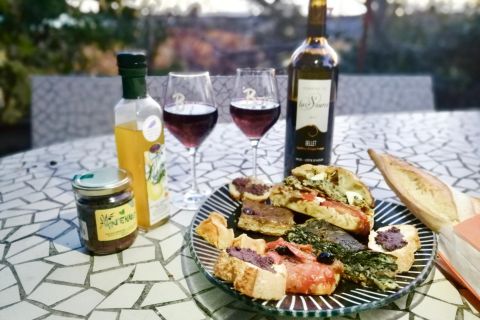
- Bellet AOC, the 50 hectare wine appellation grown on the hills behind the city